“It’s just a party game, stop pretending to be FGC!”
“Why don’t you guys pick up a MAN’S game like Street Fighter or Tekken?”
“Only little kids play Smash.”
These comments and many more like them have rung out in the halls of many venues and social media outlets. When it comes to the fighting game community or “FGC”, Super Smash Bros. has always been on the backburner for many reasons. Some are self-inflicted by the community, some by issues with the game’s more obscure mechanics, and some from a lack of understanding from the FGC. Luckily, a good number of these issues have seen improvements. The FGC and Smash have a much more loving relationship and players from both sides have embraced each other’s game of choice.
For example, Immortal Gaming’s ANTi is an avid Street Fighter fan and player and has beaten the likes of Low Tier God, an established name in the SF community. EchoFox’s SonicFox, a champion of many games in the FGC, has stated his interest in the newest Smash game and even challenged TSM’s Zero to a Best-of-10 when the game releases. TSM’s Leffen is a strong player in both Super Smash Bros. Melee and DBFZ, placing 1st and 33rd respectively at EVO 2018. Even commentators such as ESA’s Bam, VGBC’s TK, 2K’s EE, VGBC’s Coney, D1, and James Chen are prominent commentators in several games related to Esports.
Despite all that occurred between Smash and the FGC, there was always one major thing holding back Super Smash Bros. as a whole. The constant non-believer, naysayer and overly strict step-dad of the Smash community was none other than their biological father: Nintendo. Namely, Masahiro Sakurai himself.
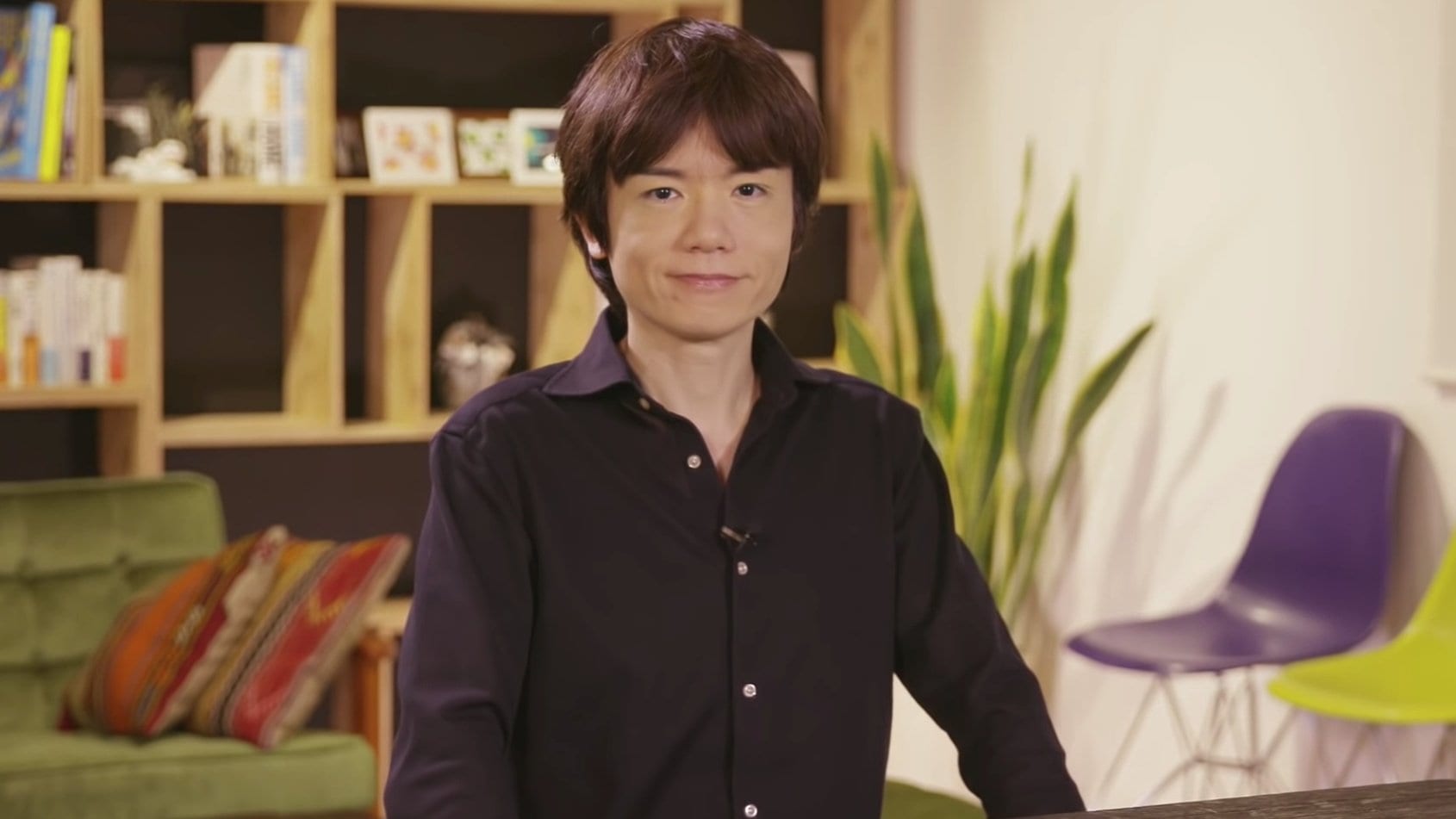
Super Smash Bros. Director Masahiro Sakurai during Wednesday’s Direct. Photo credit to Nintendo.
Sakurai’s history and relationship with Smash is one that is derived from love. As beautiful as love can be, love can also be one of the most volatile of emotions. Love at its most volatile is one built off of expectations. Talk to any happy couple or expert on the subject and they will tell you that you must have no expectations when it comes to love. These expectations can cause someone to have an idealistic view of their partner and, if they don’t meet that standard, can lead to disastrous results. Unfortunately, this was the love that was built mutually between Sakurai and the Smash community.
Nintendo will always have its faithful players of any Mario platformer and any Zelda puzzle-solver, but Smashers encompass a whole new type of die-hards. From the Smash community’s perspective, they embraced this kid’s party game and turned it into an uber-competitive fighting game. That type of transformation took place because of the passion and effort this community put forth for this franchise. This community loves Smash so much that they found ways to attain combos that weren’t initially designed to be possible. Smashers developed a meta game for each character for every incoming Smash title without any preexisting guide as to what the character was supposed to do. Some stayed in the lab and found ridiculous combos, movement tech, and even glitches to increase the depth of Smash. Most fighting games come with advice and guides on how to play the game.
Smashers MADE the guide.
They literally wrote the book on Smash. Smashers feel their efforts should deserve some merit and reward from Nintendo, whether Nintendo asked for it or not. That merit comes in the form of things like balancing characters, adding amenities to Smash’s bland training mode, and the ever-elusive tourney developer support from Nintendo. That relationship fostered a lot of hope from the community, only to be met with cricket chirps and quips from their favorite developer.
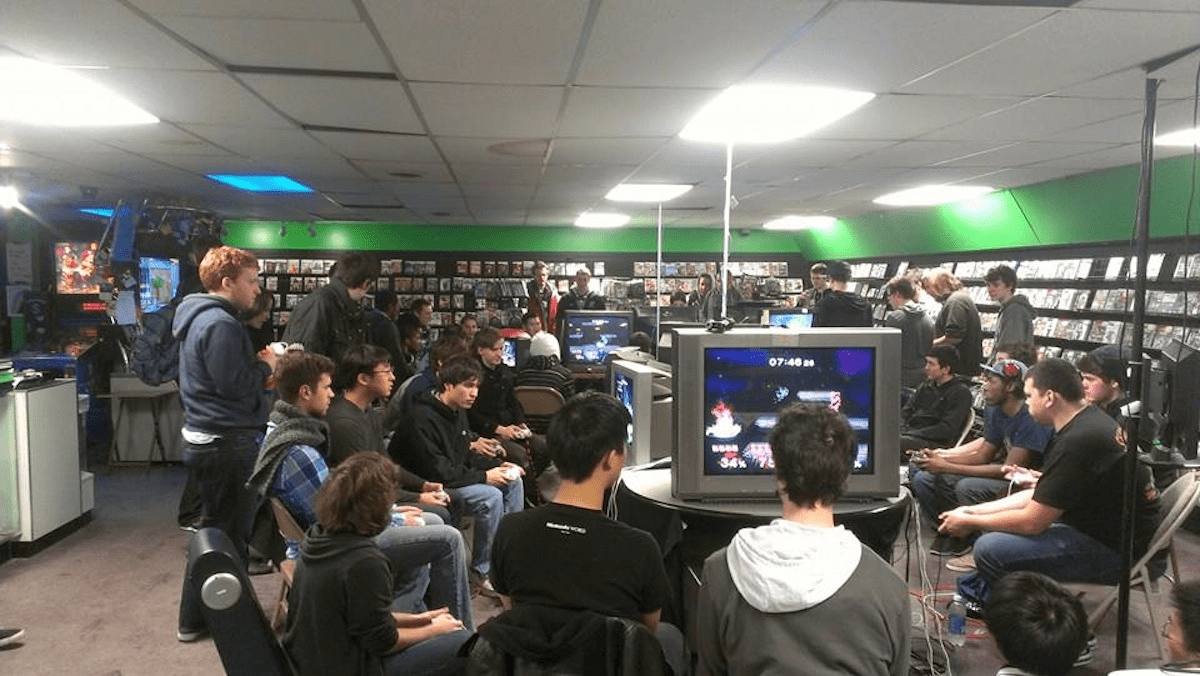
College students from Boston compete in Super Smash Bros. Melee. Credit to Boston Magazine and Matt Zaborowski.
On the other hand, we have Masahiro Sakurai. His days with Nintendo stretch as far back as 1992, when Kirby made his debut in Kirby’s Dreamland. Sakurai created Kirby at age 19, and it can be argued that he was always destined for video game greatness. Sakurai worked at HAL Laboratory and was the main director behind Smash in 1999. He has voice-acted King Dedede on several occasions and produced other Nintendo titles like Meteos and Kid Icarus: Uprising. He has accomplished a great deal, but nothing has defined his career more than his direct involvement in Smash. From 1999 on, Sakurai has raised the bar for every Smash game and the platform fighting genre. His ability to seamlessly blend stellar gameplay while having an iconic character “feel” like they should is a feat that is hard to pull off in any video game. In fact, it can be argued that this “feel” is Smash’s best trait. How could someone not be drawn to the idea of playing your favorite Nintendo character who beats up everyone else? That kind of game is one that does not fit into a demographic. Combined with all the fun game modes, items, and game references, Smash is one of the best party games for any one of any age.
Yet, that accessibility is where the contention lies with Sakurai and the Smash community. Accessibility has always been a key component when it comes to Nintendo’s method for making new products. Nintendo originally started as a toy company that evolved into a gaming company, so naturally they are inclined to make things for kids first and adults second. Nintendo has done a wonderful job finding a balance between the two and made games that are easy to learn but hard to master. Sakurai himself has stated that he believes games like Melee and Street Fighter lose a wider audience due to their competitiveness. He explains in a Washington Post article by Imad Khan, “I think a lot of Melee players love Melee. But at the same time, I think a lot of players, on the other hand, gave up on Melee because it’s too technical, because they can’t keep up with it…It’s not to say that Street Fighter is failing [by more fully embracing competitive gaming] by any means, but personally, I think any games with command inputs are difficult.” Sakurai clearly values a game that can be enjoyed by many and not by the few.
Putting this all together, you get one of the strangest relationships in gaming. Smashers love Sakurai for making this game that means the world to them, yet they feel neglected and shunned. “Why can’t Sakurai just make it easier on us?” they’d say. Sakurai puts his blood, sweat, and tears into making Smash good for everyone INCLUDING competitors of Smash, but he, and the company he works for, believes Smash is for everyone. Why should one community get special treatment? These ideas have been discussed ad nauseum without seemingly any resolution…until now.
On August 8, 2018, the video game world was on pins and needles waiting for the new Nintendo Smash Direct to premiere. What new characters are we going to get? What are the newest stages? Is Brawl’s beloved Subspace Emissary coming back for a sequel? The trailer started with a bang and quickly announced Simon and Richter Belmont from Castlevania as new Smash characters. Coming on the heels of Ridley being announced and the faces of Wolf, Snake, and Pichu making long awaited returns, it felt more like Sakurai was LISTENING to competitive Smashers. As the Direct kept rolling, we saw Shovel Knight become an assist trophy, Chrom and Dark Samus become echo fighters, and finally King K. Rool himself appeared. The K. Rool trailer below was also beautifully done as Sakurai trolled an entire audience of people. These were characters people had been begging for to the point where they were becoming Smash memes. As amazing as these announcements were, this wasn’t what will change the dynamic between Sakurai and competitive Smashers.

King K. Rool Super Smash. Bros Reveal Trailer. Photo credit to Nintendo.
Traditionally, Smash’s training mode was very vanilla and bare bones. You could increase and decrease game speed, spawn items, toggle percentages, toggle basic CPU actions, and view a combo/damage counter. This wasn’t entirely without use, but it lacked several things other fighting games had as a standard. These training mode amenities make it easier for the FGC to come together and discuss combos and strategy. In Smash, that was never the case. CPUs couldn’t perform any of the complicated moves players could pull off since players found exploits in Smash’s design. A CPU can’t perform an action it wasn’t originally designed to do. Measuring hitboxes and knockback angles when someone gets hit were also devoid from Smash’s training mode, making it difficult to calculate how effective a move could be.
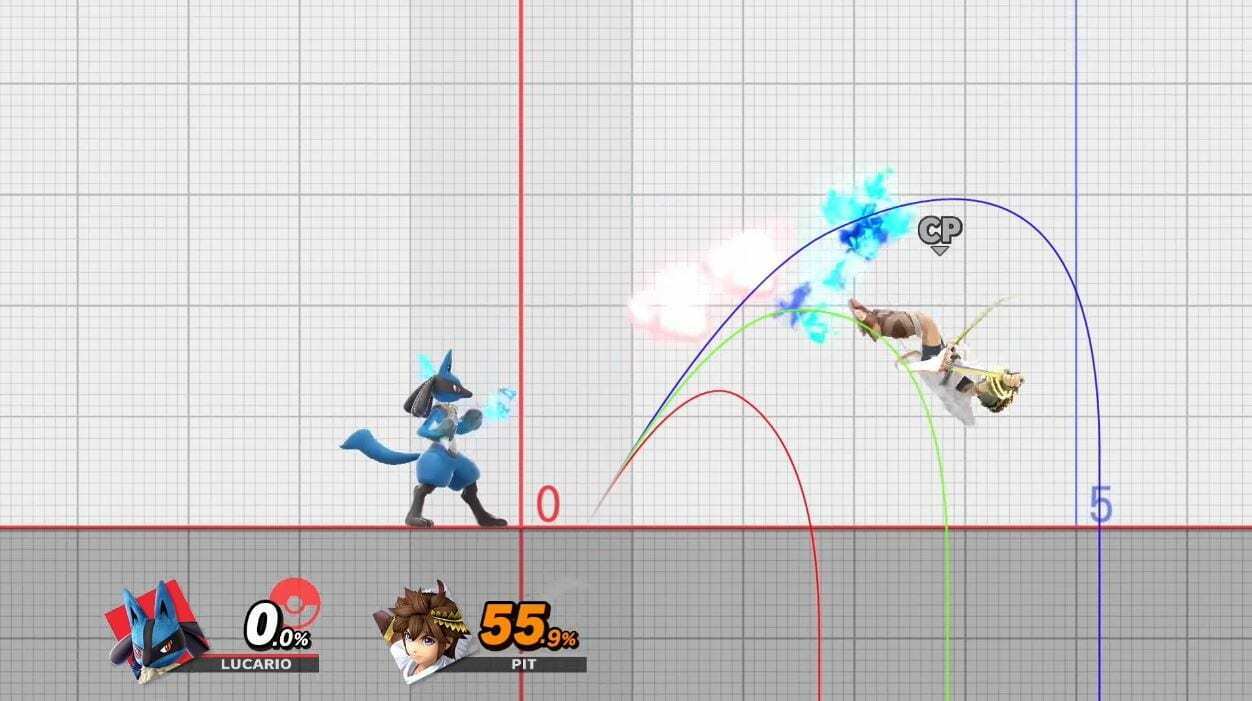
Super Smash Bros. Ultimate Training Mode. Photo credit to Nintendo.
In the newest Direct, most of this was rectified. Smash Ultimate’s training mode now has grids (like Street Fighter) along with three separate knockback angles: one for 0%, one for 50%, and one at 100%. Though CPU’s may still have basic actions, this is enormous news for the Smash community. For once, Sakurai eased our workloads when it comes to testing with Smash. A lot of testing was done by a small percentage of the community that had the knowledge and the access to use game development tools. Names like Kurogane Hammer and Ruben were sources of information such as frame data of a character’s moves, angles, hitboxes, knockback, invincibility or intangibility frames, etc. With this new training mode, more people in the community can find valuable info instead of relying on a few prominent figures. It’s a change that is welcomed by many, as is evident by the pure joy on several players’ faces when the training mode was showcased…including a certain Rectify writer.
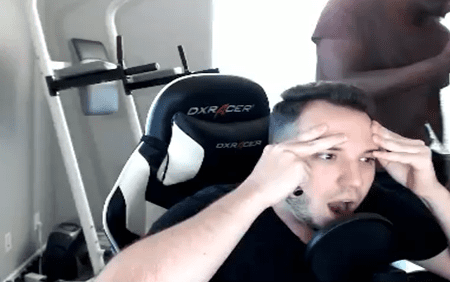
Mind. Blown.
Sakurai has finally given this community what it has wanted from the very beginning: validation. Validation that competitive Smash is not only relevant, but that Nintendo truly cares about the community. Validation that this game can be both a casual experience as well as a competitive one. Validation after all these years of having to fight the “it’s a kid’s party game” stigma that it IS more than what the doubters say. Developer support for tourneys may still be something that the community will fight for, but those calls have died down for the time being. With Nintendo sponsoring more Smash events, the FGC blending with Smash, and Sakurai himself approving of competitive Smash with the birth of Ultimate, it seems we are entering an entirely new era of Smash. After all this time, it feels amazing to see how far the passion of these competitive players has taken them.
All they needed was a little love from their father.


- Esport EventsEsports NewsNews
 EVO Las Vegas 2026 lineup has been revealed
December 10, 2025
- Esports NewsNews
 SNK World Championship 2025 at DreamHack Atlanta includes $4.1M prize pool
September 22, 2025
- Esports News
 TSM Joins Halo Championship Series As Latest Partnered Team
February 2, 2025
- EsportsEVO 2025 Lineup Features Mortal Kombat 1, Tekken 8, And More
January 15, 2025