
Summary
If Ubisoft wants to shape its own future as confidently as it asks players to shape Rome, it needs more than another carefully assembled sequel. It needs a new empire entirely, built on fresh ideas and fearless creativity, not another gentle rework of what once worked well enough.
Developer – Ubisoft Mainz
Publisher – Ubisoft
Platforms – PS5, Xbox Series X|S,PC (Reviewed)
Review copy given by Publisher
Anno 117 Pax Romana arrives at a moment when Ubisoft desperately needs a miracle, and it comes from a franchise that has existed for more than two decades and carried the city building genre through multiple eras of gaming. The Anno series began in the late nineteen nineties and quickly established itself as a blend of calming construction, carefully balanced production chains, and historical settings that allowed players to shape trade routes, societies, and growing populations. Fans have sailed the oceans of sixteen hundred, navigated the markets of seventeen hundred, industrialized the world of eighteen hundred, and even pushed into speculative futures with twenty seven hundred and twenty two hundred five. Across all these entries the series has earned a reputation for reliability rather than reinvention, holding onto a loyal audience that enjoys the predictable but deeply satisfying flow of expanding towns, researching improvements, and watching tiny citizens react to changing circumstances. It is a formula that has served Ubisoft for decades, but even with that history behind it, Anno 117 Pax Romana is clearly not the game that will save the company from its rumoured financial troubles or the talk of a possible pause in stock trading. Ubisoft keeps reaching into old storage boxes, pulling out familiar brands, and polishing them through expansions or DLC, but the company desperately needs to create new worlds and new ideas instead of expecting nostalgia to carry them forward.
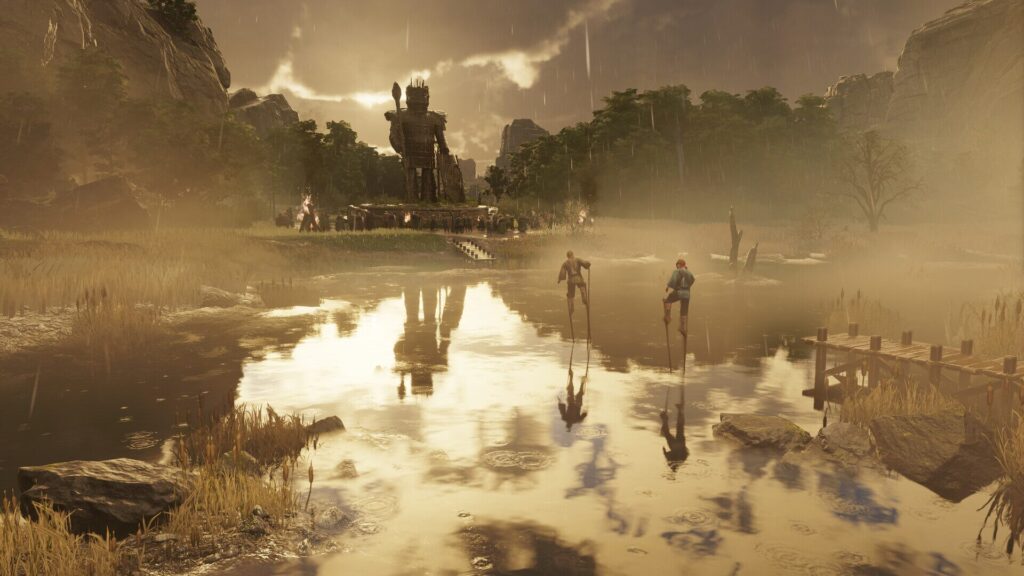
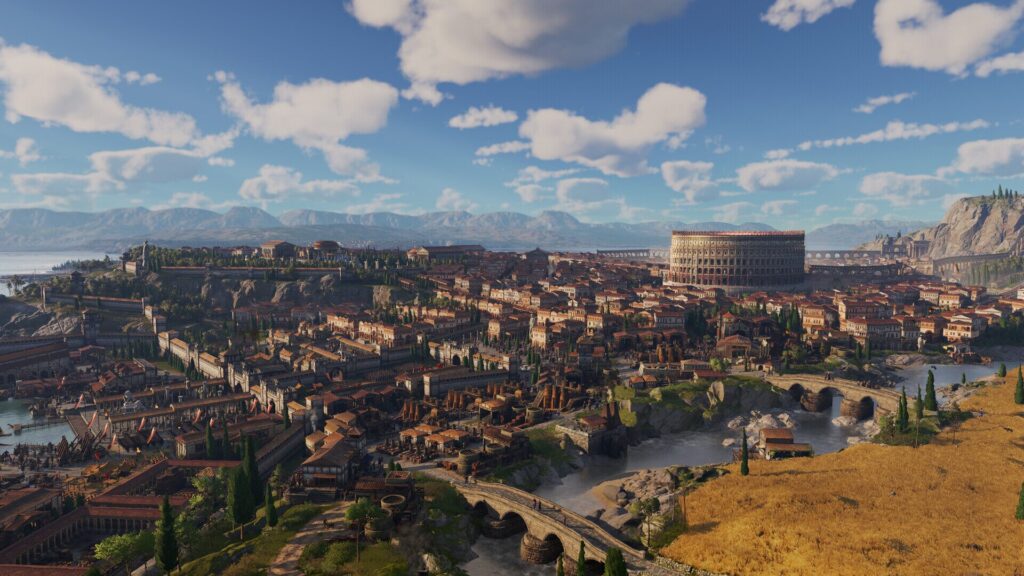
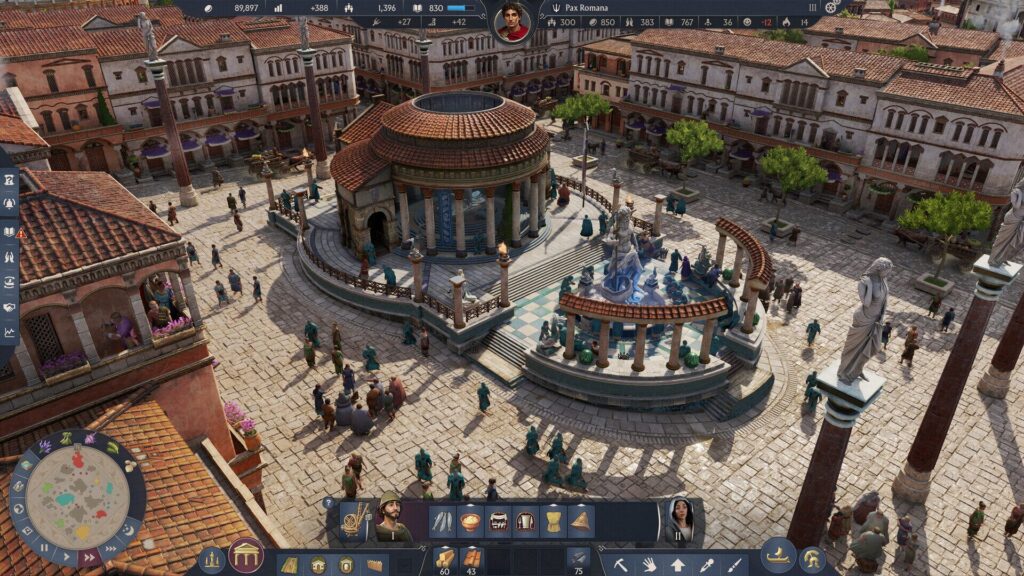
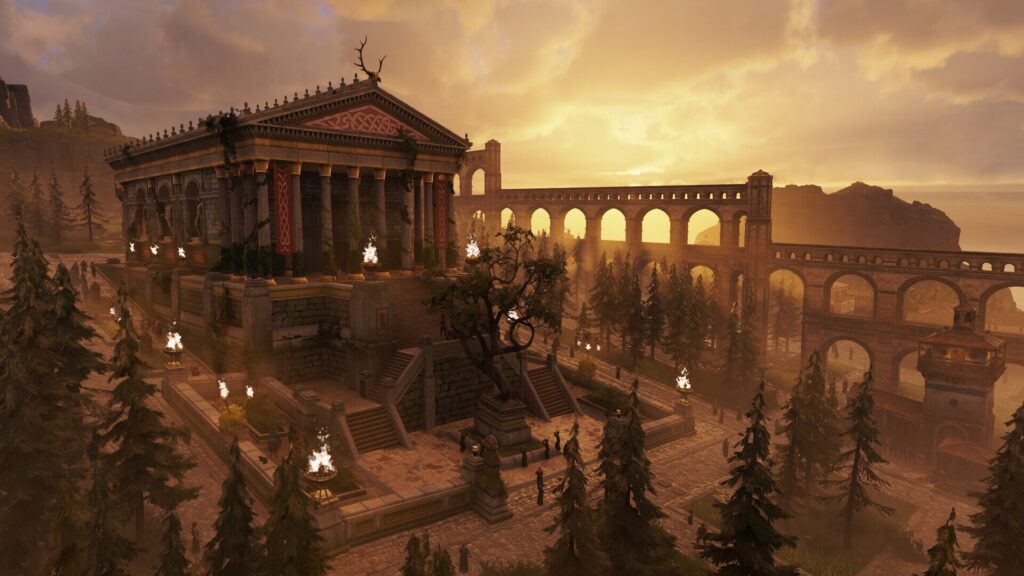
The pitch for Anno 117 Pax Romana is undeniably strong. The idea of shaping the Roman Empire as a governor, influencing provinces through diplomacy, economy, or military might, and forging alliances while navigating the demands of a watchful emperor should create a thrilling sense of agency within a historical setting that many players adore. When the game begins and you first see Latium glowing with warm afternoon light or Albion brooding under damp skies, it feels like the visual side of the experience is exceptionally well crafted. Children run through narrow streets, dogs chase after them, vendors shout from crowded markets, and massive crowds roar inside packed arenas. The level of detail is beautiful, and it sells the fantasy of living cities better than most strategy games on the market.
However, the moment you start building, it becomes clear that the familiar Anno rhythm remains almost perfectly intact. You lay down districts, establish production chains, manage resource flows, and do everything that fans of the franchise already know by heart. The loop is still satisfying because the Anno formula has always been strong, but the sense of familiarity borders on complete repetition. It feels like returning to a house you love only to realize not a single room has been remodeled, rearranged, or refreshed. Everything functions well enough, but nothing sparks the excitement that a new generation entry should bring. Ubisoft claims unmatched detail, flexibility, and scale, and while the detail is absolutely impressive, the sense of scale is only incrementally larger than before. The improvements feel like small steps, not bold leaps.
The governing system attempts to provide a sense of weight to your choices. You can lean into diplomacy and try to build a peaceful empire where relationships and trade routes matter most. You can focus entirely on economic dominance and let wealth fuel your growth. Or you can charge into military conquest and force your will upon rival provinces. On paper this should give you multiple avenues to express your leadership style, and the emperor reacting to your choices should inject tension into the narrative. In practice these options feel surprisingly shallow. It almost feels like choosing between three slightly altered versions of the same underlying strategy loop. The consequences exist, yes, but they rarely hit hard enough to shake you out of your routine or force you to adapt. Rather than shaping your own story, you often feel like you are walking through a series of predetermined outcomes that lack the emotional weight the game wants you to feel.
The cultural decisions also lack impact. The idea of either honoring Celtic culture or imposing strict Roman tradition should spark meaningful moral dilemmas, but the execution plays out like a standard efficiency test. There is no emotional connection to these choices, no sense that you are truly shaping the identity of your provinces through sensitive, difficult leadership. Instead it feels like flipping switches inside a preset system that politely nods at your decisions but never transforms in a dramatic or memorable way. Combat suffers from a similar lack of depth. Land and naval battles exist, but they feel slow, sluggish, and lacking in clear feedback or tension. They complete the checklist of what a Roman era strategy game should include, but they do not stand out as compelling features in their own right.
Visually the game is stunning. Ubisoft always excels in atmospheric world building, and Anno 117 Pax Romana is no exception. Cities feel alive in small ways that many strategy games cannot replicate. Forests look ancient. Coastlines shimmer. Citizens wander through markets with believable movement patterns. Everything feels carefully placed and filled with artistry. But visuals alone cannot support a strategy game that needed deeper mechanics and more ambitious systems to elevate it beyond a polished but predictable experience. Ubisoft aims to make this the premier builder of the generation, yet the design choices never fully commit to meaningful innovation.
Narrative moments lack the dramatic pull needed to immerse you in your role as governor. You are told repeatedly that your choices shape the destiny of entire provinces and countless citizens, but the emotional connection never strengthens. The game tells you that the stakes are high, but the player rarely feels the weight of those stakes. Ubisoft needed a project that would redefine a classic franchise and remind players why this company once led the industry in creative exploration. Instead this game feels like a safe, careful continuation of an existing formula with almost no risk taken.
This lack of ambition is what frustrates the most. The foundation of the Anno series is still wonderful. The pacing, the joy of seeing small settlements grow into bustling hubs, the visual storytelling embedded in animations and citizen behavior, all remain highly enjoyable. But this entry plays like it was built to satisfy a schedule rather than inspire a vision. It is playable, pleasant, and polished, yet it never tries to rise above expectations. It never challenges the player. It never tries to prove that Ubisoft still knows how to excite the strategy genre.
By the time you settle into the mid game loop, the sense of missed opportunity becomes impossible to ignore. Ubisoft is relying far too heavily on reviving older series rather than generating new ideas and building new intellectual properties. This game is not a disaster, not even close, but it reflects a company stuck in a holding pattern. Skilled developers clearly put time and effort into the project, but the direction itself feels cautious and confined.
Anno 117 Pax Romana is a stable and visually delightful city builder that delivers many hours of peaceful construction and careful management. Fans of the franchise will enjoy returning to familiar mechanics and seeing the Roman setting come alive. Newcomers may find it a gentle introduction to the genre. Yet the game lacks the boldness needed to push the franchise into new territory, and it lacks the spark needed to restore faith in Ubisoft as a creatively driven studio.
For all these reasons the game lands firmly at a five out of ten. It is functional, charming, and enjoyable in moments, but it never reaches beyond the safety of its own traditions. It mirrors Ubisoft itself: experienced, structured, and capable, but unwilling to break out of old habits at a time when reinvention is crucial.
If Ubisoft wants to shape its own future as confidently as it asks players to shape Rome, it needs more than another carefully assembled sequel. It needs a new empire entirely, built on fresh ideas and fearless creativity, not another gentle rework of what once worked well enough.