Summary
Schematic Void proves that a game doesn’t need to be complete to feel fulfilling. Its broken systems, strange puzzles, and fourth-wall experiments come together to create something genuinely memorable. It’s both a puzzle box and a commentary on puzzle boxes. It’s confusing, clever, beautiful, and self-aware in ways that make you appreciate the weird artistry of interactive media.
If you’re willing to play something that refuses to play by the rules, Schematic Void is a bizarre little gem worth exploring. It’s not the cleanest or the clearest game out there, but that’s the point. It’s unfinished on purpose, and finishing it, both literally and metaphorically, is half the fun.
Developer – Meowton Games
Publisher – Meowton Games
Platforms – PC (Reviewed)
Review copy given by Publisher

Schematic Void is one of those strange little games that feels impossible to describe without sounding like you’re losing your mind halfway through the explanation. The developers call it a “point-and-click, anti-horror adventure with a mashed fourth wall, stylish minimalistic graphics, a relaxing plot, and other advantages.” That’s somehow both accurate and still wildly underselling what this game actually is. It’s weird, self-aware, confusing, funny, and, in its own broken way, kind of brilliant.
The premise starts simple enough: imagine a game that was never finished. The developer gave up, walked away, and left you, the player, to clean up the digital mess. That’s the central hook of Schematic Void. It’s not just about solving puzzles or following a story; it’s about finishing the game itself. You literally fix broken pieces of logic, reconnect systems, and unravel strange code fragments, all while the game winks at you from behind the screen.
This meta concept drives the entire experience. You’ll often find yourself asking, “Is this a bug or a feature?” and the answer is always “yes.” Schematic Void takes the idea of breaking the fourth wall and turns it into a full-blown design philosophy. Menus lie to you, dialogue boxes argue back, and the interface occasionally glitches on purpose just to remind you that you’re part of the joke.
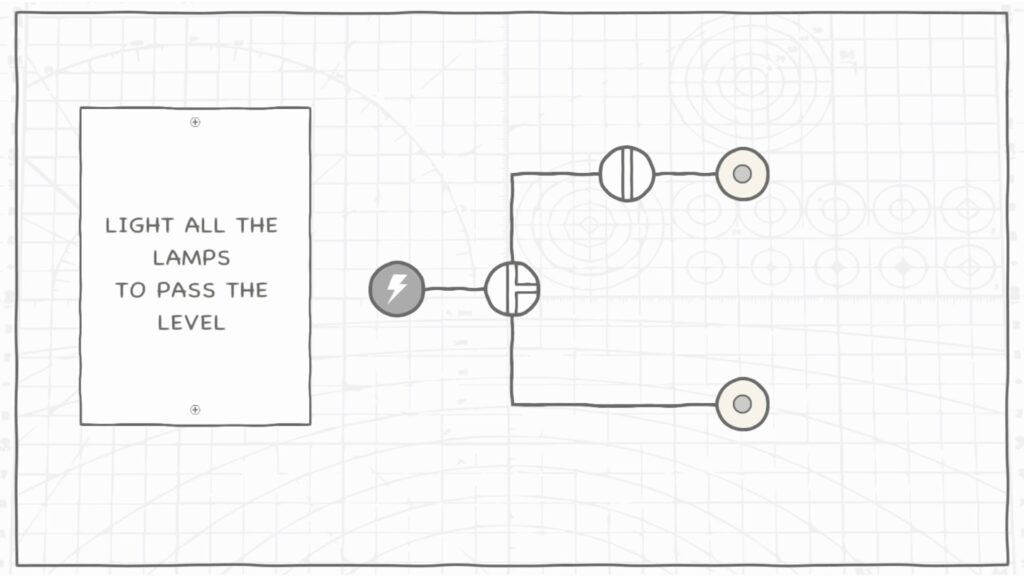
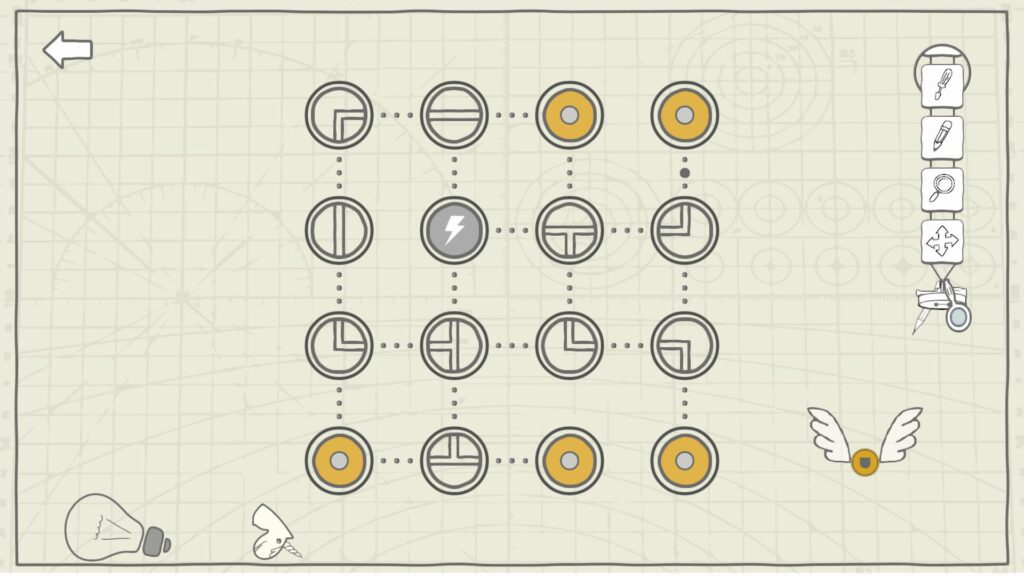
The “schematic” part of the title isn’t just for show, either. At its core, Schematic Void is about circuits, though the developers are quick to insist this isn’t an engineering simulator. The puzzles often involve rearranging or reactivating elements that resemble electrical nodes, but in the most abstract way possible. Sometimes the solution is literal wiring, other times it’s a metaphorical connection between ideas. You might be asked to repair a level’s logic flow, rebuild a creature’s thought process, or reconnect the emotional charge of a scene. It’s creative chaos wrapped in a minimalist art style.
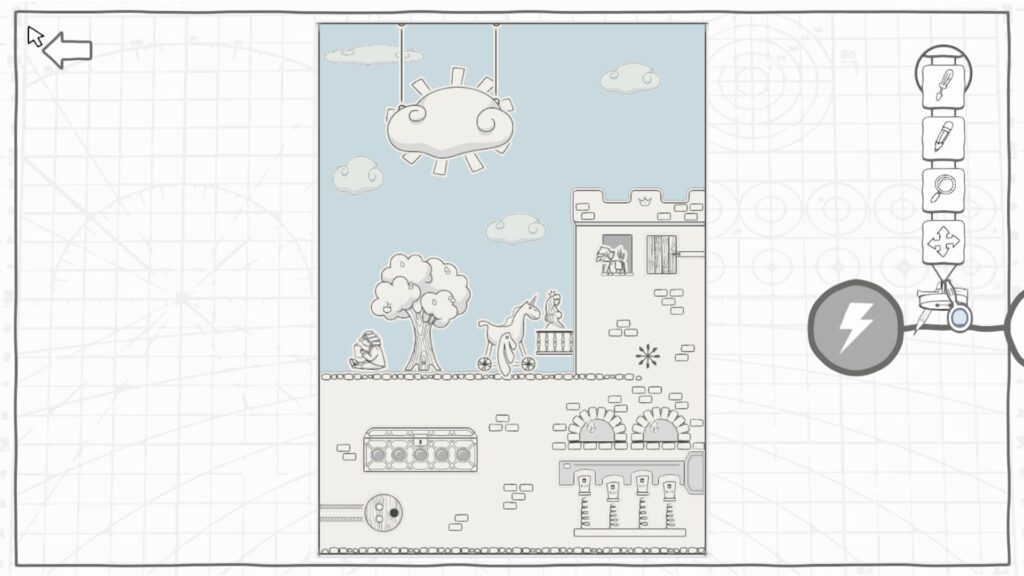
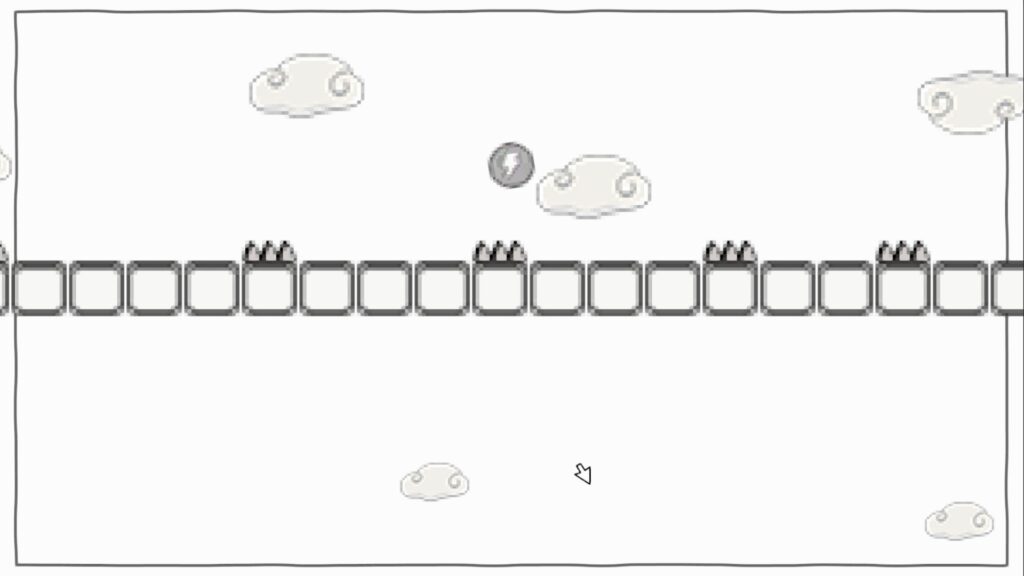
That minimalist style deserves credit for how much personality it squeezes out of so little. The 2D visuals occasionally play tricks on perspective, pretending to be 3D when it suits the moment, and the entire presentation feels purposefully hand-drawn and slightly unstable. The game’s world feels alive, even when it’s intentionally broken. It’s abstract in a way that feels deliberate rather than cheap, and it constantly finds new ways to keep you guessing what’s real and what’s performance.
Gameplay-wise, it’s hard to call Schematic Void traditional point-and-click. You’re rarely just picking up items and using them in the right spot. Instead, it’s a series of interconnected micro-puzzles tied together by humor, absurdity, and a sense of rebellion against standard game logic. Sometimes the best solution is the most illogical one. Sometimes the game wants you to fail just so it can laugh with you. It’s the kind of experience where breaking the rules feels like the only correct way to play.
Adding to all that madness is a tone that walks the line between unsettling and oddly cozy. Despite the “anti-horror” label, there’s never a real sense of danger, just the eerie calm of something aware of its own digital existence. You’ll meet strange companions, including pets, princesses, and yes, even a unicorn, each of whom feels ripped from a dream you don’t quite remember. The writing is witty, unpredictable, and full of bizarre humor that somehow works perfectly in the context of the game’s nonsense.
Then there’s the soundtrack, which is honestly one of the biggest highlights. It’s a stunning mix of relaxing, moody, and slightly melancholic tones that somehow make you want to dance and cry at the same time. It does an incredible job of setting the vibe, whether you’re rewiring circuits or chatting with a talking pixel about existential dread.
What’s interesting about Schematic Void is how much it trusts you to make sense of it, or not. It throws ideas at you without holding your hand and expects you to tinker, experiment, and embrace the confusion. When you finally solve a puzzle or realize what the game has been hinting at, it’s genuinely satisfying because you did it through intuition rather than instruction.
The writing constantly blurs the line between sincerity and parody. It mocks typical indie tropes, pokes fun at the concept of “deep storytelling,” and yet somehow delivers a weirdly touching narrative beneath all the self-referential chaos. There’s a “kinda” plot, as the developers describe it, deep but not wide. It doesn’t care about being cinematic; it just wants to make you think, smile, and maybe question the structure of games themselves.
That’s where Schematic Void really stands out. It’s not trying to scare you or frustrate you. It’s trying to get you to engage with the idea of play itself. It’s a sandbox for curiosity and problem-solving, a reminder that games don’t need to follow strict rules to be enjoyable. The experience feels like discovering a forgotten art project that comes to life the moment you touch it.
While it’s not for everyone, those who crave clear objectives or traditional storytelling might find it too vague. There’s a charm in its unfinished, experimental nature though. It’s the gaming equivalent of an open sketchbook filled with half-doodles and half-philosophies. Somehow, the mess becomes the message.
Schematic Void proves that a game doesn’t need to be complete to feel fulfilling. Its broken systems, strange puzzles, and fourth-wall experiments come together to create something genuinely memorable. It’s both a puzzle box and a commentary on puzzle boxes. It’s confusing, clever, beautiful, and self-aware in ways that make you appreciate the weird artistry of interactive media.
If you’re willing to play something that refuses to play by the rules, Schematic Void is a bizarre little gem worth exploring. It’s not the cleanest or the clearest game out there, but that’s the point. It’s unfinished on purpose, and finishing it, both literally and metaphorically, is half the fun.