Summary
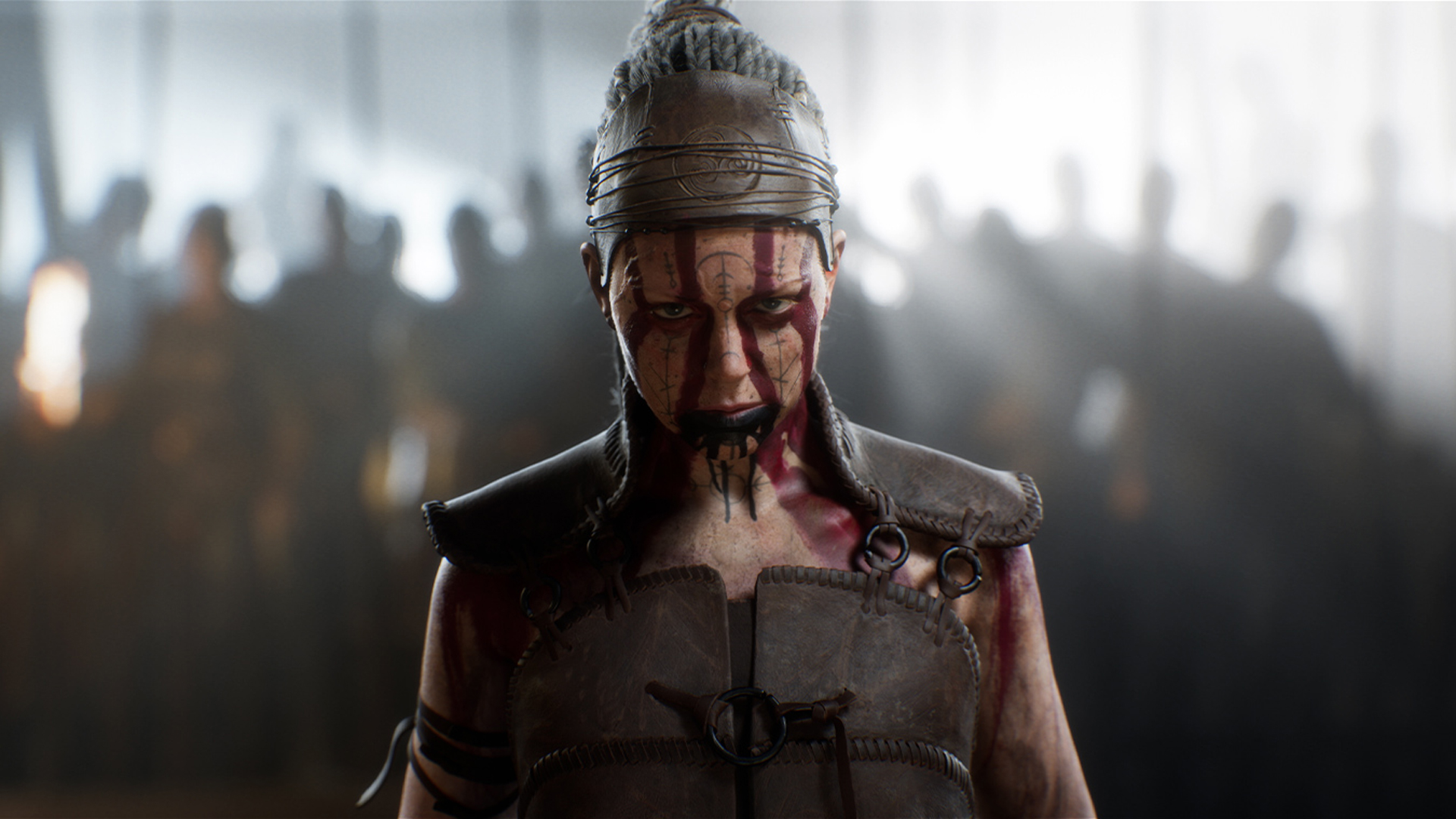
Senua's Saga: Hellblade II Enhanced Edition represents both the best and worst of modern gaming's cinematic ambitions. It's an audiovisual masterpiece wrapped around a mediocre game.
Developer – Ninja Theory
Publisher – Xbox Game Studios
Platforms – PC, Xbox Series S|X, PS5 (Reviewed)
Review copy given by publisher
Check out Tyler’s review of the original Xbox release: https://www.rectifygaming.com/review-senuas-saga-hellblade-ii/
After spending considerable time with Senua’s Saga: Hellblade II Enhanced Edition on the PS5, I find myself in a peculiar position. Here’s a game that represents some of the highest achievements in visual and audio design this generation has produced, yet it stumbles when it comes to the fundamental act of playing it. The Enhanced Edition brings welcome improvements, particularly the game changing 60fps Performance Mode, but these upgrades can’t entirely mask the underlying issues that prevent this sequel from reaching the heights of its predecessor.
Picking up where the 2017 original left off, Senua’s Saga continues the story of our warrior as she ventures into Viking Iceland on a mission to free her enslaved people. The narrative shift from internal struggle to external conflict feels natural, though it sacrifices some of the intimate psychological horror that made the first game so memorable. Where Senua’s Sacrifice was deeply personal, almost claustrophobic in its exploration of grief and mental illness, this sequel broadens its scope to examine how trauma ripples through communities.
Melina Juergens returns as Senua and delivers another phenomenal performance. Every micro expression, every hesitation in her voice, every moment of doubt followed by steely determination feels authentic. The supporting cast holds their own too, particularly Steven Hartley’s menacing turn as The Shadow, though none quite reach the emotional depths that Juergens delivers.
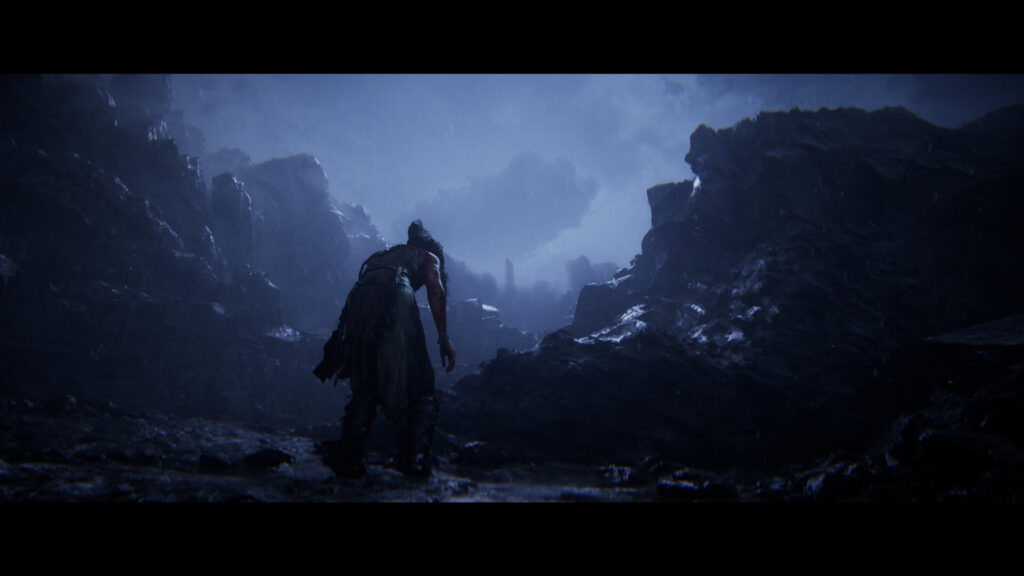
The story unfolds across roughly six to eight hours, depending on how much you explore and whether you engage with the optional content. It’s a more linear experience than you might expect, with the narrative pulling you forward through Iceland’s desolate shores and mountain passes. The pacing can feel uneven at times, with moments of profound emotional weight followed by stretches where the game seems to be padding its runtime with yet another environmental puzzle or combat encounter.
What works best is Ninja Theory’s continued commitment to depicting psychosis with sensitivity and nuance. The voices in Senua’s head, the Furies, return as both guides and tormentors. Their constant whispering creates an unsettling soundscape that keeps you on edge throughout. The game treats these manifestations not as mere gameplay mechanics but as integral parts of Senua’s experience of the world.
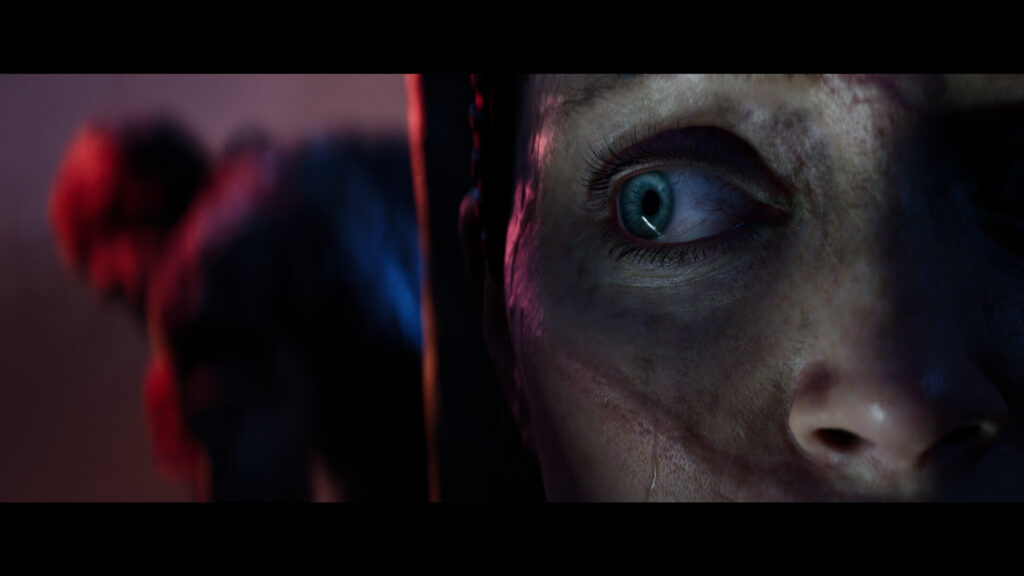
Here’s where things get complicated. Calling what Hellblade II offers “gameplay” feels a bit too generous. The experience consists primarily of three elements: walking through stunningly rendered environments, solving perspective based puzzles, and engaging in one on one combat encounters. None of these mechanics have evolved significantly from the first game, and in some ways, they feel even more simplified.
Combat remains weighty and visceral, with every sword strike carrying heft. The parry windows are tight, requiring careful observation of enemy animations. When it clicks, there’s something satisfying about the pace of battles. After the first few encounters, you’ve essentially seen everything the combat system has to offer. There’s no progression system, no new moves to unlock, no variety in enemy types beyond cosmetic differences. Each fight plays out nearly identically to the last, turning what should be climactic moments into repetitive chores.
The newly introduced Dark Rot mode attempts to add challenge by implementing permadeath if the corruption reaches Senua’s head after too many failures. It’s an interesting callback to the first game’s psychological threats, but in practice, the base combat is so basic that most players won’t see the Dark Rot change much at all.
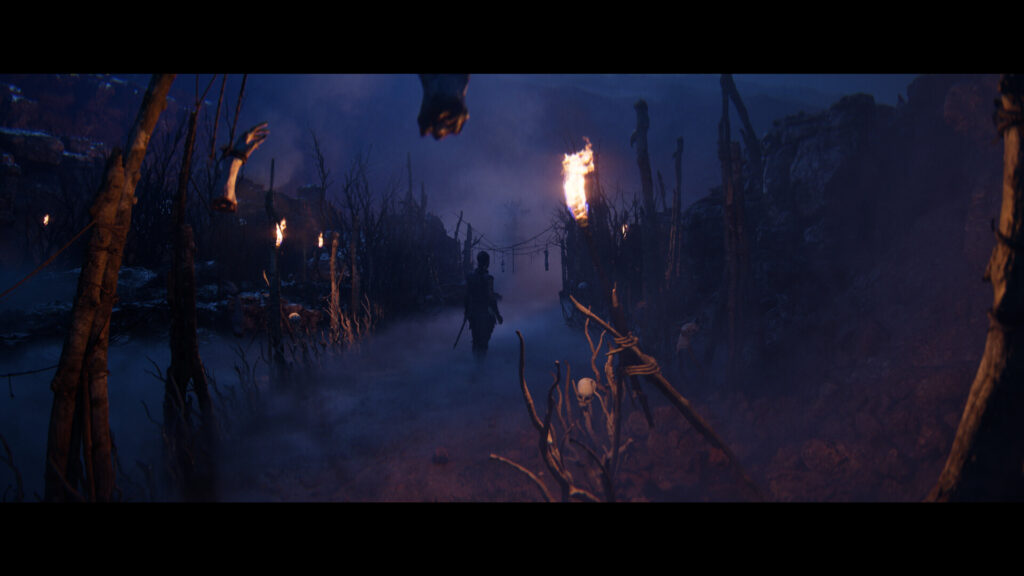
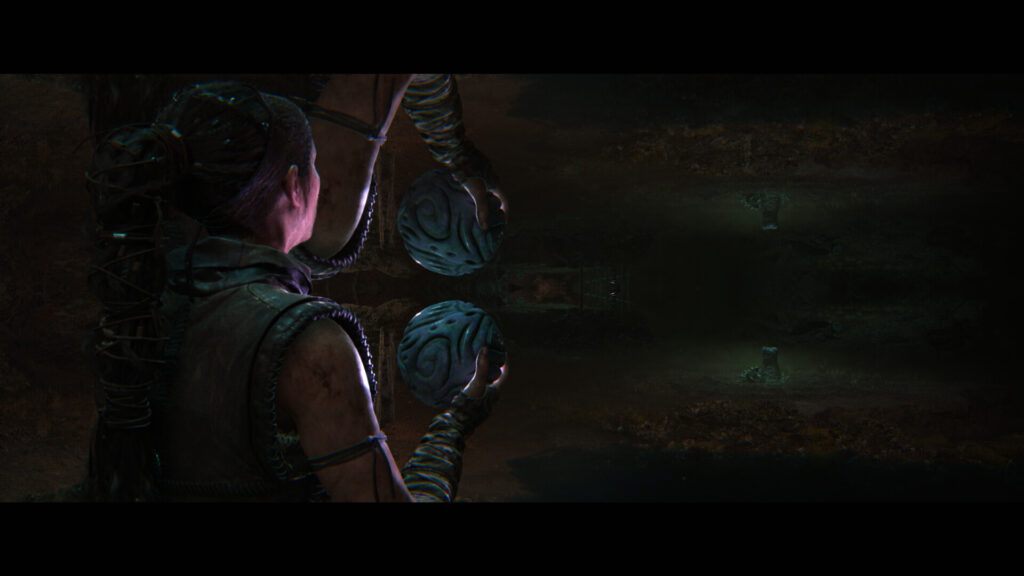
Environmental puzzles fare even worse. These primarily involve lining up symbols in the environment to match patterns on doors or finding specific viewing angles to reveal hidden paths. They feel disconnected from the narrative and world, existing solely to gate progress rather than enhance the experience. After the twentieth time you’re asked to find floating runes in the environment, any sense of discovery has long since evaporated.
The Enhanced Edition’s 60fps Performance Mode does make a noticeable difference, particularly during combat sequences. Actions feel more responsive, and the increased fluidity makes parrying and dodging more intuitive. It’s not enough to transform the combat into something truly engaging, but it’s an improvement over the original 30fps lock.
On a technical level, Senua’s Saga is nothing short of remarkable on PS5. Load times take a quick 6-7 seconds thanks to the PS5’s SSD, with seamless transitions between gameplay and cutscenes that maintain the cinematic flow Ninja Theory clearly intended. The game takes full advantage of the DualSense controller’s haptic feedback, with the Furies’ whispers creating subtle vibrations that shift from left to right.
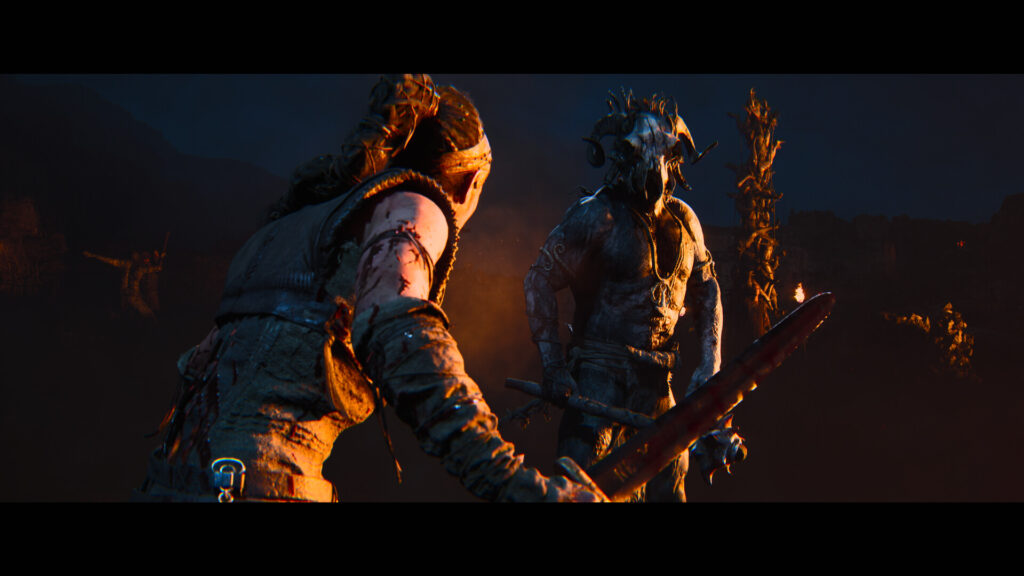
Simply put, Hellblade II is one of the most visually stunning games ever created. Built on Unreal Engine 5, every frame could be a desktop wallpaper. The character models are frighteningly lifelike, with facial animations that cross deep into uncanny valley territory, in the best possible way. Environmental detail is extraordinary, from the way light filters through morning mist to the individual pebbles on an abandoned beach.
This is a game that begs to be photographed, where every vista feels composed with artistic intent. It’s the kind of visual fidelity that makes you stop and stare, even when you should be pressing forward.
If the visuals set a new benchmark, the audio design operates on an entirely different level. This is a game that demands good headphones or a quality surround sound setup. The 3D audio implementation on PS5 is exceptional, creating a truly immersive soundscape where every whisper, every environmental sound, every clash of steel feels precisely positioned.
Senua’s Saga: Hellblade II Enhanced Edition is a difficult game to score. As a piece of interactive art, a showcase for what modern hardware can achieve, and an empathetic exploration of mental health, it succeeds brilliantly. As a video game, with engaging mechanics and satisfying gameplay loops, it falls frustratingly short.
For those who valued the original Hellblade for its artistic ambitions and emotional storytelling, this sequel delivers more of the same. For those hoping Ninja Theory would expand on the gameplay foundation to create something more mechanically satisfying, disappointment awaits. It’s a game best played in one or two sittings, approached more as an interactive film than a traditional video game.
Senua’s Saga: Hellblade II Enhanced Edition represents both the best and worst of modern gaming’s cinematic ambitions. It’s an audiovisual masterpiece wrapped around a mediocre game.