
Summary
Alien: Rogue Incursion Evolved Edition is a technically competent adaptation that captures the Alien atmosphere but suffers from repetitive pacing and the limitations of its VR origins. It’s worth experiencing for franchise fans, but unlikely to convert newcomers to the series.
Developer – Survios
Publisher – Survios
Platforms – PC, Xbox Series S|X, PS5 (Reviewed)
Review copy given by publisher
When Alien: Rogue Incursion first launched as a VR exclusive last December, it represented something many fans had been craving: a proper first-person Alien experience that didn’t rely solely on hide-and-seek mechanics. Now, with the Evolved Edition bringing the game to traditional platforms, we finally get to see how well this xenomorph hunt translates without the immersion of virtual reality. The answer, unfortunately, is a mixed bag that showcases both the potential and limitations of adapting VR experiences for flat screens.
But what does the Evolved Edition bring over the original? Sadly, it doesn’t include any additional story content, new weapons, extra missions, or gameplay modes beyond what was in the original. What’s new is enhanced visuals, improved AI, and DualSense controller feedback.
The narrative puts you in the shoes of Zula Hendricks, a character lifted from the expanded universe comics who serves as a compelling protagonist with clear motivations. Set between the original Alien and Aliens films, the story follows Zula and her synthetic companion Davis 01 as they investigate a distress signal on the remote planet Purdan, only to discover a Weyland-Yutani facility overrun by xenomorphs.
What works here is the authenticity to the source material. Writer Alex White, who wrote several Alien novels, clearly understands the universe and its tone. The corporate conspiracy elements feel sinister, and Zula’s backstory as a rogue Colonial Marine hellbent on exposing Weyland-Yutani’s experiments gives the narrative some real stakes. Davis 01 also proves to be a genuine companion whose synthetic nature adds an interesting dynamic.
However, it’s confusing that the game is labeled “Part One”, signaling that it’s something of a larger saga. While the narrative stands reasonably well on its own, there’s an inevitable sense of incompleteness that leaves plot threads hanging. The pacing also becomes increasingly rushed in the latter half.
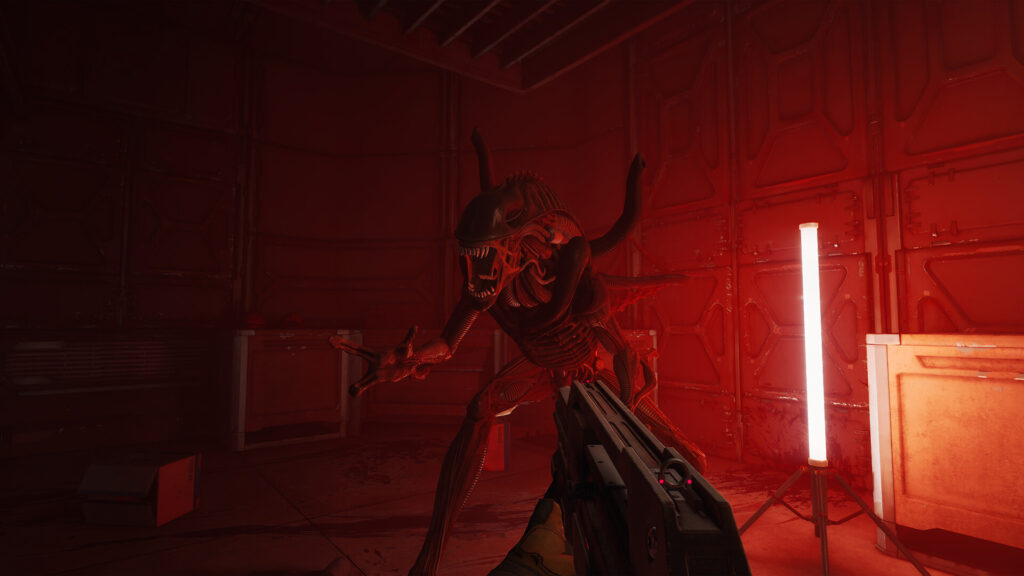
The core gameplay loop revolves around exploration, puzzle solving, resource management, and frequent xenomorph encounters. You navigate the corridors of the Gemini Exoplanet Solutions facility, scavenging for ammunition and health supplies while using a motion tracker to detect approaching threats. The shooting mechanics feel solid and weighty, with a decent variety of weapons that pack appropriate punch against the alien menace.
Your main weapon will be the M41A Pulse Rifle, an early prototype version of the iconic Colonial Marine weapon. You’ll then get your hands on a close quarters combat shotgun that is effective against xenomorphs at point blank range. And when both main weapons fail, you have a six-shooter revolver. Unfortunately, there’s no traditional weapon upgrade system, as you can’t modify your weapons, add attachments, or improve their stats.
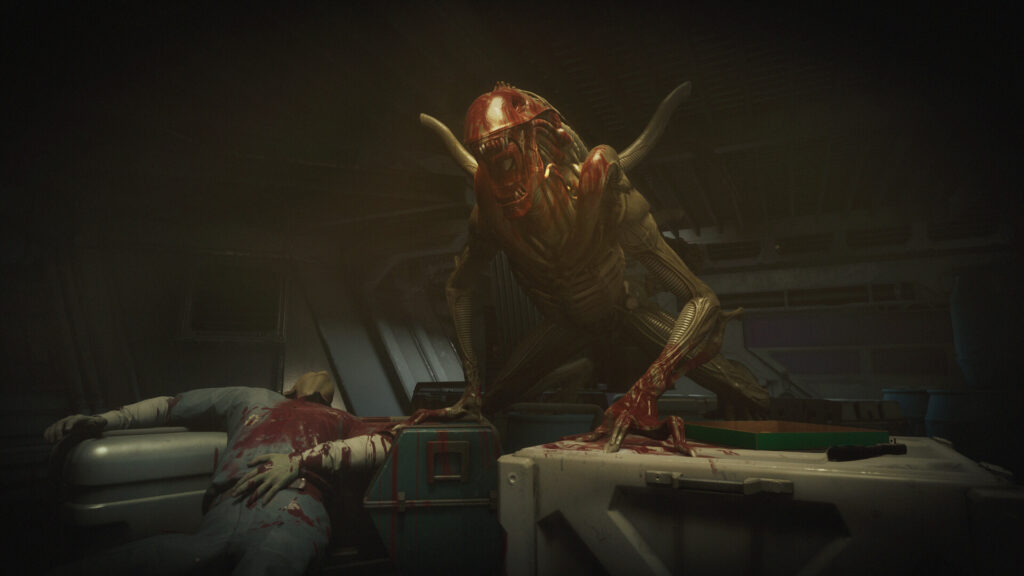
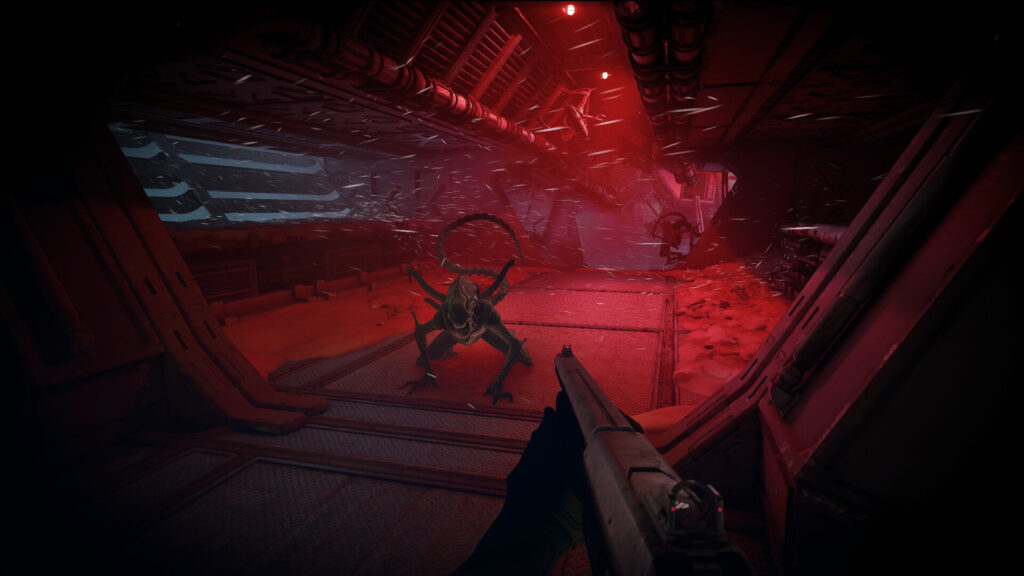
Honestly, the early hours show real promise. Those first few xenomorph encounters are tense affairs, with the creatures displaying impressive AI behavior as they stalk through vents, climb walls, and coordinate attacks. The panic room save system creates natural tension points, and the environmental storytelling does excellent work building atmosphere without relying on dialogue dumps.
Things start to fall apart when Rogue Incursion throws xenomorphs at you with predictable regularity. What begins as heart-pounding encounters gradually becomes routine pest control, with creatures spawning every few minutes like clockwork. The developers have claimed the Evolved Edition features improved AI over the VR version, but the fundamental problem remains: quantity over quality.
The game is a relatively short experience that takes about 8-9 hours to complete if you focus on the main story, though thorough explorers can stretch this to around 10 hours. At $29.99, this feels like a reasonably sized piece of survival horror. Unfortunately, the game offers no New Game Plus mode whatsoever. Once you complete the story, there’s no way to replay with carried-over equipment, upgrades, or unlocked content.
The transition from VR to traditional controls works better than you would expect, though some cracks show. Environmental interaction feels less intuitive without hand tracking, and certain puzzle elements that would feel natural in VR now seem awkward with controller inputs.
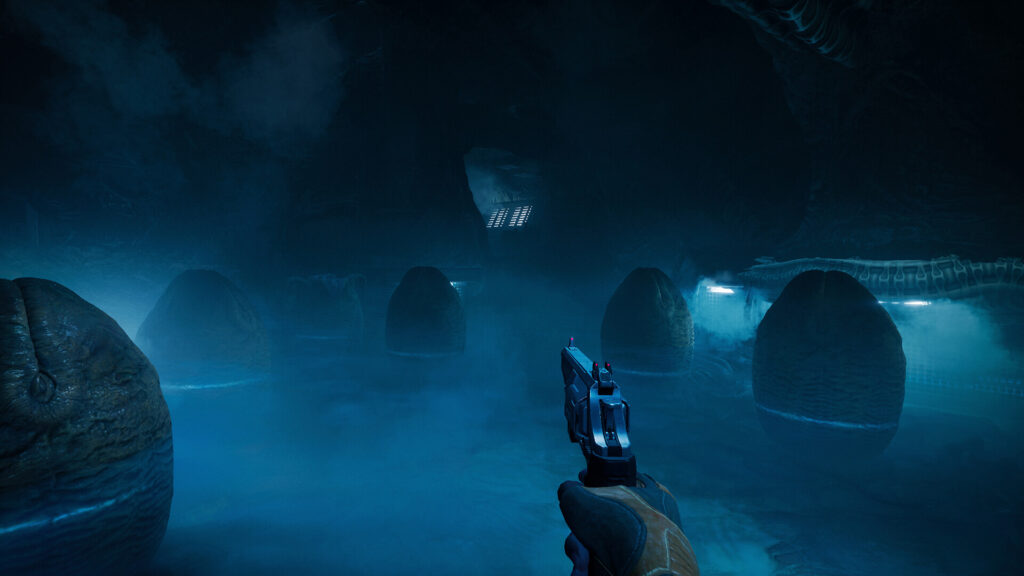
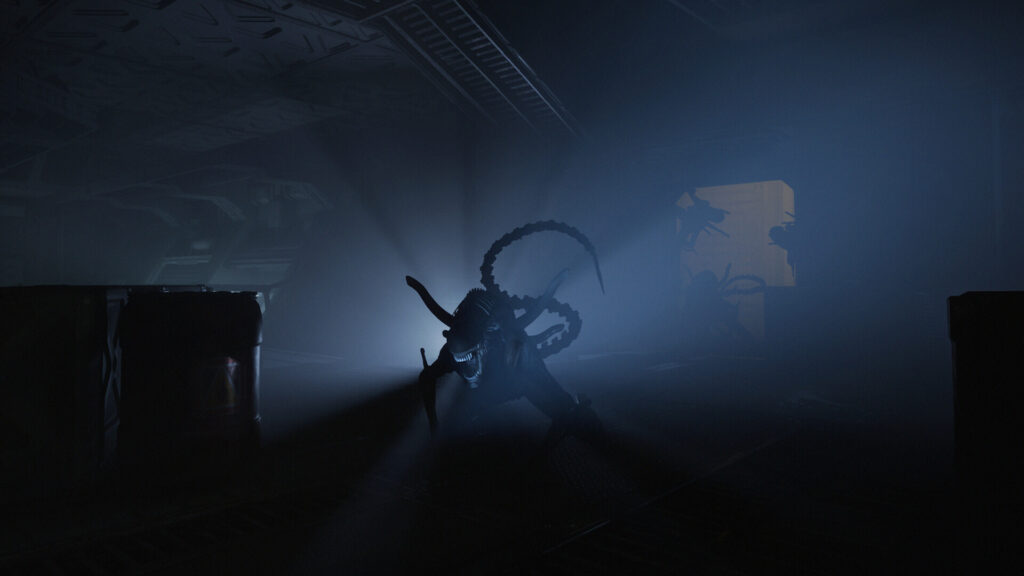
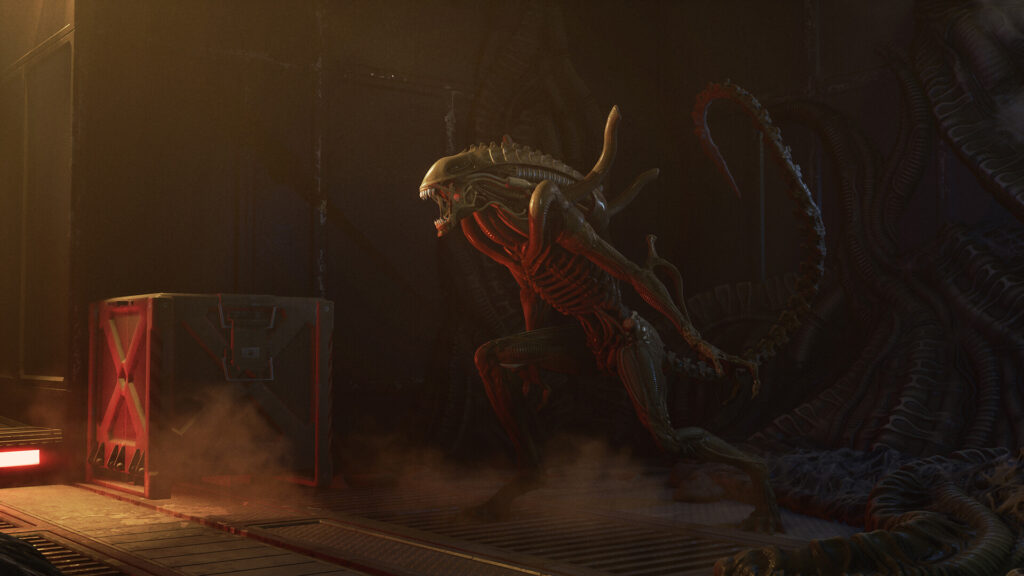
Running on a base PlayStation 5, the Evolved Edition showcases some impressive visual upgrades. The game maintains a consistent 60 fps throughout, and the enhanced lighting creates an atmosphere that captures the industrial horror aesthetic of the films. The xenomorph models look particularly impressive, with detailed biomechanical designs that feel faithful to H.R. Giger’s original vision.
Texture quality is noticeably improved from the VR version, and the environmental detail work is consistently solid throughout the facility. Load times are minimal, and the game makes good use of the PS5’s SSD for seamless area transitions. There are occasional frame rate dips during particularly intense action sequences, and certain interactive elements can feel glitchy or unresponsive.
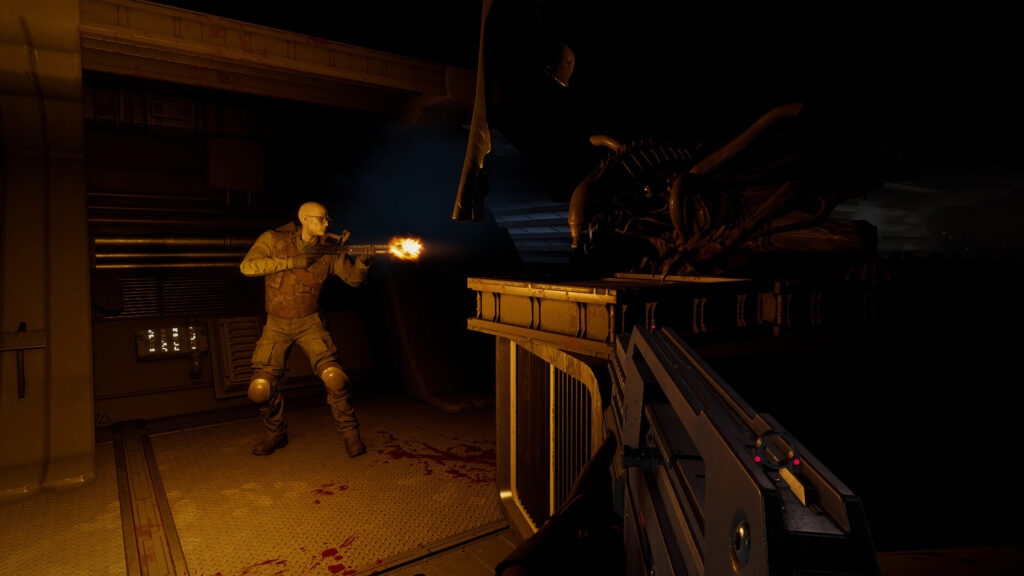
The art direction succeeds in creating an authentic Alien environment. The facilities strike the right balance between corporate efficiency and organic corruption as the xenomorph infestation takes hold. Steam vents from pipes and flickering emergency lights create an atmosphere of barely-contained chaos. The xenomorphs themselves are the visual highlight. Their animations feel threatening, even if their frequent appearances somewhat diminish their impact.
The audio design deserves praise for maintaining the franchise’s signature soundscape. The motion tracker’s iconic beeping creates tension, while hissing pipes and distant machinery keep you on edge. Voice acting is solid throughout, with Zula and Davis’s performances carrying the weight effectively. The xenomorphs’ audio presence is terrifying when it’s not overdone. Their distinctive hissing, chittering, and movement sounds create genuine dread in the early encounters.
Alien: Rogue Incursion Evolved Edition is a technically competent adaptation that captures the Alien atmosphere but suffers from repetitive pacing and the limitations of its VR origins. It’s worth experiencing for franchise fans, but unlikely to convert newcomers to the series.