Summary
If Patapon was a drumbeat that echoed through handheld history, Ratatán is the full symphony that follows, hitting every note it aims for with mesmerizing animation, brilliant music, and endlessly inventive rhythm combat. It’s a triumphant return for a long-silent genre, a rhythm you won’t just play but feel in your chest long after you’ve put the controller down.
Developer – TVT Co. Ltd., Ratata Arts
Publisher – Game Source Entertainment
Platforms – Nintendo Switch, PS4/5, Xbox One, Xbox Series X|S ,PC (Reviewed)
Review copy given by Publisher
NOTE:
The following game is being reviewed in an Early Access State, the game may change after the release of this review, this review reflects the game at the time of publishing. Rectify Gaming has been asked to hold it’s review score by the Publisher till the game is out of Early Access.

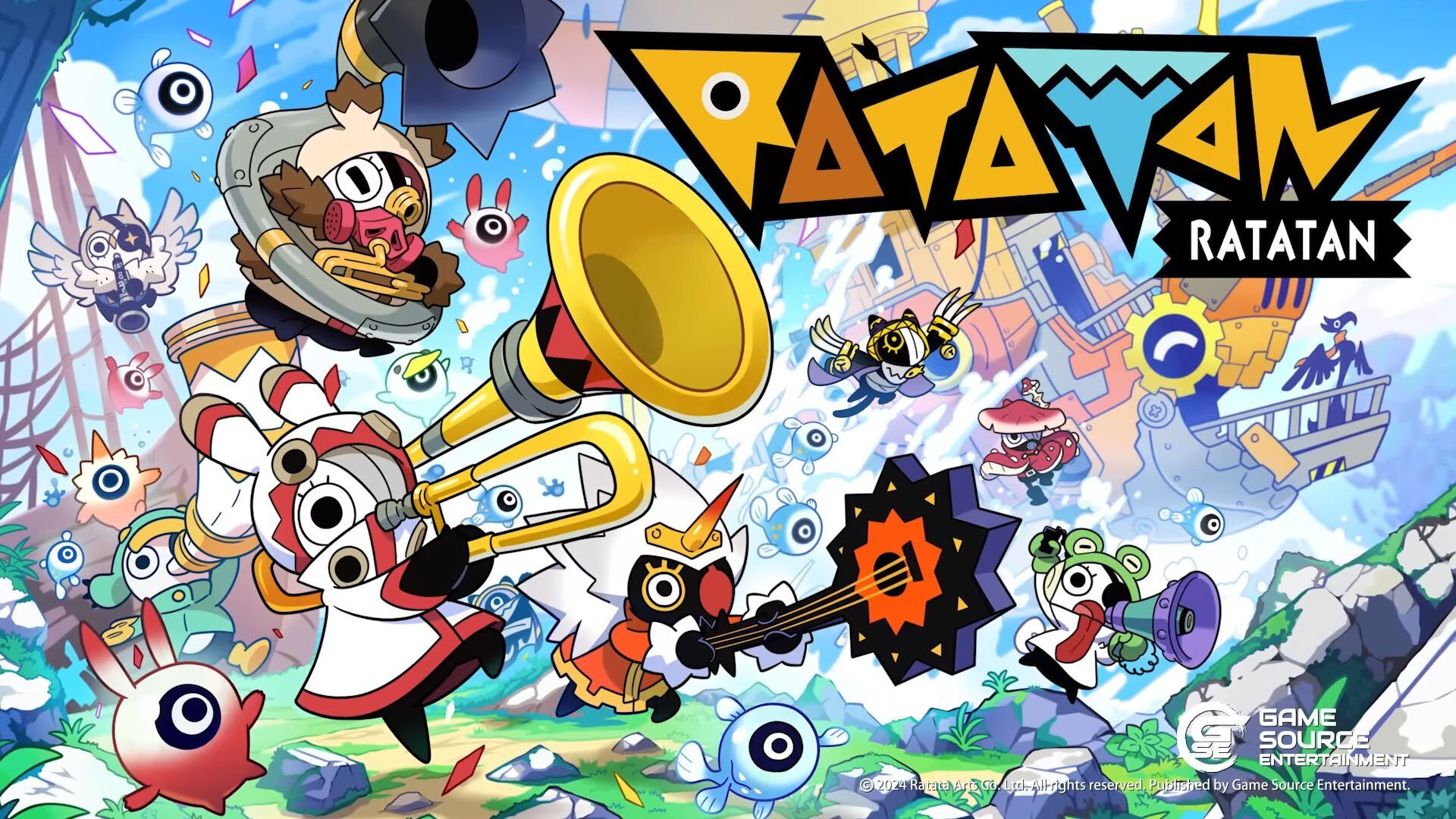
There’s something magical about watching hundreds of tiny, bouncing warriors move in perfect unison to the beat of a drum. It’s that same hypnotic rhythm that Patapon delivered back in the PSP era, where timing was everything and rhythm dictated survival. Now, over a decade later, the original creators return with Ratatán, a spiritual successor that doesn’t just live up to its legacy but expands it, deepens it, and reimagines it for a new generation. This isn’t just a nostalgic revival; it’s a triumphant reinvention that marries rhythm, roguelike tension, and side-scrolling action into something endlessly replayable and musically addictive.
The world of Ratatán begins in Rataport, a colorful island bursting with personality, where its quirky animal-like inhabitants, the Ratatans, live in harmony. They’re expressive, weirdly adorable, and each one looks like it popped straight out of a living storybook. But their cheerful home hides a greater longing: the dream of reaching “The Everafter,” a mystical realm said to house the Goddess who can grant ultimate peace. It’s a whimsical setup with a surprising amount of heart, and despite the cartoonish tone, Ratatán doesn’t shy away from exploring themes of persistence, loss, and the eternal drive to move forward, all wrapped in its playful rhythm-based structure.
The opening hours feel like a warm welcome back to that familiar beat-driven cadence fans of Patapon know so well. Every action, from attacking to defending to advancing, hinges on hitting commands in rhythm with the background music. But where Patapon asked you to memorize and input drum patterns, Ratatán evolves this with a more dynamic system that blends rhythm timing with strategic freedom. You control not just one squad of followers but multiple units of Cobuns, your loyal companions who fight, build, and march to your command. Every beat feels like an order in a musical warzone, and success means syncing your soul to the soundtrack.
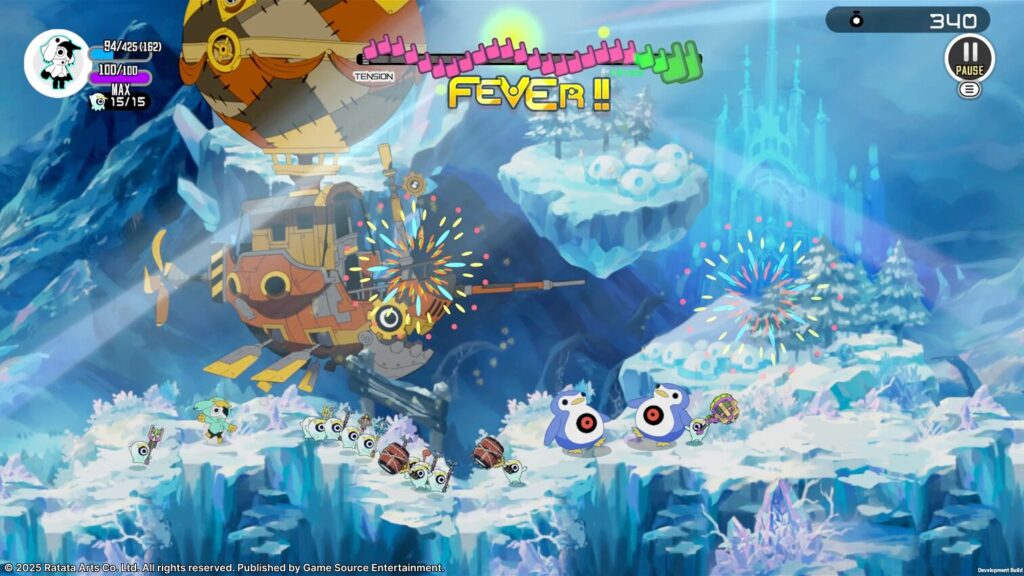
The first major surprise is how reactive the battlefield feels. Instead of strictly linear progression, Ratatán incorporates roguelike elements that make each run unique. One mission might throw you into a chaotic brawl against swarms of mechanized beasts, while another pits you against an environmental hazard that forces you to adapt your timing and formation. Lose, and you don’t just restart; the world subtly shifts. The Goddess’ realm remains distant, but you come back stronger, smarter, and more in sync. It’s a clever way of merging rhythm precision with the unpredictability of roguelikes, a combination that shouldn’t work as well as it does, yet somehow feels natural once you’re in the groove.
And what a groove it is. Ratatán’s soundtrack deserves its own standing ovation. Every track pulses with energy, layering tribal percussion with vibrant synths and experimental beats. Each biome has its own musical flavor: the jungles hum with organic drums, while mechanical areas twist rhythm into clanks and echoes. It’s not just background music, it’s the lifeblood of the gameplay, directly influencing tempo and intensity. Missing a beat isn’t just a mistake; it’s a narrative break in the world’s heartbeat. When you’re perfectly synced, it feels transcendent, like you and the Ratatans are channeling a single rhythm that drives the entire island forward.
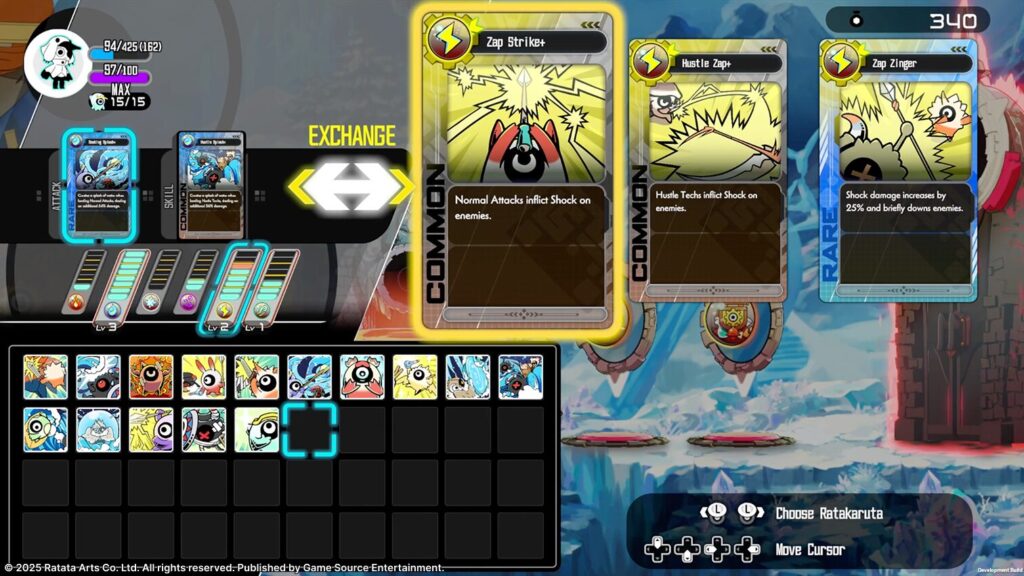
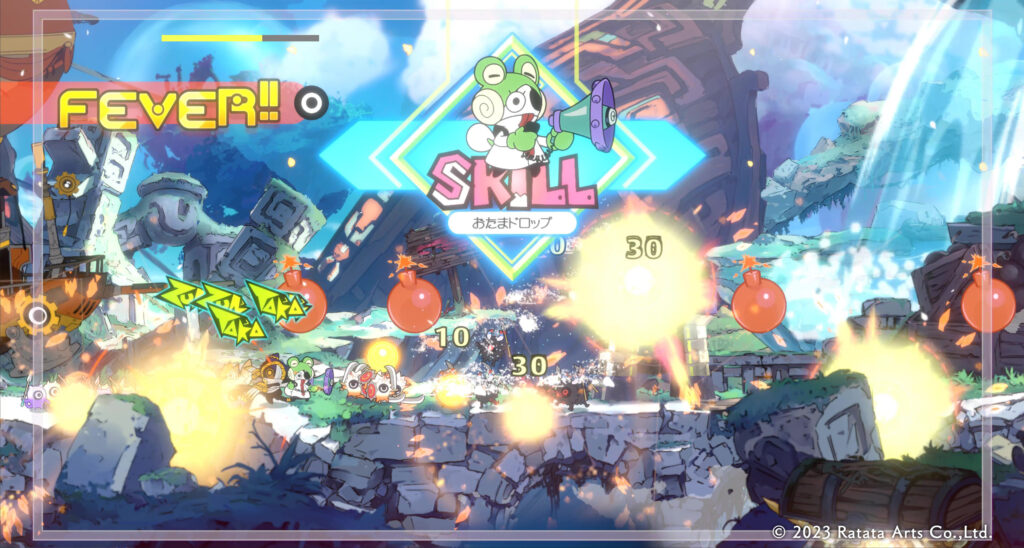
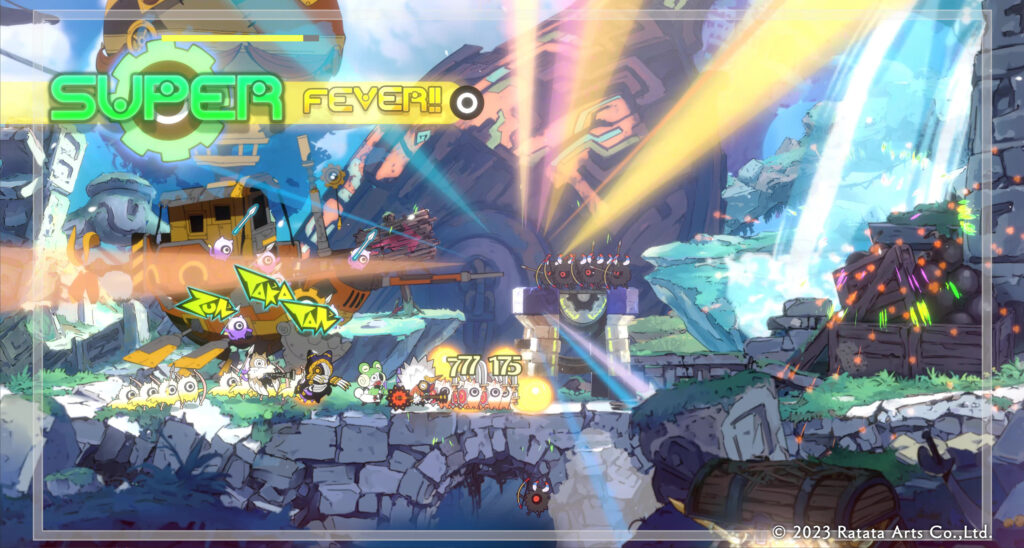
Combat blends spectacle and strategy beautifully. You can command up to 100 units in massive, chaotic melees where clarity somehow never gives way to confusion. The crisp 2D animation makes every attack burst with personality. Tiny Ratatans with spears leap and twirl, drummers pound their instruments to power up allies, and spellcasters perform rhythmic rituals that burst into explosions of color. It’s genuinely impressive how well the developers have captured the chaos without losing legibility. Even in four-player co-op, where up to 400 units fill the screen, the performance holds steady and the rhythm remains sharp. When everything’s flowing together, Ratatán feels less like a strategy game and more like conducting a living orchestra.
Where Patapon felt like a focused rhythm experiment, Ratatán feels like an open invitation to play, fail, and remix. Between battles, Rataport serves as your home hub, a place where you rebuild structures, recruit new Cobuns, and unlock different Ratatan heroes, each with their own abilities and beats. Some excel in heavy melee combat, others boost defense or generate musical buffs that warp the soundtrack in real-time. It’s these moments between fights that really showcase how alive this world feels. Characters chatter in a made-up language, their animations bouncing to the beat of the ambient music, and you can practically feel the warmth of the island community through its visuals and sound design.
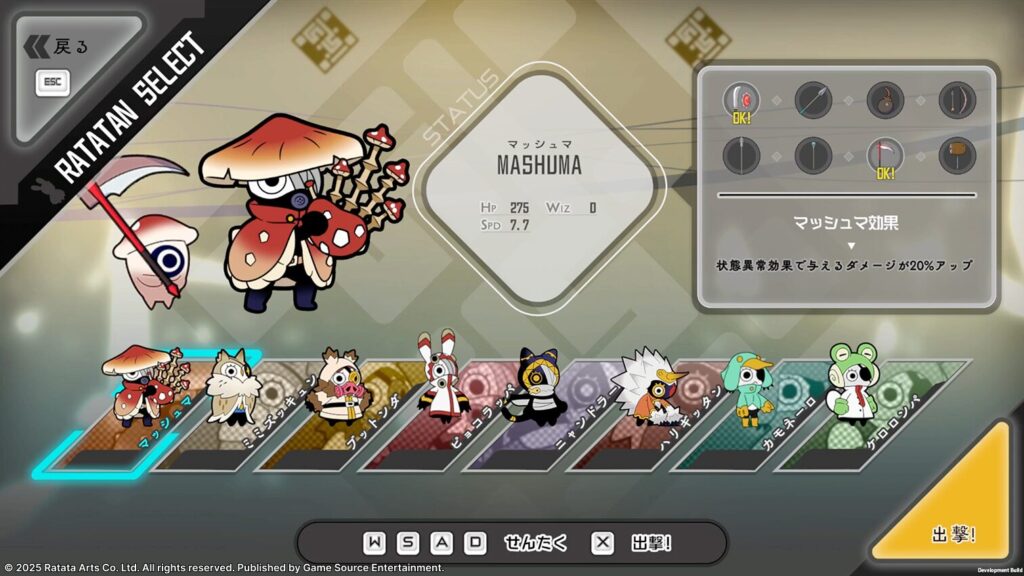
The art direction is another standout. Every frame of Ratatán is dripping with hand-drawn style. The developers have leaned heavily into 2D animation, giving every character and movement a distinctive flair. Attacks stretch and squash with expressive weight, backgrounds shimmer with parallax depth, and even idle animations feel packed with personality. It’s a reminder that hand-crafted 2D isn’t dead; when done right, it can outshine the glossiest 3D visuals. The use of lighting and particle effects over traditional animation techniques gives the game a unique hybrid look, one that feels both nostalgic and fresh.
The roguelike structure, while engaging, does introduce some divisive pacing. Failing deep into a long run can sting, especially when you’re halfway through a complex rhythmic gauntlet only to mistime one sequence and lose your entire squad. Thankfully, Ratatán softens the blow with progression that carries over, unlocking new Ratatan classes, relics, and musical instruments that open up alternative playstyles. Once you grasp the risk-reward rhythm of the game, every death feels like another verse in a larger song rather than a restart.
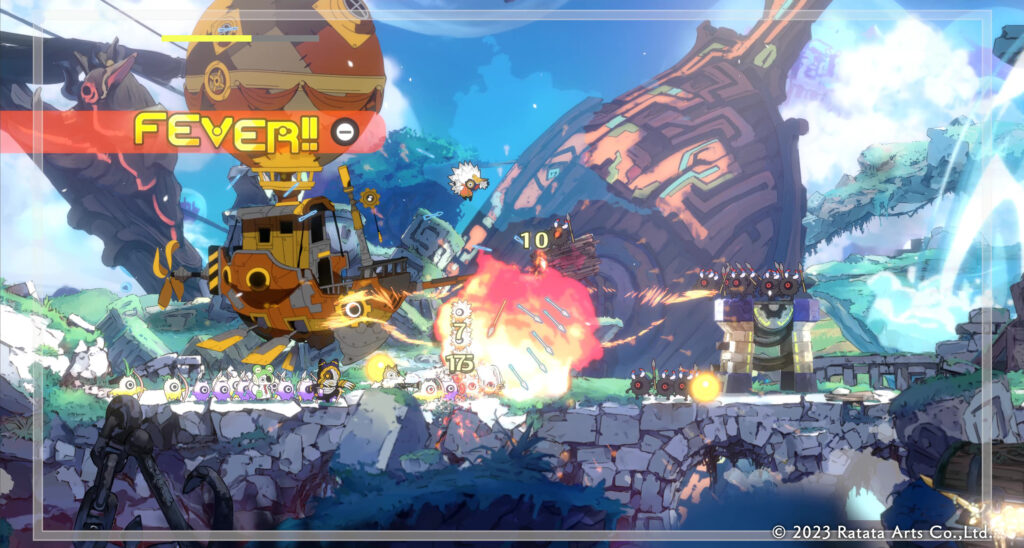
Co-op mode is where Ratatán really flexes its muscles. Up to four players can sync up online, coordinating their commands and formations to pull off massive multi-unit combos. The screen can turn into pure visual madness, but when everyone’s locked into the same tempo, the sense of shared achievement is unmatched. There’s an almost trance-like thrill in watching your combined armies move as one, drums thundering across the field as enemies crumble under the weight of perfect timing. It’s chaotic, hilarious, and deeply satisfying, especially when your squad’s rhythm clashes with another’s and you both scramble to regain tempo.
Narratively, Ratatán surprises with moments of poignancy. The journey to The Everafter unfolds like a rhythmic fairy tale, where every loss and resurrection becomes part of a cyclical legend. The Goddess isn’t just a distant figure; she embodies the beat itself, the rhythm that connects all Ratatans. There’s even a late-game revelation that reframes your endless runs as echoes of a song that never truly ends. It’s a beautiful metaphor for both the game’s roguelike loop and the persistence of its characters’ dreams. For all its playful energy, Ratatán has something profound to say about purpose and harmony.
Still, not every note lands perfectly. Some boss fights rely too heavily on memorization, demanding near-flawless timing without much room for improvisation. A few later levels drag slightly, and some online sessions can desync when connection quality dips. But these moments are rare interruptions in what’s otherwise a masterfully tuned experience. Even with its imperfections, Ratatán keeps the beat alive with relentless charm and creativity.
Comparing it directly to Patapon feels inevitable, but Ratatán earns its own identity. Where Patapon was minimalistic and mysterious, Ratatán is vibrant, layered, and communal. It’s louder, faster, and more experimental, but never loses sight of the emotional core that made its predecessor special. It captures that same feeling of commanding an army through music but expands it into a world that feels limitless.
By the time the credits roll and the final song swells into a triumphant, tear-inducing chorus, it’s hard not to smile. Ratatán is both a love letter to rhythm and a declaration of creative evolution. It respects its roots while daring to push far beyond them, blending musical mastery, roguelike unpredictability, and heartfelt storytelling into a single, unforgettable melody.
If Patapon was a drumbeat that echoed through handheld history, Ratatán is the full symphony that follows, hitting every note it aims for with mesmerizing animation, brilliant music, and endlessly inventive rhythm combat. It’s a triumphant return for a long-silent genre, a rhythm you won’t just play but feel in your chest long after you’ve put the controller down.