
Summary
Tormented Souls 2 is a faithful sequel that broadens scope while respecting the source material. Tank controls stay polarizing because you're getting retro survival horror complete with its flaws. If you bounced off the first game's clunky controls and archaic design, this won't convert you. But it is a solid followup through and through.
Developer – Dual Effect
Publisher – PQube
Platforms – PC, Xbox Series S|X, PS5 (Reviewed)
Review copy given by publisher
Four years ago, Dual Effect surprised horror fans with Tormented Souls, a love letter to classic survival horror that actually understood the assignment. It wasn’t perfect, and it certainly wasn’t polished like big-budget releases, but it captured something mainstream franchises had largely abandoned. Get ready for another round of supernatural torment, because Dual Effect is back with Tormented Souls 2, a sequel that offers exactly what fans wanted while building off the foundation in meaningful ways.
Caroline Walker still can’t catch a break. Set six months after escaping Wildberger Hospital, she takes her younger sister Anna to a remote clinic in Villa Hess, Chile, hoping to cure the disturbing visions plaguing Anna since the first game’s events. Anna’s condition has worsened: violent nightmares, drawings that manifest into reality, coughing blood, blackened eyes.
Of course everything goes sideways. The nuns running the clinic reveal themselves as a twisted cult claiming ownership over both sisters. They subdue Caroline, and she wakes up alone in an infirmary, stripped to her underwear and covered in needle punctures. Oh, and Anna is gone.
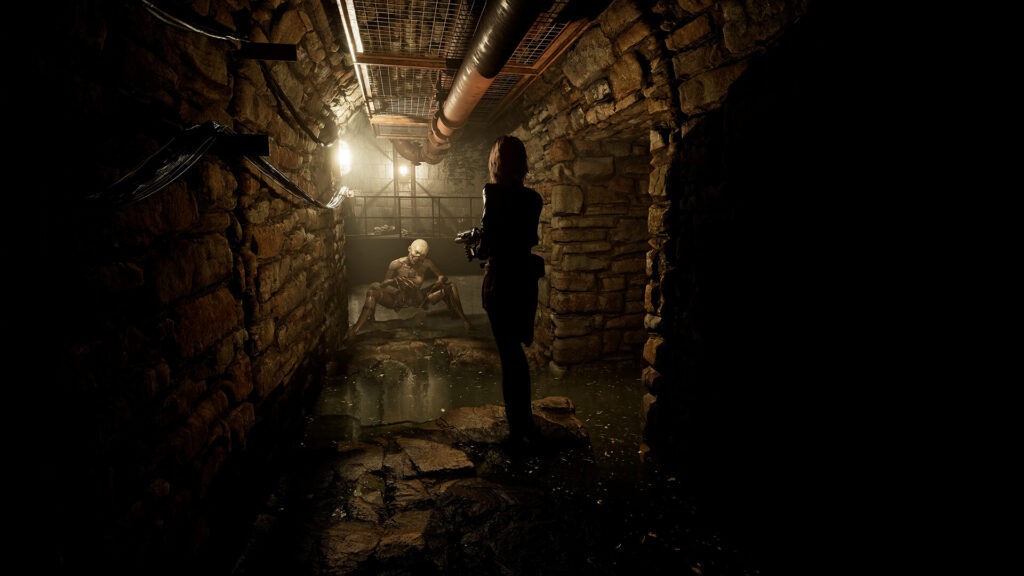
Where 2021 sent you investigating strangers based on a mysterious photograph, this grounds the horror in family bonds. Caroline feels more confident, evidenced in how she calmly narrates progress at save points. The writing leans into campy B-movie territory while drip-feeding revelations through notes and environmental details. But the overall story plays it too safe with an overly familiar and overtold cult angle.
Veterans will recognize the gameplay DNA immediately. Static cameras make a full return forcing you to navigate through blind corners. Controls offer both tank-style movement and modern analog. I absolutely despise tank controls. They often lead to cheap deaths when you bump into enemies or get lost in darkness after camera transitions.
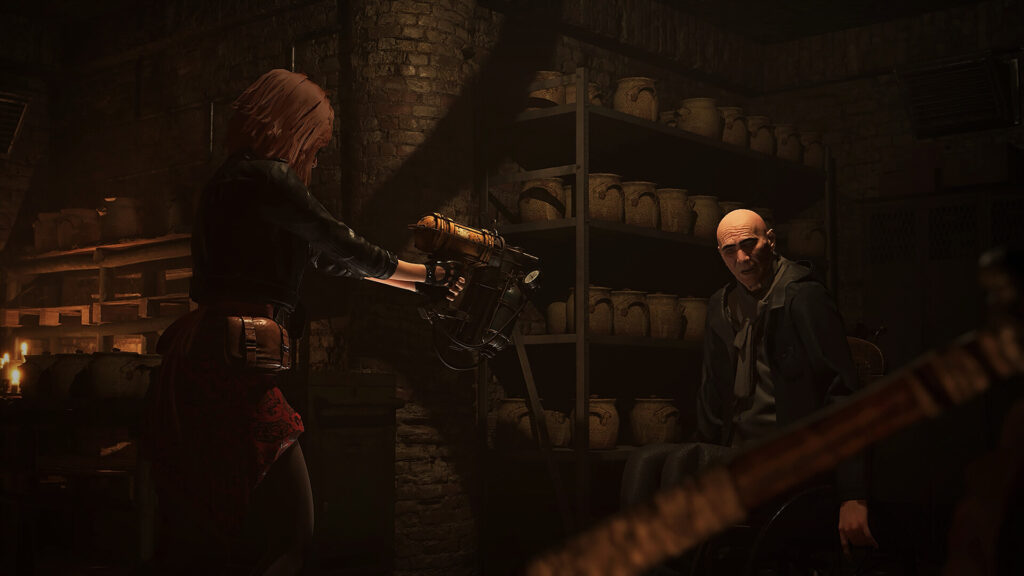
Your arsenal starts with the returning nail gun and expands to include a shotgun, crowbar for melee, and yes, chainsaws. Unfortunately, the weapon selection feels very similar to the first entry. Weapon upgrades are available if you explore thoroughly, adding some progression to combat effectiveness.
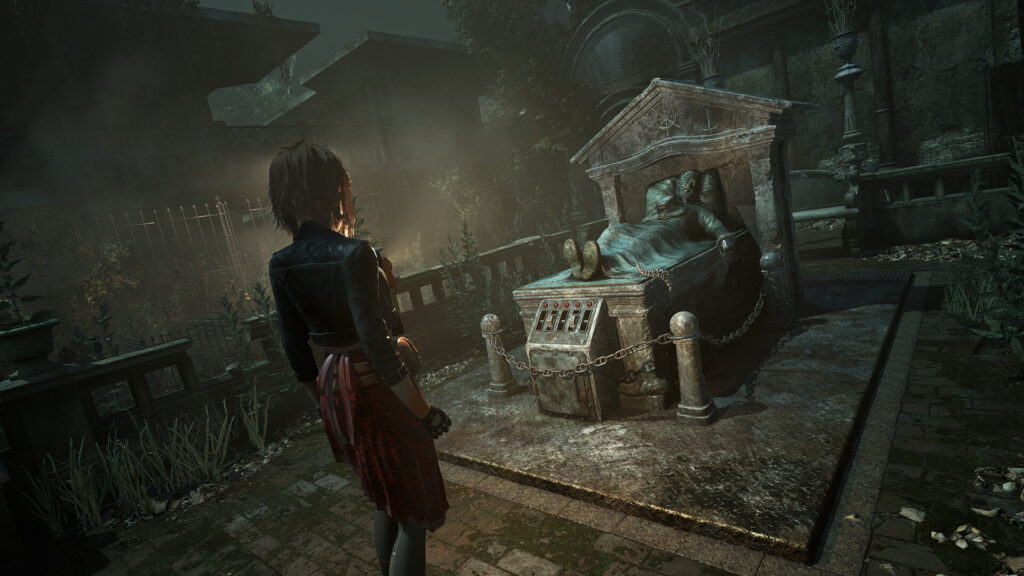
Combat is where Tormented Souls 2 struggles most. The mechanics get a pass in Resident Evil classics because enemies move slowly and you rarely face more than two at once. Here, monsters close the distance aggressively and swarm you in groups. The restrictive cameras mean threats approach from angles you can’t see. Worse, the lighter mechanic worsens these problems. Dark areas require your lighter for visibility, but switching to a weapon means putting it away. You’re constantly juggling survival against actually seeing threats, and lingering in complete darkness kills you outright. It’s awkward and often unfair.
If you’re smart, you’ll quickly learn to just sprint past most encounters rather than engage. This works fine until you hit rooms where escape isn’t an option. Difficulty settings help mitigate issues, with the easiest mode weakening enemies while adding auto-save on room transitions and minor auto-healing at death’s door. On Normal, limited save tapes create that commitment anxiety, but the punishment feels excessive when deaths result from camera angles rather than player mistakes.
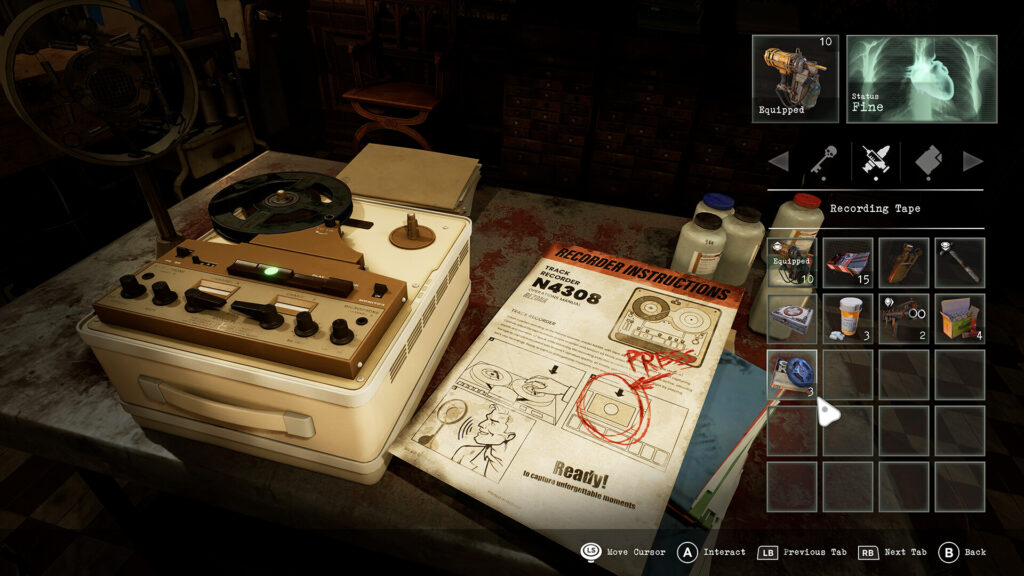
Puzzles are where Tormented Souls 2 truly shines. These aren’t simple key-for-door affairs. You’ll decipher switch configurations from cryptic diagrams, solve chess-like mechanical locks, manipulate environmental details through careful observation, and work through brain-teasers. The game respects your intelligence, offering minimal guidance and progression demands attention to dialogue and map study.
But this also means some puzzles cross the line into overly cryptic territory. You’ll occasionally spend extended periods wandering Villa Hess searching for an obscure item or connection you missed. The backtracking required to gather puzzle pieces scattered across multiple locations can drag pacing to a crawl.
The reality-switching mechanic returns with expanded integration. Using mirrors, Caroline can jump between the normal world and a nightmarish “Otherside” dimension. Puzzles demand manipulating both timelines, altering past events to reshape the present and reveal hidden paths. Unfortunately, environment interactivity disappoints. You can inspect certain objects but most of the world remains hands-off.
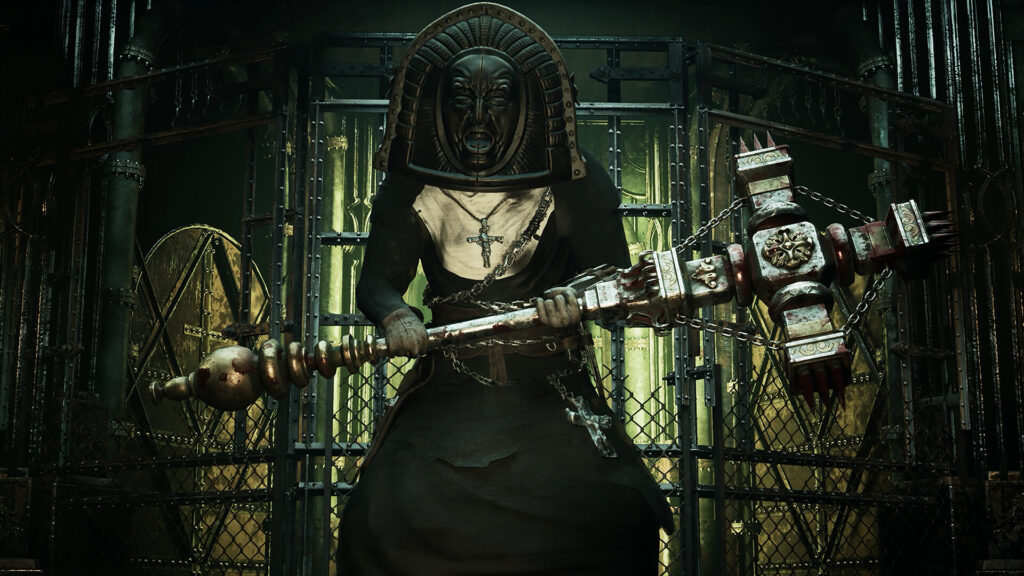
After escaping the convent, Villa Hess expands into a derelict mall, abandoned school, and other decaying structures. Each area has distinct visual identity and environmental storytelling, though some feel less developed. The map opens with a dedicated button instead of menu diving, marking locked doors and points of interest, though it doesn’t always show your current location clearly. As previously mentioned, save points require consumable tape reels, so use them wisely.
Multiple endings provide different outcomes based on late-game choices. Completing Normal unlocks the Carabinero costume and brutal Tormented difficulty. Beat Tormented for the Cheerleader outfit. Expect first playthroughs to take 15-18 hours.
Performance is rock-solid at 60fps on PS5 with swift loading times. The PS5 version also takes advantage of DualSense features. Haptic feedback adds tactile response when firing weapons or feeling your way through darkness. Adaptive triggers provide resistance appropriate to each weapon.
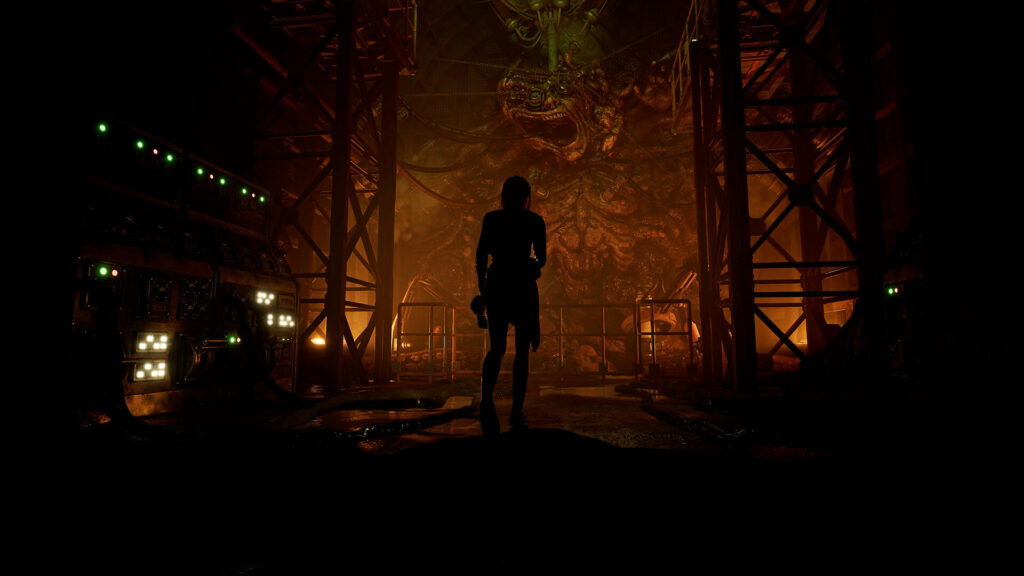
The visual upgrade from the first game is very noticeable. Character models show dramatic growth over 2021’s functional but unimpressive work. Caroline and NPCs feature detailed facial expressions thanks to motion capture. The convent, school, mall, and other locations are richly detailed with strong production values. When you venture into complete darkness, the screen distorts your vision in truly disorienting ways. It’s quite impressive for an indie game! That being said, animation quality is the weakest visual element. Character movement lacks fluidity, and some actions feel stiff.
Sound design builds tension through silence broken by environmental cues: footsteps, groaning, creaking. Enemy audio warns you before visual confirmation. The soundscape creates unease even in empty rooms. Voice acting varies. Caroline sounds confident and capable. Other performances range from serviceable to memorably rough in ways that fit the B-movie tone.
Tormented Souls 2 is a faithful sequel that broadens scope while respecting the source material. Tank controls stay polarizing because you’re getting retro survival horror complete with its flaws. If you bounced off the first game’s clunky controls and archaic design, this won’t convert you. But it is a solid sequel through and through.