Summary
While the story remains just as captivating as it was back in 2012, Lollipop Chainsaw RePOP ultimately feels like little more than a way to re-experience the original on modern hardware. Unfortunately, the remaster doesn’t offer enough substantial updates to make it feel like a truly refreshed experience. Instead, it often feels like you’re running the game through an emulator rather than playing a fully optimized version for today’s systems. The lack of significant improvements in gameplay, visuals, or technical performance makes it hard to see this as anything beyond a straightforward port.
Developer – DRAGAMI GAMES, LTD.
Publisher – DRAGAMI GAMES, LTD.
Platforms – Playstation 4/5, Xbox One , Xbox Series S|X,Nintendo Switch, PC (Reviewed)
Review copy given by Developer
Remakes and Remasters are usually done so people can play their favorite classic “retro” title on new hardware with updated graphics and other fun enhancements. Although the game was originally meant to be a remake, fans called for the game to be remastered instead, but did the fans get what they wanted? unfortunately, not every game gets the same treatment, and sometimes a remaster isn’t “master” at all.
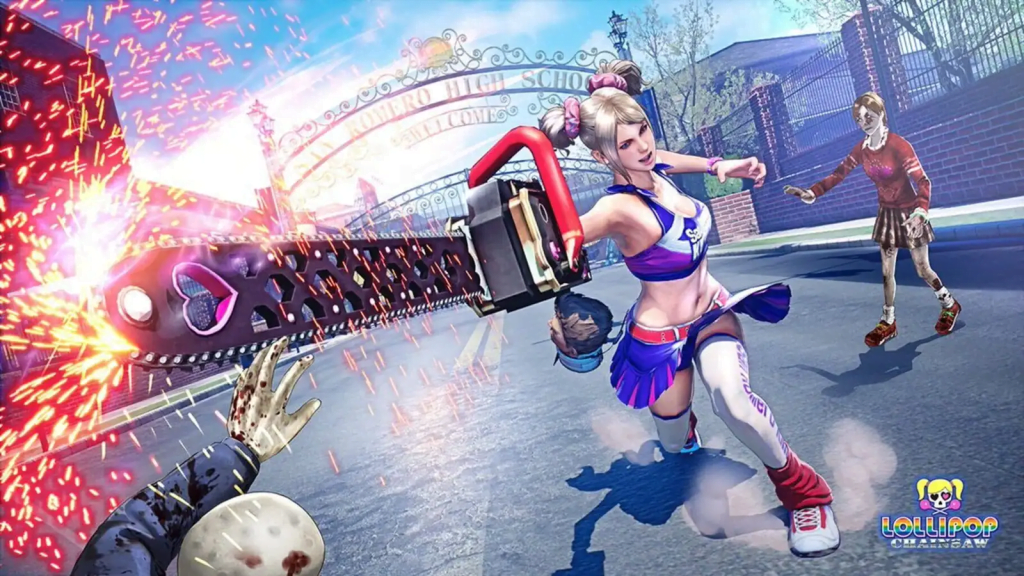
Lollipop Chainsaw was released 12 years ago as an action-adventure hack-and-slash video game developed by Grasshopper Manufacture and released on Xbox 360 and PS3. In case you didn’t play the original, Lollipop Chainsaw is a game centered around Juliet Starling, an 18-year-old cheerleader turned zombie hunter, who is thrust into action when a sudden zombie apocalypse invades her high school. On her way to meet her boyfriend Nick at San Romero High School, Juliet finds herself battling through waves of the undead using a chainsaw, fighting to survive. The situation takes a turn when Nick is bitten by a zombie, forcing Juliet to decapitate him in order to save him from turning. Through a magical ritual, Juliet keeps Nick alive as a disembodied head, which she carries on her belt throughout the rest of the game.
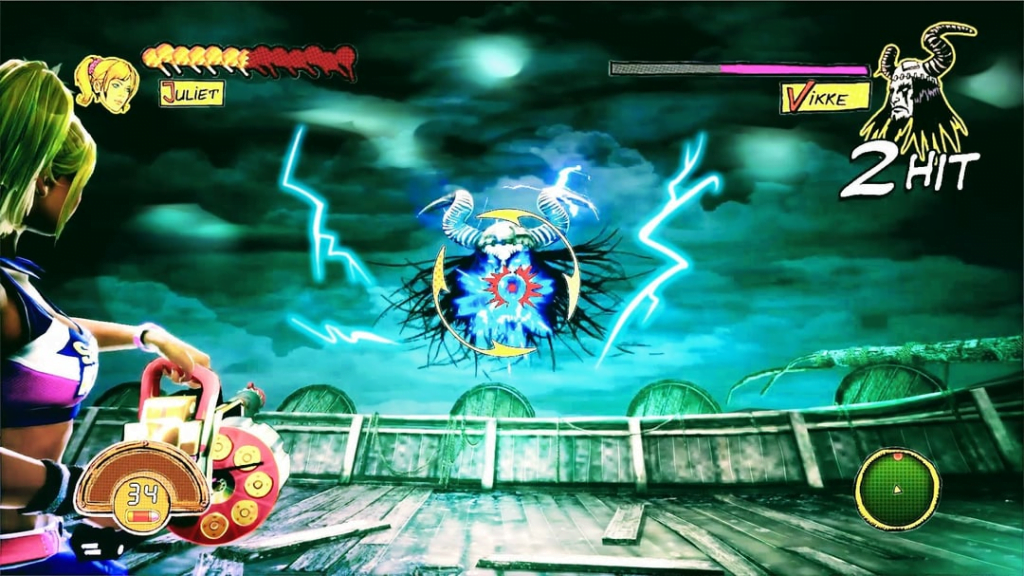
As Juliet journeys through the chaotic, zombie-infested world, she discovers that the outbreak is not just a random occurrence. Guided by her tutor, Junji Morikawa, Juliet learns that the universe is divided into three realms—Earth, the Land Beyond Words, and the Rotten World—and someone has opened a portal between them, unleashing the zombie horde. The mastermind behind this event is Swan, a brooding goth, who uses his powers to summon five zombie overlords known as the Dark Purveyors, each representing a unique genre of rock music. To stop the apocalypse and close the portal, Juliet must hunt down and defeat each of the Purveyors.
The final showdown takes place in the heart of the city, where Juliet confronts Lewis Legend, the leader of the Dark Purveyors. After defeating him, Swan reveals his true plan: the Dark Purveyors’ deaths were part of a ritual to summon the ultimate zombie lord, Killabilly. With revenge on his mind due to his unrequited love for Juliet and the torment he endured, Swan sacrifices himself to complete the incantation, unleashing Killabilly upon the world. Juliet and her family face their most dangerous foe yet, with Juliet ultimately entering Killabilly’s body to confront Swan’s corpse and destroy the monster from within.
The climax is both heroic and tragic as Juliet learns the only way to defeat Killabilly is to sacrifice Nick by placing his head on Swan’s body. In a heart-wrenching moment, she carries out the act, but Nick’s selflessness earns him a second chance at life in the form of a new body.
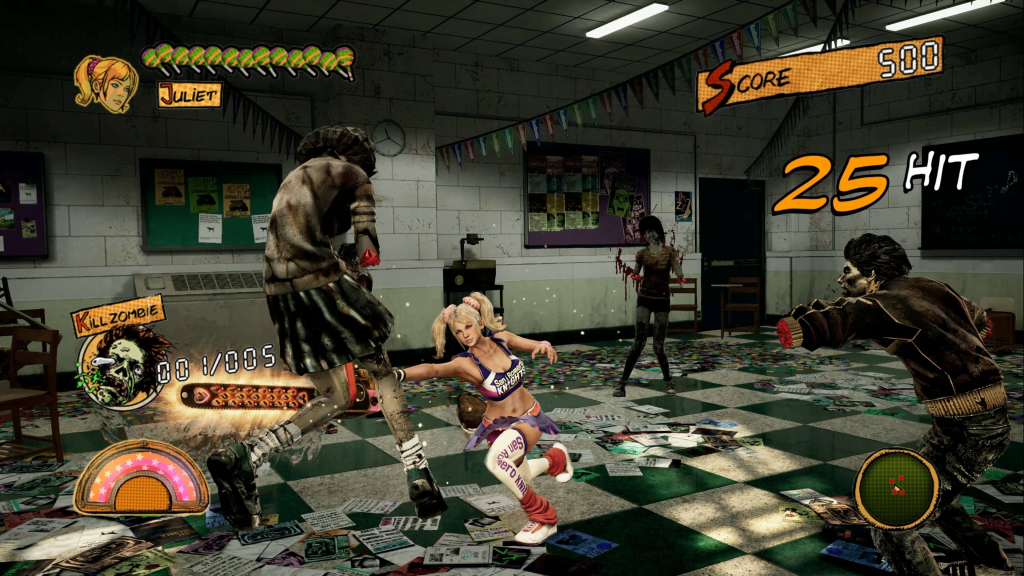
Although the storyline remains unchanged, this game falls short of delivering the enhancements expected from a true remaster. Yes, the visuals are marginally improved, but that’s largely due to the natural benefits of running on more advanced hardware. Any game would look better with a power boost, so the improvements here feel more like basic upscaling rather than a genuine overhaul. In fact, some of the menus and textures still appear blurry and unpolished, detracting from the overall experience. When it comes down to it, the game feels more like a direct port than a proper remaster, lacking the kind of meaningful upgrades that would justify a re-release.
The game also suffers from noticeable issues with missing audio and subtitles in certain areas, and there are frequent instances where the audio falls out of sync with the visuals, which can be quite frustrating. Additionally, a significant portion of the original soundtrack has been removed due to copyright complications, which severely impacts the atmosphere and immersion that the original music provided. While I personally didn’t encounter any graphical problems, many day-one players and fellow reviewers have reported frequent stuttering, even when running the game on high-end graphics cards. These performance hiccups only add to the list of technical shortcomings, further detracting from the overall experience.
While the story remains just as captivating as it was back in 2012, Lollipop Chainsaw RePOP ultimately feels like little more than a way to re-experience the original on modern hardware. Unfortunately, the remaster doesn’t offer enough substantial updates to make it feel like a truly refreshed experience. Instead, it often feels like you’re running the game through an emulator rather than playing a fully optimized version for today’s systems. The lack of significant improvements in gameplay, visuals, or technical performance makes it hard to see this as anything beyond a straightforward port.