
Summary
Towa and the Guardians of the Sacred Tree is a game with genuine heart and gorgeous presentation that's undermined by fundamental design flaws and poor understanding of roguelite mechanics. The art and soundtrack deserve better than the repetitive experience they're wrapped in.
Developer – Brownies inc.
Publisher – Bandai Namco Entertainment
Platforms – PC, Nintendo Switch, Xbox Series S|X, PS5 (Reviewed)
Review copy given by publisher
When Bandai Namco announced their foray into the roguelite genre, I’ll be honest, my first reaction was skepticism. The roguelite space feels extremely saturated these days, and big publishers don’t always nail the delicate balance that makes these games work. And after diving deep into what developer Brownies Inc. has crafted, Towa and the Guardians of the Sacred Tree emerges as something both refreshing yet frustrating.
The story follows Towa, a young priestess of Shinju Village, who must unite with eight unique guardians to combat an evil force known as Magatsu. While the premise sounds familiar enough, the execution shows surprising details rooted in Eastern folklore.
What sets the narrative apart is how it weaves character relationships into the roguelite structure. Each guardian isn’t just a combat tool but a fully realized character with their own backstory, motivations, and personality. The standout here is Nishiki, a buff humanoid koi fish who somehow manages to be both ridiculous and endearing.
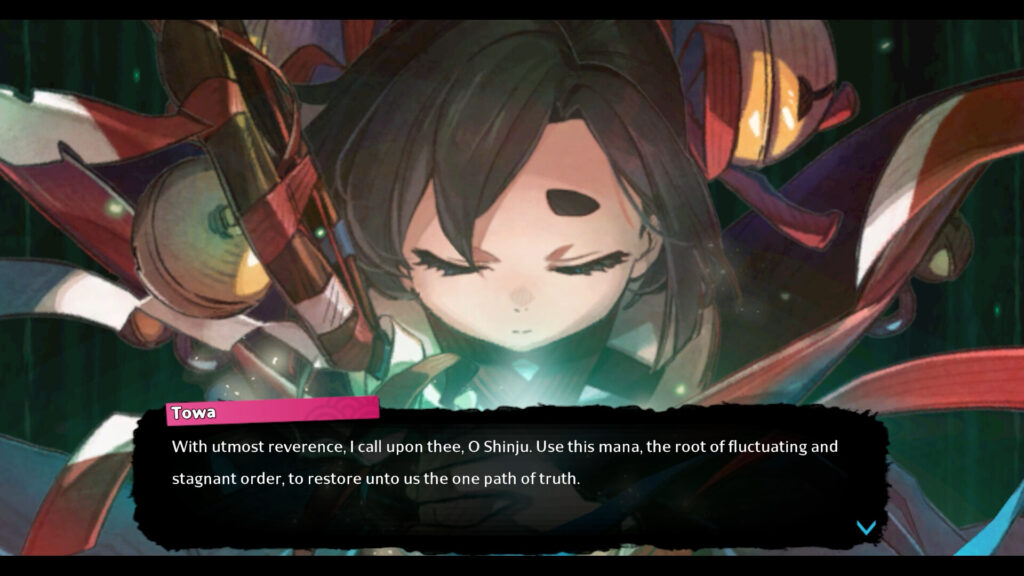
The village of Shinju also evolves across different timelines, creating a sense of progression that feels meaningful rather than just cosmetic. You’re not just grinding through runs, you’re also watching a community grow and change. This layer adds weight to what could have been just another “clear rooms, get some upgrades” experience.
However, the execution falters. The game opens with a long exposition dump that kills momentum before it even starts. The story constantly interrupts the gameplay flow with lengthy cutscenes that disrupt the action-heavy cycle that makes this genre work. Characters also react with emotional detachment to major events, with guardians shrugging off their own deaths with a casual disclaimer.
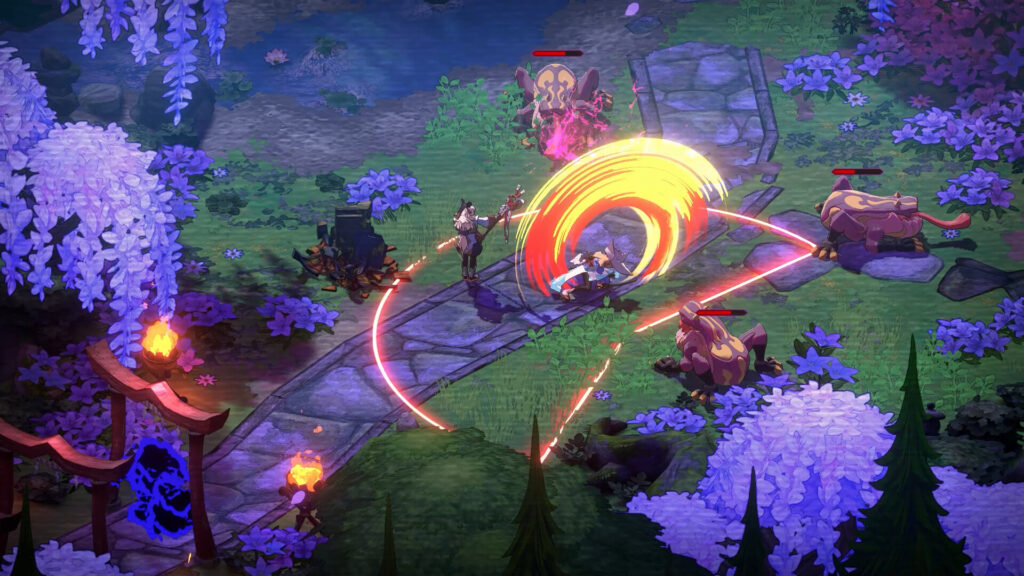
The gameplay introduces a unique dual-character system. You choose two guardians for each run: one wields the Tsurugi, a sacred sword, as the primary attacker, while the other carries the Kagura, a staff, as support. The roles aren’t character-locked either, meaning any guardian can fill either position, fundamentally changing their abilities and playstyle.
The weapon-switching mechanic adds some tactical depth that most roguelites lack. Each weapon has different speeds, damage outputs, and special properties. As you use one weapon, a meter depletes, forcing you to switch to the other to maintain effectiveness. This encourages learning multiple combat styles and creates natural combo opportunities.
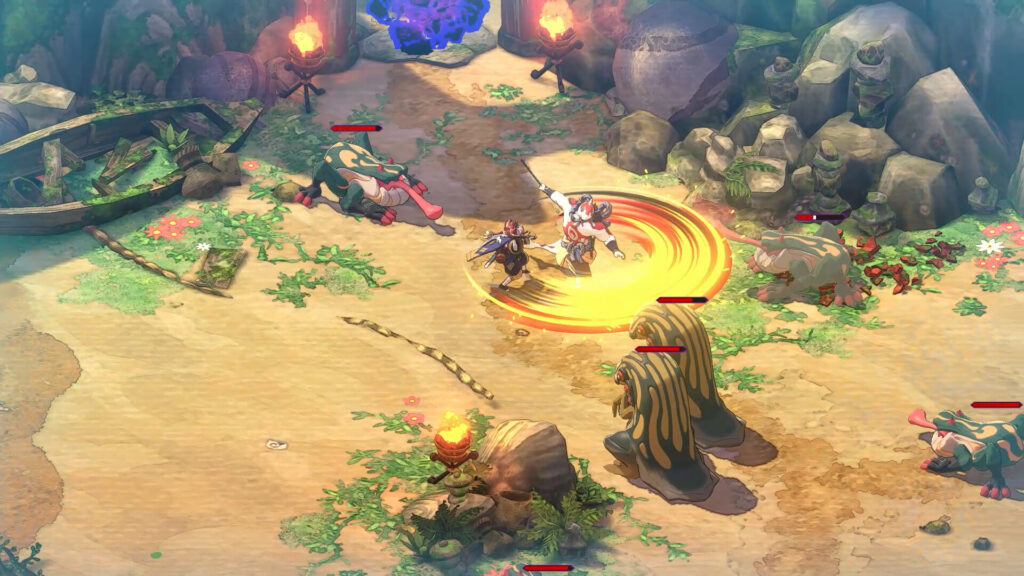
Combat feels fast and responsive, and clearing rooms never becomes monotonous thanks to the variety in guardian abilities. The progression structure follows the classic roguelike model: clear rooms, choose some upgrades, work towards a boss encounter. With 8 guardians and the ability to assign either to Tsurugi or Kagura roles, you’re looking at 56 different character combinations: 8 choose 2, times 2 for role assignments.
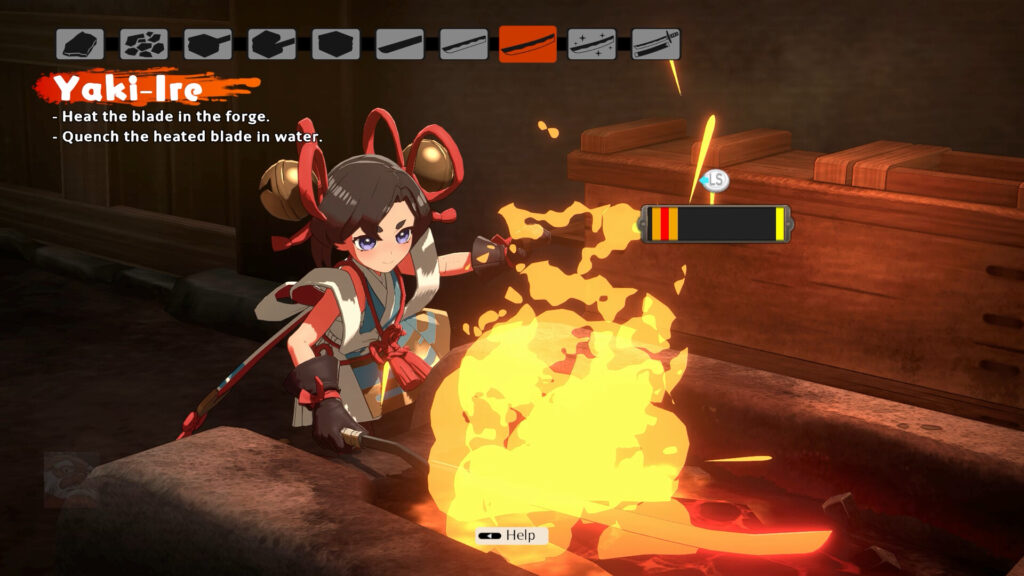
When not in a run, you can train at the dojo to unlock new abilities, craft weapons at the forge, and build relationships with NPCs that unlock new story content and gameplay benefits. The relationship system is deeper than your typical roguelite, where actual character development affects how the village grows over time. Be sure to spend any ore you’ve gathered to construct new buildings, upgrade your Grace Jewels, or purchase items at the shop.
Graces are spirit allies that you can summon at specific parts of Shinju Village during your meta-progression between runs. They function as another layer of the upgrade system, providing buffs and special abilities that enhance your subsequent dungeon runs.
There’s also a cute fishing minigame that serves as more than just a palette cleanser between runs. The fish you catch are worth Fishing Points, which you can redeem with fishers back at the village for special items that are unique, such as inscriptions that give you an early game boost.
Unfortunately, there’s simply not a lot of depth here. The game’s biggest flaw is its lack of procedural generation. You’ll fight the same enemies in the same rooms with the same spawn patterns run after run. A game of this genre requires randomization and variety to keep things fresh, but Towa becomes predictably repetitive. The upgrade pool, while featuring some interesting effects, isn’t extensive enough to maintain long-term engagement when the core encounters never change. The default difficulty is normal, but there’s also an accessible story mode where divine blessings weaken enemy attacks for you.
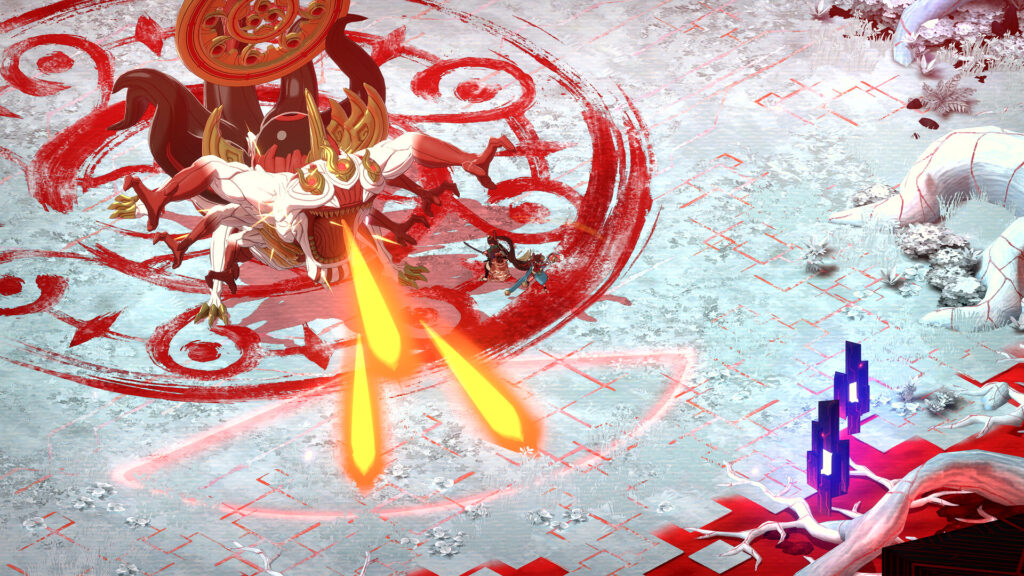
The PS5 version runs smoothly with no notable frame drops or technical issues. One technical highlight is the seamless weapon switching system, where transitions happen instantly without disrupting combo flow. The game only takes up a small 7.15 GB on the console. Load times are ultra fast, taking only 3-4 seconds from the main menu, which is crucial for a roguelite where you’re constantly restarting runs. There’s also both local and online co-op, a rare sight in games nowadays. Unfortunately, whoever is Player 2 barely gets to play as the cooperative function is half baked at best.
The visuals might be Towa’s strongest suit. The hand-drawn art style is absolutely gorgeous, creating a world that feels alive and vibrant even when depicting dark themes. Every character design pops with personality, from Rekka’s fierce samurai aesthetic to the aforementioned muscle-bound koi fish Nishiki. Enemy designs maintain the same high quality, with each creature feeling distinct and memorable rather than generic.
Each area feels like a living illustration, with lush forests, mystical mountains, and village scenes. The visual contrast between the peaceful, colorful world and the underlying threat creates an engaging dynamic. The only minor criticism here is that the isometric perspective occasionally makes it difficult to parse depth, particularly in busier combat scenarios. It’s not game-breaking, but it can cause some frustration.
Hitoshi Sakimoto’s involvement as composer was a smart choice. Known for his work on Final Fantasy Tactics and Vagrant Story, Sakimoto’s work elevates the entire experience. The soundtrack balances traditional Eastern instruments with modern touches, creating melodies that feel both timeless and contemporary.
Towa and the Guardians of the Sacred Tree is a game with genuine heart and gorgeous presentation that’s undermined by fundamental design flaws and poor understanding of roguelite mechanics. The art and soundtrack deserve better than the repetitive experience they’re wrapped in.