Summary
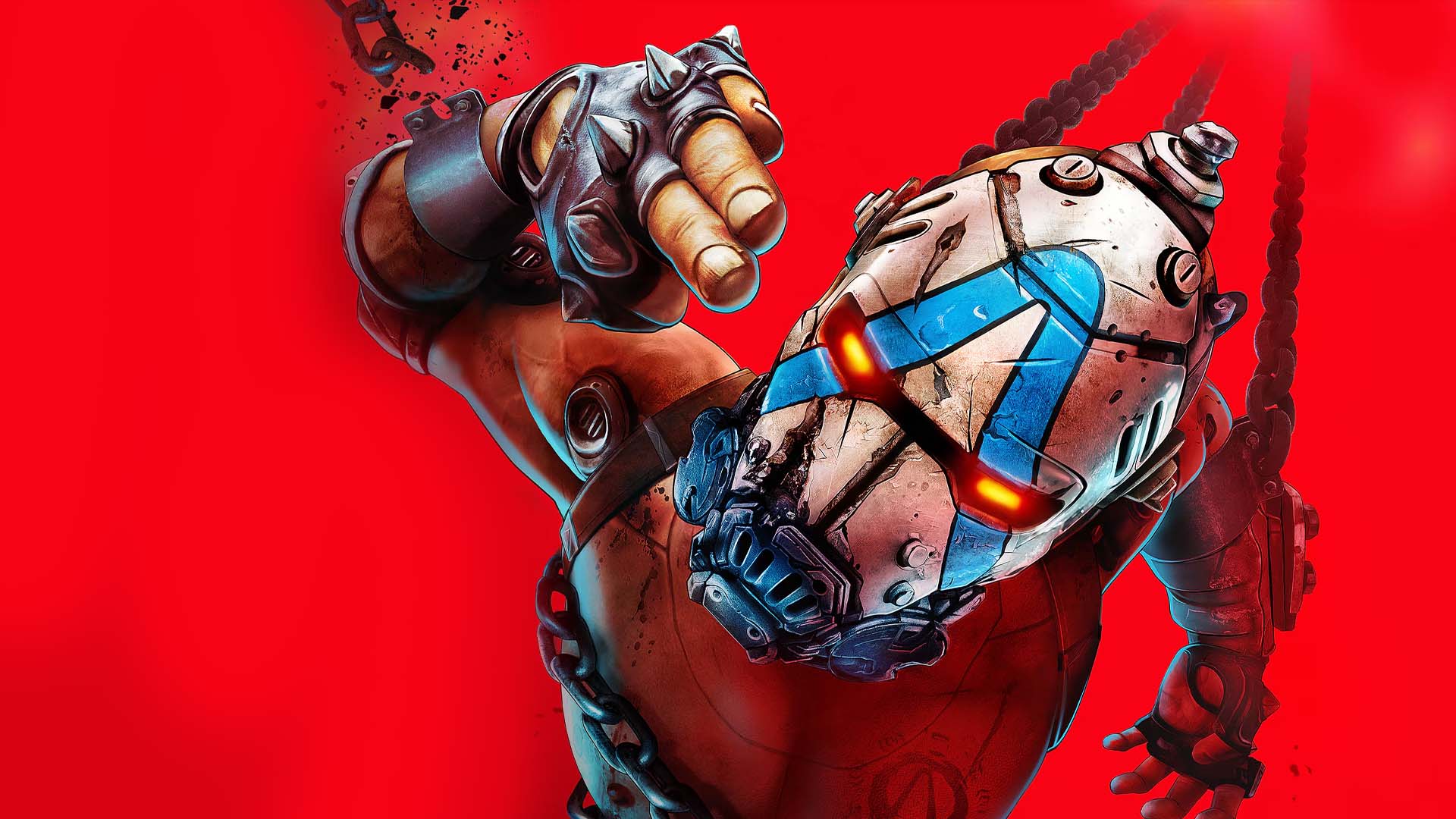
Borderlands 4 represents both the series' greatest triumph and most serious technical frustrations simultaneously. When everything aligns correctly, it delivers the most mechanically refined Borderlands experience ever created. The foundation is excellent, but the technical polish just isn’t there yet.
Developer – Gearbox Software
Publisher – 2K
Platforms – PC (Reviewed), Xbox Series S|X, PS5
Review copy given by publisher
After six long years since Borderlands 3, Gearbox Software returns with their latest looter-shooter offering. It’s a mixed bag of goodies and woes that’ll have you simultaneously smiling and clenching your teeth in frustration. Borderlands 4 delivers on the series’ core promise of chaotic gunplay and billion gun variety, but stumbles when it comes to the technical execution that should make that mayhem as smooth as possible.
Borderlands 4 steps away from the franchise’s familiar Pandoran setting and drops you onto Kairos, a prison planet ruled by the iron-fisted Timekeeper. This dictator controls his subjects through cybernetic bolts surgically implanted into their spines, an unsettling concept that gives the story some stakes. The premise surprisingly works better than Borderlands 3’s convoluted Calypso twins nonsense.
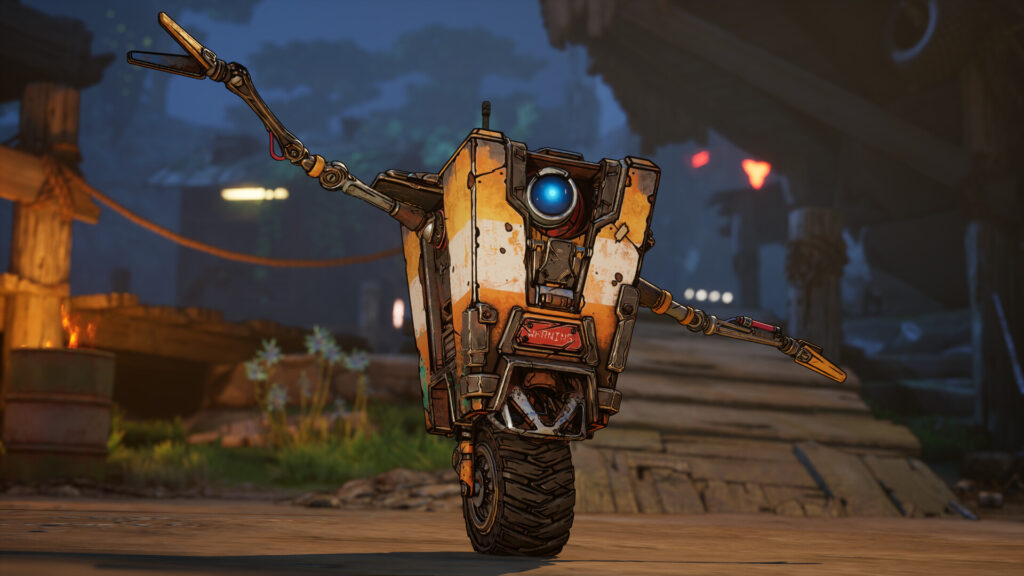
That being said, the story still follows a familiar template where your crash-landed Vault Hunters must unite and rise against an oppressive regime. Classic right? While the narrative feels somewhat predictable, the execution is mostly solid. Claptrap returns as the unlikely leader of the Crimson Resistance, and his character development goes beyond comic relief this time around. The supporting cast of new characters, from the noble Electi faction to the scrappy Outbounders, brings their unique personalities.
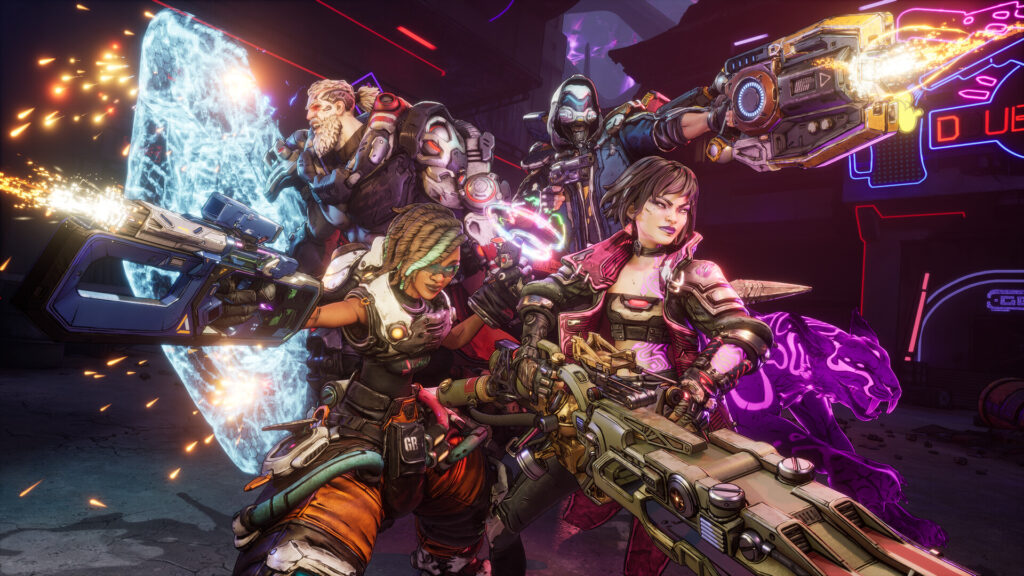
Where the narrative succeeds is in its restraint with nostalgia bait. Borderlands 4 features legacy characters in key moments featuring Zane, Moxxi, Lilith, and Amara. These cameos feel more impactful rather than taken advantage of. However, the writing still suffers from trademark inconsistencies.
Let’s be real here. Gameplay is where Borderlands 4 truly shines, delivering what might be the franchise’s most mechanically satisfying experience to date. The four new Vault Hunters represent the series’ strongest starting roster, with each class feeling distinct and viable across all content types.
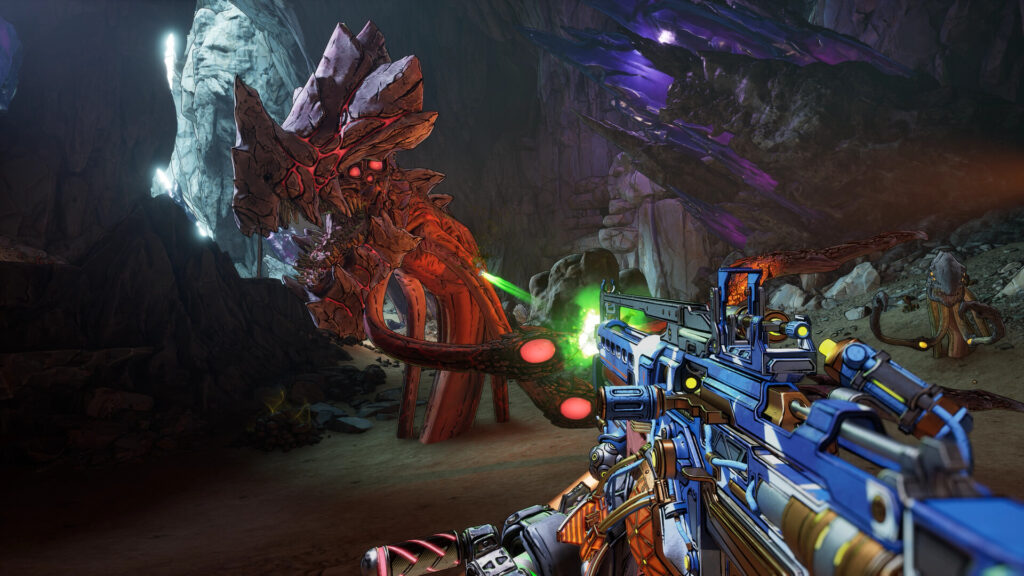
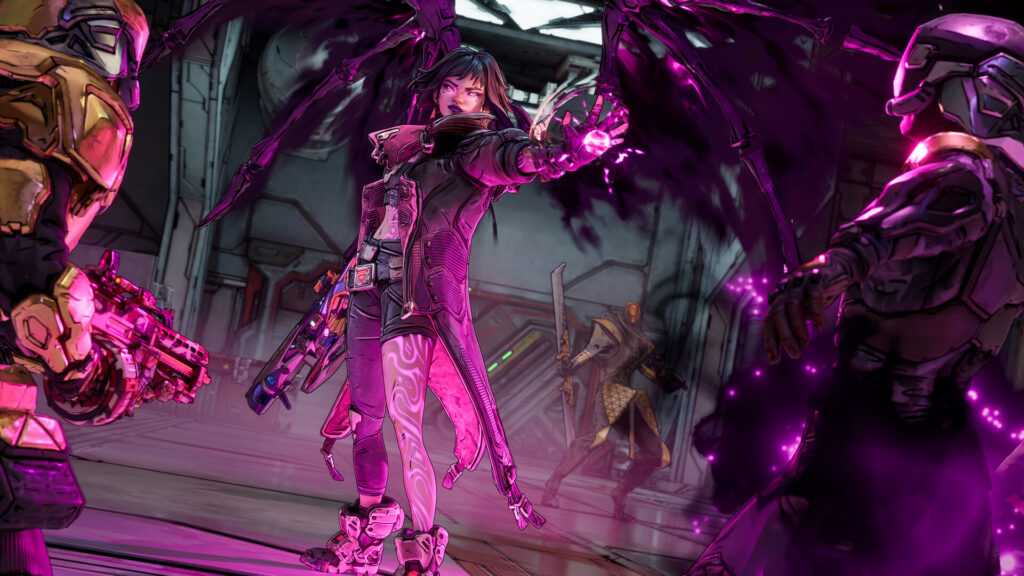
Vex the Siren commands spectral allies and phase energy manipulation that makes crowd control feel effortless. Rafa the Exo-Soldier brings tactical versatility through his Tediore tech, allowing weapon customization on the fly. Amon the Forgeknight serves as the game’s tank, crafting elemental melee weapons that make close quarters combat satisfying. Harlowe the Gravitar specializes in area denial through cryo and radiation effects that can lock down entire battlefields. There’s something for everyone.
Each Vault Hunter supports three branching skill trees that encourage specialization while maintaining overall build flexibility. You can swap Action Skills, Augments, and Capstone abilities on the fly, making experimentation feel rewarding.
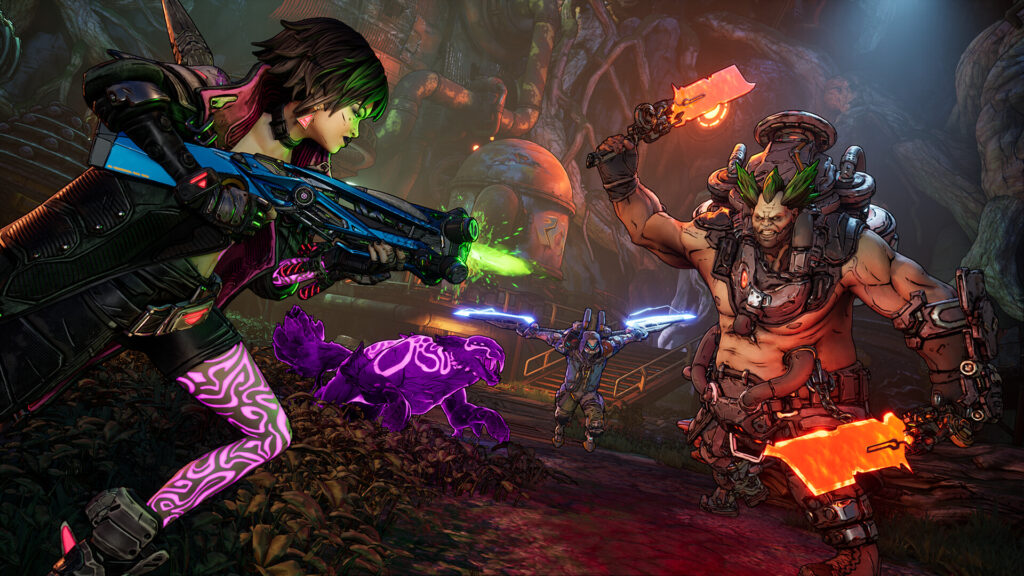
New traversal mechanics transform movement from a chore into a joy. The grappling hook system feels responsive and intuitive, while double-jumping, gliding, and dashing create verticality that previous entries lacked. You can chain these movements fluidly: grapple to a ledge, double-jump for height, then glide to your destination.
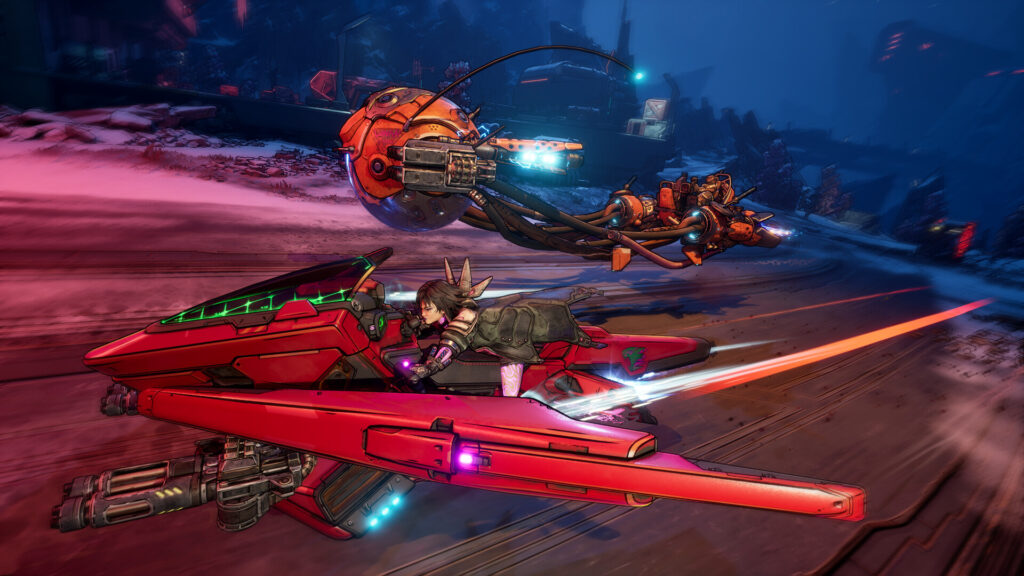
Then there’s the Digirunner vehicle system. This personalized hover bike summons instantly with a button press, jet-boosts across distances with speed, and features customizable handling through unlockable Hover Drives. Vehicle combat actually feels engaging rather than clunky.
Combat feedback has also been significantly improved. Weapons feel weighty and impactful, with the new Licensed Parts system creating fascinating hybrid guns that blend manufacturer characteristics. Finding a Jakobs pistol with Maliwan elemental tech creates exciting scenarios that keep loot hunting fresh even dozens of hours in. The core loop of exploring, looting, and shooting remains as addictive as ever, enhanced by meaningful improvements to build crafting and weapon variety. Cooperative play reaches new heights here.
There are some truly impressive boss encounters that feel like proper multi-phase spectacles rather than bullet sponges. Take Vile Lictor, one of the mid-game bosses — he requires tactical thinking beyond just shooting until dead. In his first phase, you must destroy his floating limbs to expose weak points on his core, while dodging purple void walls that can knock you out of the arena. Phase two transforms him into a mobile threat that crawls around the battlefield, forcing constant repositioning while he unleashes energy claw barrages. I like how some bosses integrate the game’s traversal mechanics into their design.
There are 98 side missions scattered across Kairos, and the sheer volume could easily become padding, but Gearbox has crafted some remarkably memorable stories. The standout “Ready to Blow” involves helping a sentient missile named Gigi, who’s having an existential crisis about her purpose, to explode. It’s both absurd and surprisingly thoughtful about identity and purpose.
Borderlands 4’s endgame might be the most well-designed aspect of the entire package. The main campaign takes 25-30 hours, extending to 50-60 hours with side content, and easily 100+ hours for completionists and loot hunters. Ultimate Vault Hunter Mode replaces traditional New Game Plus featuring five progressive difficulty ranks that unlock through specific challenges, escalating both enemy lethality and loot quality rather than just inflating health bars.
The new Firmware system adds meaningful build customization by allowing you to transfer set bonuses between gear pieces, though the donor item gets destroyed in the process. Wildcard Missions feature creative enemy modifiers that force tactical adaptation, while weekly rotating content and Maurice’s Black Market provide ongoing incentives to return.
Technical performance is where Borderlands 4 becomes icky on PC. Even high end rigs equipped with RTX 5090s seem to struggle maintaining consistent 60fps at 4K. I have to turn down the graphical settings to medium and turn DLSS on in order to have reasonable framerates on my PC.
When the game runs correctly, it showcases some impressive visual improvements over its predecessors. Kairos presents a colorful and diverse playground that breaks away from Pandora’s desert monotony. Lush valleys contrast sharply against industrial complexes and crystalline formations.
The Unreal Engine 5 implementation brings improved lighting through Lumen technology, creating more realistic illumination than previous entries. Character models show significant detail improvements, particularly in facial animations during dialogue sequences. The art direction remains distinctly Borderlands from its cel-shaded aesthetic.
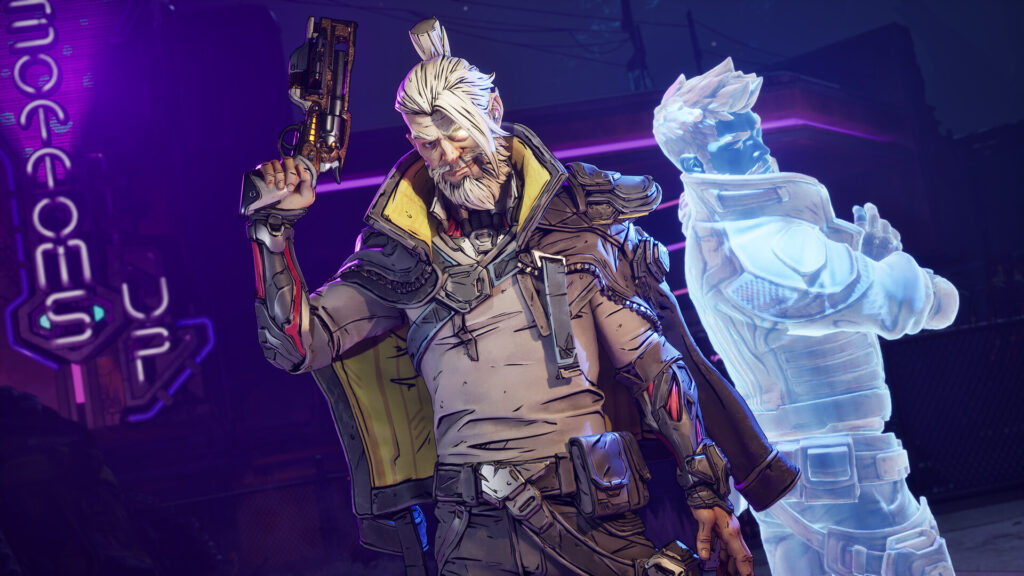
Borderlands 4’s audio design maintains a high standard while introducing welcome improvements. Voice acting quality varies between characters, with standout performances from returning favorites like Claptrap and Zane compared to bland delivery from some new cast members.
Weapon audio feedback feels satisfying and distinct between manufacturer types, helping you identify loot quality through sound alone without needing to inspect every drop. And music composition strikes an effective balance between atmospheric exploration tracks and high-energy combat themes.
Borderlands 4 represents both the series’ greatest triumph and most serious technical frustrations simultaneously. When everything aligns correctly, it delivers the most mechanically refined Borderlands experience ever created. The foundation is excellent, but the technical polish just isn’t there yet.