
Summary
Ghost of Yotei is the rare sequel that understands what made its predecessor special and builds upon it exceptionally. Atsu's revenge tale might hit predictable notes, but the journey transcends its familiar narrative through unparalleled player freedom. And with Yotei Legends coming in 2026? I can't wait to dive back in.
Developer – Sucker Punch Productions
Publisher – Sony Interactive Entertainment
Platforms – PS5 (Reviewed)
Review copy given by publisher
Ghost of Tsushima was one of my favorite games on the PlayStation 4. I poured in 100+ hours, earned the platinum trophy, explored every corner of Jin’s journey, and spent countless time in Legends mode with friends during the pandemic. So when Ghost of Yotei was announced, my expectations were high, and somehow, Sucker Punch has managed to exceed them.
Where Tsushima pushed the PS4 to its limits, Yotei runs effortlessly on the PS5, with instant loads, zero hitches, and the works. Yes, the revenge plot is familiar territory, but Sucker Punch nailed the execution. Seamless weapon switching mid-combo, northern lights lighting up snow while you stalk a target… these aren’t just pretty details, they’re the reason to own this console. This is the PS5 showcase Sony needed.
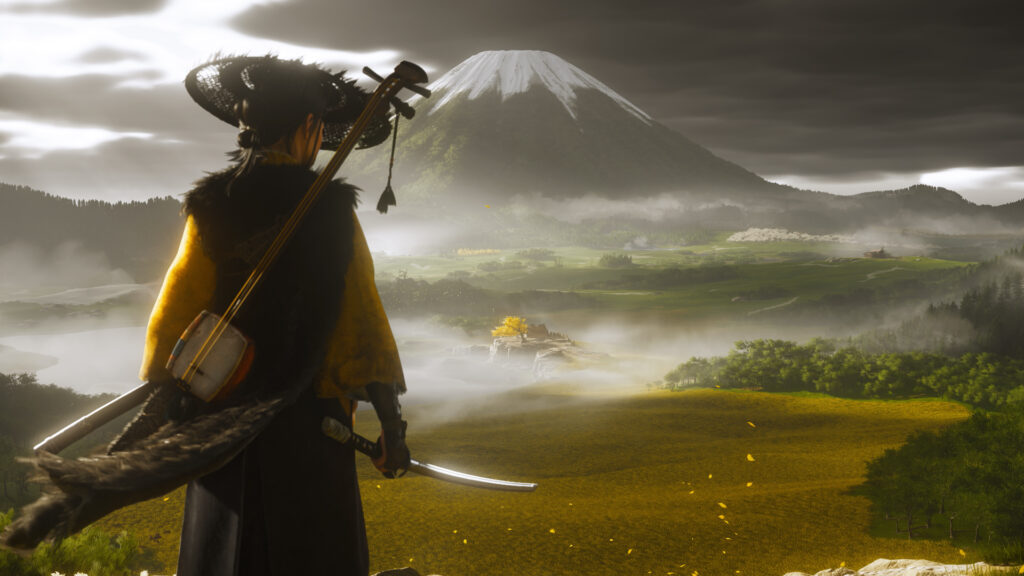
Ghost of Yotei jumps 300 years past Jin Sakai to follow Atsu, a mercenary hunting the Yotei Six, the gang that killed her family and left her pinned to a burning ginkgo tree sixteen years ago. It’s a revenge story through and through, though the game takes its time showing how that single-minded focus has hollowed Atsu out. What begins as a straightforward revenge plot gradually unfolds into something more complex, exploring themes of healing, identity, and the cost of vengeance. Not groundbreaking thematically, but Sucker Punch sells it.
You can choose which member of the Yotei Six to pursue first, creating a non-linear path through the campaign. Each villain brings a distinct personality and backstory. The Oni, a mountain of a man residing in a hilltop castle, contrasts with the more mysterious Snake, Kitsune, and Dragon, each adding their own flavor of menace and evil. Puzzles like the fox statue cipher fit naturally into the questline for the Kitsune.
Flashbacks let you glimpse Atsu’s past and understand everything that was taken from her. While the revenge premise might seem familiar and occasionally predictable, the execution is where Yotei shines. Character development unfolds naturally rather than through forced exposition.
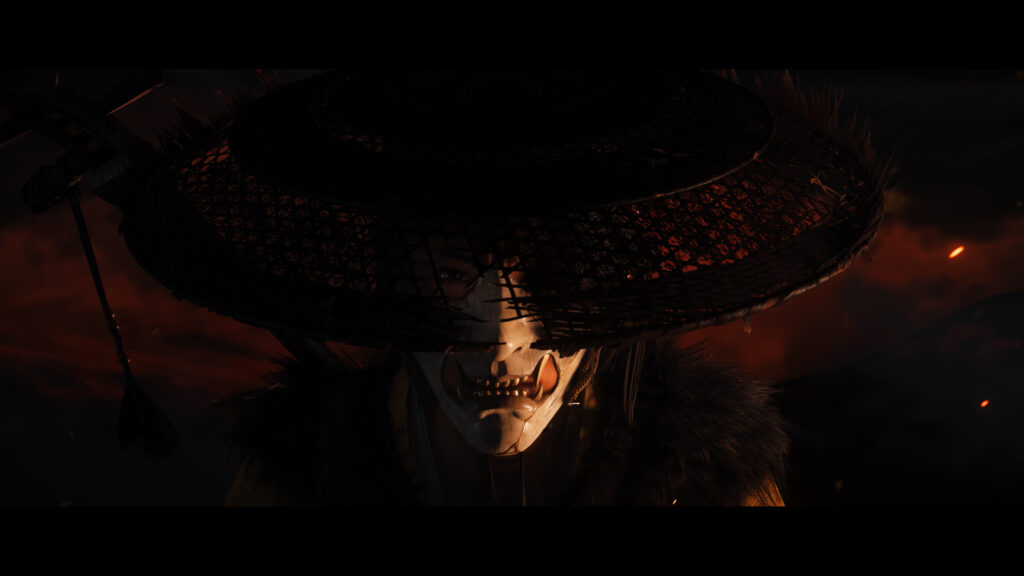
Where Ghost of Tsushima asked you to master four stances, Yotei hands you an entire arsenal of tools and says “go crazy.” You can now wield dual katanas, a heavy odachi, powerful yari spears, versatile kusarigama sickles, a slick bow, and even the tanegashima rifle for even more powerful ranged attacks. Each weapon serves a distinct purpose, similar to the aforementioned stances, with the kusarigama overwhelming shield-wielders while the odachi breaks through brutes, etc.
This rock paper scissors approach could have turned out cumbersome, but Sucker Punch has made the transitions smooth enough that weapon switching becomes second nature. Combat embraces improvisation, allowing you to fight dirty. You can pick up fallen enemy weapons to throw, chuck empty sake bottles, or call your wolf companion to even the odds. It’s faster, more brutal, and more varied than Tsushima ever was. It’s a battle playground!
The stealth mechanics return as well, with a more aggressive approach. It’s about eliminating everybody quickly and violently rather than slipping by unnoticed. You can yank enemies out of sight with the kusarigama or chain assassinations together in a deadly fashion. The grappling hook, available from the start, adds verticality to both combat and exploration.
However, the camera can occasionally struggle during intense combat when enemies slip out of view. You need to awkwardly pull your fingers away from face buttons to manually adjust the camera with the right stick when reacting to unblockable attacks. A minor frustration, but one nonetheless.
Ghost of Yotei’s progression system avoids the bloat common to open-world games. Each weapon has its own skill tree and mastery challenges, encouraging experimentation with different playstyles. The bounty hunting system evolves from Tsushima’s memorable duels, with every target having a backstory that leads to some compelling confrontations with mini-narratives rather than simple checklist targets.
Character customization runs deep, with weapon kits that alter your blades’ appearance and color, armor upgrades providing both stat and visual improvements, and charms for specific builds. The freedom to dress your Atsu with the most aura and drip is one of my favorite activities.
The game values your time and gives you the freedom to do what you want to do. You can flow from Sumi-e painting to clearing enemy camps, with shrine climbs and fox dens in between, creating a satisfying loop of ronin simulation. Quality-of-life improvements like camps where you can cook meals for stat boosts and assemble ammunition make extended exploration sessions more viable without constant returns to towns. It’s great that you can auto complete many of the mini-game activities that come with making a fire or cooking too, but still have the option to immerse yourself if you wish.
Once you’ve crossed the last name off your revenge list, Ghost of Yotei still has plenty to offer. There’s altars, wolf dens, and dozens of cosmetic items. The game doesn’t artificially pad its runtime, though some activities grow repetitive if you’re trying to hundred-percent everything.
Side activities let you improve your stats through hot springs, bamboo cutting, and fox shrines, with new additions like painting replacing haiku composition, gambling with Zeni hajiki (my favorite degenerate activity), and learning new songs. While these add flavor to the world, the repetitive quality does catch up eventually. The dated open-world structure definitely shows its age when you’re on your twentieth bamboo strike or fifteenth hot spring.
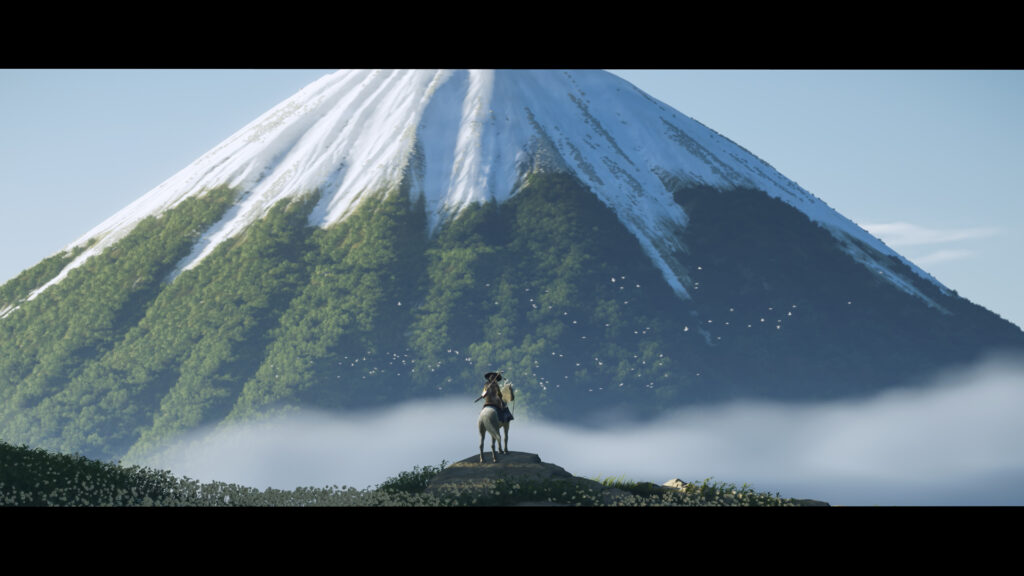
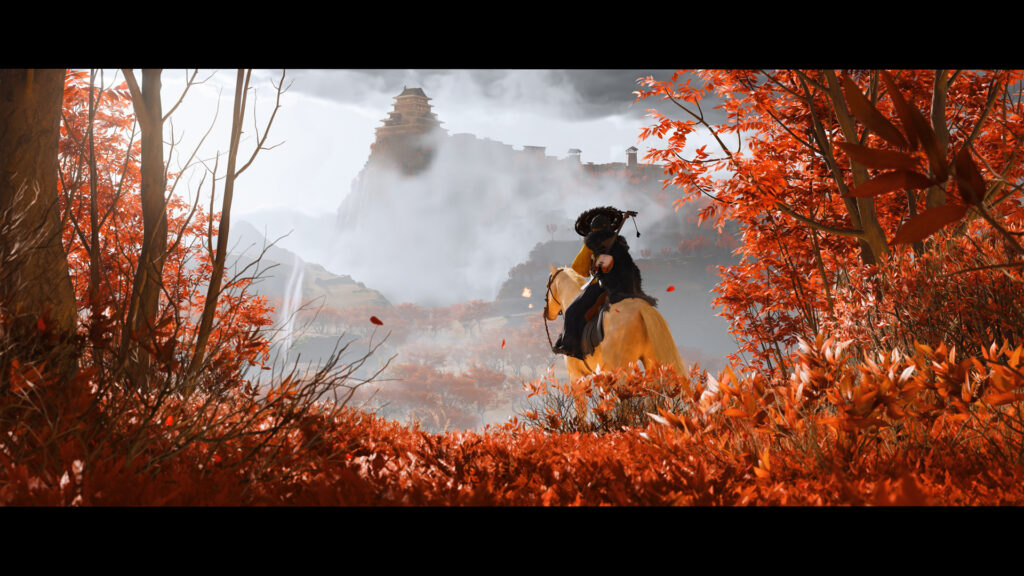
Yet the exploration itself becomes the endgame. The game includes numerous methods of pointing you toward interesting content without wasting your time. You are always rewarded for going off the beaten path. Riding your horse across the landscape while the weather shifts from snow to rain remains breathtaking even after dozens of hours.
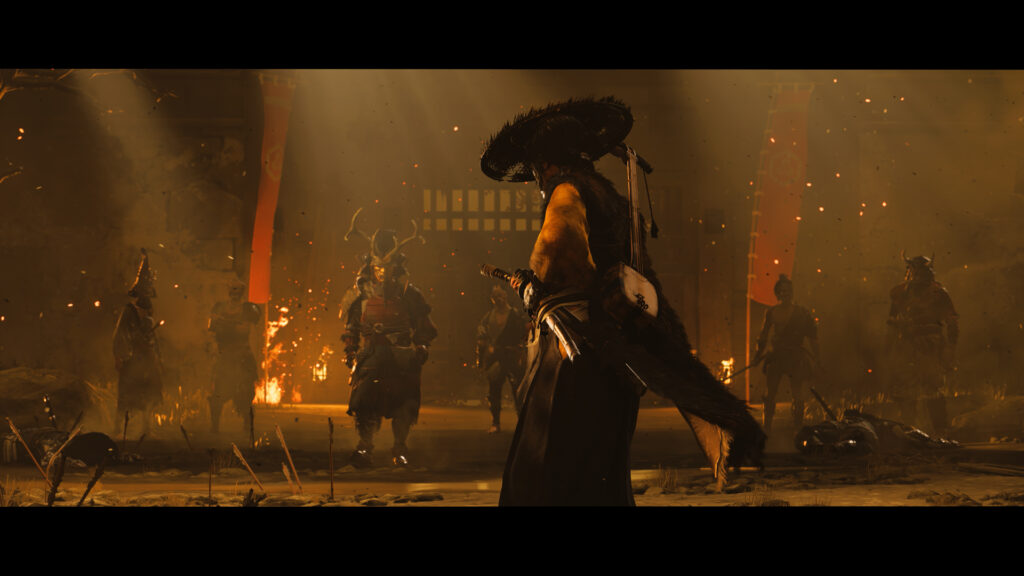
Ghost of Yotei delivers rock-solid performance on the PS5. You get three graphics modes: quality targeting 30fps at near 4K, performance hitting 60 fps at 1440p, and ray tracing at 30 fps with enhanced lighting around 1440p. You already know I played on performance mode only for such an action oriented game.
Frame rate stability is exceptional across all modes. Performance mode on the base PS5 shows no noticeable drops outside of cutscenes (which is locked at 30fps). Load times are essentially non-existent, with fast travel happening in the blink of an eye. It’s magic!
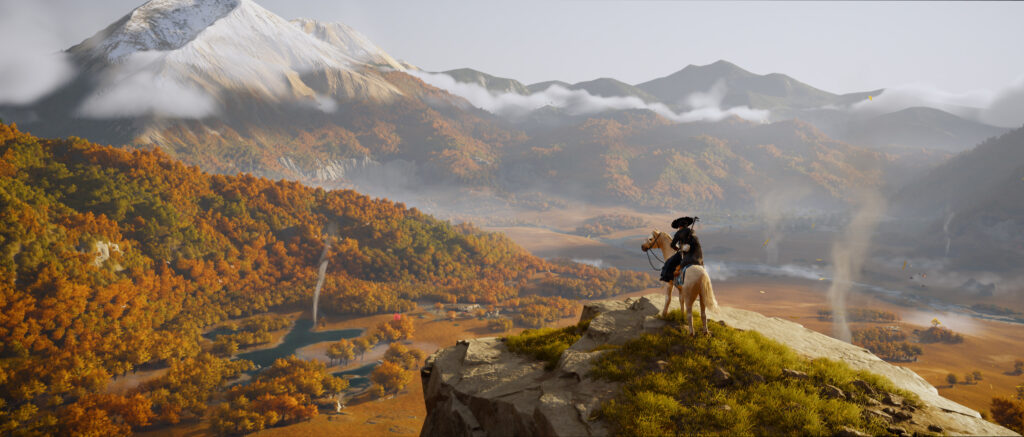
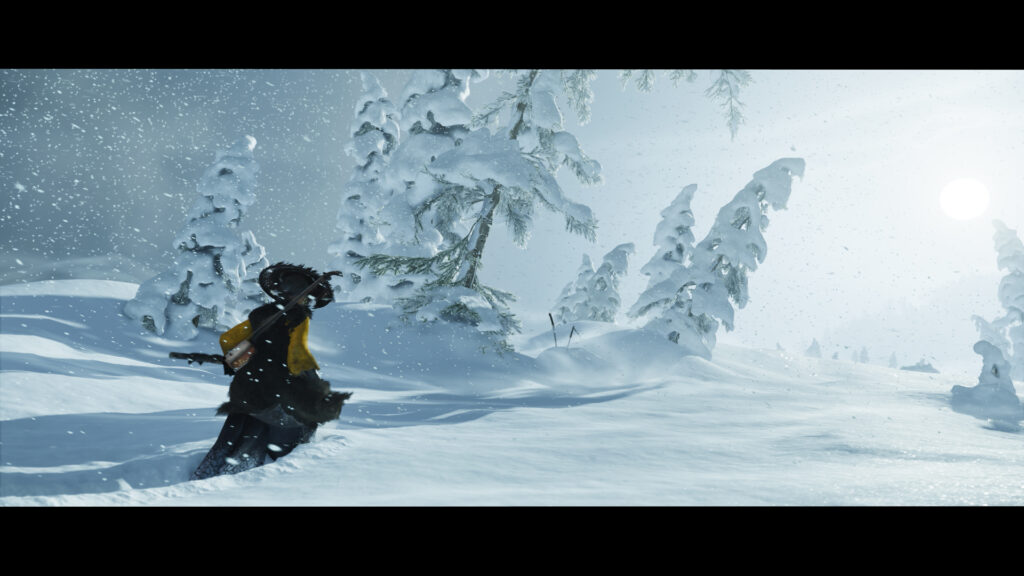
The art direction takes what made Tsushima gorgeous and amplifies everything. Environments showcase snow and rain inspired by the real climate around Mount Yotei. Snow accumulates on Atsu’s armor, rain creates mud that affects movement, and fog provides natural cover for stealth approaches. And the gore, there’s lots of it.
Character detail excels at every level. Weapon textures show wear and craftsmanship, armor pieces have individual materials that catch light differently, and facial animations during cutscenes sync well with dialogue. The game includes visual modes inspired by different filmmakers: Miike mode pulls the camera closer during combat with increased blood splatter, while Watanabe mode adds lo-fi beats created by Shinichiro Watanabe.
The soundscape might be Ghost of Yotei’s most underappreciated achievement. The majestic score composed by Toma Otowa perfectly captures both the grace and brutality of feudal Japan. Voice acting across multiple languages impresses, though I would still recommend the Japanese audio for peak authenticity.
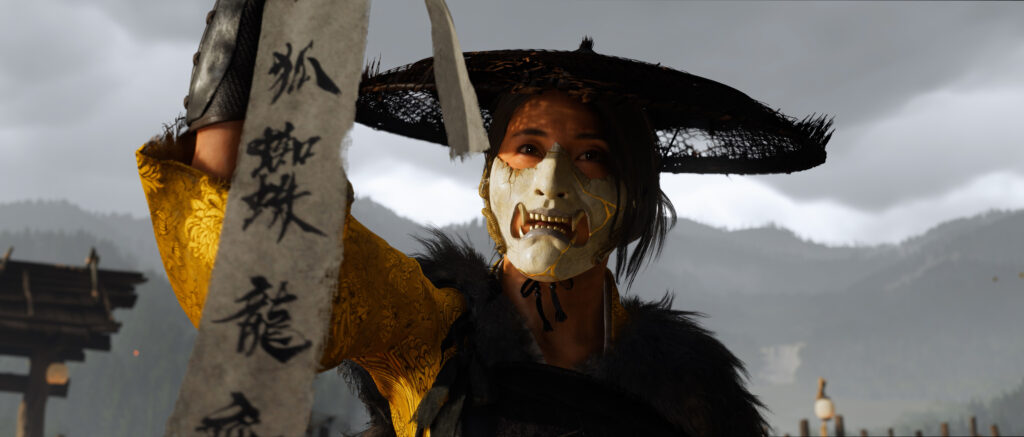
The DualSense implementation is nothing short of outstanding. You can sense raindrops on the controller matching those falling on your map, while musical instruments balance their audio between the main speakers and the controller’s speaker. Every sword clash, arrow release, and footstep in snow provides tactile feedback that genuinely enhances immersion. But the most impressive are the Sumi-e painting segments where you literally draw character brushes using motion sensors and adaptive triggers, with resistance changing based on stroke intensity. This should be the standard for all PlayStation 5 games!
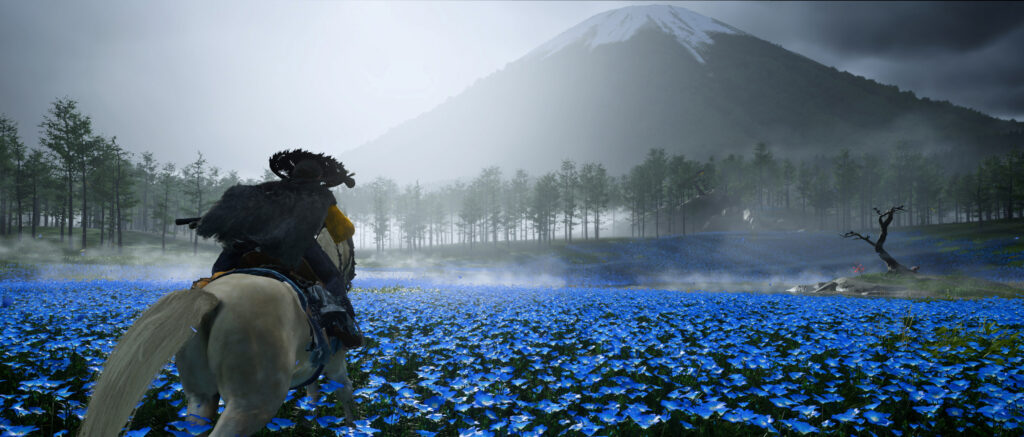
Ghost of Yotei takes Tsushima’s foundation and improves nearly every aspect while maintaining the core identity that made the original special. If you hated Tsushima’s open-world structure, Yotei likely won’t convert you. But for those of us who loved the original, this is the sequel done right. The improvements are substantial but not revolutionary. Mission design shows more variety, exploration better rewards curiosity, and the story, while conventional, is told with greater confidence.
The game doesn’t attempt radical reinvention, instead refining mechanics and enhancing attention to detail. Some might see this as playing it safe, but there’s something to be said for excellence in execution. Sucker Punch has assembled a package that respects player autonomy through multiple viable playstyles and meaningful choices about how to approach objectives.
Ghost of Yotei is the rare sequel that understands what made its predecessor special and builds upon it exceptionally. Atsu’s revenge tale might hit predictable notes, but the journey transcends its familiar narrative through unparalleled player freedom. And with Yotei Legends coming in 2026? I can’t wait to dive back in.