Summary
Therapy Simulator is a celebration of connection and a reminder that even messy conversations can lead to meaningful breakthroughs. It is charming, reflective, replayable, and proudly imperfect in the best possible way.
Developer – Jemboy
Publisher – Jemboy
Platforms – PC (Reviewed)
Review copy given by Developer
WARNING:
At Rectify Gaming, we are committed to fostering a gaming community that is inclusive, respectful, and safe for all players. While this game explores mature and sometimes sensitive subject matter, we want to make it clear that we do not condone or endorse any harmful actions or attitudes depicted within its narrative. Players should be aware that the story touches on a range of heavy themes involving personal trauma, discrimination, violence, and other adult situations that may be unsettling for some audiences.
Furthermore, we encourage players to seek help or support if they are personally affected by any of these issues in real life. Play responsibly and be aware of the impact of the content on your emotions and well-being.
If you or someone you know is experiencing thoughts of Self-harm or Suicide, In Canada, you can reach out to Kids Help Phone at 1-800-668-6868 or visit kidshelpphone.ca. For assistance in the United States, the National Suicide Prevention Lifeline is available at 1-800-273-8255, or visit suicidepreventionlifeline.org , aswell as you can Text HOME to 741741 to connect with a volunteer Crisis Counselor from the Crisis Text Line. We’d also like to thank Safe in Our World for being supportive of our work in Gaming and Helping support Mental Health Awareness through Gaming.
Therapy Simulator begins with a deceptively simple pitch. Sit down in a soft Manhattan office, light a candle, adjust a plant, and talk to people about their problems. What unfolds from that setup is a surprisingly heartfelt experience that embraces the unpredictable nature of therapy itself. The big twist is that the game relies heavily on AI enhanced dialogue, and while that can be a bit messy at times, the imperfections somehow make the sessions feel more genuine. No two people open up the same way, and this game leans into that truth with confidence.
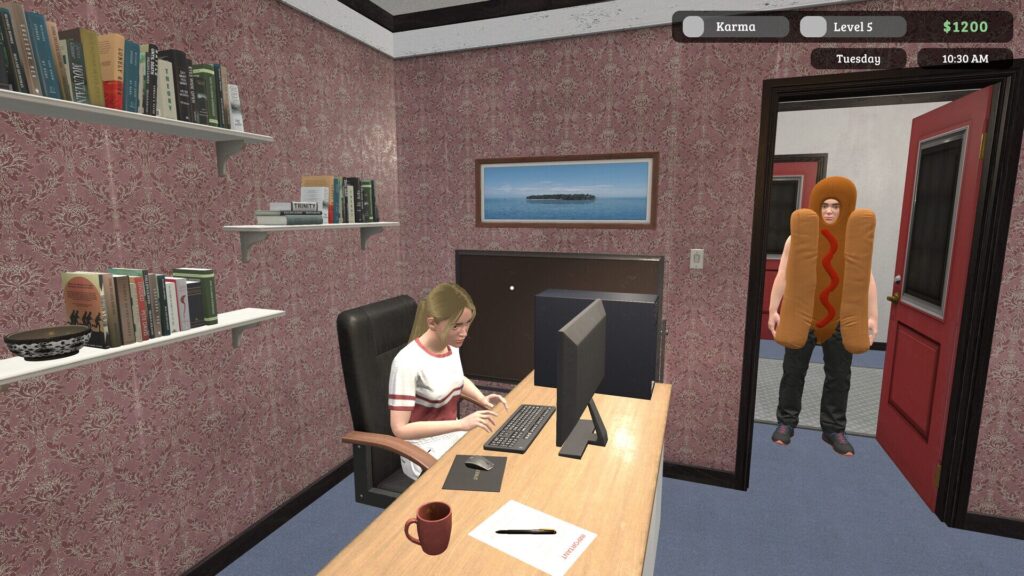
The first thing that stands out is how the patients feel alive in their own strange way. Some come in with easily understood issues while others unravel line by line in unpredictable directions. There are heartfelt confessions, jokes that land out of nowhere, and emotional spirals that catch you off guard. The AI infused writing sometimes stumbles or meanders, but that unevenness feels oddly similar to real conversations where people hesitate or contradict themselves. It adds texture rather than taking it away.
Therapy is not a clean or perfectly polished art. The game clearly understands this. When a patient unloads something complicated and you are given branching dialogue choices, none of the options feel like the single correct answer. That is intentional. Real therapy is not about solving someone instantly. It is about listening, guiding, nudging, and letting people discover their own path. Therapy Simulator uses that philosophy as a gameplay loop and it works far better than expected.
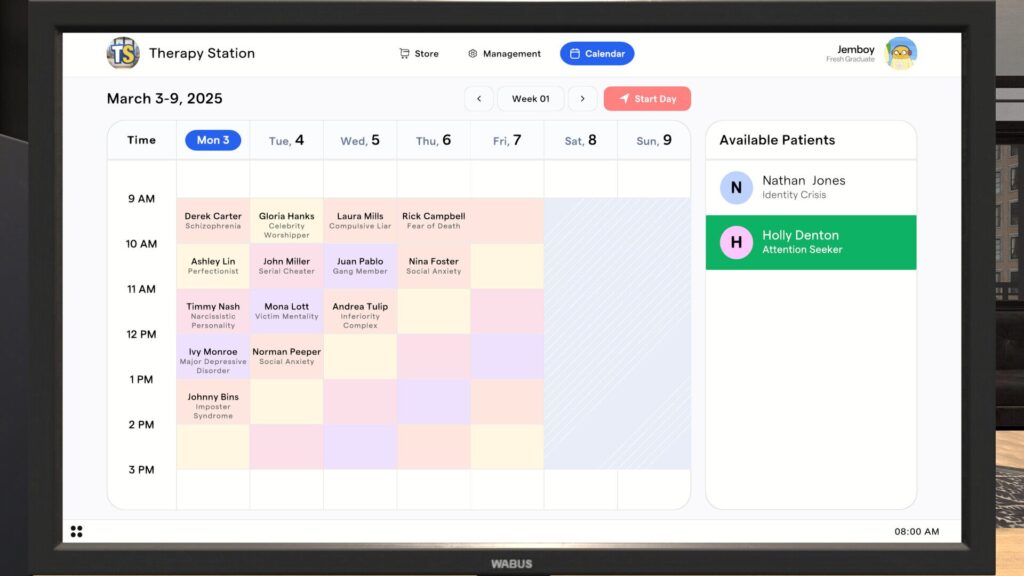
The cozy Manhattan office becomes a character of its own, and being able to customize it is surprisingly relaxing. You start with a modest room but soon you are rearranging chairs, adding small touches, and slowly building a space that reflects your approach as a therapist. Maybe you want a polished, minimalist setup. Maybe you want a soft and inviting room with warm light and plants. The game lets you decide what feels right.
The window overlooking the city is a lovely touch. Cars pass below, day becomes night, and the room feels alive even when no patient is present. It makes each session feel grounded in a world that keeps moving outside your doors. That sense of place helps reinforce the emotional ups and downs of the job.

Across your sessions you meet a wide variety of personalities. Some patients come across as quirky and comedic. Others dig deep into emotional territory. The writing mixes humor with sincerity in a balanced way that rarely feels forced. One moment you are dealing with a conspiracy minded extrovert, and the next you are comforting someone who just needs to be heard for the first time in years.
As you progress, the game encourages you to reflect on your choices. Did you give someone the push they needed. Did you misread the moment and create awkward tension. The consequences are subtle rather than punishing. The focus is on empathy with a sprinkling of experimentation. You can help patients or gently poke at the absurdity of their stories if you feel like playing a little looser. The freedom to shape the tone of each session gives the game real replay value.
The AI assisted dialogue especially shines during longer patient arcs. Sometimes characters reveal things gradually. Sometimes they shift moods unexpectedly. This unpredictability is the main feature rather than a flaw. Life is not scripted and people rarely follow neat emotional paths. Therapy Simulator mirrors that feeling in a charming and occasionally chaotic way.
The game also sends a powerful message simply through its core loop. Talking helps. Listening helps. Opening up helps. Even in a comedic or exaggerated setting, the focus on positive mental health resonates. The game never mocks the idea of therapy. Instead it celebrates the courage it takes for anyone to seek help. That sincerity gives the narrative more weight than its whimsical exterior might suggest.
Therapy Simulator even includes moments that remind players that every individual deserves a unique approach. Someone who needs reassurance will not respond the same way as someone who needs a challenge. Someone who dodges their feelings will open up differently than someone who overshares. The game embraces the idea that there is no single formula for care.
The long term progression is satisfying as well. Your schedule fills up, new faces appear, and the office transforms from a quiet little room into a dynamic workspace that reflects all the emotional journeys you have witnessed. There is a sense of earning your way into the role, learning through trial and error, and becoming more comfortable in your own therapeutic style.
Replayability comes from the endless procedural patients who show up even after the main story concludes. No two runs feel the same. There is always a new face, a new twist in a story, or a new conversational fork waiting to surprise you. Because the dialogue responds to your choices, you can try different approaches and see very different outcomes.
One of the most entertaining new features is the Twitch integration. Viewers can vote in real time on dialogue choices, reactions, and even how to steer emotional moments. Watching a community collectively decide how to handle someone’s crisis or personal breakthrough is both hilarious and oddly wholesome. Streamers get a lot of mileage out of this feature and the game feels perfectly designed for interactive storytelling.
The humor throughout the game stays warm rather than cruel. When something absurd happens, it feels like a natural exaggeration rather than a cheap joke. Therapy Simulator respects the emotional core of its setting even when it playfully pushes boundaries.
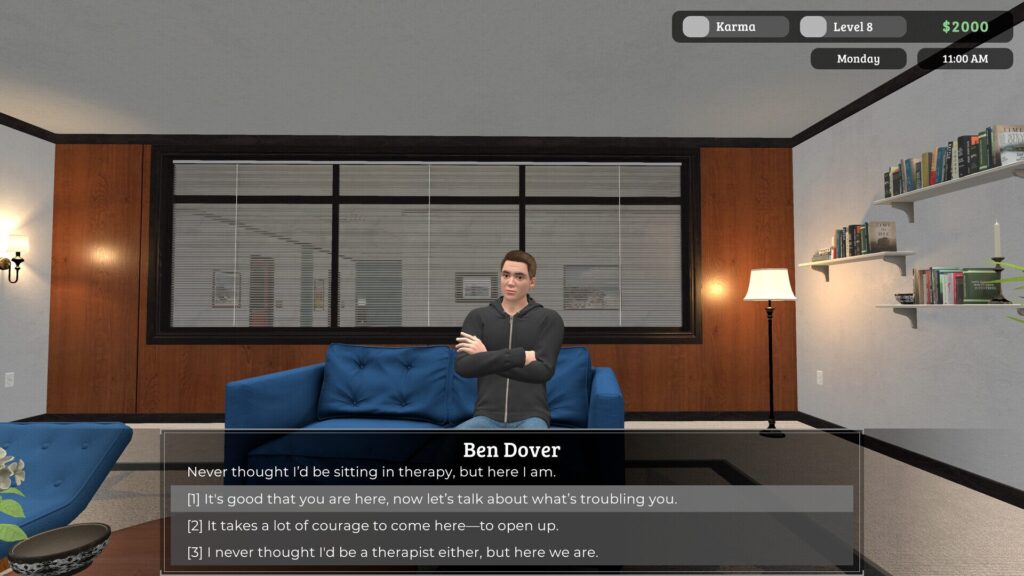
There are definitely moments where the AI output can be clunky or odd, but those moments rarely break immersion. If anything they reinforce the truth that people themselves can be inconsistent, confusing, or unexpectedly honest. The game does not try to be a clinical simulation. It aims to reflect the messiness of human emotion with a wink and a smile.
As the hours go by, you start to appreciate how patient focused the design truly is. Every choice encourages you to think about empathy, communication, and the power of understanding. Even when you play mischievously, the game still presents emotional depth beneath the silliness.
Therapy Simulator stands out because it treats mental health conversations with care while keeping the experience playful and accessible. It shows that therapy is not something to fear or avoid. It is a tool, a resource, and sometimes even a comforting ritual that helps people grow into better versions of themselves.
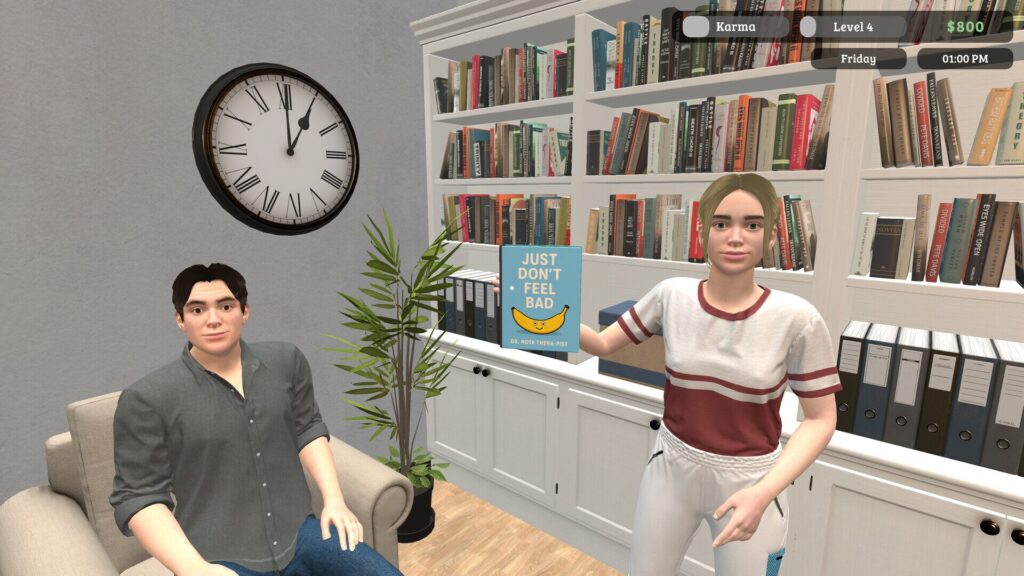
The game may not be perfect, but its imperfections make it human. And that humanity is what ultimately makes it special.
To be honest,Therapy Simulator succeeds by capturing the soul of real conversation. It is funny, heartfelt, unpredictable, and full of moments that make you think about what people need and how we support each other. For players who enjoy narrative adventures with emotional variety, this is an experience worth settling into.
Therapy Simulator is a celebration of connection and a reminder that even messy conversations can lead to meaningful breakthroughs. It is charming, reflective, replayable, and proudly imperfect in the best possible way.