Summary
The game embodies the paradox of adaptation. In trying to stay fresh and unexpected, it sacrifices the timeless strengths of Christie’s storytelling. It’s colorful, ambitious, and sometimes clever, but rarely elegant. Ultimately, Death on the Nile is less a triumphant voyage and more a cautionary tale in how easily a mystery can lose its edge when it strays too far from what makes it compelling in the first place.
Developer – Microids Studio Lyon
Publisher – Microids
Platforms – PS5, Xbox Series X|S, and Nintendo Switch, PC (Reviewed)
Review copy given by Publisher

Agatha Christie adaptations always arrive with a sense of expectation. The queen of mystery crafted stories so iconic that any modern retelling carries both weight and risk. After Microids tackled Murder on the Orient Express with a fresh perspective, all eyes turned to Agatha Christie – Death on the Nile. It had the chance to be the studio’s crowning achievement, a lavish blend of classic Christie intrigue and modern design. What it delivers instead is a bold but uneven experience that never quite reaches the elegance of its predecessor.
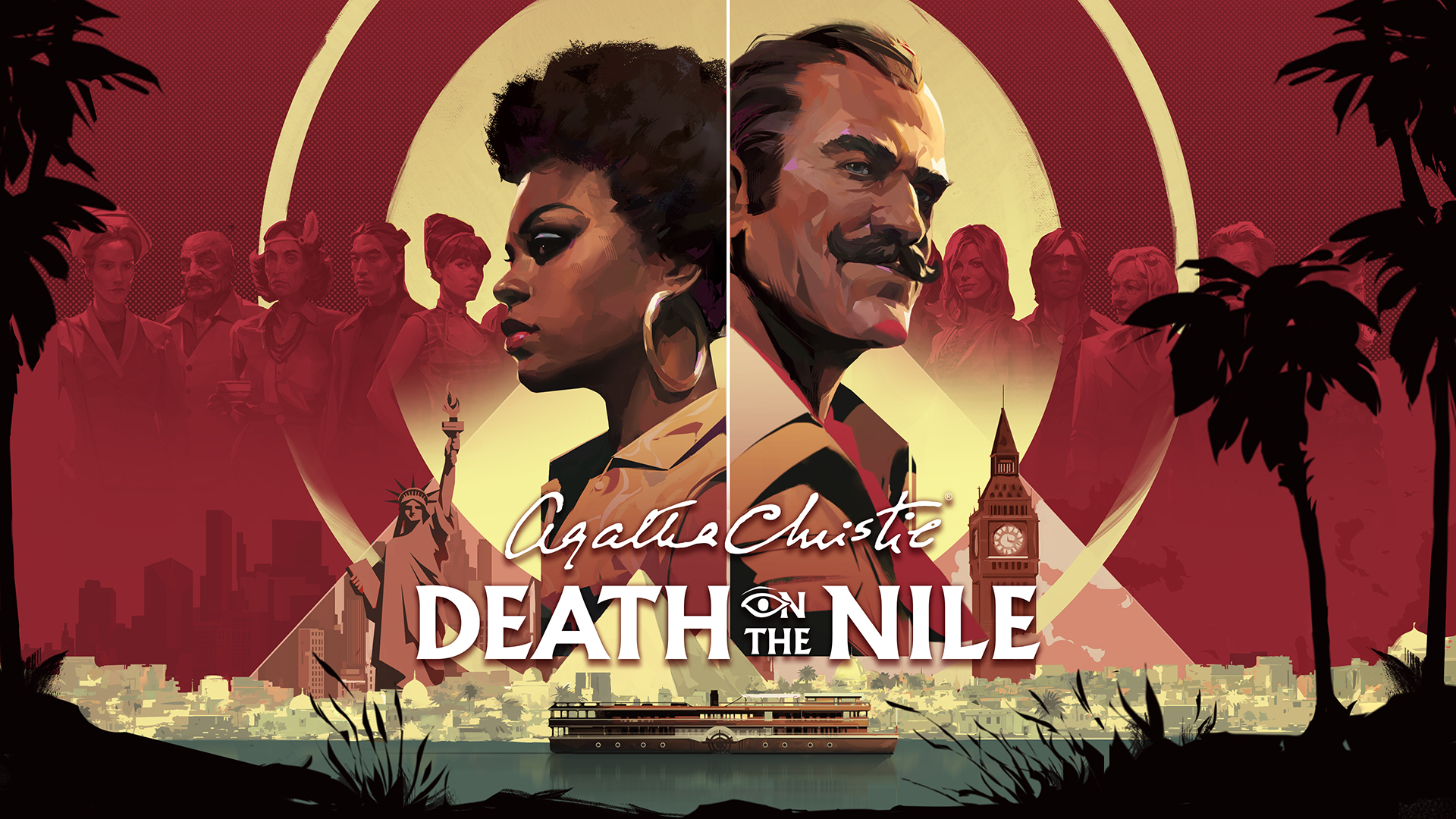
The game sets the stage with an irresistible premise. A peaceful luxury cruise along the Nile descends into chaos after a crime disrupts the serenity of the journey. Of course, the famously meticulous Hercule Poirot is onboard, ready to unravel the threads of deception. But there’s a twist. This time, he isn’t the only one on the case. Players also follow Jane Royce, a private detective tracing a murderer’s trail from London to Majorca to New York before her path converges with Poirot’s in Egypt.
The dual-protagonist structure is one of the game’s most interesting additions. Switching between Poirot’s methodical analysis and Royce’s more direct investigative instincts adds a rhythm to the narrative. It creates space for two different tones to coexist, making the eventual convergence of their storylines at Abu Simbel feel like a payoff that has been earned. This dynamic approach also adds more variety than just watching Poirot interrogate suspects endlessly.

But with that ambition comes a cost. The story, while grand in scope, is stretched beyond its breaking point. Murder on the Orient Express thrived because of its focus. It was tightly wound, every beat driving forward. Death on the Nile tries to expand the story beyond the book, weaving in new chapters and locations, but in doing so it sacrifices pacing. What should feel sharp and suspenseful instead comes across as bloated and sometimes exhausting.
This is a shame, because the settings themselves are brimming with potential. The game leans heavily on its 1970s aesthetic, and it does so with gusto. Bell-bottoms, disco clubs, feminist movements, and psychedelic backdrops infuse the world with a colorful vibrancy. It’s a clever way of grounding a classic story in a decade defined by change. Poirot looks slightly out of place against the backdrop of counterculture, but that fish-out-of-water quality actually works in the game’s favor.

When it comes to gameplay, the developers made some bold choices. The inclusion of stealth sequences gives the game a dose of tension that fans of Hitman might recognize. Sneaking past guards or slipping into restricted areas as Jane Royce provides welcome variety and makes her sections feel more urgent. Unfortunately, the core movement mechanics don’t hold up as well. Something as simple as walking upstairs feels clunky and awkward, leaving basic navigation feeling like an afterthought compared to the polish of the stealth.
Poirot’s side of the gameplay, however, sticks to what worked before. The mindmap system returns, allowing players to piece together information visually and make deductions in a way that feels interactive rather than passive. This remains one of the franchise’s strongest mechanics, a satisfying tool that embodies the spirit of detective work. The confrontation system also comes back, letting you use collected evidence to corner suspects and expose lies. These moments remain some of the game’s most satisfying beats, even if they are spread thinner across the extended story.

Unfortunately, the voice acting holds the game back in a significant way. If Orient Express struggled with inconsistent performances, Death on the Nile suffers even more. Poirot’s lines are delivered with varying degrees of conviction, but many side characters sound flat, robotic, or simply under-directed. Dialogue is the lifeblood of a mystery game, and without strong vocal performances to sell the tension and emotion, the experience loses weight.
The unevenness extends to the variety of locations. London has some charm, Majorca brings sunny vibes, and New York injects some metropolitan energy, but these feel more like detours than destinations. Egypt remains the heart of the narrative, and when the game fully settles there, the sense of place is finally strong and compelling. The grandeur of the Nile and the majesty of Abu Simbel give the mystery a proper stage, but reaching that point can feel like a chore.

The extended storyline itself is both the game’s biggest strength and its biggest flaw. For longtime Christie fans, it’s thrilling to see a fresh investigation unfold beyond the well-trodden beats of the novel. For newcomers, it provides surprises that can’t simply be spoiled by reading the source material. Yet mystery works best when it’s sharp and economical. By trying to stretch Poirot’s investigation across continents and into extra layers, the story blunts its own suspense.
The thematic focus on the 1970s also deserves credit. The game doesn’t just drape the decade over its settings; it actively integrates its social currents into the narrative. Characters feel shaped by the feminist movement, the shifting cultural norms, and the broader questions of identity and liberation that defined the era. This gives the story more texture than if it had simply stuck to a timeless Christie presentation.

But all the bold choices in the world can’t mask the uneven execution. The stealth mechanics feel inspired but underdeveloped. The dialogue systems remain satisfying, but they’re weakened by lackluster voice work. The settings are ambitious, yet the pacing drags them down. It’s a game that seems constantly caught between what it wants to be and what it actually delivers.
Even the technical polish leaves something to be desired. Character animations often feel stiff, and environmental interactions don’t always register smoothly. Combined with the sluggish movement, these issues erode immersion. While no single flaw is game-breaking, the accumulation makes the entire package feel less refined than it should.
As a whole, Agatha Christie – Death on the Nile is a fascinating case study in ambition outpacing execution. It tries to expand the formula with new protagonists, stealth mechanics, and a bigger world, but in doing so it loses the precision that made Murder on the Orient Express compelling. Instead of a tight, nail-biting mystery, we get a drawn-out, meandering investigation.

For dedicated Christie fans, the game still has value. There’s enjoyment to be found in seeing Poirot and Jane Royce unravel threads across such a wide canvas. The extended narrative ensures that even readers familiar with the book can discover new twists and turns. But for players looking for a polished, sharply paced mystery, Death on the Nile might feel like a step back rather than forward.
The game embodies the paradox of adaptation. In trying to stay fresh and unexpected, it sacrifices the timeless strengths of Christie’s storytelling. It’s colorful, ambitious, and sometimes clever, but rarely elegant. Ultimately, Death on the Nile is less a triumphant voyage and more a cautionary tale in how easily a mystery can lose its edge when it strays too far from what makes it compelling in the first place.