Apokerlypse presents itself with the kind of bold confidence that immediately suggests something new, something that will twist familiar systems into fresh shapes. It talks about poker, it dresses itself in poker language, and it sells the fantasy of high stakes card mastery at the Tavern at the End of the World. The reality, however, is that poker is more of a skin than a foundation. Outside of basic hand ideas like pairs and straights, the experience quickly shifts into something closer to a card strategy rogue like deck builder where the rules are constantly rewritten by systems layered on top of systems.
At its core, the game is about emptying your hand while bending every possible rule in your favor. That familiar objective is quickly overwhelmed by the sheer density of mechanics. Chips, skills, enchantments, and modifiers all collide to create runs that feel less like calculated poker and more like controlled chaos. The promise of poker strategy fades early, replaced by a much louder identity built around breaking the game in as many ways as possible.
What really defines Apokerlypse is its obsession with combinations. The so called demon chips are where most of the personality lives. These modifiers reshape how cards behave in ways that can spiral into explosive turns. One moment you are playing carefully, and the next you are triggering cascading effects that wipe out entire hands in ways that feel almost unreadable at first. It is chaotic, but it is the kind of chaos that rewards experimentation rather than caution.
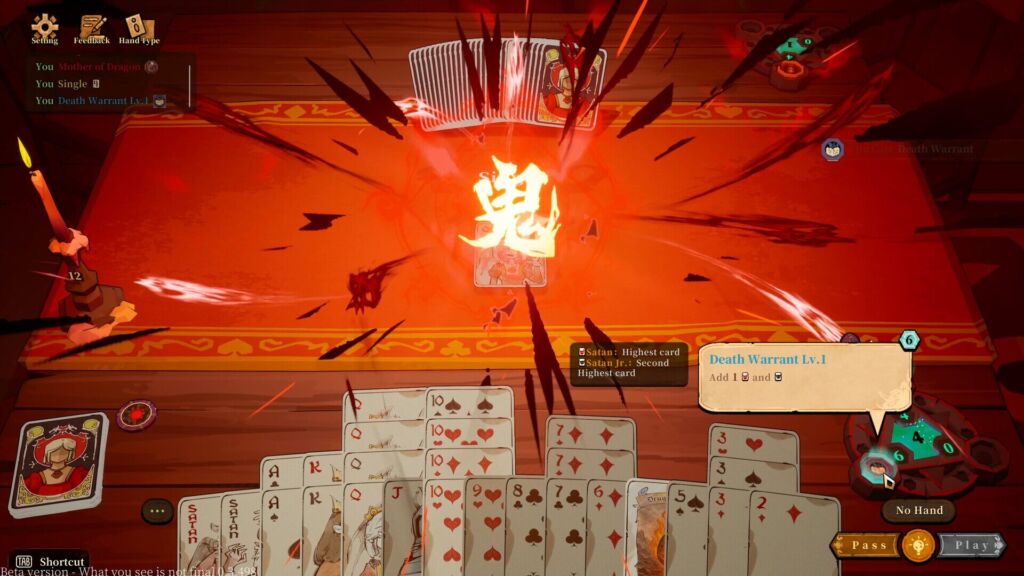
The skill system pushes that idea even further. Abilities like Dragonfire Bomb, Blade Storm, and Emberblade Katana are not subtle tools. They are spectacle machines designed to flip matches on their head. The game constantly encourages you to abandon safe play and lean into absurdity. When it works, it produces moments that feel wildly over the top in the best possible way. When it does not, it can feel like you are watching your carefully built strategy get drowned in randomness.
The asynchronous multiplayer layer adds another wrinkle. You are not facing live opponents, but instead facing builds created by other players. This gives every encounter a strange sense of personality, as if you are fighting echoes of real strategies that have already been stress tested by someone else. It is an interesting idea that helps the game feel more alive, even when you are playing solo.
The hero system adds some structure to the chaos. Each character pushes you toward a different style of play, whether that is chaining attacks endlessly, overwhelming enemies with explosive plays, or building intricate setups that reward patience. It gives you just enough direction to make the overwhelming number of systems feel slightly more manageable, while still encouraging experimentation.
Where Apokerlypse struggles a bit is in clarity. There are so many moving parts that it can become difficult to understand what actually caused a winning or losing run to happen. The game seems almost proud of this opacity, as if discovery is meant to come from repetition rather than explanation. For some players that will feel exciting. For others it will feel like being locked out of understanding their own success or failure.
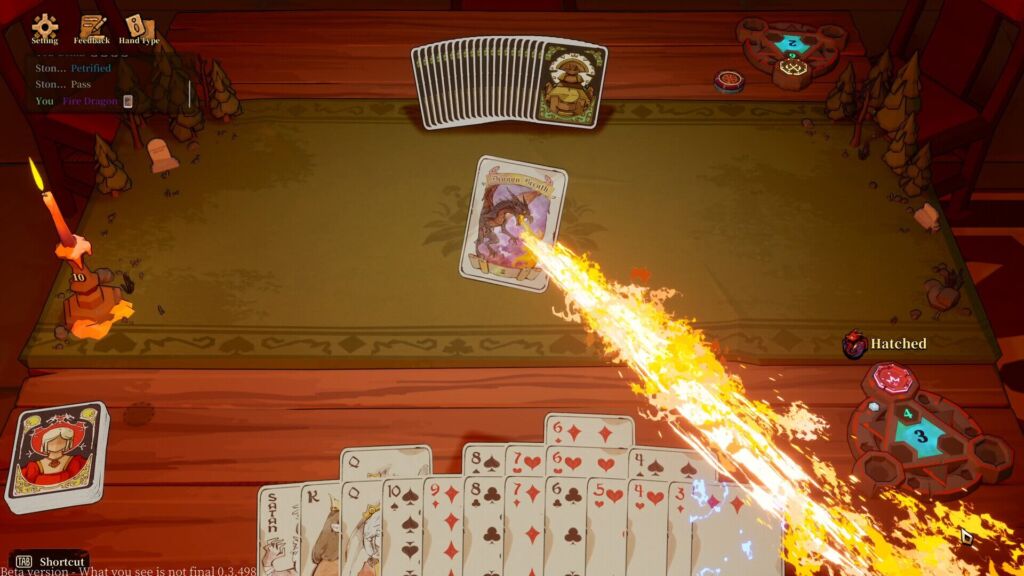
Even with that complexity, the progression loop is compelling. Each run feels like an invitation to push a little further into chaos, to stack a few more modifiers, to see how far the system can be bent before it breaks. The sense of escalation is strong, and the game is constantly feeding you new tools to experiment with.
Single player mode holds its own surprisingly well. The difficulty curve climbs in a way that forces adaptation, and the game does a good job of making you feel like your growth is matching the escalating challenge. There is a steady rhythm of learning, failing, and returning stronger, which keeps the loop engaging even when the mechanics start to blur together.
Multiplayer, on the other hand, feels more like a showcase of creativity than a competitive battleground. Because you are fighting against recorded builds, the focus shifts toward understanding patterns rather than reacting to a living opponent. It works, but it is more puzzle like than truly competitive, which may not be what everyone expects going in.
Honestly, Apokerlypse is not really about poker at all. It borrows just enough of its structure to feel familiar, then quickly dives into a dense web of deck building systems that prioritize chaos, synergy, and experimentation over traditional card play. It is messy, overwhelming, and occasionally confusing, but it is also constantly inventive in how it lets you break its own rules. For players who enjoy pushing systems until they crack, it offers plenty to dig into, even if the poker fantasy it advertises fades into the background almost immediately.