Summary
Titanic Scion is stylish but shallow, clunky but occasionally fun. It’s a PS2-era mech game wearing modern armor, and no amount of polish can hide the rust underneath.
Developer – Marvelous Inc.
Publisher – XSEED Games, Marvelous USA, Inc., Marvelous Europe
Platforms – Nintendo Switch 2, PS5, Xbox Series S|X,PC (Reviewed)
Review copy given by Developer

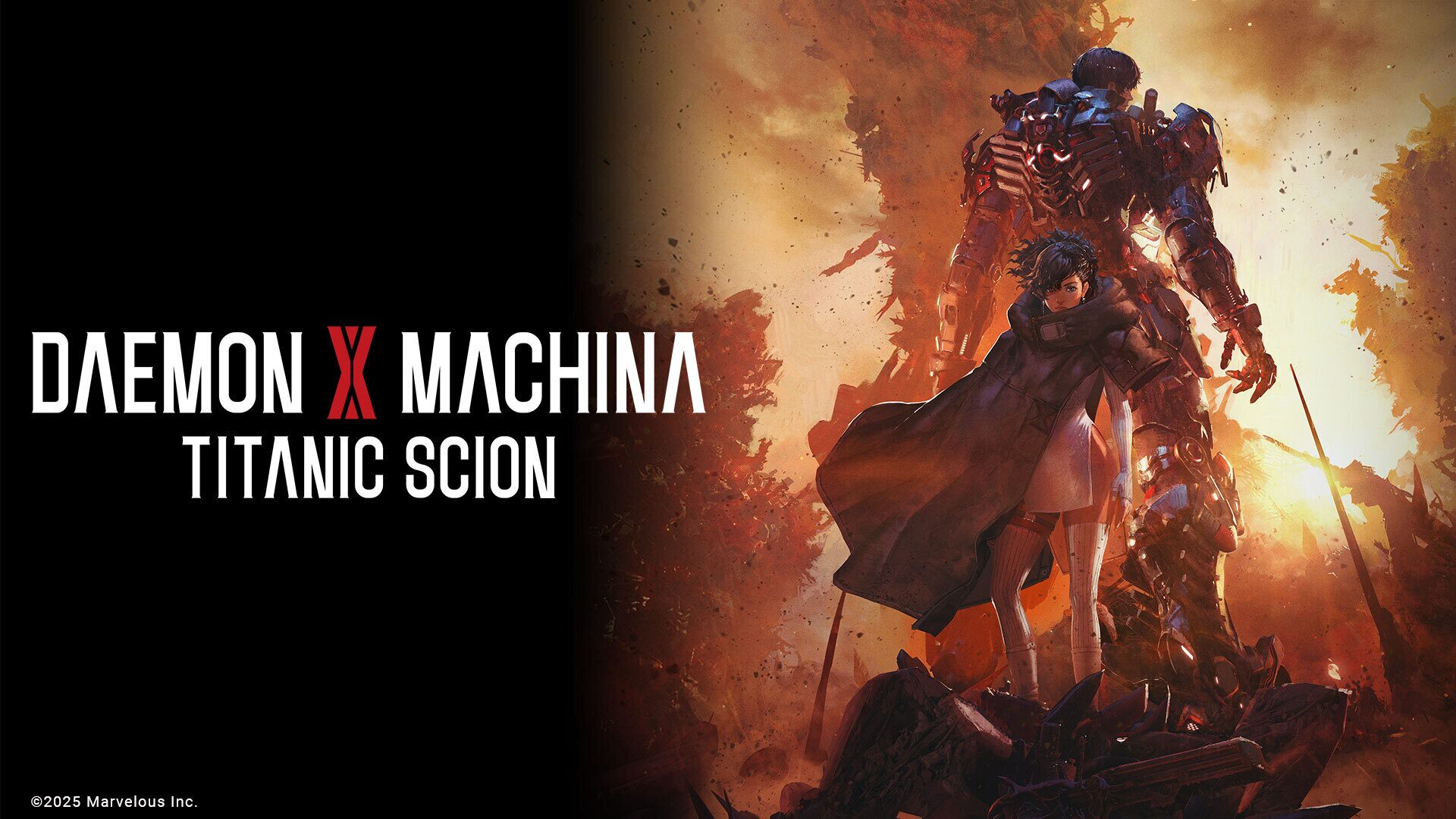
Daemon X Machina: Titanic Scion is a game that knows exactly what it wants to be: big mechs, big explosions, and a flashy sci-fi setup where humanity’s survival depends on you strapping into a hulking suit of armor and saving the day. On paper, that sounds like a dream come true for mecha fans. In practice, though, Titanic Scion struggles to justify its price tag and often feels like a relic of the PS2 era dressed up in a more modern coat of paint.
Right from the jump, Titanic Scion pitches itself as a dark, epic sci-fi adventure. The world is under threat, giant enemies stalk alien landscapes, and you’re given an Arsenal, a customizable mech built to turn the tide. That’s a cool hook, but the execution is painfully cliché. Characters never really come alive, dialogue feels recycled, and the story’s heavy tone veers into awkward or even icky territory more often than it should. After a couple of hours, I stopped paying attention entirely. None of the cast grabbed me, and the big narrative beats felt like scenes I had already watched a hundred times before in other games or anime.
That same sense of being stuck in the past bleeds into how Titanic Scion feels moment to moment. There’s an undeniable PS2-era energy to its design, which could have been nostalgic if handled well. Instead, it highlights just how clunky and outdated many of its systems are. Every action is slowed down by one or two extra menus. Want to change your loadout? Be prepared for a slog of unnecessary steps. Some missions require you to be offline, which is baffling. To do them, you need to exit to the main menu, disable online functionality, and then reload the game. Why these side missions couldn’t just exist normally is beyond me, but it perfectly sums up Titanic Scion’s design philosophy: add friction for no reason.
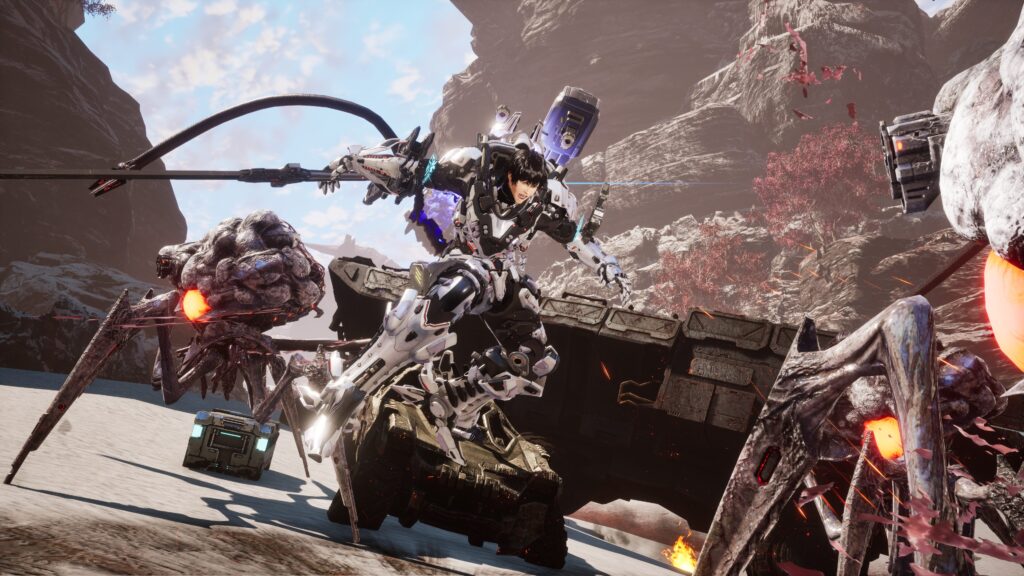
Combat is the core of a mech game, and here it’s a mixed bag. Flying around in your Arsenal, unleashing missiles and slicing through enemies, feels good in short bursts. The problem is that combat never evolves. Movement is clunky and unresponsive, so instead of feeling like a fast, precision-built machine, your Arsenal often lumbers around the battlefield. Weapons only add to the monotony. Most have a single basic attack with no depth or real combo potential, and the promise of carrying four weapons at once sounds exciting until you realize they all function about the same. It’s repetition disguised as variety.
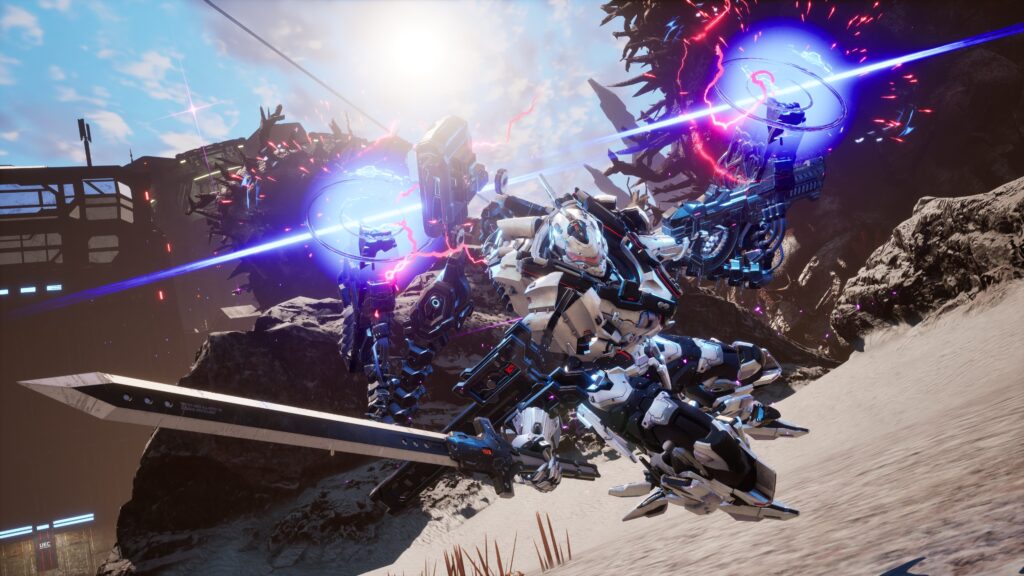
Customization is another area where Titanic Scion looks strong on paper but disappoints in practice. Building out your Arsenal with heavy or light parts should encourage experimentation, but the differences are too shallow. Heavier builds lean into ranged combat, lighter ones into melee, and that’s about it. Gear stats don’t make much of an impact either, feeling like random numbers shuffled around rather than meaningful tweaks to your playstyle. To make matters worse, missions sometimes force you into specific weight classes, even for trivial objectives like moving boxes from one place to another. These moments don’t test your build; they just waste your time.
Then there’s the mutation system. This is how you unlock skills, by altering your pilot’s body with femto technology. On paper, it’s a neat way to tie character progression into the game’s lore. In reality, it just makes your character look more monstrous the further you go, undermining the entire point of customizing your pilot’s appearance in the first place. Worse still, the skills themselves often feel niche or underwhelming. Rather than being excited to unlock new abilities, I felt like I was wading through another clunky system that didn’t respect my time.
Multiplayer doesn’t save things either. The marketing pushes the idea that you’re never fighting alone, but in reality, unless you’re directly in a co-op mission, the world feels empty. Other players don’t populate the overworld. The only trace of their presence is the occasional healing station they’ve set up, which doesn’t exactly scream community. For a game that tries to present itself as an epic, connected adventure, the online features feel barebones and oddly restrictive.
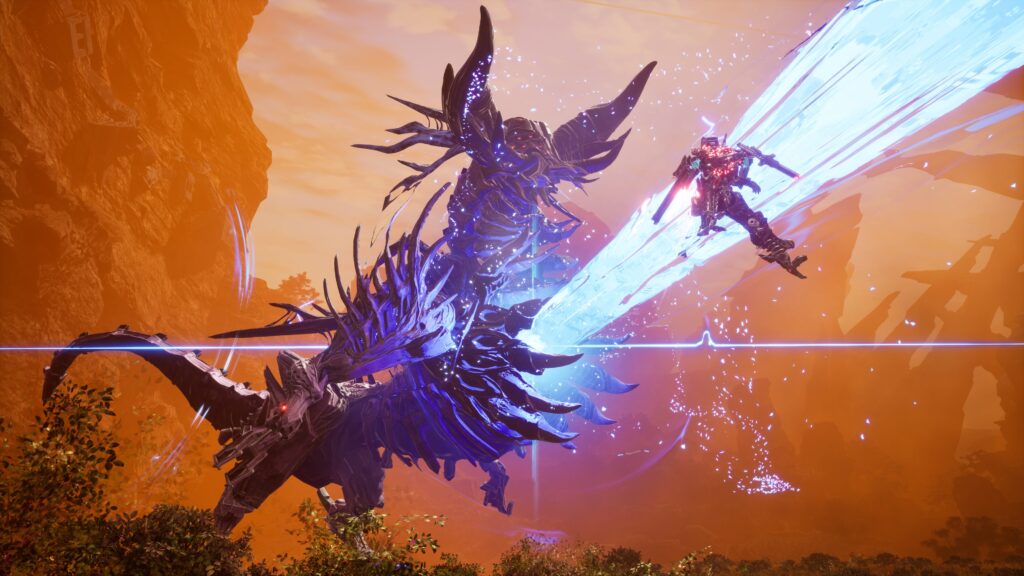
Visually, Titanic Scion is a mixed bag. The mechs themselves look great, with a sharp, angular style that makes them feel powerful. Some environments have a decent sense of scale, and boss battles at least attempt to deliver spectacle. But even here, the cracks show. The open world is often barren, filled with repetitive objectives and dull scenery. For every big flashy fight, you’ll spend twice as much time on filler missions that feel like chores.
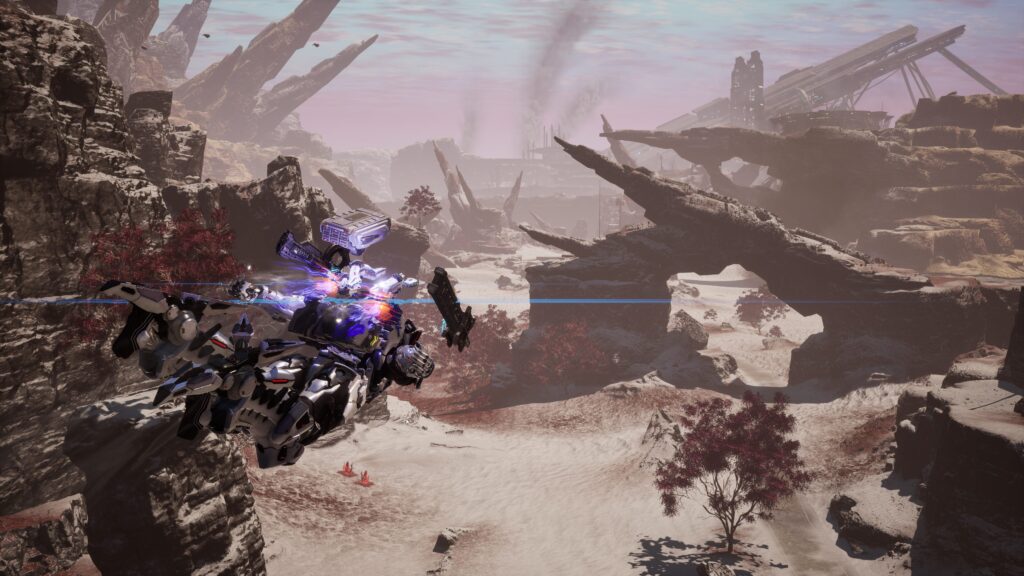
What makes Titanic Scion so frustrating is that it has the foundation of something much better. The idea of piloting a customizable mech through massive battlefields still has undeniable appeal. There are glimpses of fun when the combat flows, or when a boss fight actually delivers on the promise of “Titanic” action. But those moments are drowned out by clunky systems, uninspired mission design, and a story that fails to hold your attention.
It doesn’t help that the game feels overpriced for what you get. The content simply doesn’t justify the cost, especially when much of it feels like filler or busywork. For fans of the series who desperately want more, there’s some enjoyment to be found in customizing your Arsenal and tackling missions with friends. For everyone else, it’s hard to recommend.
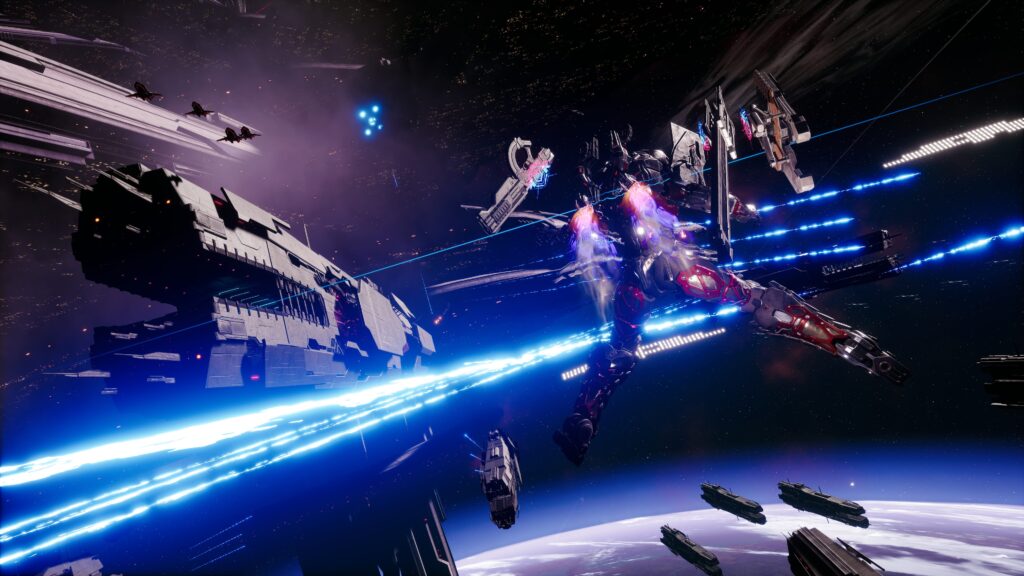
Daemon X Machina: Titanic Scion feels like a game trapped between generations. It wants to be a modern, high-octane mech experience, but too much of it is weighed down by outdated design and shallow execution. Instead of evolving the formula, it rehashes it with a new coat of paint and a higher price tag.
In the end, Titanic Scion is a decent mech game buried under frustrating design choices, clunky systems, and a story not worth your time. It’s not a total disaster, but it’s far from the must-play experience it tries to be.