
Summary
Grifford Academy is a solid turn-based RPG. The story is pretty decent, filled with interesting conversations and situations that highlight relationships with friends and loved ones that can cause issues regardless if you have the same goals. The combat system, while limited, works well to provide a challenge by adding specific charge rates per weapon and creating a sense of strategy when selecting your individual load outs. At the current price of $15 you will get at least a solid 10 hours from the game on the first playthrough, so the value seems on par with the price which in this economy is always a great thing. Graphically, the game has a somewhat unique style which gives a fantasy Saturday morning cartoon feel and the music works well to bring everything together. As I said, Grifford Academy has a solid foundation. There is a lot here that can be crafted to make the game even better than it currently is. I hope that the developers receive enough support so that we can experience the full story soon! Upon release, I will provide an update as I am sure there is quite a bit more to expect here.
Developer: LandShark Games
Publisher: LandShark Games
Platform: Steam (Reviewed)
NOTE:
The following game is being reviewed in an Early Access State, the game may change after the release of this review, this review reflects the game at the time of publishing.
Grifford Academy is a new turn-based RPG by LandShark Games that was added to Steam’s Early Access games recently and I had the chance to play through the current content that has been released. I played through all 5 chapters and while there are some weaknesses here and there with the title, overall there is a really solid foundation here that has a lot of potential.
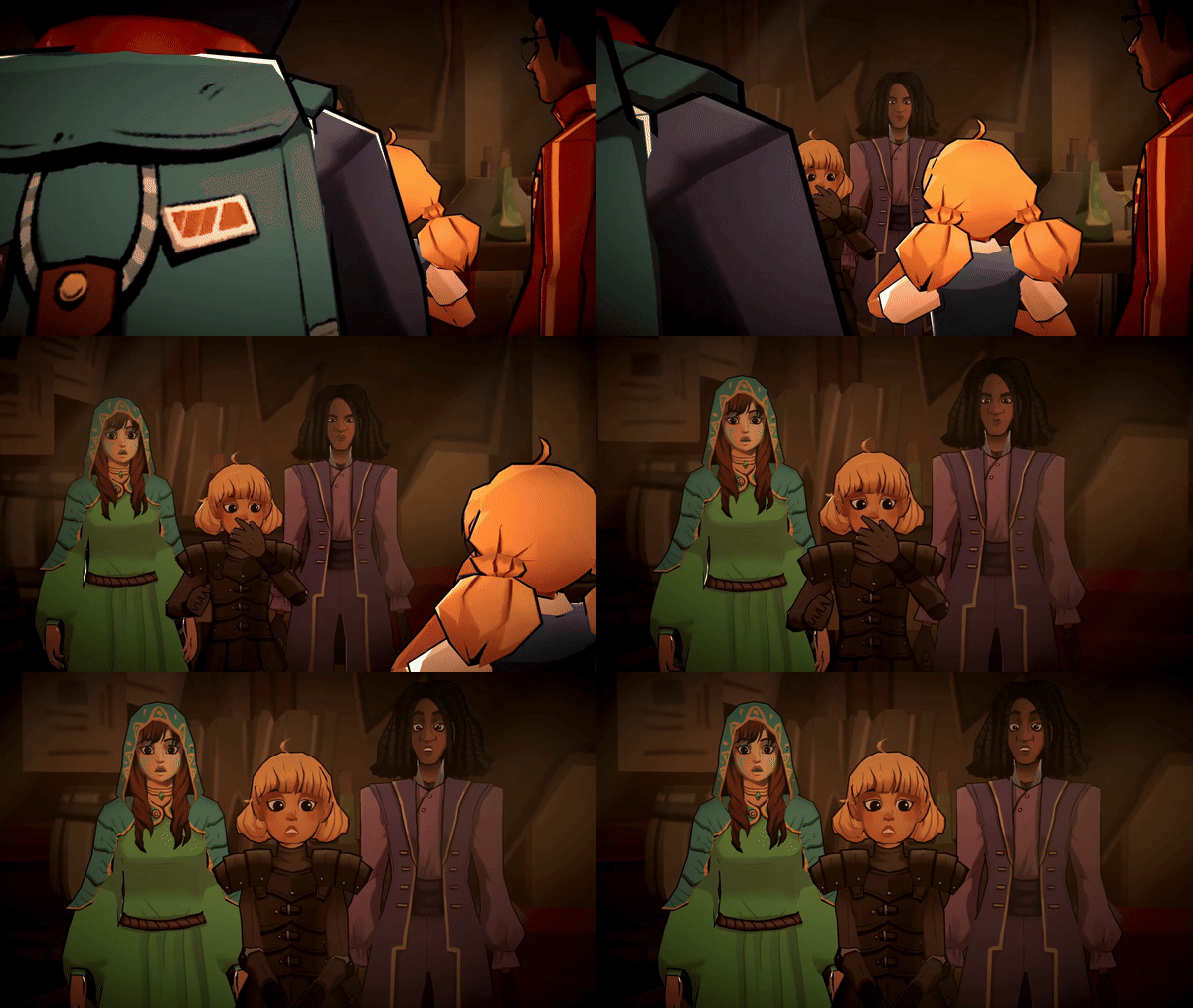
The game starts with a few characters swept away into a fantasy world called Caldria. A mystical book inside their school’s library has a special inscription that allows users to enter the world of the book. We are quickly introduced Erika, a young girl who is responsible for the well-being of her brother. After a brief introduction to the world our party grows quite quickly into a group of 3 students. These three students are your core party for about half of the current content and there is a small shuffle that introduces a new character to replace a member. Each of these characters starts with a weapon that highlights a role that the character can excel in. They aren’t stuck with that role however as each character can be customized by stat allocations to suit your needs better.
Erika, the main character, has a hockey stick as her main weapon and this weapon grows with more offensive growth. Typically weapons that fall into the same category are similar such as hammers, greatswords, and other straight forward damaging weapons. Her primary weapon causes stagger which reduces the enemies turn meter to give you a chance to switch turn order.
Our second character, Viva, is more of a support/healer type character who specializes in weapons that can provide status boosts and overall protection of the team. Her primary weapon heals our group which is very helpful in fights by keeping our units in the fight.
Our third character, Cap, tends to be more of a debugger type character who utilizes similar weapons like Erika but a lot of the weapons produce status ailments. His primary weapon cleanses himself of status ailments as well as doing decent damage.
Jinnie, the fourth character who joins the party, unfortunately removes another from our group and replaces her with someone that is very similar in role to Eurika. This choice seems to hamper progress more than aid. This was one of my first problems with the game as I was heavily invested in the replaced character and decked them out in great gear just to lose them. This change completely throws the balance of the party out the window and makes progress quite a bit harder than I feel it should be.
Progression in the game involves wandering an overworld map that is a simple point and click interface that instantly moves you to that area. Think of games like Final Fantasy Tactics and you will get the idea. The map is filled with nodes are points of interest such as battle grounds, towns, castles, and other random encounters. World exploring is simple but effective and reduces the time spent exploring, and allows you to spend more time interacting with characters and battling. After each battle, you are given a bit of essence to spend on buying weapons and consumables and also some sort of backend experience gain to increase your character’s level. If you have played an RPG before you will quickly become acclimated to what we have here in Grifford Academy.
Story wise all of the characters are well written and have an interesting relationship with each other that develops over the course of the 10 hour game. Whether it’s love interests, general annoyances, and jealousy this isn’t your standard fantasy story. The characters each have their own motivations that intertwine into one general purpose regardless of how much they may disagree or care about the reasoning behind their goal. Sometimes these interactions work and sometimes they fall flat but I was always interested in where the story would turn next.
The general story follows our group as they make their way through a magical world that somewhat reminded me of one of my childhood favorite movies, The Neverending Story. There is an evil force that has its grip on the land and that force is growing through the use of very powerful dark magic. Some of the students that were sucked into this world have been absorbed into monsters and as you progress in the game trying to defeat the source of evil, you also rescue the kids from their imprisonment. Of course there are twists and turns, characters you meet that you might suspect of having good intentions are not always what they seem and this works both ways. Unlikely heroes and villains are created in this scenario and navigating through this world doing side quests helping out different villages and their inhabitants will keep you progressing but also wondering who you can really trust.
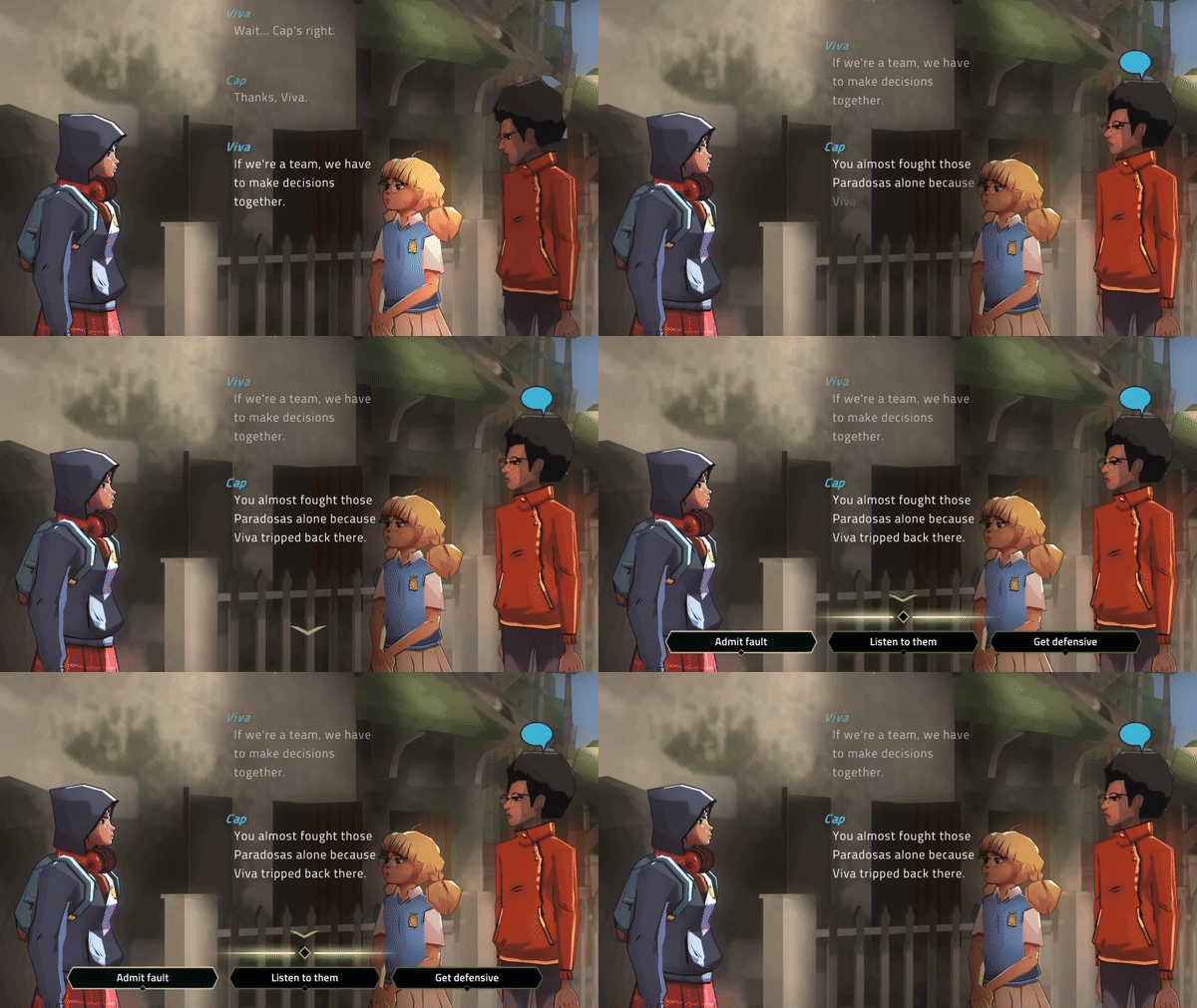
Technically the game does this through mostly text driven dialogue between the party and the other NPCs. The game has no voice acting and some of the interactions are lengthy but nothing that drags on too long to bore. Occasionally, you are given choices in the dialogue which can sometimes shape your character’s nature that can provide permanent buffs for the rest of the game. A few examples are starting out the battle with buffs like reflecting an attack, retaliating after an attack, or increases of specific stats for that character. While I don’t believe any of these selections change the game’s narrative, it is nice that your choices can have meaning in some way even in small doses like this.
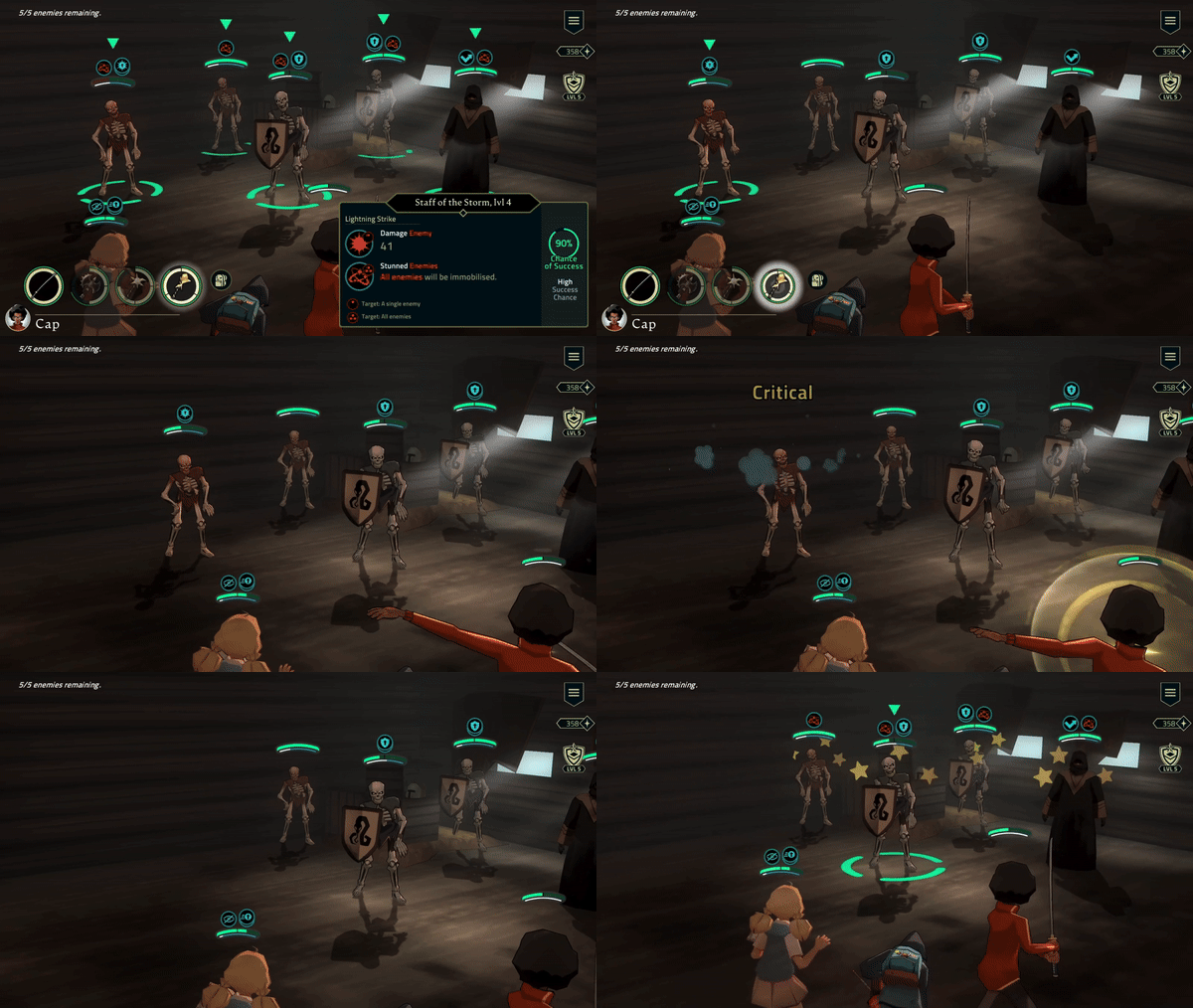
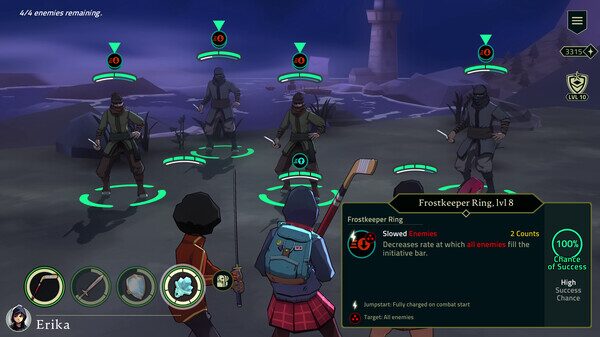
Grifford Academy utilizes a pretty simple turn-based combat system, but it can be quite challenging if you do have the right weapons assigned to your team members. Each character and enemy has a turn meter that once filled they can perform an attack of their available weapons that have enough charge or can use an item during their turn. Weapons have individual charge requirements that can range between 1-4 turns, and each turn generates 1 charge towards all of your weapons. Your primary weapon is a 1 charge use item that can be used every turn so you can always make an attack which is nice, and most of the time stronger weapons or weapons that can cause debuffs typically have a longer charge requirement.
Figuring out the best way to balance your weapons is key to being capable in battle as you definitely don’t want to stack a bunch of 3-4 charge weapons and be stuck using your simple primary weapon for several turns while enemies are doing huge amounts of damage. One of my favorite combos was having a weapon that causes defense down to the team and the next character using a weapon that hits all enemies utilizing the prior debuff application to do more damage. Using debuffs is a key element to the battle system because oftentimes the enemies can out perform your team in damage and status effects. Putting enemies to sleep, or stunning them for a turn, or even causing stagger to delay their turn can make battles much easier. This is especially the case when you don’t have the healer in the party anymore and you are relying on juggling status effects and dealing as much damage as possible to weaker enemies to reduce their numbers.
There are a few minor issues that I do have with Grifford Academy, that I have suggested fixes for in the game’s discord and there are a few others that have done the same. The overall developer response is favorable and they are very interested in making the game enjoyable for everyone. A few issues that I had with the game was the fact that if you purchase a weapon and are using it, you can’t find an upgraded version for that weapon until you sell your lesser copy and refresh the store’s inventory. I went through the majority of the game without realizing this until I finally found an upgrade that was worth using and then the next time I went to a shop they had the upgraded version of the weapon that I just sold and it was better than what I just purchased. I wish there was a way that you could spend the in-game currency, essence, to upgrade the items that you enjoy using. My other issue with the game is the balancing of the party and the cost of stat attribution as your characters level up. Each level you receive 1 point that you can use to allocate into different stats. By the end of the game, you will reach about level 15 and have a total of 16 or so points to spend per character. To fully level up an attribute, it requires 15 points, so you will be able to allocate a single point into another stat. This somewhat locks you into a certain stat unless you choose not to really focus on a stat. This leads to characters being somewhat the same, boosting a good portion of the primary weapon and choosing 1 attribute to increase barely. It didn’t make much sense to me to spread my stats out too thin due to the amount of increase for each level.
One technical issue I had in the game was that in the last chapter, my game would get stuck during dialogue and I couldn’t complete the quest which locked me out of completing the game. Luckily, the developer was extremely responsive in Discord and they were able to fix this bug in a day or two and provide the update to allow progression. I think this was a very specific bug that didn’t seem to affect many people but their speed in fixing these issues is a great sign.
Overall, Grifford Academy is a solid turn-based RPG. The story is pretty decent, filled with interesting conversations and situations that highlight relationships with friends and loved ones that can cause issues regardless if you have the same goals. The combat system, while limited, works well to provide a challenge by adding specific charge rates per weapon and creating a sense of strategy when selecting your individual load outs. At the current price of $15 you will get at least a solid 10 hours from the game on the first playthrough, so the value seems on par with the price which in this economy is always a great thing. Graphically, the game has a somewhat unique style which gives a fantasy Saturday morning cartoon feel and the music works well to bring everything together. As I said, Grifford Academy has a solid foundation. There is a lot here that can be crafted to make the game even better than it currently is. I hope that the developers receive enough support so that we can experience the full story soon! Upon release, I will provide an update as I am sure there is quite a bit more to expect here.