
Summary
This isn't a perfect entry point to the series. If you've never played an Octopath game before, start with the second one. But if you've already experienced both previous entries and want more of this specific flavor of JRPG, Octopath Traveler 0 offers enough new ideas and refined systems. Square Enix's effort to transform a mobile gacha game into a legitimate console RPG is impressive.
Developer – Square Enix
Publisher – Square Enix
Platforms – Nintendo Switch 1|2, PC, Xbox One, Xbox Series S|X, PS4, PS5 (Reviewed)
Review copy given by publisher
Octopath Traveler 0 arrives as something of an anomaly. This game began as a free mobile gacha title called Champions of the Continent, yet Square Enix has transformed it into a full-fledged console experience. The result is one of the grimmest and most mechanically refined entries in the series and definitely worth checking out if you’re a fan of the previous titles.
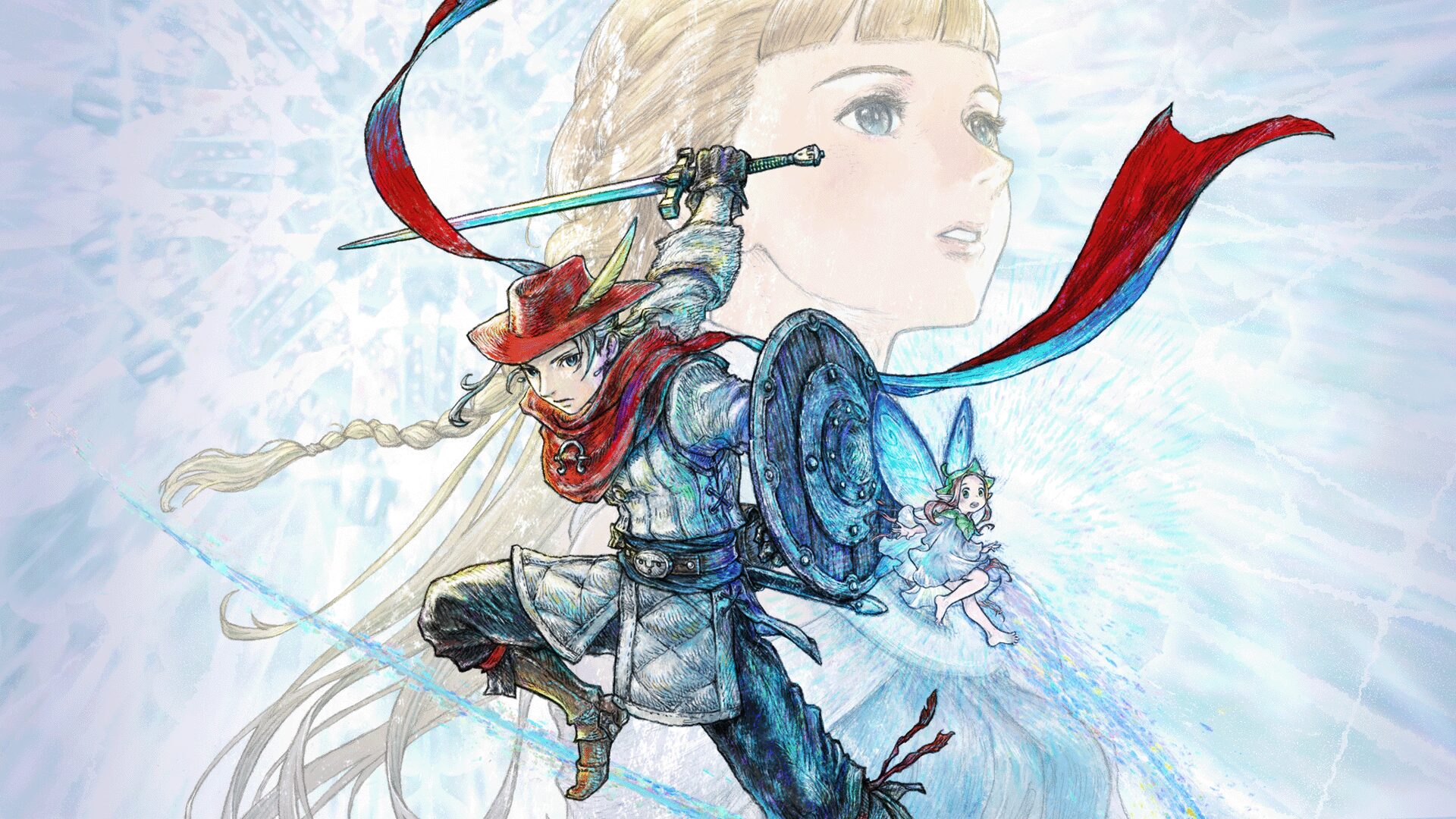
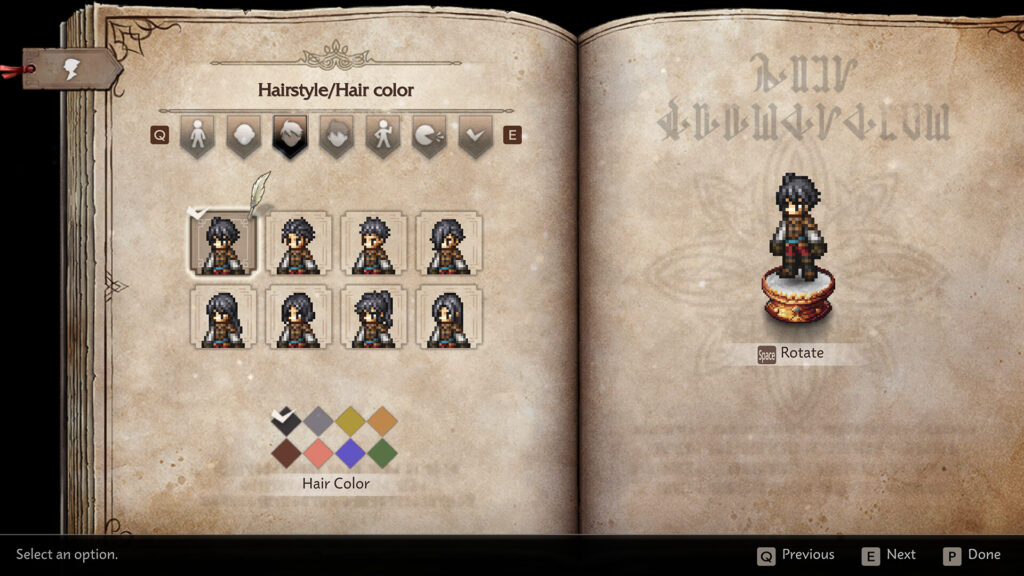
The story takes a different approach from its predecessors by focusing on a single protagonist rather than eight separate tales. You create your own character from the village of Wishvale, and watch helplessly as three ring-bearing villains burn your hometown to the ground during a celebration. What follows is a quest for vengeance and restoration that unfolds across dozens of hours of gameplay.
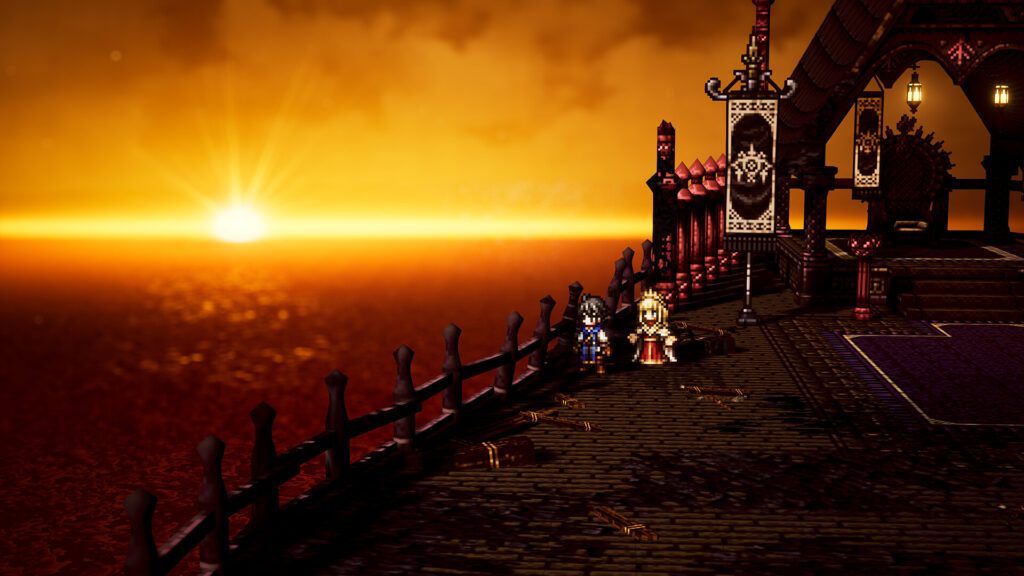
Here’s where things get a bit complicated. The plot is structured around pursuing three primary antagonists, each containing their own story arc: “Master of Wealth,” “Master of Fame,” and “Master of All.” There’s also a fourth storyline focused on rebuilding Wishvale itself. This setup achieves much better cohesion than the previous games’ fragmented approach. Everything ties back to your burning village and your personal stake in the conflict.
The villains themselves are memorable in the sense that they show their cruelty in explicit detail rather than leaving things to implication. You’ll witness disturbing moments that make pursuing them feel justified and urgent. But there’s a significant problem that undermines much of this strength. Cutscenes stretch on and you’re forced to sit through 20 or 30-minute dialogue sequences that could have been half the length.
The choice system is also mostly illusory. You’re presented with dialogue options and path actions that suggest branching possibilities, but these choices rarely matter. Character recruitment represents another mixed bag. You can ally with over 30 different travelers, but most get minimal development beyond their initial introduction.
Combat is where Octopath Traveler 0 truly shines, building on the series’ foundation while introducing changes that elevate it. You can deploy eight characters simultaneously, split by a frontline of four fighters and a backline of four supporters. This expansion opens up strategic possibilities that simply didn’t exist before.
The Break and Boost system returns largely unchanged, which is absolutely fine because it remains one of the genre’s best combat mechanics. Enemies possess shields that you chip away by exploiting their elemental and weapon weaknesses. Once broken, they become vulnerable to massive damage for several turns. Meanwhile, you accumulate Boost Points each round that can be spent to either chain multiple basic attacks together or amplify the power of special abilities.
What makes the eight-character system work is the ability to swap frontline and backline units mid-battle. This isn’t just about rotating fresh fighters into combat. It becomes a resource management puzzle where you’re constantly weighing whether to keep someone in the backline to recover health and accumulate boost points or bring them forward to exploit a specific weakness. The expanded party size means you can cover more elemental and weapon types in a single encounter, making it easier to adapt to whatever the game throws at you.

The job system offers plenty of variety on paper, with dozens of recruitable characters bringing different classes and abilities. In practice, there are balance issues. Certain jobs prove objectively superior, and you’ll likely rely on the same handful of fighters throughout most of the campaign. Trying out different party compositions often just makes encounters drag on longer without offering any advantages.
Path Actions return but feel surprisingly underutilized here. In earlier entries, these character-specific interactions with NPCs and the environment added a sense of role-playing flexibility. Here they’re relegated to occasional story gates rather than gameplay systems. It’s another area where the mobile game’s more streamlined approach shows.
Character progression follows a traditional level-based system where experience points make your party stronger. There’s nothing revolutionary here, just competent fundamentals executed well. You’ll unlock new abilities as characters level up, as simple as that.
The game requires a fair amount of grinding for harder optional content. Main story bosses can generally be handled at recommended levels, but post-game challenges demand dedicated leveling time. Random encounters occur with too much frequency, especially in later regions, but that might be good for farming exp.
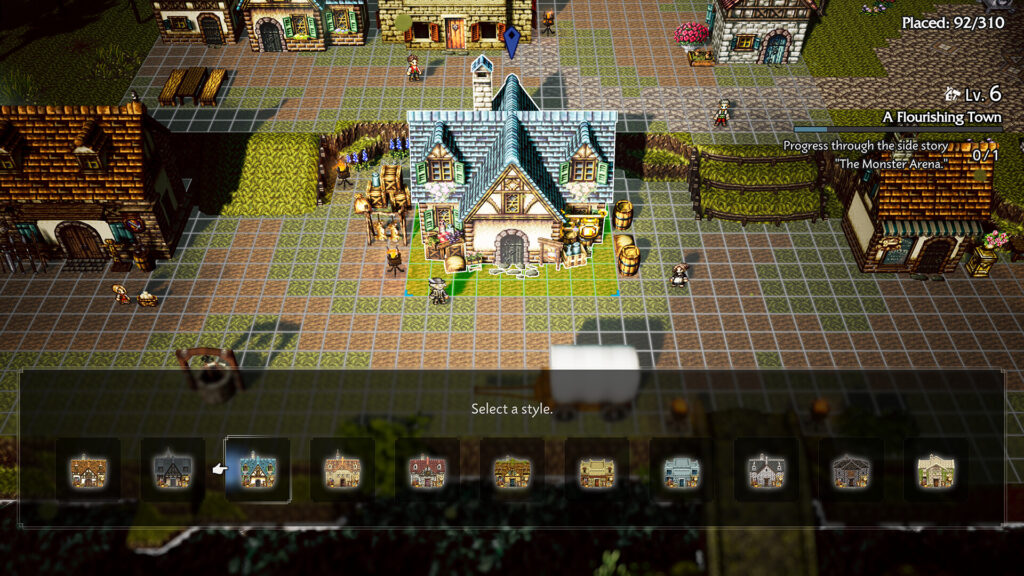
Town building introduces a completely new progression system unique to this entry. Wishvale starts as a burnt husk, and you gradually restore it to glory by gathering materials during your travels and constructing various facilities. You’ll build homes, shops, farms, taverns, and more specialized structures on a grid-based layout. Former residents can be recruited to move back, each bringing unique benefits depending on where you assign them. For example, a talented farmer improves crop yields while an experienced merchant reduces shop prices.
The town building is more absorbing than I anticipated. There’s satisfaction in watching Wishvale transform from ruins into a thriving settlement. The system integrates nicely with the core gameplay loop. Better facilities grant tangible benefits like improved equipment selection or passive experience gains for benched party members. Late-game structures require rare materials found only in optional dungeons, incentivizing exploration beyond what the main story demands.
My main complaint is that the story tightly controls your access to features. Progress is gated behind narrative milestones rather than allowing free development. I often wanted to focus on town building during lengthy story segments but couldn’t because the game hadn’t unlocked new options yet.
Post-game content offers multiple reasons to continue after the credits. There are two distinct endings to pursue, each requiring different conditions. The “Bestower of All” ending serves as the standard conclusion, while the “Galdera” ending acts as a true finale with additional requirements and a harder final boss. You can reload your clear file and access either ending through a time-rewind mechanic. Beyond the dual endings, an ultimate superboss also awaits in a post-game dungeon.
The PS5 version targets 120fps but doesn’t consistently hit that mark. You’ll encounter periodic dips during busy combat or certain overworld areas. Limiting output to 60fps also delivers rock-solid performance. Load times on PS5 are excellent. Fast traveling between locations happens almost instantaneously, and reloading after death takes only seconds. The game runs smoothly without crashes or significant bugs.
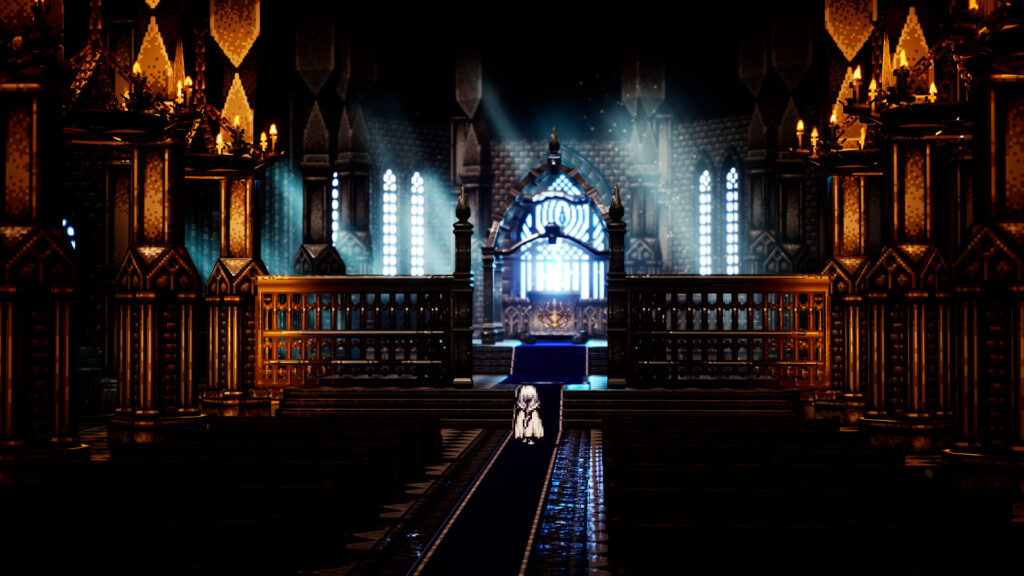
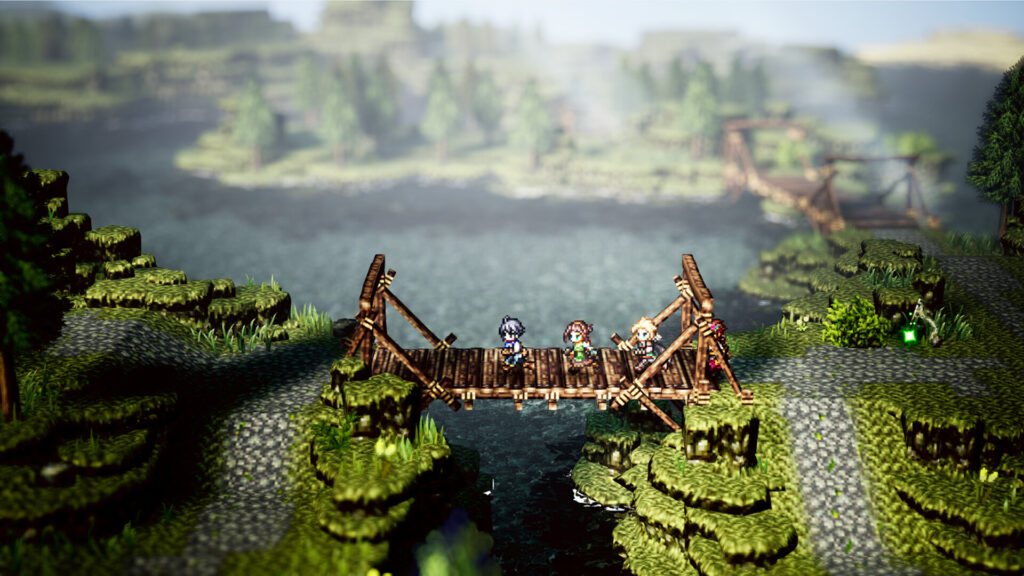
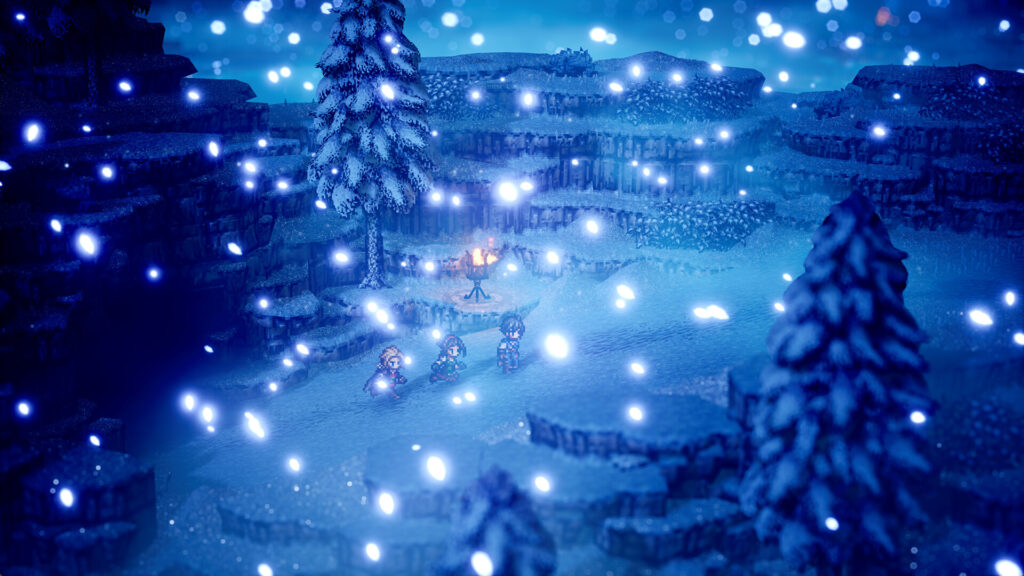
The iconic HD-2D art style returns for its third mainline Octopath appearance, blending pixel art sprites with 3D environments and modern lighting effects. When this aesthetic works, it’s genuinely beautiful. Character sprites are expressive despite their limited resolution, environments have remarkable depth and atmosphere, and the particle effects during combat abilities look spectacular.
However, this entry shows its mobile game origins. Asset quality falls short of Octopath Traveler II’s standards. Textures appear muddier, environments seem simpler, and dungeon designs lack architectural complexity. Zooming out helps disguise some of these issues, but direct comparisons make the downgrade apparent.
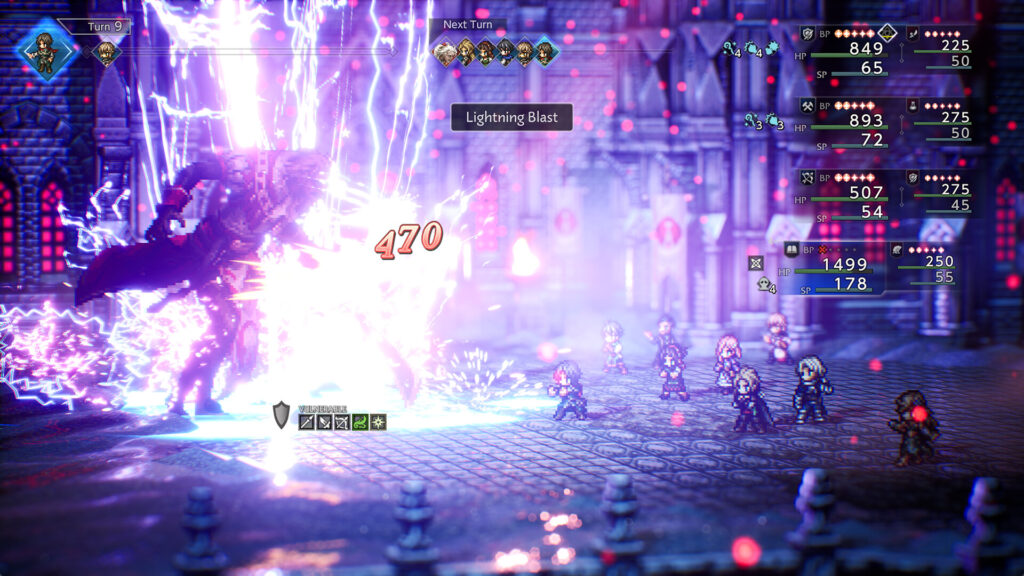
Music stands as one of Octopath’s greatest strengths. Composer Yasunori Nishiki delivers another excellent soundtrack filled with memorable melodies and rousing orchestral arrangements. Battle themes drive combat encounters with appropriate intensity, exploration tracks establish mood and atmosphere, and boss fight music reaches epic heights. The soundtrack alone makes moments of this game worth playing through.
Unfortunately, most of the music isn’t new. Much of the OST consists of recycled tracks from previous games. The music is fantastic, among the best in the genre, so reusing it isn’t inherently a problem. Voice acting presents more significant issues. The English dub suffers from noticeable audio compression, especially during battles. Voices sound muffled and tinny, lacking the clarity you’d expect. The Japanese voice option sounds considerably better, suggesting the compression specifically affects the English files.
This isn’t a perfect entry point to the series. If you’ve never played an Octopath game before, start with the second one. But if you’ve already experienced both previous entries and want more of this specific flavor of JRPG, Octopath Traveler 0 offers enough new ideas and refined systems. Square Enix’s effort to transform a mobile gacha game into a legitimate console RPG is impressive.