
Summary
Robots at Midnight is comfort food. It's not going to blow your mind or redefine what games can be, but sometimes you don't want that. Sometimes you just want to punch robots in a colorful world while searching for your dad. But combat, while fun, never evolves much beyond what you learn in the first hour.
Developer – Finish Line Games
Publisher – Snail Games USA
Platforms – PC, Xbox Series S|X, PS5 (Reviewed)
Review copy given by publisher
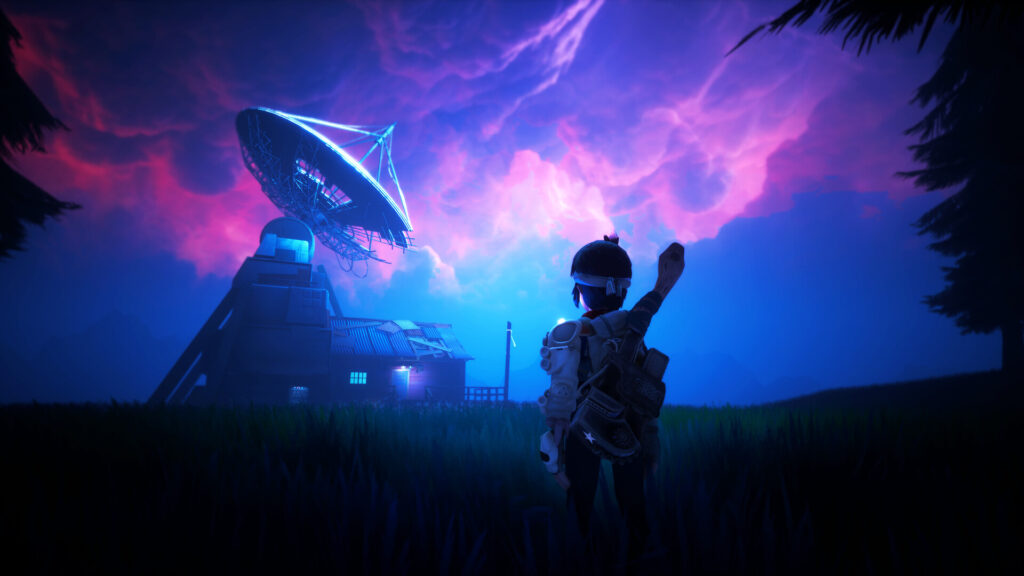
I’m getting a bit tired of Soulslikes that look like they were painted with ash and depression. So when I fired up Robots at Midnight on my PS5 this week, the first thing that hit me was the color. Purple skies, neon-lit ruins, robots that actually look like they stepped out of an 80s toy commercial rather than a nightmare. After playing through Finish Line Games’ latest offering, which just landed on PlayStation after a few months of Xbox exclusivity, I’ve got some thoughts. And honestly, they’re mostly positive, even if this isn’t going to win any game of the year awards.
You wake up from a twenty-year nap in a cryo pod, and surprise, the luxury resort planet you once knew is now crawling with malfunctioning robots. The story setup is straightforward enough. Your dad’s missing, there was some catastrophic event called “The Blackout,” and you need to figure out what happened while also not getting murdered by kitchen appliances gone rogue.
What I appreciate about the storytelling here is that it doesn’t pretend to be deeper than it is. There’s no pretentious philosophy about the nature of humanity or whatever. It’s just a girl looking for her dad on a planet full of crazy robots. The game tells you to “be home before midnight,” which sounds ominous, and when midnight actually hits during certain story moments, things do get properly intense. The robots’ eyes glow red, they become more aggressive, and you’re basically running for your life through chaos. These sequences are genuinely thrilling, though I wish they happened more frequently.
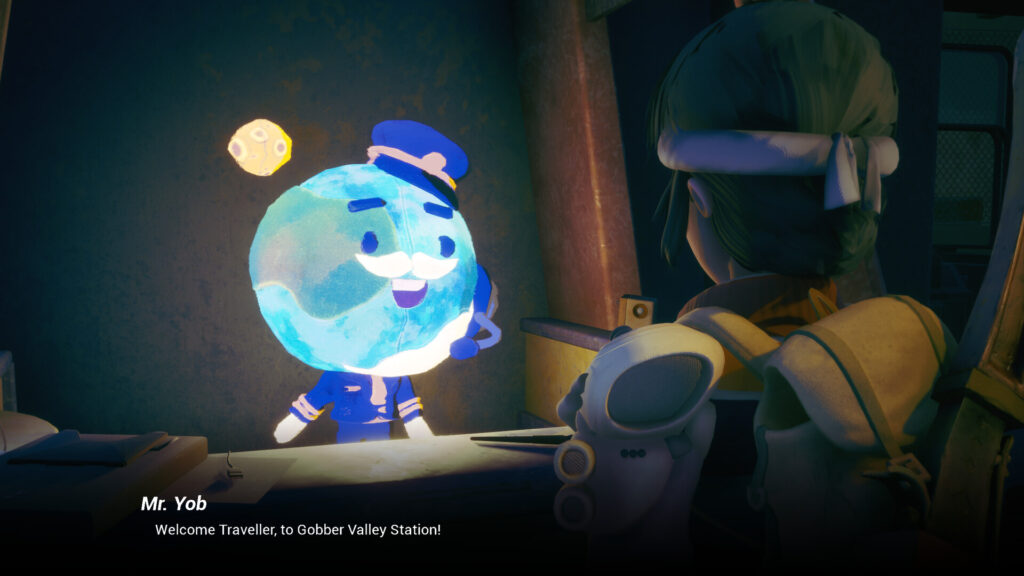
The supporting cast is small but memorable. Doug, your robot buddy who rescues you at the start, just wants to watch TV on his couch. There’s also Hawkings, who handles your upgrades and constantly needs “more hard drives” without ever specifying how many. The writing has this Saturday morning cartoon quality that works surprisingly well. It’s not trying to be The Last of Us, and that’s perfectly fine. My main complaint with the narrative is that it feels a bit underdeveloped. The mystery of The Blackout never quite pays off in a satisfying way, and your personal journey, while charming, lacks real emotional weight.
Calling Robots at Midnight a Soulslike is sort of like calling a house cat a tiger. They’re related, sure, but one is significantly less likely to kill you. The game borrows the basic formula of stamina-based combat, dodge rolling, and challenging boss fights, but it’s been defanged in ways that will either delight or disappoint you depending on what you’re after.
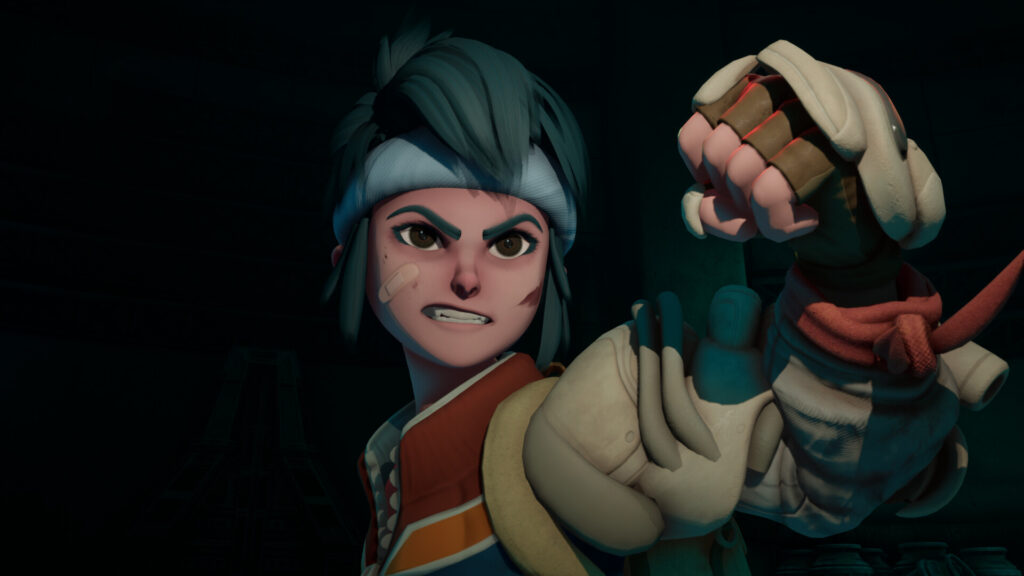
The star of the show is the MITT, which stands for Mobile Impulse Traversal Technology. Basically, it’s a fancy space glove that lets you punch robots really hard. But it’s more than just a punching device. You can use it to boost jump, dash away from attacks, and even bounce off enemies’ heads like you’re playing some kind of violent platformer. Once you get the rhythm down, combat becomes this fluid dance of bouncing, punching, and dashing that feels genuinely unique. There’s nothing quite like launching yourself off a robot’s head, hovering in the air for a moment, then coming down with a charged punch that sends other robots flying.
The difficulty options are where things get interesting. Hero Mode is basically easy mode, and there’s no shame in that. Master Mode brings the pain for those who want it. But here’s the kicker: you can switch between them at any time without losing progress. Stuck on a boss? Switch to Hero Mode, beat it, then switch back. Some purists might scoff at this, but I think it’s brilliant. Sometimes I just want to make progress without beating my head against a wall for hours.
Boss fights are definitely the highlight. Each one feels unique, with different patterns to learn and strategies to employ. One early boss is this pompous construction robot who monologues while trying to crush you with a wrecking ball. The fight itself is challenging but fair, and his dialogue had me actually laughing between dodge rolls. These encounters nail that sweet spot between frustration and satisfaction.
However, the regular combat can get repetitive pretty quickly. Enemy variety is limited, and once you figure out the patterns, most encounters play out the same way. The weapon selection is also disappointing. You’ll find different pipes and wrenches, but they all feel basically identical except for slightly different damage numbers. The game’s wild aesthetic promises more creativity than the combat actually delivers.
The upgrade system is weirdly opaque too. You collect hard drives to upgrade your MITT abilities, but the game never tells you how many you need for the next upgrade. I kept fast-traveling back to base hoping to upgrade, only to be told I needed more. Just put a counter on the screen. It’s not that hard.
Running on a base PS5, the game is, for the most part, smooth. What you get is mostly 60 frames per second, although there are some stutters and drops. This isn’t exactly pushing the PS5 to its limits, but what’s here works well enough. Load times are serviceable, coming in at around 5 seconds. You get some haptic feedback when you punch things and the triggers offer resistance when charging abilities, but it’s nothing special.
I did run into a few technical hiccups. Texture pop-in is noticeable when entering new areas; sometimes the game still loads while you’re already running around. I had one complete crash that booted me back to the home screen, though the generous checkpointing meant I only lost about a bit of progress.
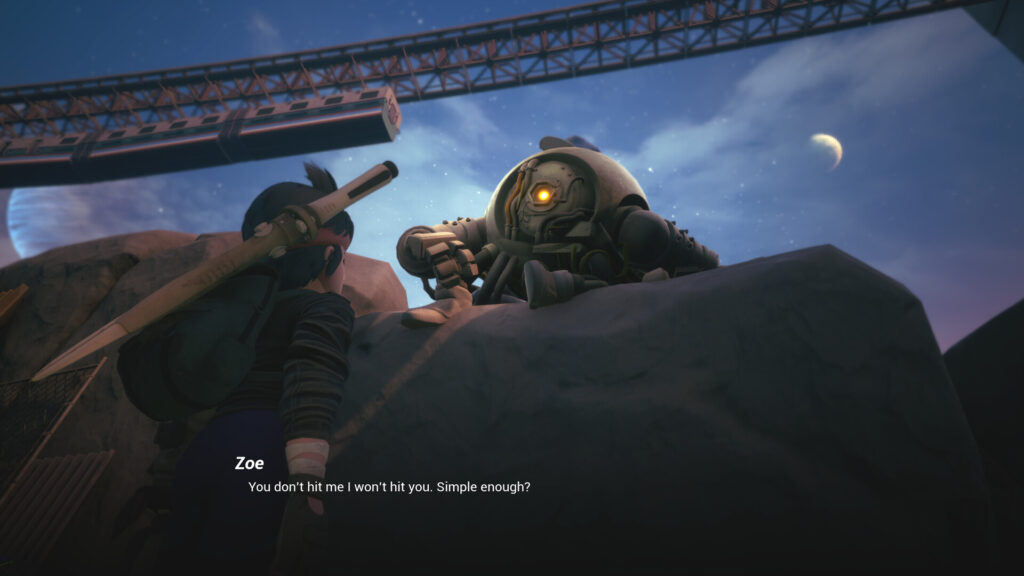
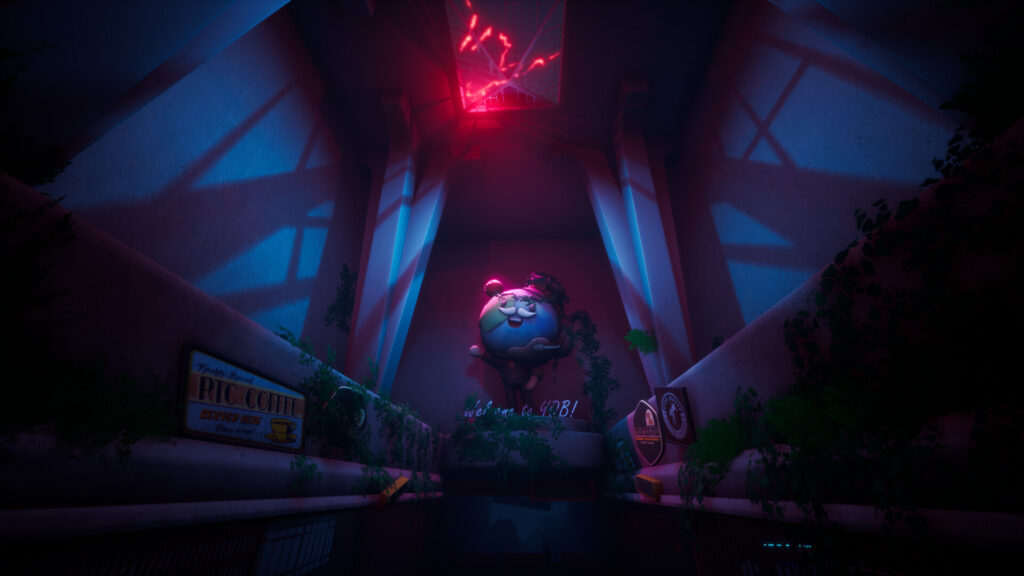
The art direction of Robots at Midnight is absolutely on point, serving up this cassette futurism aesthetic that feels fresh in a genre usually obsessed with Gothic castles and decaying medieval towns. The world of Yob is awash in purples, oranges, and electric blues that make every screenshot look like it belongs on the cover of a synthwave album from 1987.
That said, interior environments are notably less impressive. Dungeons and buildings feel generic, with repetitive textures and layouts that could’ve been pulled from any mid-tier action game from the last decade. It’s clear the team put most of their effort into the outdoor areas and boss designs, and while I understand the budget limitations, these sections stick out like a sore thumb.
The soundtrack knows exactly what it wants to be: an 80s-inspired synthwave journey with just enough modern production to avoid feeling like pure nostalgia bait. Combat music pumps up the energy with driving electronic beats, while exploration themes are more atmospheric, letting those synth pads wash over you as you wander through Yob’s ruins. Unfortunately there is little to no voice acting, which kind of makes sense given an indie game of this budget.
Robots at Midnight isn’t going to change anyone’s life. It’s not going to revolutionize the Soulslike genre or win a bunch of awards. But the game respects your time in its 5-6 hour playthrough, which I genuinely appreciate. No padding, no fetch quests, no grinding for materials. You play through the story, maybe explore a bit for collectibles if you want, and then you’re done. It’s perfect for someone who’s curious about Soulslikes but intimidated by their difficulty, or for genre veterans who want something lighter between more intense experiences.
Robots at Midnight is comfort food. It’s not going to blow your mind or redefine what games can be, but sometimes you don’t want that. Sometimes you just want to punch robots in a colorful world while searching for your dad. But combat, while fun, never evolves much beyond what you learn in the first hour.