
Summary
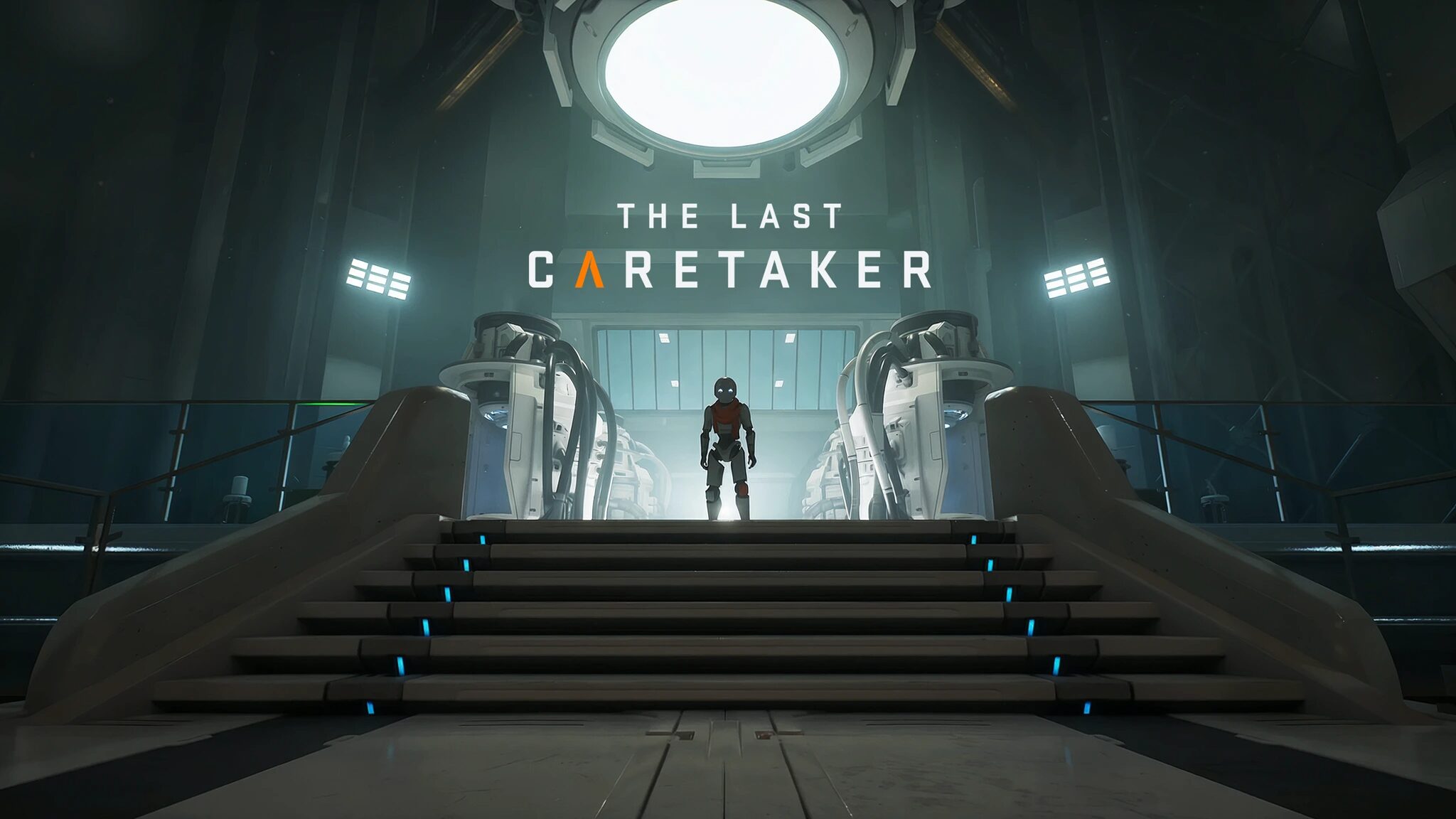
The Last Caretaker is a haunting survival experience that nails its atmosphere but falters in execution. For every breathtaking storm or tense moment of exploration, there is an equally dull or broken piece of gameplay waiting to drag it back down. It is a world worth visiting, but not one you will want to stay in for long.
Developer – Channel37 Ltd
Publisher – Channel37 Ltd
Platforms – PC (Reviewed)
Review copy given by Developer
NOTE:
The following game is being reviewed in an Early Access State, the game may change after the release of this review, this review reflects the game at the time of publishing.

The Last Caretaker opens with an arresting premise. The Earth has drowned beneath a limitless ocean, humanity is gone, and you are the final machine left to restore what remains. It sets the stage for a melancholic world where metal towers crumble above roiling waves and fragments of civilization sink into the depths. From the first moment, the game captures a sense of isolation that few survival titles achieve, with a visual and auditory identity that feels meticulously crafted. The atmosphere is immediately striking and lingers as one of its strongest achievements.
Exploration is the heart of the experience. The world stretches endlessly in every direction, a vast sea dotted with rusting megastructures and the remnants of human technology. The simple act of traveling between outposts is made tense by the unpredictable weather and the ominous feeling of what might lurk below. Falling into the ocean can feel genuinely terrifying. The murky water and low-frequency hum of unseen creatures make every plunge feel like a risk you do not want to take.
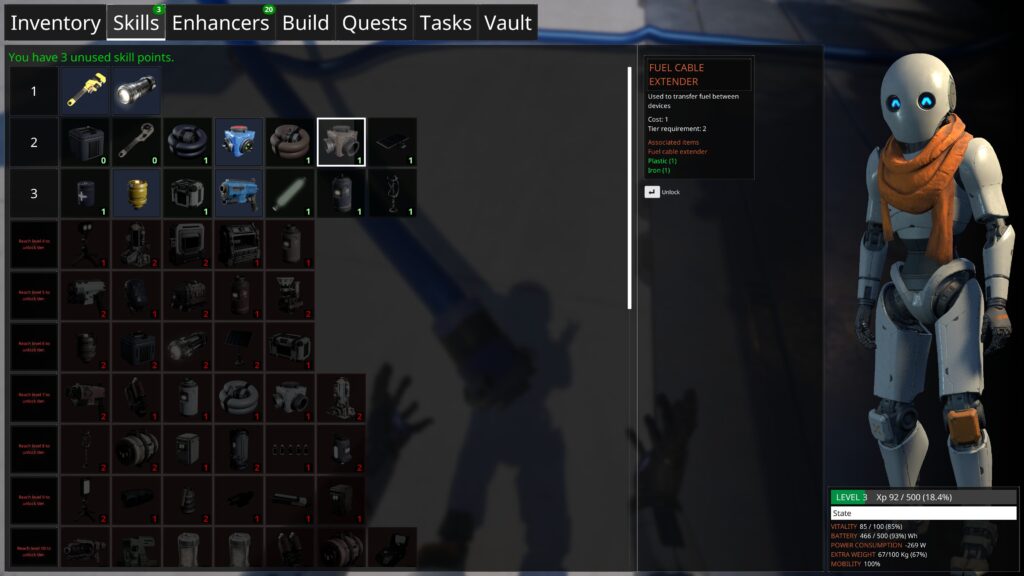
Sound design plays a massive role in establishing that dread and wonder. Storms are loud and enveloping, shaking the screen with wind and thunder that feel physically present. The subtle mechanical clicks when activating panels, the low hum of generators, and the crunch of metal underfoot all carry a precision that elevates the sense of immersion. It is one of the most convincing soundscapes in any recent survival game.
The visuals match that level of polish. The world glows with a soft, washed-out palette that communicates decay and loneliness without being drab. The weather effects are extraordinary, particularly the way rain lashes across your view during storms or sunlight cuts through the mist after a long night. The game’s lighting work makes even small spaces feel alive, giving weight to the abandoned structures scattered across the map.
Unfortunately, the beauty of this world stands in stark contrast to the stiffness of how you interact with it. The combat system feels unfinished and clumsy, lacking any sense of impact or rhythm. The starting electric pistol is weak and unsatisfying, doing little to slow enemies that often climb terrain erratically. Fights with small, fast-moving creatures quickly become a chore rather than a challenge. There is no meaningful feedback from hits, and encounters end up feeling like random chaos instead of deliberate combat.
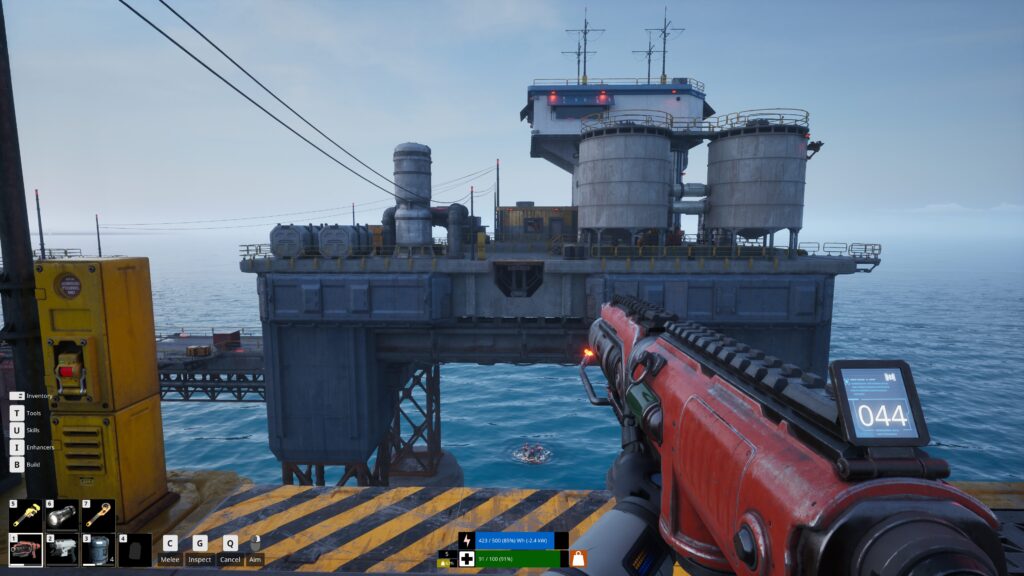
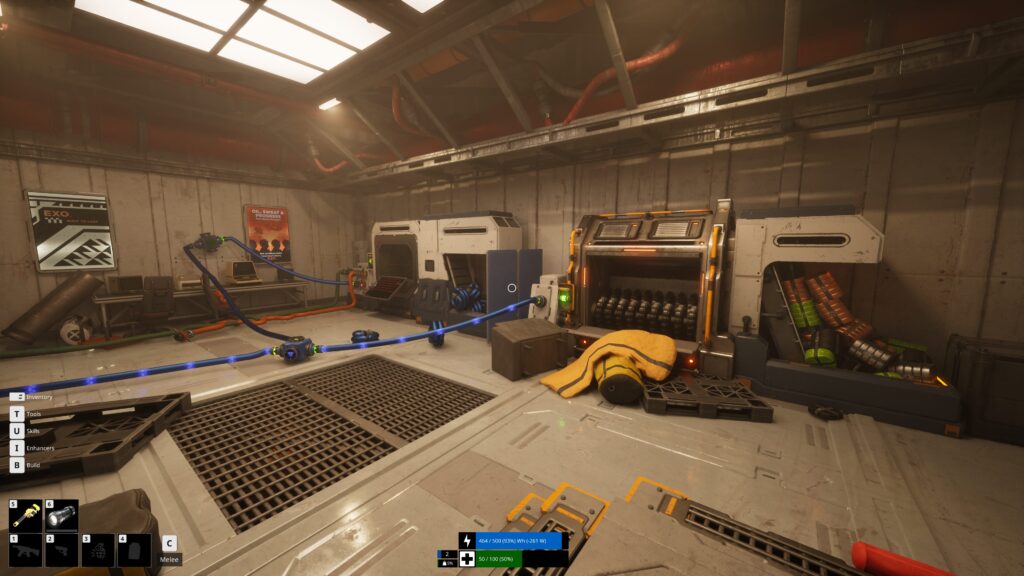
When you are not fighting, you are gathering resources, crafting, and maintaining the systems that sustain the last human seeds. This is where The Last Caretaker finds its core loop, and at its best moments, it can be captivating. Managing incubation temperatures, nutrient flows, and memory data integration gives you a tangible sense of responsibility. You are literally rebuilding humanity from nothing, and the interface does a good job of making those actions feel important.
That feeling of purpose is helped by the game’s strong thematic framing. Every task you perform, from patching power conduits to launching rockets, ties into the idea that you are restoring life after an apocalypse. There is a slow burn satisfaction to completing objectives and seeing small signs of progress in the Lazarus Complex, your central hub. When the first human seed finally matures, it is a genuinely emotional moment.
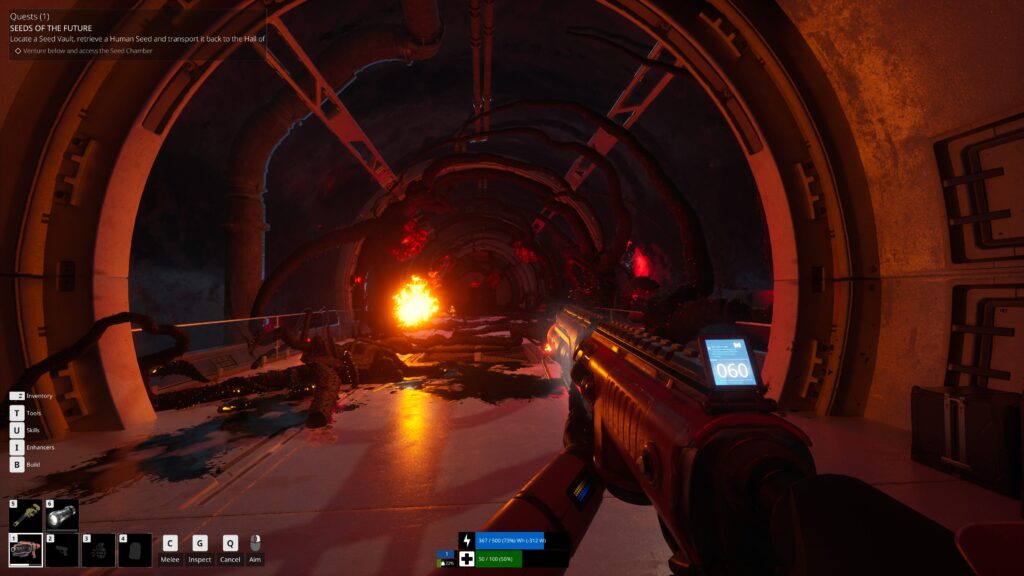
However, the systems surrounding that emotional core are often frustratingly opaque. The tutorial provides little guidance, and tooltips are either missing or too vague to be useful. It becomes a guessing game of what materials do, how certain machines function, and how to interpret status warnings. This lack of clarity turns what should be a thoughtful, meditative experience into one filled with trial and error.
Even basic quality-of-life features are missing or underdeveloped. Inventory management feels clunky, menus are slow, and there are few shortcuts for crafting or navigation. When compared to other survival-crafting games, The Last Caretaker often feels like it is several updates behind in usability. It is not broken, but it demands far more patience than it should.
The progression is another mixed bag. Early hours are gripping because of the novelty of the world and the tension of surviving the unknown. But once you establish a base and begin repeating the same gathering and crafting loops, the pacing slows down dramatically. There are long stretches where little of consequence happens, and the game struggles to maintain a sense of discovery.
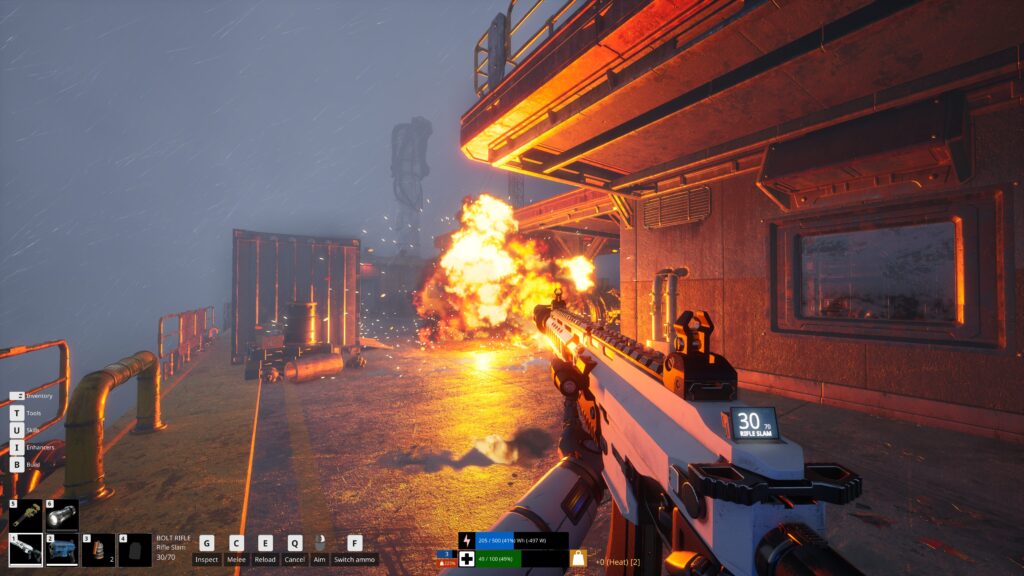
Combat, as mentioned earlier, never evolves into something more engaging. New weapons feel marginally stronger but never satisfying to use. Enemy variety is limited, and their erratic behavior makes every encounter feel more like a nuisance than an opportunity for strategy. This is especially disappointing because the setting and tone could have supported a more deliberate, eerie kind of combat.
What makes this frustration sharper is how much potential the game shows elsewhere. The concept of nurturing humans, defending them from rogue machines, and launching them into orbit has enormous narrative weight. Watching a successful rocket launch, carrying your revived humans into the sky, should feel triumphant. And in those brief moments, it does. But those highs are surrounded by long stretches of mechanical tedium.
Performance is mostly stable, but occasional bugs and physics issues can break immersion. Enemies clip through geometry, vehicles jitter across uneven terrain, and items sometimes disappear from the inventory without explanation. These issues do not ruin the game, but they add to the sense that it needed more refinement before release.
The story is serviceable but never quite as deep as it promises. The setup hints at a rich sci-fi mystery, but the actual narrative delivery is sparse. Audio logs and fragments of text provide glimpses into the world’s collapse, yet they rarely develop beyond surface-level observations. There are meaningful themes about responsibility, creation, and the nature of survival, but they feel underexplored.
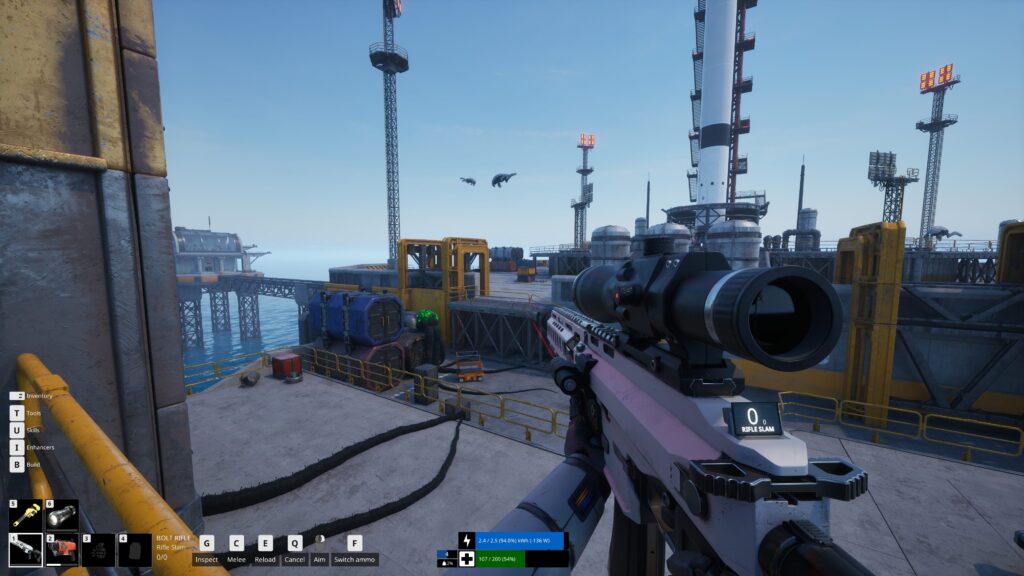
Despite these shortcomings, The Last Caretaker still has moments of quiet brilliance. Standing on a weathered platform, watching a storm roll across the ocean, with lightning reflecting off distant towers, captures a haunting beauty that few games achieve. The environmental storytelling alone makes it worth seeing, even if the gameplay often struggles to meet the same standard.
The crafting system has depth, and the sense of progression through rebuilding humanity’s last hope gives it emotional grounding. Yet that emotional weight is often undermined by how clunky the mechanics feel in practice. For a game about precision and care, it too often feels imprecise and careless in its execution.
There is also the issue of price. For what it currently offers, The Last Caretaker feels slightly overpriced. Its content is stretched thin, and the lack of major improvements since the demo suggests it could have used more development time. Players expecting a polished or fully realized survival experience may come away disappointed.
Still, there is something undeniably compelling about its ambition. The world design, sound, and atmosphere combine to create a distinct tone that lingers even after you stop playing. It is the kind of game that you want to love, even as it frustrates you with every rough edge and missing feature.
With more updates, The Last Caretaker could evolve into something remarkable. The foundation is strong, and the artistry behind its presentation deserves recognition. But in its current state, it feels like an early draft of a masterpiece that has yet to fully emerge from the water.
The Last Caretaker is a haunting survival experience that nails its atmosphere but falters in execution. For every breathtaking storm or tense moment of exploration, there is an equally dull or broken piece of gameplay waiting to drag it back down. It is a world worth visiting, but not one you will want to stay in for long.