Summary
For veterans, Trails beyond the Horizon feels like a reward for years of investment. For newcomers, it may feel daunting, but it also stands as a testament to what long form storytelling in games can achieve when creators trust their audience to follow along. The Legend of Heroes is no longer just telling stories about nations and heroes. It is telling a story about a civilization standing at the threshold of the unknown, asking whether it is ready to step beyond the horizon.
Developer – Nihon Falcom, PH3 GmbH
Publisher – NIS America Inc.
Platforms – Nintendo Switch/Switch 2 , PC (Reviewed)
Review copy given by Publisher
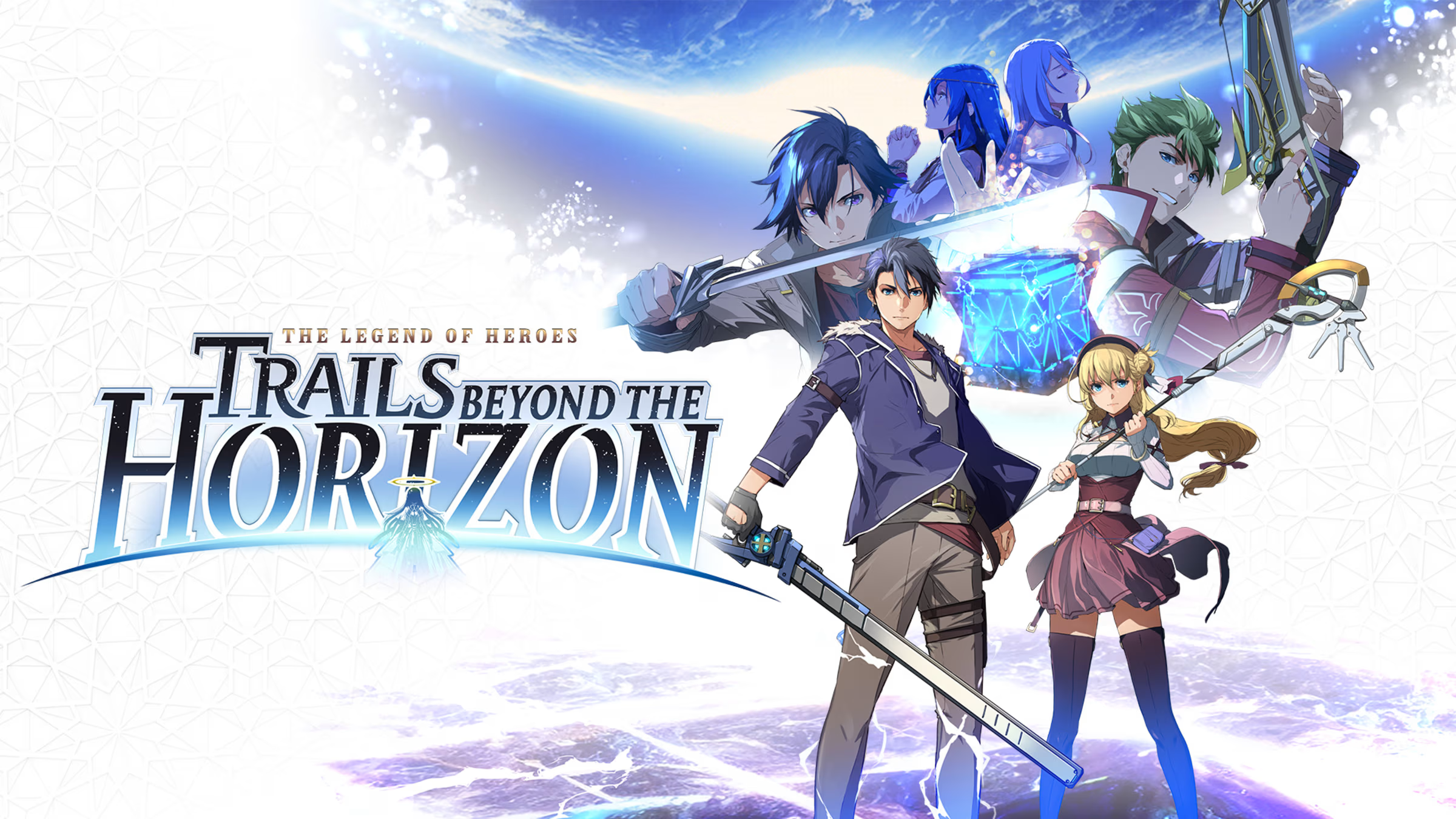
The Legend of Heroes series has always thrived on patience. Long before most modern RPG franchises dared to plan trilogies or interconnected arcs, Trails was already building a living continent where politics, technology, and personal relationships carried consequences years later. Trails beyond the Horizon feels like the culmination of that slow burn philosophy, not because it rushes toward answers, but because it finally dares to look outward. After decades of conflict rooted in Zemuria itself, this entry asks a bigger question. What happens when humanity looks past its own borders, even the borders of the world?
To appreciate Trails beyond the Horizon, it helps to understand how far the series has come. The journey began modestly in the Sky trilogy, where Estelle and Joshua’s coming of age story quietly laid the foundation for the Bracer Guild, Ouroboros, and the first hints that Zemuria was far more fragile than it appeared. Those games established Falcom’s commitment to world building through dialogue, NPC routines, and slow political shifts. Nothing exploded overnight, but everything mattered.
The Crossbell duology expanded that scope dramatically. Trails from Zero and Trails to Azure showed what it meant to live inside a geopolitical pressure cooker. Crossbell was small on the map but massive in consequence, squeezed between Erebonia and Calvard while hiding secrets that reshaped the understanding of Sept Terrions and causality itself. The Special Support Section became a lens through which players saw how ordinary lives are affected by grand conspiracies.
Then came the Cold Steel saga, where the series leaned into scale. Rean Schwarzer’s journey through Erebonia introduced a more militarized tone, class conflict, and divine knights that blurred the line between technology and myth. Cold Steel sometimes struggled under the weight of its own ambition, but it also delivered some of the most emotional payoffs in the franchise, especially for players who had followed the series from the beginning.
Trails through Daybreak marked a tonal shift. Calvard was messier, more modern, and morally gray. Van Arkride was a very different kind of protagonist, less idealistic than Estelle and less burdened by destiny than Rean. Daybreak’s hybrid battle system and street level perspective made Zemuria feel closer to a cyberpunk future than a classic fantasy past. Beyond the Horizon builds directly on that foundation, refining both its mechanics and its themes.
Set against the prophesied end of the Zemurian continent and humanity’s first steps toward space exploration, Trails beyond the Horizon immediately establishes stakes that feel existential without losing the personal touch the series is known for. The invitation from Marduk to participate in a high tech training exercise seems innocuous at first, but Trails fans know better than to trust anything that looks too clean. Bringing together Van Arkride, Rean Schwarzer, and Father Kevin Graham is not just fan service, it is a deliberate collision of philosophies shaped by entirely different eras of Zemuria.
Van represents Calvard’s pragmatism, Rean carries the scars of Erebonia’s wars and divine interference, and Kevin embodies the Church’s quiet burden of knowing far more than it ever reveals. Watching these characters interact is one of the game’s greatest strengths. Their conversations feel earned, layered with history that longtime fans will recognize immediately, yet written clearly enough that newer players can grasp the tension.
The structure of the game is built around three intertwining story paths, allowing players to experience Calvard from multiple perspectives. This design reinforces the idea that no single viewpoint can fully explain what is happening to Zemuria. Locations across the republic feel dense and alive, filled with NPCs who comment on space exploration, political anxiety, and rumors about Ouroboros. As always, talking to everyone is rewarded, not with loot, but with context.
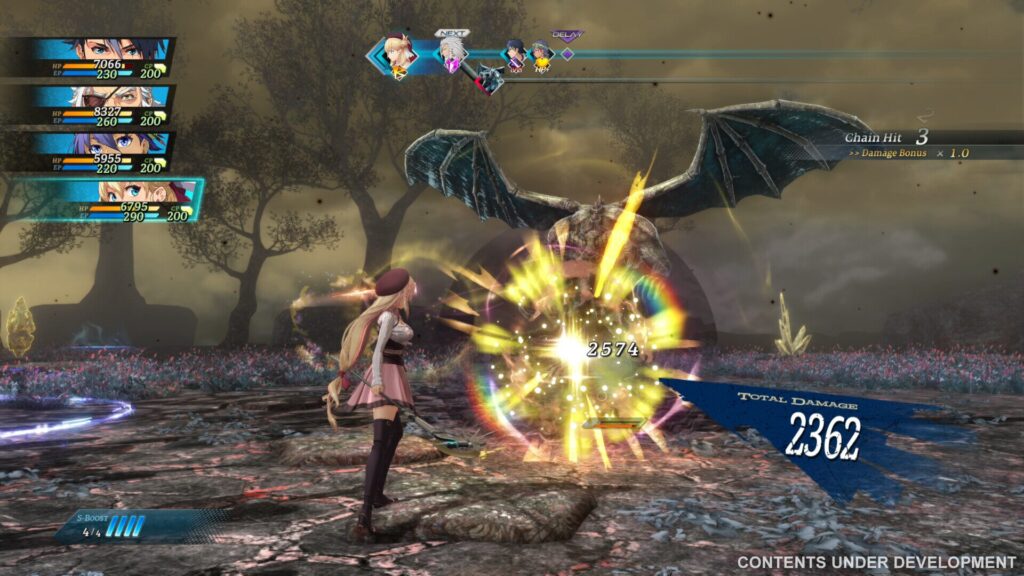
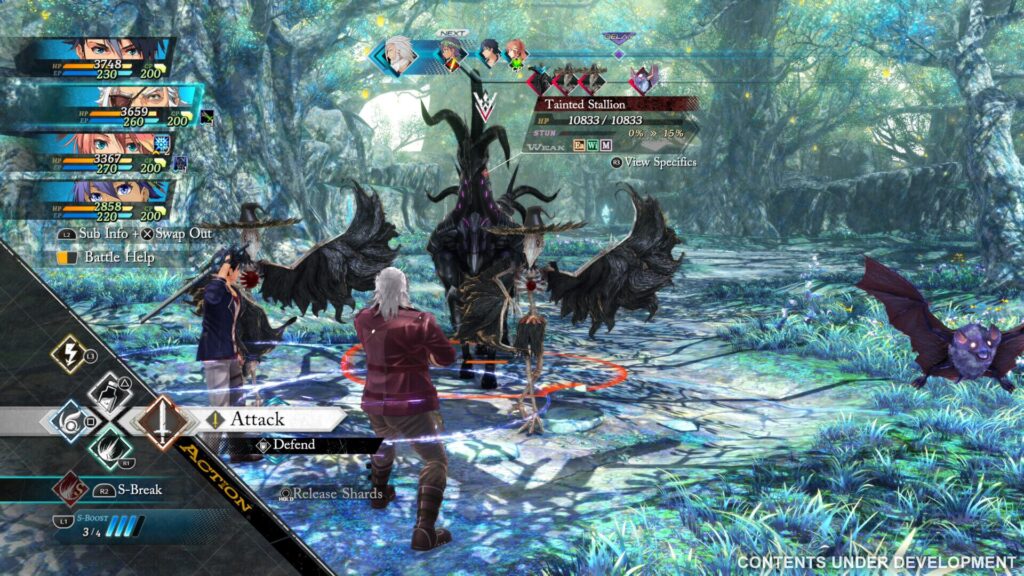
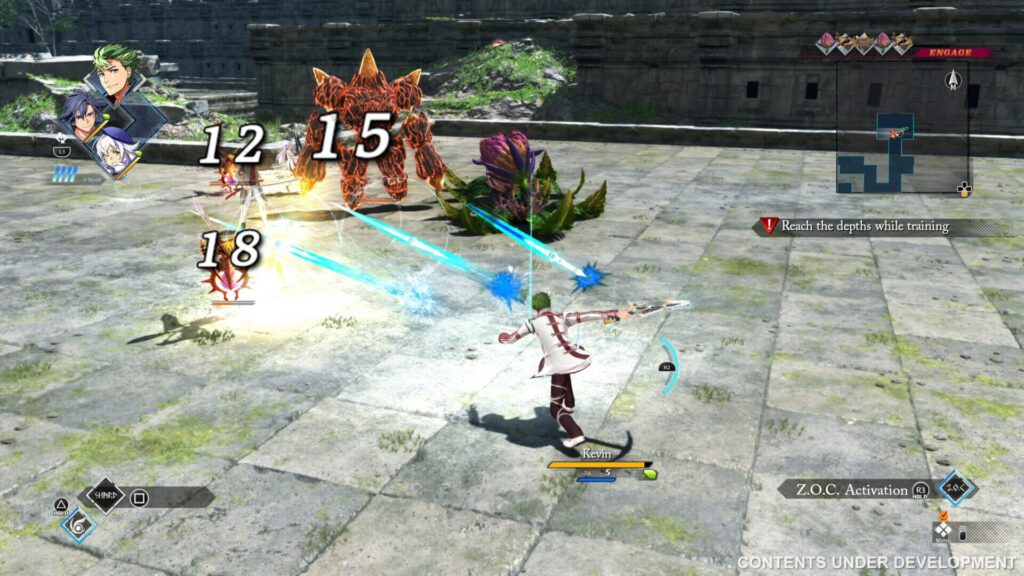
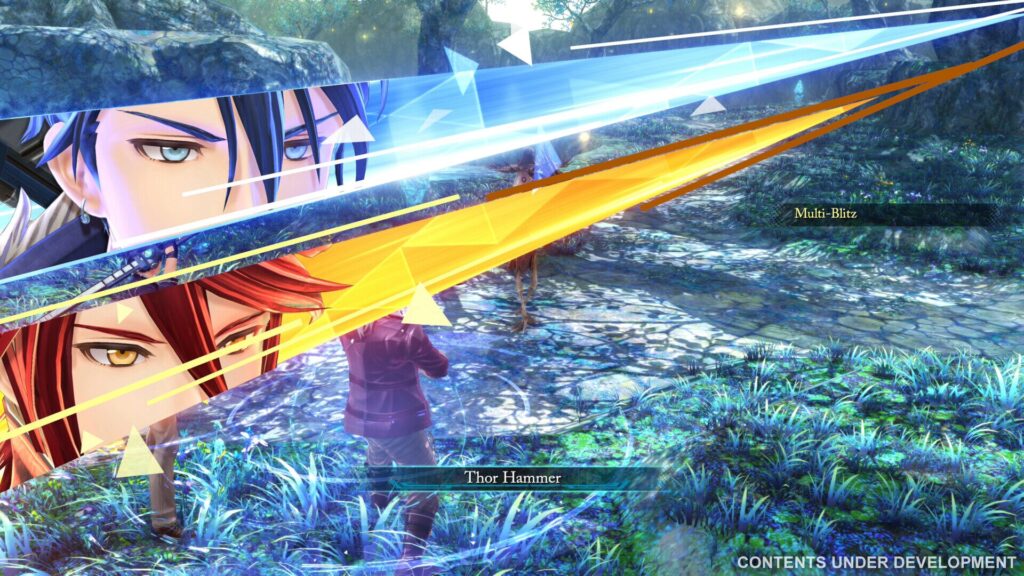
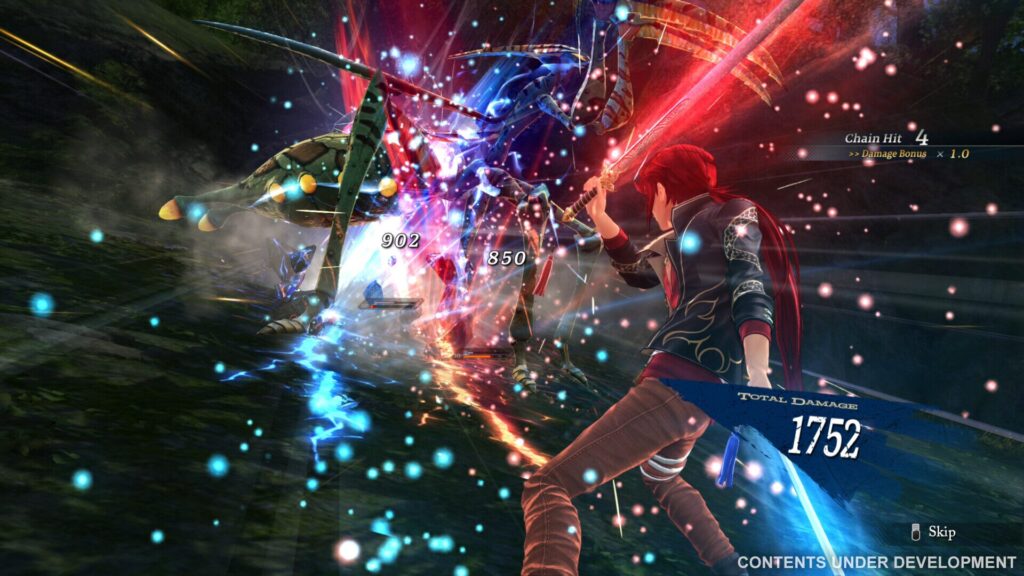
Combat continues the evolution started in Trails through Daybreak. The seamless shift between Field Battles and Command Battles remains one of the most satisfying systems Falcom has ever designed. Smashing into enemies in real time before transitioning into turn based strategy keeps encounters fresh, especially during longer dungeon runs. Beyond the Horizon expands this flexibility even further.
Shard Commands are a standout addition. By using S Boosts, players can trigger powerful effects that vary depending on the character and their holo core. This adds a layer of customization that encourages experimentation rather than reliance on a single optimal setup. Battles feel less about following a script and more about adapting on the fly.
Awakening mechanics, particularly Van’s transformation into Grendel, bring a welcome sense of spectacle to Field Battles. These moments are brief but impactful, reinforcing the idea that certain characters are walking anomalies in a world already stretched thin by technology and ancient power.
Z O C is perhaps the most dramatic new mechanic. Slowing time to a crawl while boosting attack power and stun damage fundamentally changes how players approach tough enemies. High defense foes that once felt like endurance tests can now be dismantled through precise timing and aggressive play. It is empowering without feeling cheap, especially since proper use requires awareness and resource management.
The Grim Garten dungeon serves as both a narrative and mechanical playground. By allowing players to assemble custom parties from allies across Calvard and beyond, it becomes a celebration of the series’ interconnected cast. It also reinforces the ever present threat of Ouroboros, reminding players that no matter how far humanity looks toward the stars, old shadows still linger.
What truly elevates Trails beyond the Horizon is its thematic confidence. Space exploration is not treated as a gimmick, but as a mirror to Zemuria’s long standing fear of the unknown. The question of what lies beyond the horizon is not just literal, but philosophical. Can a continent built on Septium, prophecy, and hidden truths survive contact with something greater than itself?
The writing balances nostalgia and progression remarkably well. Returning characters are not frozen in time, but shaped by their past victories and failures. New characters feel grounded in Calvard’s social fabric, avoiding the trap of feeling like temporary companions.
Visually, the game continues Falcom’s steady improvement. Environments are richly detailed, especially urban areas that blend cutting edge tech with cultural identity. Character animations during conversations add subtle emotional cues that make quieter scenes resonate.
The soundtrack deserves special mention. Longtime composer strengths are on full display, blending electronic motifs tied to space and technology with the melodic warmth the series is known for. It is a score that understands when to step back and when to soar.
For veterans, Trails beyond the Horizon feels like a reward for years of investment. For newcomers, it may feel daunting, but it also stands as a testament to what long form storytelling in games can achieve when creators trust their audience to follow along.
This is not a game that rushes to answers. It is a game that invites you to sit with uncertainty, to reflect on everything Zemuria has endured, and to consider what growth really means. Beyond the Horizon does not just push the series forward, it redefines the edge of its world.
By the time the credits roll, one thing is clear. The Legend of Heroes is no longer just telling stories about nations and heroes. It is telling a story about a civilization standing at the threshold of the unknown, asking whether it is ready to step beyond the horizon.