Summary
Overall, Ninja Gaiden: Ragebound is both a loving tribute and a fresh vision brimming with style and substance. It’s one of the best retro revivals of the generation: joyous, relentlessly fun, and bursting with creative confidence. Its only missteps are some shallow progression systems and a slightly softened edge to its difficulty.
Developer – The Game Kitchen
Publisher – Dotemu, Joystick
Platforms – PC, Nintendo Switch, Xbox One, Xbox Series S|X, PS4, PS5 (Reviewed)
Review copy given by publisher
Ninja Gaiden: Ragebound is a loving, almost reverent return to the franchise’s hard-edged 2D roots. Revitalized by The Game Kitchen, the masterminds behind Blasphemous, the game is dressed with all the amenities of modern retro revival design.
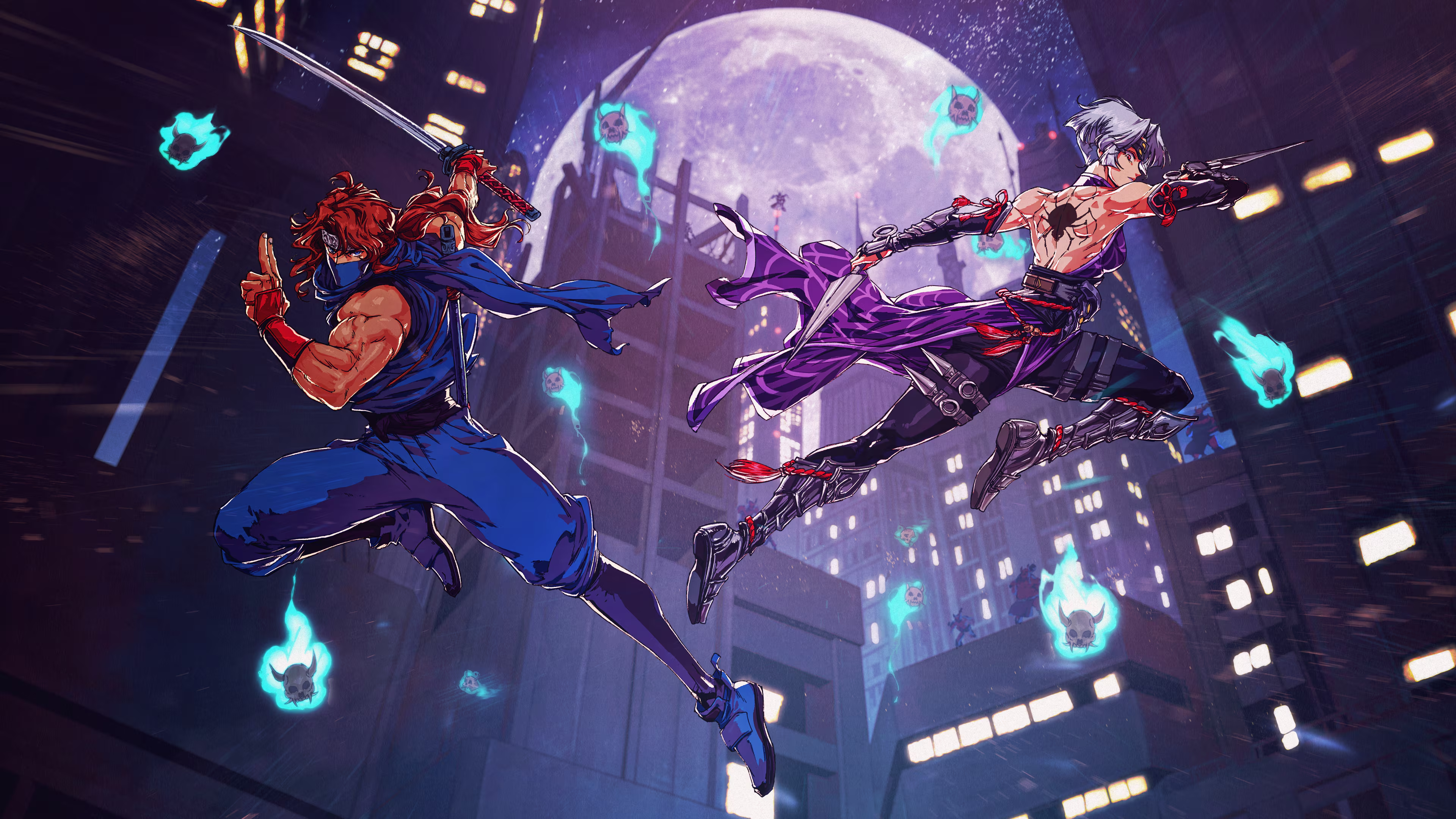
The narrative finds surprising strength in its focused storytelling. Playing as Kenji Mozu, apprentice to the legendary Ryu Hayabusa, you are swiftly pulled into a war for your very soul, forming a shaky alliance with your nemesis Kumori after your ninja village is overrun by demons. Their dynamic keeps the story lively without bogging down the tightly paced action. Though the plot doesn’t chase emotional depths, it winks knowingly at the series’ melodramatic past and steers into pulpy, cinematic Ninja Gaiden tradition, complete with gorgeously animated cutscenes that channel the NES originals.
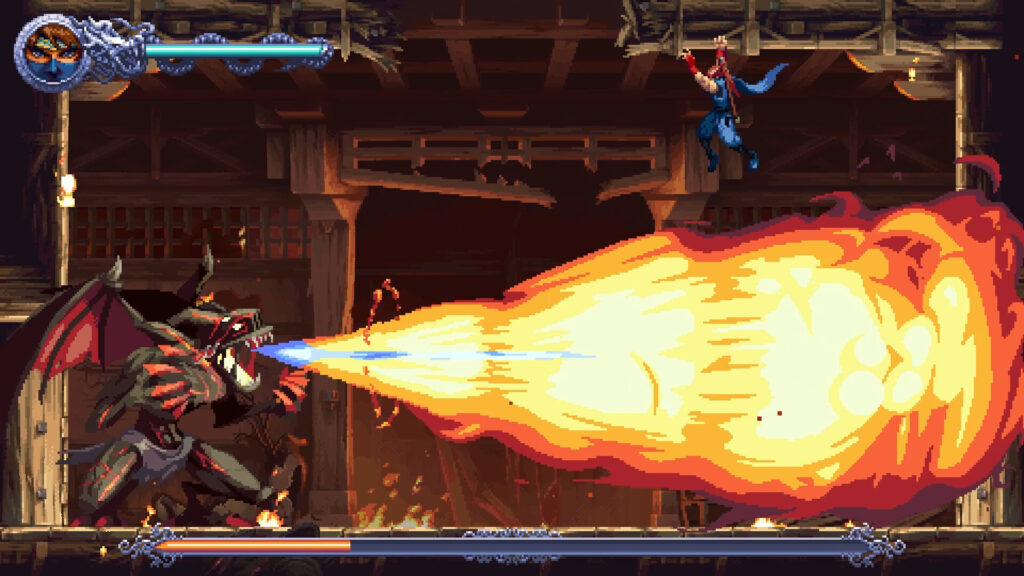
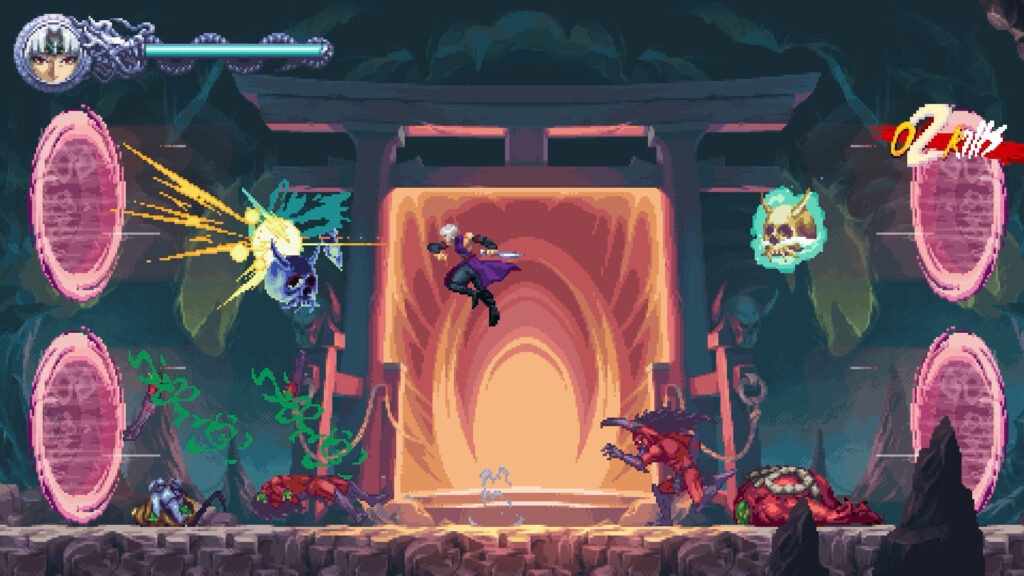
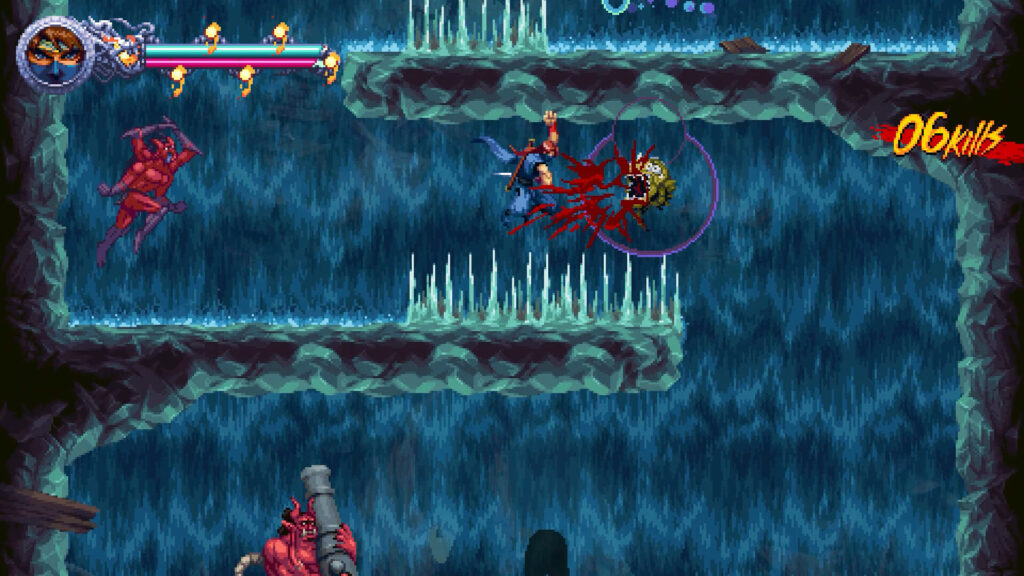
Gameplay is where Ragebound truly excels, blending the classic 2D precision of the NES trilogy with inspired modern mechanics. Every stage teems with secrets and requires not just fast reflexes but a mastery of attack chains, combo ranks, and the sublime Guillotine Boost, which allows Kenji to bounce off enemies and projectiles in a dashing fashion. The combat loop is addictive: slicing through waves of foes in a single, fluid sequence, nimbly dodging boss attacks, and channeling rage arts for devastating, screen-clearing strikes. The controls feel sharp, creating a flow state where each jump, slash, and special move clicks perfectly into place. The game rewards skillful play with higher ranks and encourages replayability through clever level design and optional challenge modifiers.
There are several notable new mechanics and features that freshen up the franchise while honoring its legacy. One of the biggest innovations is the dual protagonists system, where you control Kenji Mozu, Ryu Hayabusa’s protégé, and Kumori, a Black Spider Clan ninja who fuses her soul with Kenji. This fusion allows you to combine Kenji’s sword melee attacks with Kumori’s ranged kunai attacks, creating a dynamic combat style that uses both characters’ unique movesets. This is the first time the series features two playable characters working in tandem within the same run!
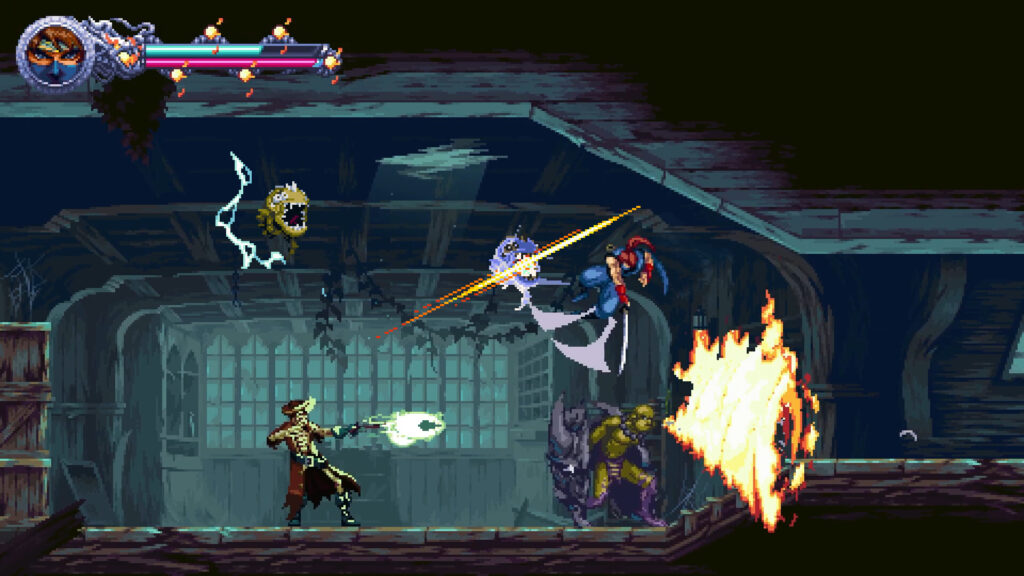
Another key mechanic is the previously mentioned Guillotine Boost, which allows Kenji to perform a mid-air bounce off enemies, projectiles, or objects to reach higher platforms or chain jumps. This move resembles an “Izuna Drop” and is crucial for both combat combos and traversal. Guillotine Boost enhances the flow of gameplay, creating a rhythm where movement and attacks seamlessly connect. The Hypercharge system is also new and important, where certain enemies glow either blue or pink, indicating the required attack type to defeat them and gain Hypercharge. It adds a strategic, almost puzzle-like element to battles, pushing you to prioritize targets and switch between characters’ attacks for maximum efficiency.
The progression strikes a balance that favors both newcomers and series veterans. You progress through levels where your performance is ranked using a letter grading system based on factors like time, collectibles, enemy kills, and combo chains. Rewards include unlocking and equipping talismans that provide meaningful boosts, such as health restoration during combos or automatic Hypercharges. These talismans are purchasable with currency found during gameplay. You can also replay levels to improve scores and tackle optional challenges.
However, for die-hard fans of the Ninja Gaiden franchise, Ragebound’s biggest flaw is a noticeable easing of difficulty. Even on harder settings, the challenge lacks the almost masochistic brutality that defined earlier entries. Frequent checkpoints and generous systems like the in-game shop make it a little too ideal for newbies. That being said, Ragebound introduces optional challenges, secret ultra-difficult levels, and a Hard Mode that unlocks only after beating the game. In Hard Mode, the safety net of checkpoints is reduced, the shop is unavailable, and progression becomes a much harsher, old-school gauntlet reminiscent of the original games. This design allows the game to cater both to newcomers and to purists who crave a more punishing experience, though some of you may wish that higher difficulty options were available from the start rather than gated behind completion.
Where Ragebound dazzles most is in its visual presentation. The pixel art is beautiful, vibrant, crisp, and soaked in atmosphere, with impossibly smooth animations for characters, enemies, and especially the oversized, multi-stage bosses. Hand-drawn cutscenes, fluid blood sprays, and subtle environmental details create a world that brims with nostalgic flair but never feels dated. The impeccable visuals are perfectly paired with an energetic, retro-inspired soundtrack that reimagines iconic Ninja Gaiden themes and introduces new tracks full of pulsing 80s and 90s flavor. The audio direction is equally excellent, with the clash of steel, the punchy effects, and witty dialog between characters all contributing to an immersive experience.
Technical performance on a base PlayStation 5 is exemplary. The game runs at a buttery smooth 60 frames per second with no stutters or loading hitches, making every movement and attack feel instantaneous. Load times are minimal, and the accessibility suite is surprisingly robust, allowing you to tailor visual effects, font types, and even aspects of the difficulty for a personalized experience. Want to be invincible and breeze through the story? You can do so!
Ninja Gaiden: Ragebound is both a loving tribute and a fresh vision brimming with style and substance. It’s one of the best retro revivals of the generation: joyous, relentlessly fun, and bursting with creative confidence. Its only missteps are some shallow progression systems and a slightly softened edge to its difficulty.