
Summary
Digimon Story: Time Stranger represents a massive leap forward for the series, offering the most comprehensive Digimon collection experience ever created in a beautiful Digital World. The evolution system is addictive, boss battles are challenging and memorable, and the story ultimately delivers. For longtime Digimon fans who've been waiting, this game will surely scratch that itch.
Developer – Media.Vision Inc.
Publisher – Bandai Namco Entertainment
Platforms – PC, Xbox Series S|X, PS5 (Reviewed)
Review copy given by publisher
After eight years of development and almost a decade since the last mainline entry, Digimon Story: Time Stranger finally arrives as the most ambitious digital monster adventure the franchise has ever attempted. This standalone Digimon game brings over 450 fully redesigned Digimon into a sprawling JRPG that takes itself seriously while never forgetting the charm of its Saturday morning cartoon roots. The result is an experience that succeeds brilliantly in some areas but stumbles in others.
Time Stranger opens with a confusing prologue that throws you into the shoes of either Dan or Kanan, secret agents working for the mysterious ADAMAS organization. The character you don’t pick becomes your operator, constantly chatting with you through your Digivice as you investigate anomalies around modern day Tokyo. After a catastrophic event known as the Shinjuku Inferno, you find yourself thrown eight years into the past, setting up a time-hopping mystery that borrows various themes from Greek mythology.

The early hours can feel like a slog as the game overwhelms you with exposition about organizations, dead parents, and a figure named Dr. Yuki, almost as if it expects you to remember plot points from a previous game that doesn’t exist. For the first four or five hours, you’ll find yourself repeatedly exploring the same sewer dungeon while the story slowly introduces Inori Misono and the goat-like Digimon companion Aegiomon. It took me a while to care about what was happening. It also doesn’t help that your chosen character never speaks during cutscenes, only offering dialogue options that appear as text.
However, the narrative improves once you reach the Digital World: Iliad. This isn’t the Digital World from the anime you might remember from your childhood. Iliad exists as a separate server managed by the powerful Olympos XII, and the game does fascinating things exploring how Digimon society functions when they’re not just digital monsters to be collected. The story takes risks as it progresses, featuring twists that caught me off guard and a finale that pays off. The plot explores themes of fate, sacrifice, and the bonds between humans and Digimon.
The core gameplay loop follows the tried-and-true monster collecting formula but adds enough charm to keep things interesting. You encounter Digimon in the field as visible enemies rather than random encounters, and defeating them fills a scan meter. Hit 100% and you can convert that Digimon to your team, though waiting until 200% grants higher stats and level caps.
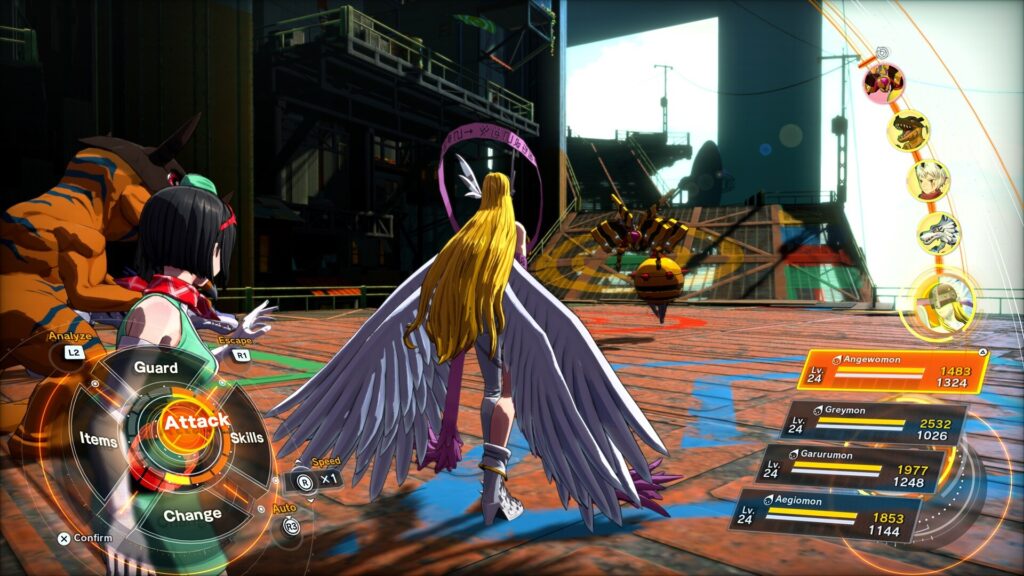
Combat is turn-based and built around the classic Data, Vaccine, and Virus rock-paper-scissors system, layered with elemental weaknesses and special traits. Up to six Digimon can be in your active party, though only three fight at once while three stay in reserve. You can swap between active and reserve Digimon without using a turn, which becomes crucial during extended boss fights. The system also lets you use items without consuming your turn, a great quality-of-life touch that makes a big difference.
Regular encounters are almost too easy. I spent most of my playtime increasing the battle speed to 5x and enabling auto-battle, letting my team stomp through standard enemies to get some extra experience points. The game clearly designed these fights to be breezy so you can focus on the real meat: collecting and raising your digital companions.
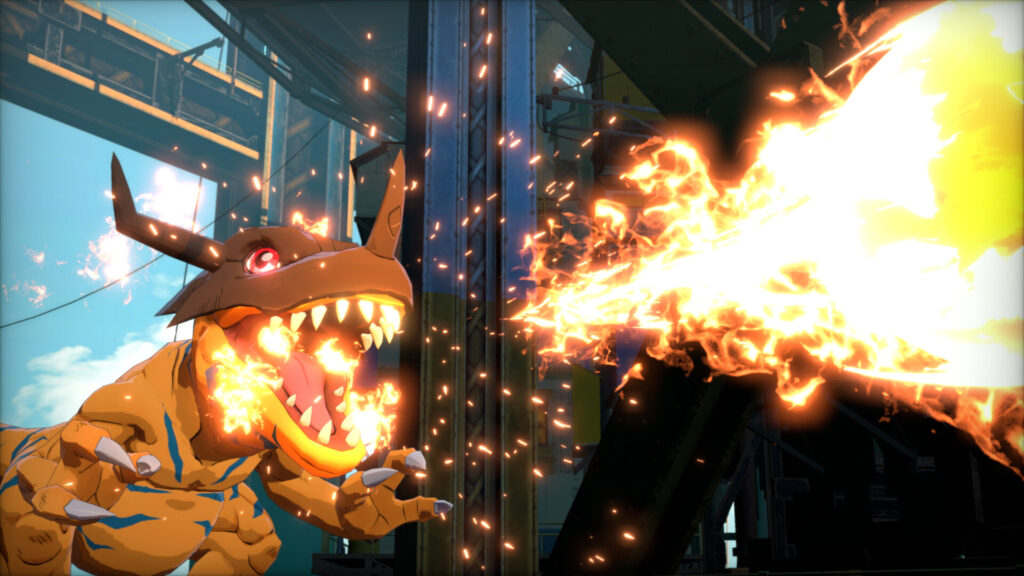
Boss battles are where the combat system truly shines. These encounters demand strategy, forcing you to manage type matchups, elemental weaknesses, and special mechanics unique to each fight. Some bosses have multiple targetable parts featuring different type weaknesses. Others enter charging phases where you need to interrupt their devastating attacks by depleting a secondary gauge. I found myself challenged by these encounters, occasionally needing to retry after realizing my team composition was wrong. The difficulty spikes can feel harsh if you haven’t prepared properly, sometimes forcing you to burn through healing items or even lower the difficulty.
The X-Art system adds another tactical layer. Landing hits on enemy weaknesses fills a gauge that lets you activate ultimate abilities ranging from party-wide buffs to direct damage attacks. These abilities gradually unlock as you progress, tied to a skill tree that also affects experience modifiers and other mechanical bonuses. Another cool feature are the temporary DNA Digivolution attacks. If you have two specific Digimon in your active party that can combine, they’ll gain special attack options where they briefly merge into a more powerful form, unleash an attack, and separate. It consumes both Digimons’ turns and costs SP, but seeing classic combinations like ExVeemon and Stingmon temporarily become Paildramon is super cool.
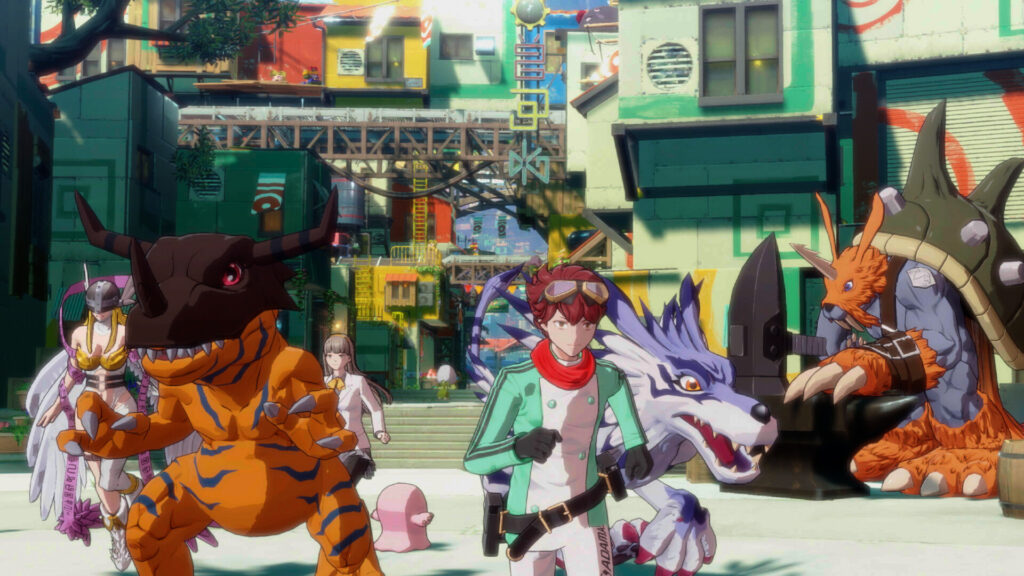
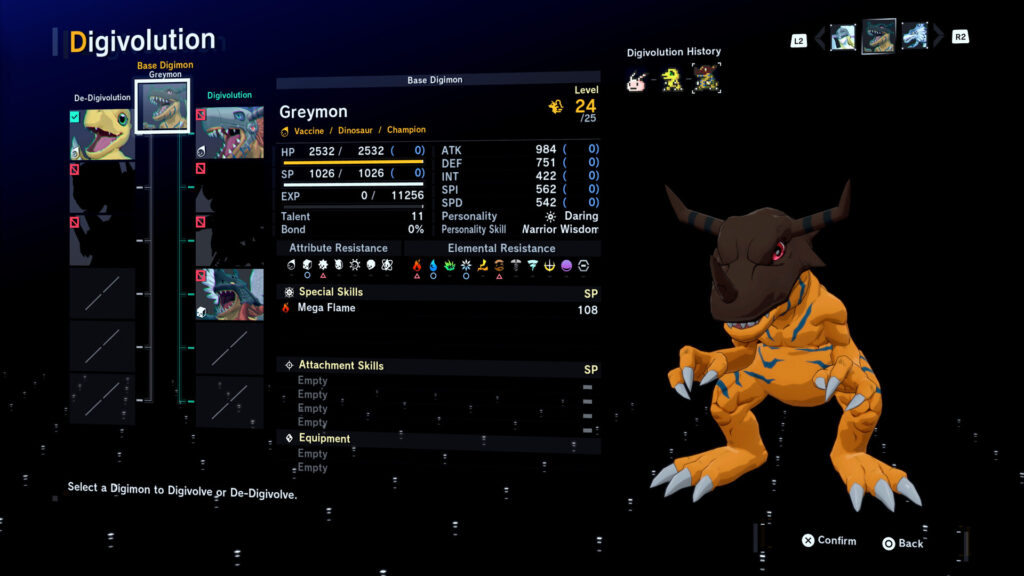
The Digivolution system is the heart of Time Stranger. Digimon follow a non-linear evolution tree, meaning your Agumon might evolve into several different Champion forms, each opening different paths to Ultimate and Mega stages. Each creature has unique idle animations, taunts before battles, and personality quirks that bring them to life. With such a massive roster, the web of possible evolutions becomes quite complex.
Evolution requirements involve meeting specific stat thresholds clearly displayed in the menu, but Time Stranger adds Agent Rank as a gating mechanism. You earn Anomaly Points by completing main missions and side quests, spending them to increase your Agent Rank and unlock access to higher evolution stages. When you finally hit the threshold for Champion, Ultimate, or Mega stages, watching your entire Digimon box light up ready to evolve feels incredibly satisfying.
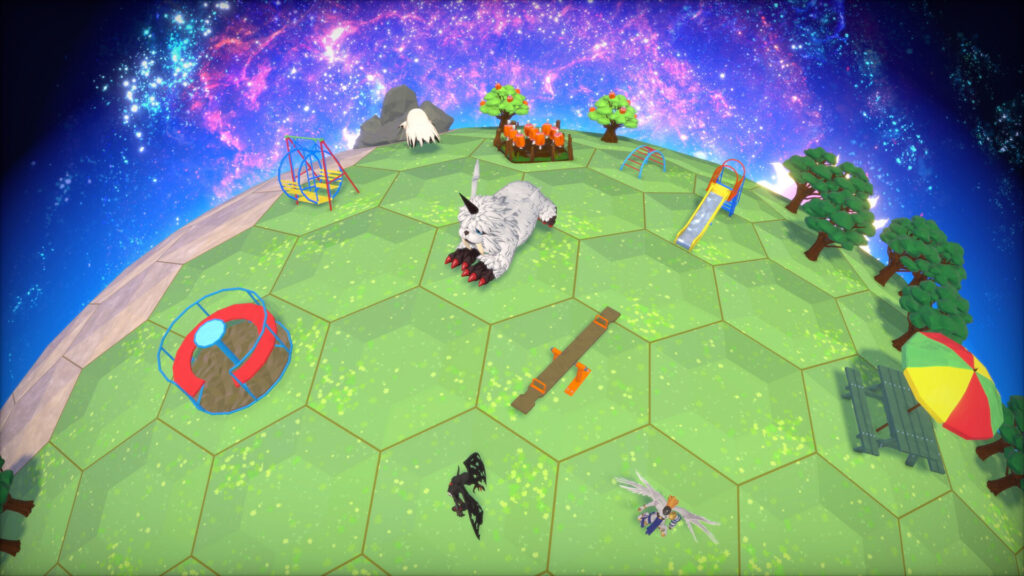
The DigiFarm training system lets you passively boost specific stats on Digimon you’re preparing for evolution. You assign training sets that take real-time hours to complete, though you can spend in-game money to finish instantly. The training sets are reusable, which is nice, but managing everything requires constant menu navigation that becomes quite tedious. I found myself keeping a notepad to track which Digimon needed which stats for their next evolution.
Each Digimon also has a Personality type that affects stat growth when leveling up. The system ties into deeper progression mechanics in ways the game doesn’t explain well, and I eventually gave up trying to optimize it. There’s also a Bond system and relationship mechanics between you and your Digimon that provide combat bonuses, but again, these feel underdeveloped and poorly tutorialized.
Side quests range from simple fetch errands to multi-part story chains. Several require swapping into specific costumes, which adds some light variety. The game drip-feeds quests throughout the adventure, then dumps a huge batch right before the finale in classic JRPG fashion. Many involve excessive backtracking through areas you’ve already cleared, feeling like padding rather than meaningful content.
Time Stranger also includes a card game minigame called Jogmon: The Ultimate Card Game. It’s stylish but shallow, featuring barely any rules and repetitive matches that never evolve beyond their basic concept. Collecting all the cards becomes a time-consuming checklist item rather than an engaging distraction. There are also Outer Dungeon challenges, special rifts that drop you into minigames like racing Digimon or surviving arena waves.
A standard playthrough clocks in around 30 to 40 hours if you’re skipping past cutscenes or not obsessing over collecting every Digimon. Completionists aiming to fill out the entire Field Guide can easily push past 60 hours. The game offers harder difficulty modes that unlock after beating the story, as well as a New Game Plus option.
Here’s where we need to talk about the elephant in the room. Digimon Story: Time Stranger is locked to 30 frames per second on PlayStation 5. The environments don’t push the hardware in ways that justify that frame rate cap. Dungeons often feel vacant, repetitive, and simplistic. The 30fps target also suffers from noticeable frame pacing issues that make camera movement feel sluggish. For a turn-based RPG, the lower frame rate doesn’t break the experience, but it’s still an overall negative.
Loading times are generally reasonable, though fast travel is implemented in the most cumbersome way possible. There’s no instant menu-based teleportation like modern RPGs offer. Instead, you need to find a Birdramon NPC in your current zone, select a landmark, then talk to another NPC at that landmark to choose your actual destination. Plus there are so many loading screens, as the in-game world is not seamlessly connected.
The game does support full English voice acting for the first time in the Digimon Story series, and the cast does solid work bringing the characters and hundreds of Digimon to life. Every Digimon shouts their attack names during battle and has unique victory lines, which is a charming touch that shows real attention to detail.
When Time Stranger looks good, it looks really good. The Digimon themselves are the clear visual highlight, featuring impressive detail and personality in each design. Attack animations during battle are dynamic and feature impressive particle effects that make even standard encounters feel impactful.
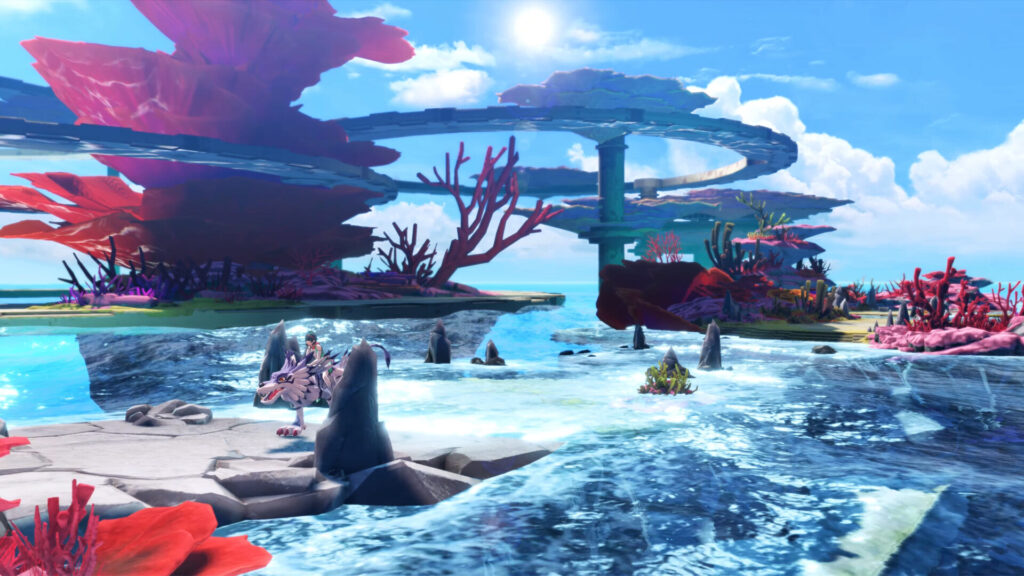
The Digital World offers creative environments that play with the concept of digital space. Some areas feature vibrant colors and impossible geometry that defy conventional design, creating memorably surreal moments. Central Town bustles with life, Digimon gathering in bars and going about their daily routines in ways that make the world feel inhabited rather than merely decorative.
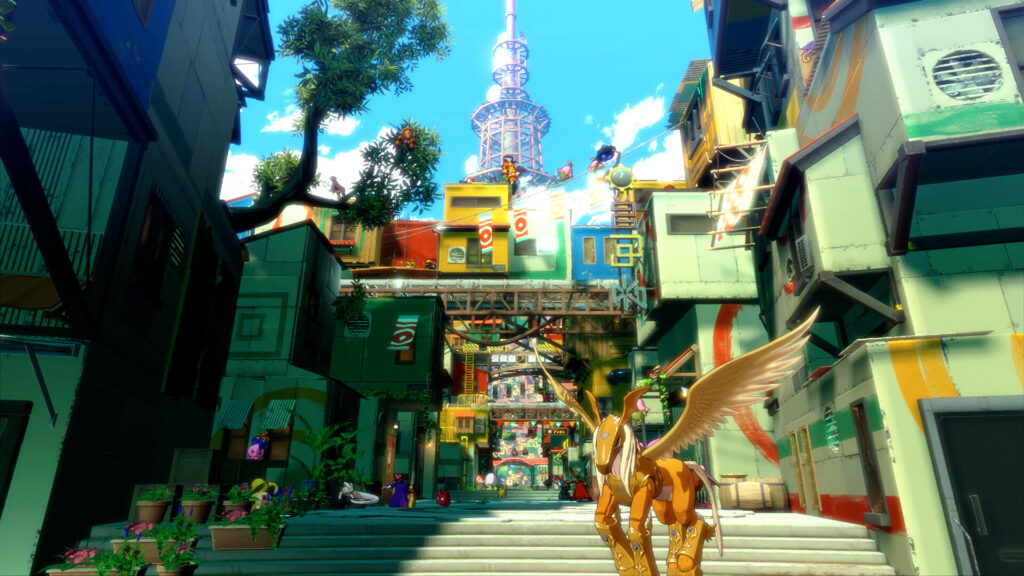
You can mount many Digimon to traverse environments, and the variety of riding positions is fun. Unfortunately, riding Digimon doesn’t make you significantly faster or unlock new areas. You’re just moving through the same restrictive spaces on a different creature, which makes the whole system feel somewhat half-baked.
Digimon Story: Time Stranger represents a massive leap forward for the series, offering the most comprehensive Digimon collection experience ever created in a beautiful Digital World. The evolution system is addictive, boss battles are challenging and memorable, and the story ultimately delivers. For longtime Digimon fans who’ve been waiting, this game will surely scratch that itch.