Summary
This is what a franchise revival should look like. Shinobi: Art of Vengeance honors its heritage while confidently establishing its own identity in the modern gaming landscape. It is a masterful blend of style and substance that feels both familiar and new.
Developer – Lizardcube
Publisher – SEGA
Platforms – PC, Nintendo Switch, Xbox One, Xbox Series S|X, PS4, PS5 (Reviewed)
Review copy given by publisher
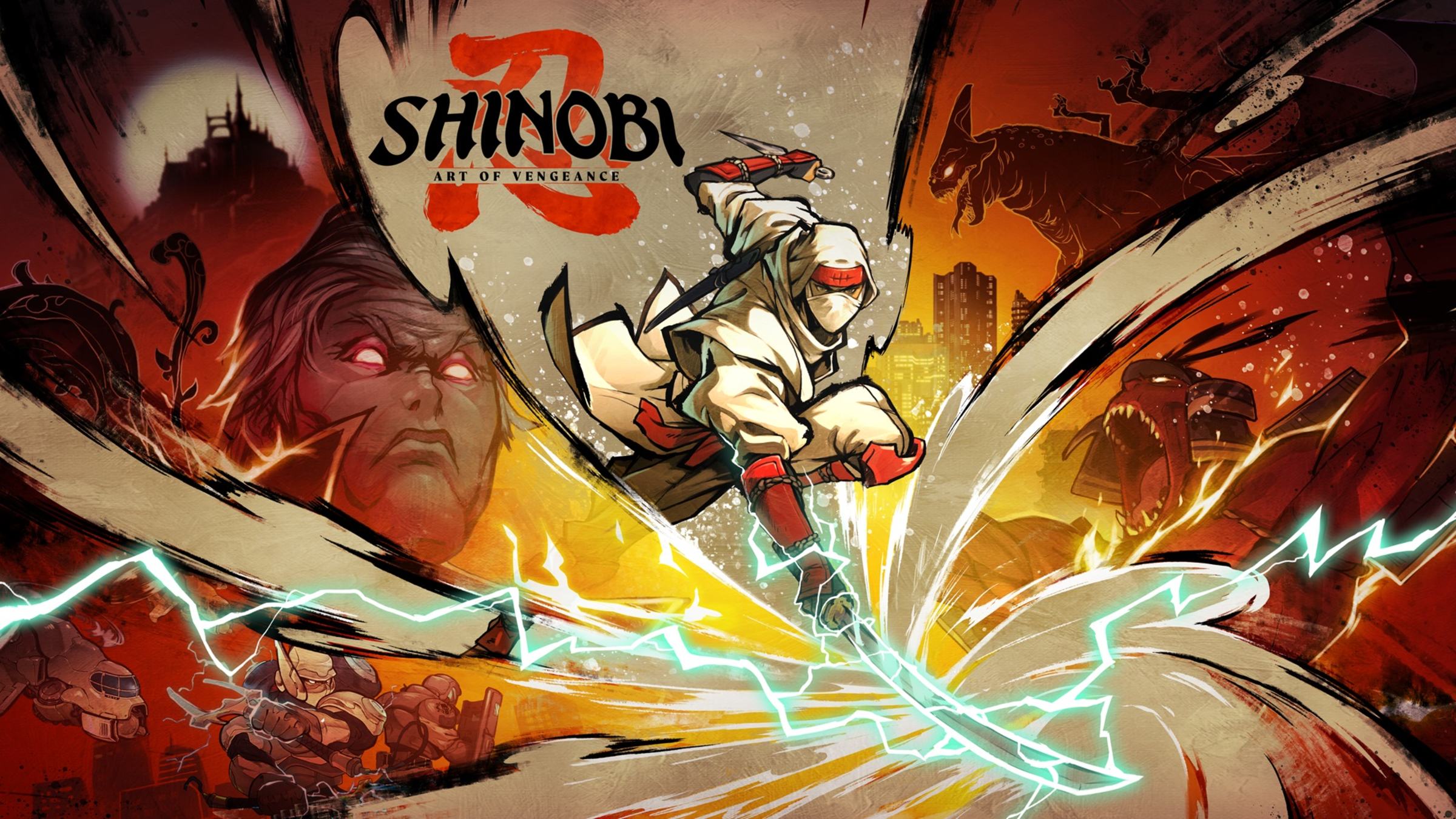
After more than a decade in the shadows, Joe Musashi has returned with a vengeance that’s both literal and figurative. Shinobi: Art of Vengeance marks the franchise’s comeback under the skilled hands of Lizardcube, the studio that successfully revived Streets of Rage 4. What we get is a game that walks the tightrope between honoring its legacy and forging something entirely new.
The story doesn’t waste time with complex plotting. Joe’s peaceful village life gets shattered when the ENE Corporation attacks, leaving his home in ruins and his clan turned to stone. It’s classic revenge, but the execution feels grounded and personal.
Voice acting adds weight to key moments without drowning you in exposition, and Joe’s motivation feels genuinely compelling. You’re not saving the world here. You’re just a man seeking justice for a very personal wrong, which gives the violence more emotional context. While the plot won’t win any originality awards, it serves its purpose effectively.
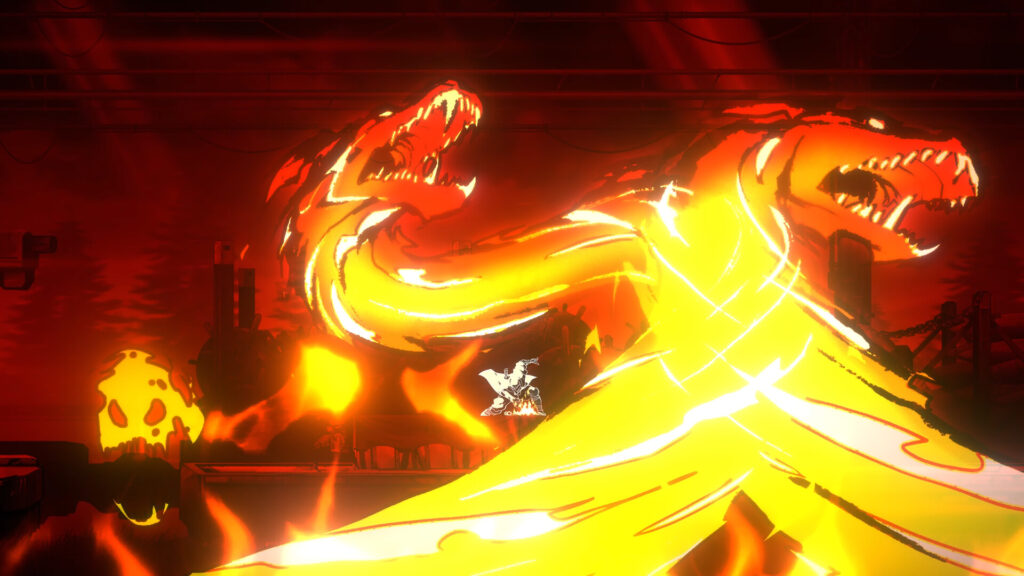
Gameplay is where Art of Vengeance will either win you over or leave longtime fans scratching their heads. Lizardcube has transformed Shinobi from a methodical, projectile-focused series into a combo-heavy brawler that prioritizes fluid action over careful positioning.
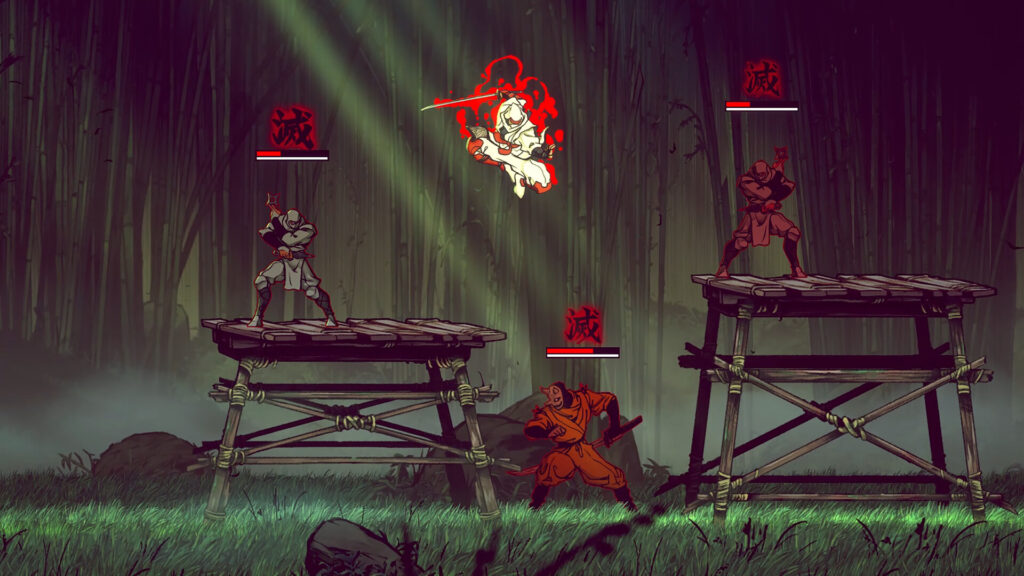
The combat system rewards creativity and experimentation in satisfying ways. Basic sword strikes flow into heavy attacks, aerial juggles, and devastating finishing moves. The Shinobi Execution mechanic adds tactical depth. Stun an enemy and you can instantly eliminate them with a flashy kill that can be chained across multiple targets.
Joe’s moveset expands throughout the game, introducing Ninjutsu stances that fundamentally change how he fights. Fire attacks provide ranged options, while new traversal abilities like wall-climbing and air-dashing unlock previously inaccessible areas. The progression system balances story unlocks with purchasable upgrades using collectibles found in each level.
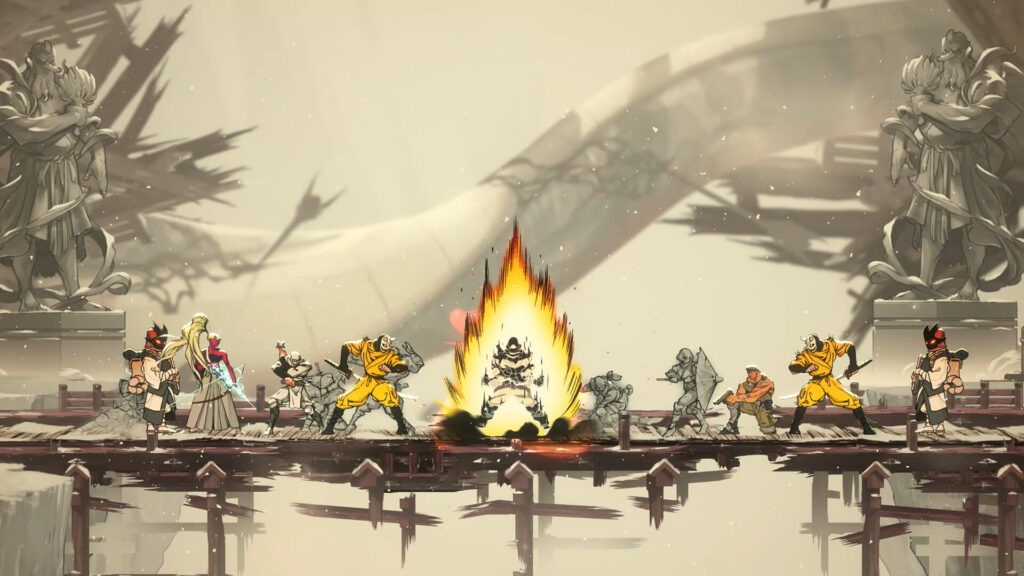
Rather than traditional linear stages, each level in Art of Vengeance is designed as a mini-Metroidvania with its own map and multiple paths. You can complete the game in a relatively linear fashion, but many areas remain inaccessible until you acquire specific skills later on. This structure encourages exploration and backtracking for completionists.
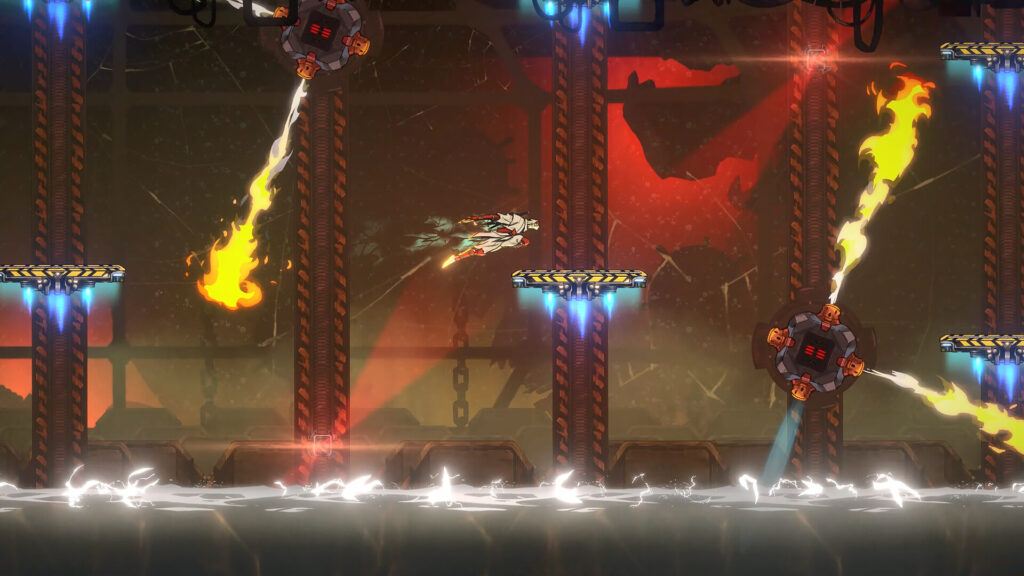
The platforming feels appropriately weighted without being sluggish. Joe moves with ninja-like agility, making the traversal portions genuinely enjoyable rather than obstacles between fights. The best moments come when combat and platforming merge during elaborate set pieces.
Progression feels rewarding across multiple fronts. Story advancement unlocks Joe’s most impressive skills, while currency collected from defeated enemies and hidden collectibles funds upgrades at shops scattered throughout levels. Amulets provide passive bonuses like increased health or enhanced kunai capacity and new combat techniques expand your arsenal substantially.
More interesting are the combo amulets that activate once your combo reaches specific thresholds. You might hit harder after your combo reaches 30, earn gold coins with every hit after 25, or launch more powerful fireballs after racking up 20 consecutive kills. This system adds a risk-reward element that encourages maintaining long combo chains rather than playing it safe.
The difficulty strikes a compelling balance. Regular encounters provide enough challenge to keep you engaged without feeling punishing, but boss fights will likely require multiple attempts as you learn their patterns. Newcomers can rely heavily on the robust upgrade system and special abilities, while veterans can challenge themselves by sticking to basic moves only. For those who find the default difficulty overwhelming, accessibility options include reducing enemy health, taking less damage from attacks, and placing respawn points closer to challenging sections. Each stage contains five hidden collectibles that often require creative thinking or advanced techniques to reach.
However, this approach represents a significant departure from series traditions. Classic Shinobi emphasized precise timing and strategic use of throwing stars. This version wants you in the thick of battle, chaining combos and looking stylish while doing it. It’s undeniably fun, but it’s also undeniably different.
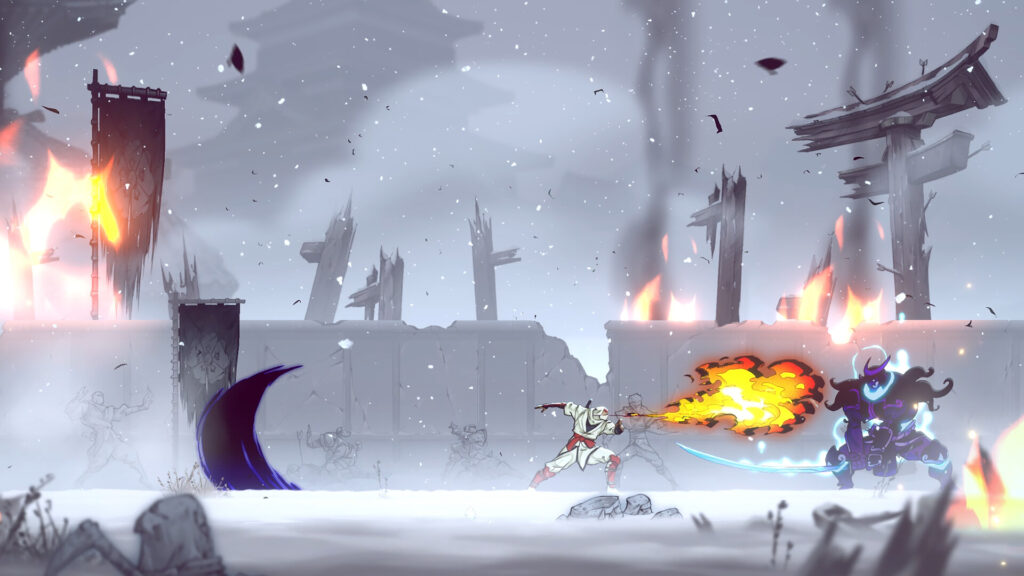
On PS5, the game generally runs smoothly with quick loading times and responsive controls. The DualSense controller feels great in hand, and input registration is precise enough for the demanding combat system. However, when the screen fills with enemies, particle effects, and elaborate special moves, frame rates noticeably drop. This becomes particularly frustrating during boss fights where timing is critical.
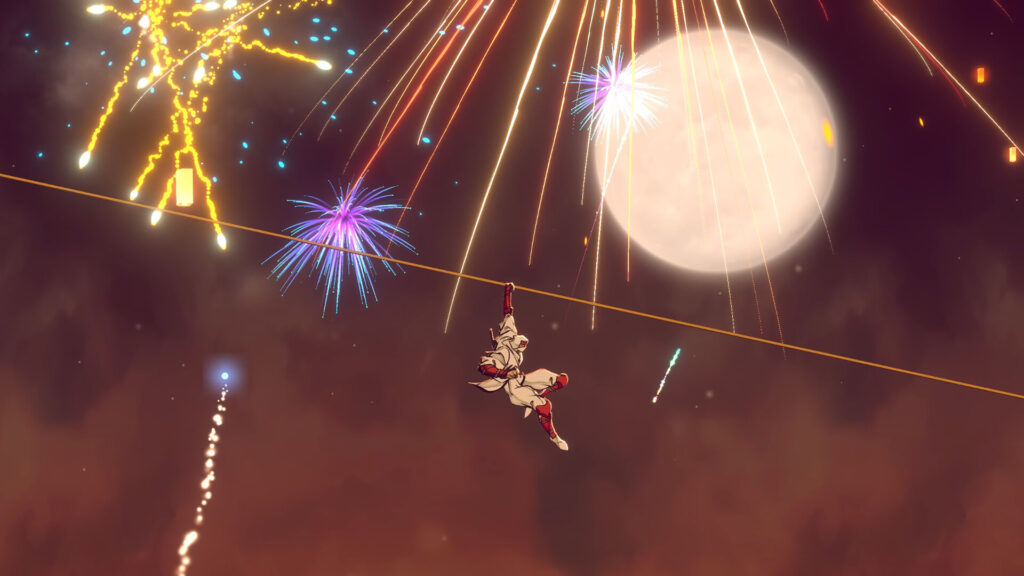
The hand-drawn art style represents Lizardcube’s finest work to date. Every frame looks like it was pulled from a premium animated film, with character animations that flow like water and backgrounds rich with detail and atmosphere.
Joe himself has never looked better, with combat moves that convey both deadly efficiency and emotional weight. Enemy designs range from generic corporate soldiers to more creative threats, all rendered with impressive attention to detail. Environmental variety keeps each stage feeling fresh, whether you’re infiltrating military bases or navigating mystical bamboo forests.
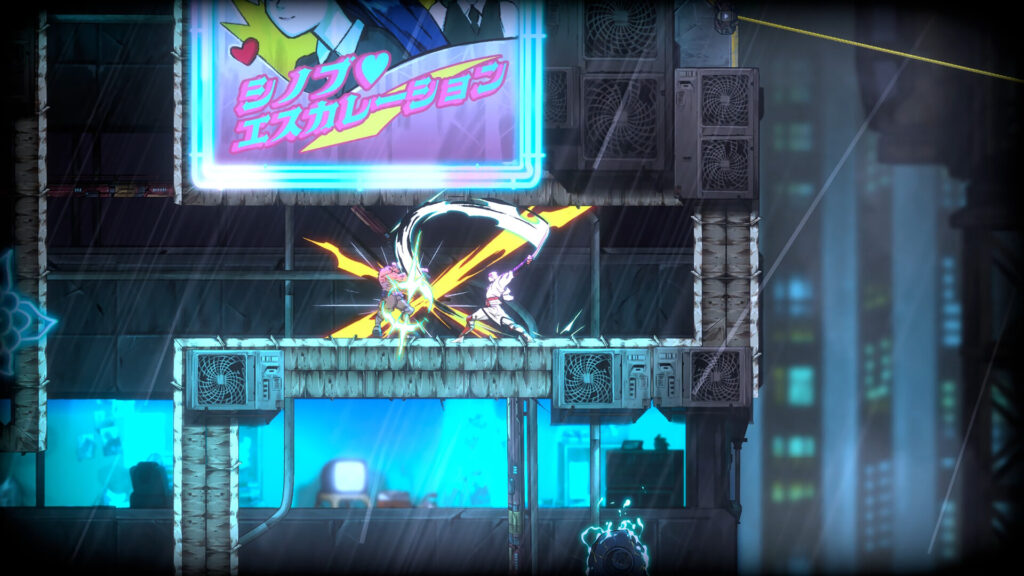
The sound design supports the action effectively without calling excessive attention to itself. Fighting feels appropriately impactful thanks to satisfying hit sounds, while environmental audio helps establish the atmosphere of each location. Music blends traditional Japanese instrumentation with modern electronic elements, creating something that feels both nostalgic and contemporary.
Shinobi: Art of Vengeance succeeds as both a respectful franchise revival and a modern action platformer that stands on its own merits. The combat system provides genuine depth for dedicated players while remaining accessible to newcomers. Level design strikes an effective balance between linear progression and exploration, with hidden secrets and collectibles providing incentives for thorough investigation.
Campaign length feels appropriate without overstaying its welcome, clocking in at roughly 8-10 hours for most. However, the replayability extends well beyond that initial playthrough. The included Arcade Mode transforms each stage by adding scoring mechanics, time pressure, and leaderboard competition.
This is what a franchise revival should look like. Shinobi: Art of Vengeance honors its heritage while confidently establishing its own identity in the modern gaming landscape. It is a masterful blend of style and substance that feels both familiar and new.