
Summary
Guardians of Azuma is a solid Rune Factory game that does most things right on a basic level – it’s not broken, it’s cute, and it’s plenty approachable – but it doesn’t stand out in any big way. It’s more like a pleasant afternoon chat with old friends than a fireworks show. So while I’d still recommend it to folks who adore farming sims and want a new cozy world to chill in, I’ll be honest: it’s definitely not the peak of the series for me. The villagers and the concept of dancing to heal the world are fun, but I couldn’t shake the feeling that this installment just played it a bit too safe. If you’re wondering why it’s my least favorite Rune Factory to date, it boils down to that lack of spark and depth compared to earlier entries. It’s a “fine” game with nice moments, but my nostalgia was left wanting a bit more of the old Rune Factory magic.
Developer – Marvelous Inc.
Publisher – XSEED Games, Marvelous USA, Inc., Marvelous Europe
Platforms – Nintendo Switch, PC (Reviewed)
Review copy given by Publisher

You might remember Rune Factory as that Harvest Moon-style farming-RPG spin-off that’s been around since the mid-2000s. The first Rune Factory debuted on DS in 2006, mixing farming with monster-fighting, and it spawned a whole series. There are five main numbered entries (RF1 through RF5) each with its own town and story – plus a few spin-offs. For example, Frontier (Wii) had floating islands and a funky “runeys” mechanic, Tides of Destiny (Wii/PS3) put you on boats with dual characters, and now Guardians of Azuma (2025) is the latest spin-off. Each game generally shares the core idea of growing crops, befriending townsfolk, and battling evil (often with “rune” magic), but the settings and side mechanics shuffle around.
In Guardians of Azuma, the setting is a brand-new land inspired by traditional Japan. Decades ago, Azuma was struck by the Celestial Collapse: some massive meteor or cosmic thing slammed into the earth and shattered it. Imagine chunks of village flying off into the sky and the sea – that’s exactly what happens. Nature’s magic (the runes) went kaput, the gods of nature vanished, and the once-happy villages turned into crumbling ruins. You wake up in this broken world with amnesia, after having a bizarre dream of dueling dragons, and are told by a mystical voice to “accept the power of an Earth Dancer.” In Rune Factory-speak, that means you’re now an Earth Dancer – a kind of magical hero whose dance-like powers can purify the land and fight the spreading blight. The game gives you a choice: play as Subaru or Kaguya (boy or girl protagonist). Both are originally from a northern village in Azuma, childhood friends, and now they’re this land’s chosen savior.
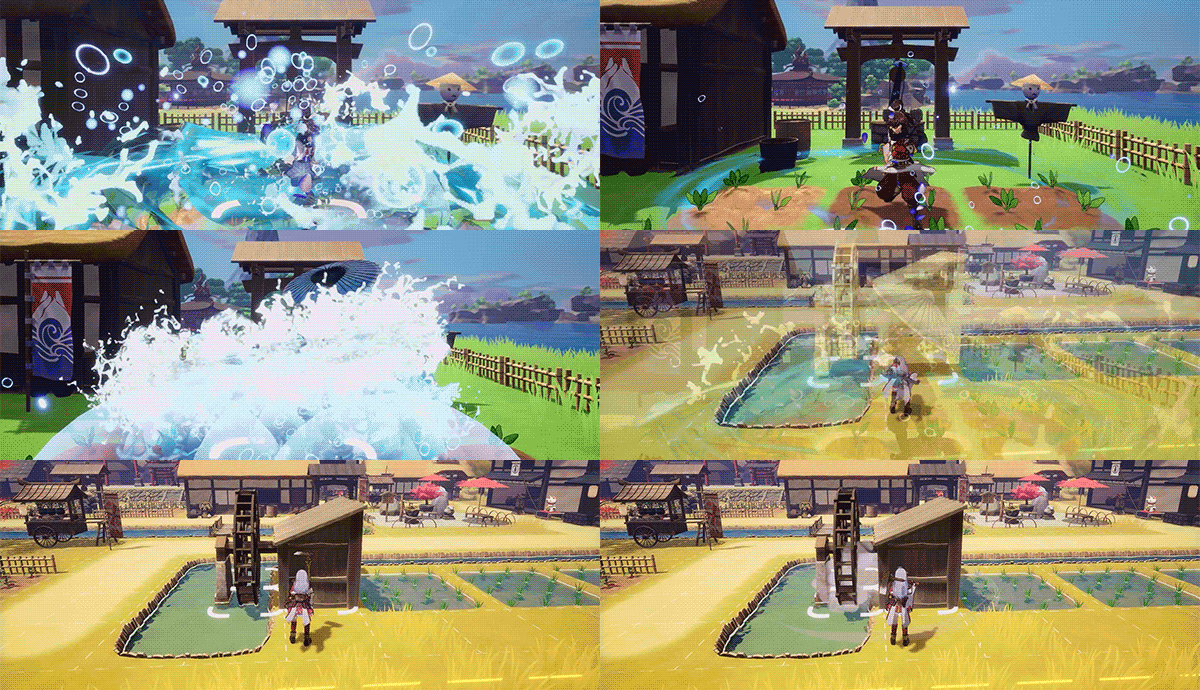
Azuma itself is divided into seasonal-themed villages (Spring Village, Summer Village, etc.), each with its own look and folk-y festivals. For instance, in Spring Village you help a shrine and meet Iroha, the kind-yet-resolute village leader. There’s a lot of Japanese flavor here – shrines, mikoshi festivals, even throwing candy like at New Year’s, and basically everyone’s dressed in yukata or samurai-style outfits. As an Earth Dancer, you gradually learn to dance at these sacred spots or temples (often after helping clear away corruption or monsters). The goal is to restore the gods (who are mostly sealed away by the blight) and bring life back to the villages. It’s a nice change of pace from the typical Rune Factory setting (which often had more Western medieval vibes); Azuma feels like a cozy anime, which is cool, but I have to say the story pacing sometimes made me go “eh.” The Celestial Collapse setup is epic-sounding, but in practice the plot unfolds more like a series of local errands – purify this shrine, rebuild that forge – than a blockbuster narrative. If you liked the big plot twists of RF4 or the political subplot of RF5, this one feels more gentle.
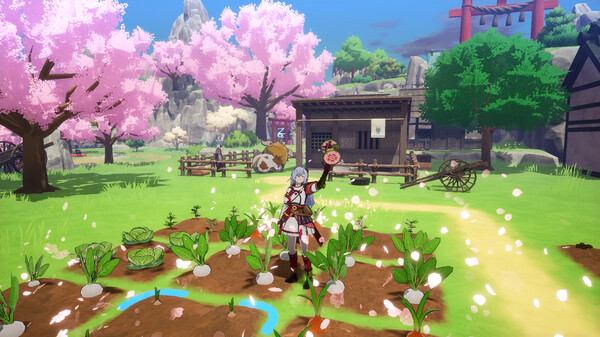
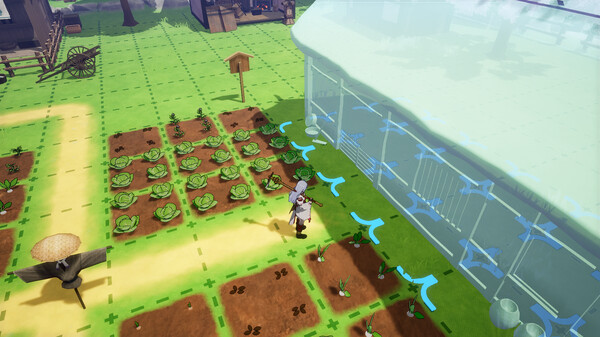
Mechanically, Guardians of Azuma mixes the familiar Rune Factory formula with a couple new twists. The biggest new thing is village-building: instead of just farming a patch of land, you literally rebuild each village piece by piece. The game gives you building “recipes” (or kits) like forges, houses, gardens, etc., and you place them on a little grid map for each village. As you lay down structures, NPCs come moving back in and the town gradually regenerates. It’s kind of neat – for a while I was enjoying positioning little houses like a mini puzzle game. But it’s also pretty constrained (the build zones are small and you only have preset buildings). Once you’ve set up the basics in one village, you do it again in the next, and after a bit it feels more like ticking boxes than a fresh challenge. Also, villagers will farm and fish for you automatically once they’re back, so ironically I hardly had to grow crops at all after the first hours. For someone who loves the farming loop, this was a double-edged sword: no more tedious watering, but also less hands-on farming fun.
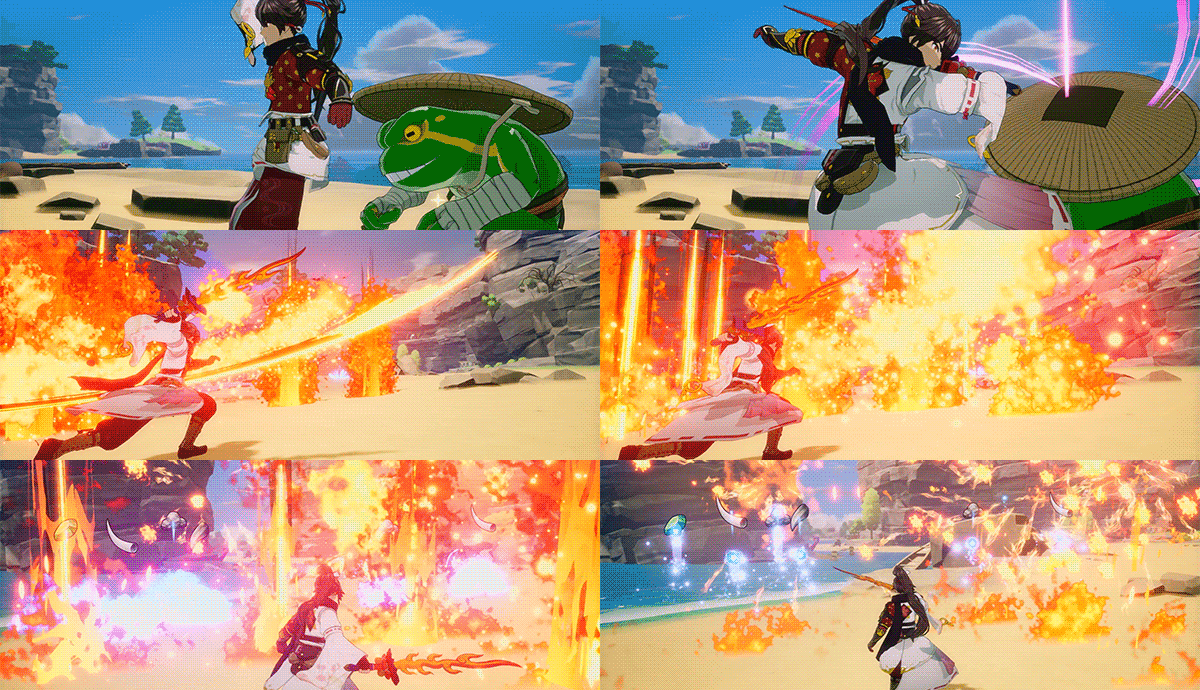
Combat in Azuma uses your Earth Dancer theme. In addition to a sword and hammer (if you want), you get new “fresh” weapons like a bow and a mystical talisman, and your hero’s attacks flow together like a dance combo. You might swing your sword, spin into the next move, and end with a flourish that heals ground or something – it feels faster and flashier than classic RF hack-’n’-slash. There are also special sacred treasures (magical items) that let you do big moves – for example, causing an earthquake or summoning a twister – to clear out blight fields or wipe monsters. On paper, it sounds exciting, but in practice the combat can be a little underwhelming. The monsters are cute-sinister Japanese-inspired creatures (living drums, vine zombies, and the like), and the boss fights are standard for the series. I wouldn’t say the dungeons are particularly memorable either. It’s fun to try combos, but the fights don’t usually feel super challenging. The earlier spin-off Tides of Destiny, for instance, leaned hard into over-the-top combat and let you switch between characters, which added a thrill. Here it’s more straightforward: you fight, heal, and backtrack when needed, but nothing stretches your skills too much.
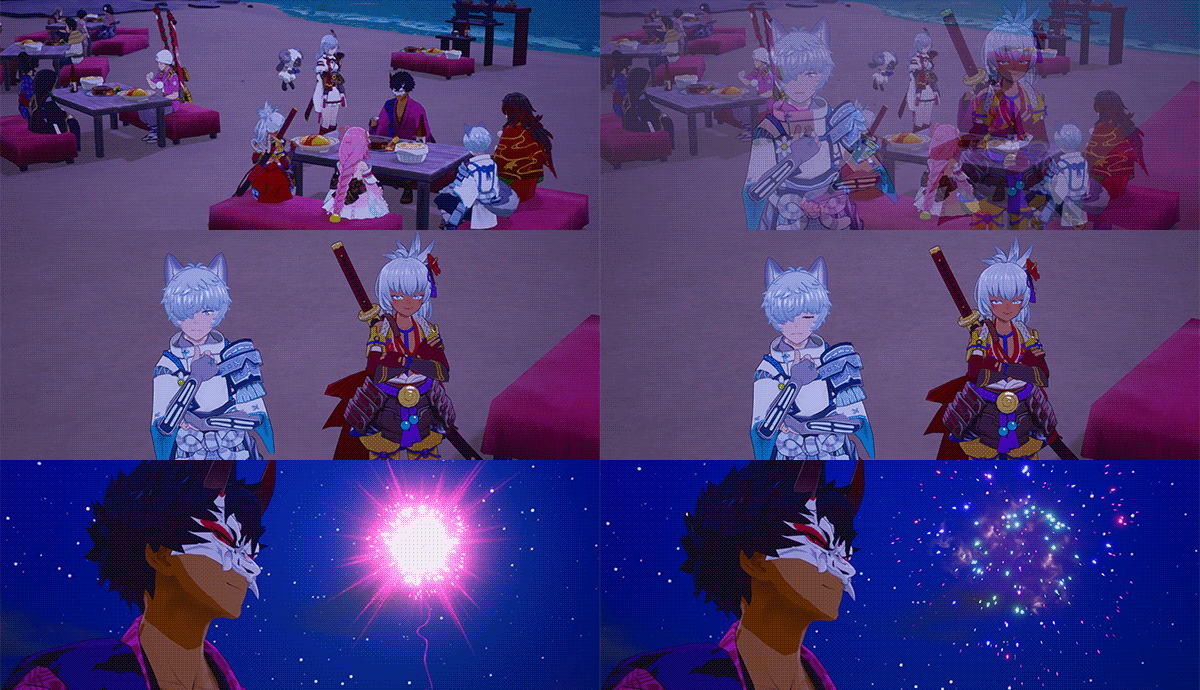
Of course, romance and characters are still a big Rune Factory staple. You pick a male or female lead and can woo any of the eligible bachelors or bachelorettes in town, even same-sex marriage if that’s your preference. The dialogue is fully voiced this time around (all those villagers actually talk out loud!), which adds charm. The cast is decent – there’s, say, the hot-headed blacksmith, the gentle shrinemaid, a cool older swordsman, funny kids, etc. They have events and festival dates as usual. I enjoyed some of these interactions; seeing a boom in your relationship gauge still feels rewarding. It does seem like Azuma brings a few more romance options than usual, which is nice if that’s your thing. That said, some of the lines felt kind of cliché (the old “That’s my target!” from the samurai-aesthetic knight popped up often). And while I liked bits of character banter, I never got hugely invested in most of them. Frankly, in games like RF4 I remember surprising personal storylines (spoiler: RF4 went nuclear on its plot halfway through), whereas in Azuma the character arcs are fairly light. They mostly revolve around helping each village with problems and witnessing cute banters, not world-shaking revelations.
Now, I’ll be straight with you: as much as I appreciate Guardians of Azuma for what it is, this entry feels weaker than some of the series’ best. It’s not a disaster by any means – it still scratches that Rune Factory itch of co-managing home life and adventuring – but it lacks the spark that made games like RF4 so memorable. For starters, the storytelling is more laid-back and also more predictable. You know there’s going to be a happy ending (the gods revived, Azuma saved) from pretty early on, so it becomes a matter of doing tasks rather than uncovering mystery. The pacing drags in spots; there are chunks of time where you’re running errands, building out the same villages, or repeating fetch-quests with minimal variation. In contrast, earlier RF games often had a bigger payoff or twist for pushing through, which keeps things exciting.
Gameplay-wise, it also feels a bit streamlined to a fault. As I mentioned, the villagers just take care of the farm and resources, so after the tutorial I rarely had to tend crops, water fields, or the like. If you’re in it for planting turnips and crafting fertilizers, this might disappoint you, because it switches almost immediately to the village-building mode. Combat isn’t particularly deep either – you can spam your combos and it works, but there’s not much strategy to master.
As for production polish, it’s mostly solid. The art is bright and colorful (Azuma’s landscapes and outfit designs really pop with that folky vibe) . The music is pleasant, full of shamisen and taiko drums, which I liked. Voice acting is a sweet touch (though sometimes villagers keep yabbering on a bit). There are a few minor bugs — a quest NPC might clip through a wall, or a shop menu might be slightly finicky — but nothing too egregious in my playthrough. The overall feel is “done and working,” even if it doesn’t shine.
In the end, Guardians of Azuma is a solid Rune Factory game that does most things right on a basic level – it’s not broken, it’s cute, and it’s plenty approachable – but it doesn’t stand out in any big way. It’s more like a pleasant afternoon chat with old friends than a fireworks show. So while I’d still recommend it to folks who adore farming sims and want a new cozy world to chill in, I’ll be honest: it’s definitely not the peak of the series for me. The villagers and the concept of dancing to heal the world are fun, but I couldn’t shake the feeling that this installment just played it a bit too safe. If you’re wondering why it’s my least favorite Rune Factory to date, it boils down to that lack of spark and depth compared to earlier entries. It’s a “fine” game with nice moments, but my nostalgia was left wanting a bit more of the old Rune Factory magic.