

Discover everything you need to know about stats in Vampire Crawlers, including the best ones to focus on.
Stats in Vampire Crawlers are attribute modifiers that change how your cards, Crawlers, and runs behave. Stats aren’t just small buffs – they define your entire run. Choosing the best ones is essential before starting a run to overcome the enemies and gain unique effects. Defensive, Offensive, Utility, and Hybrid are the four different categories of the stats, while Defensive ones are more about survival, and Offensive are damage-focused. Stats don’t work alone – they multiply each other, so it builds snowball fast if you stack the right stats together. In this complete stats guide, we uncover how they work and the best ones to choose for you to build in Vampire Crawlers.
How Stats Work in Vampire Crawlers
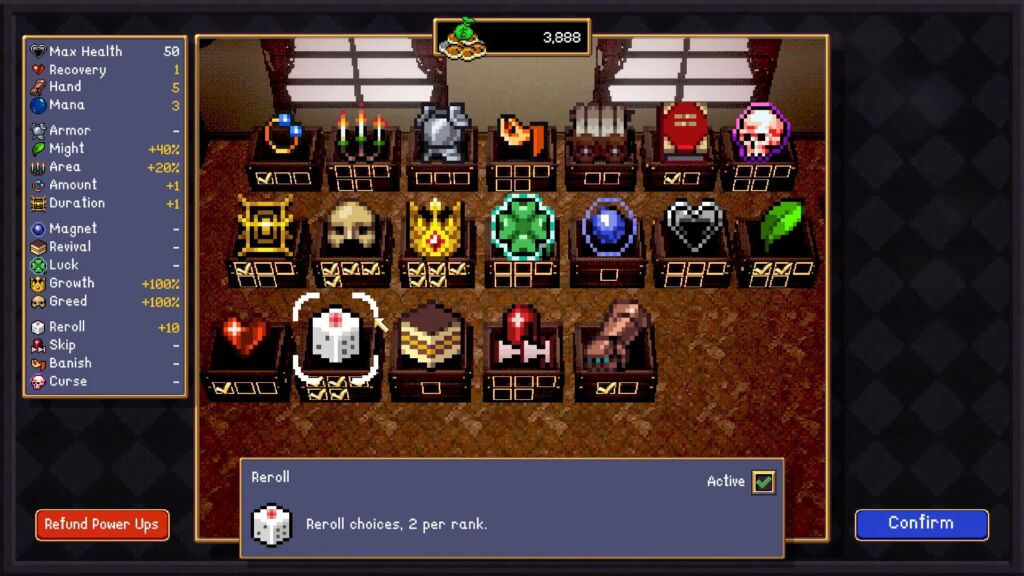
Stats are the attributes that boost different parts of your build in Vampire Crawlers. They usually come from cards, gems, power-ups, and items during a run. Some stats last for a whole run, while others are temporary.
How Stats Work
The game currently has 18 main stats, and they are divided into four main categories (offensive, defensive, utility, and hybrid stats). Temporary stats like Might, Area, Amount, etc., reset after each stat, while Permanent stats like Growth, Luck, and Revivals stay for your whole dungeon run.
- Offensive stats are the main damage system, so consider choosing any one of them.
- Defensive Stats are one of the strongest survival stats because it prevents instant run-enders.
- Utility stats don’t directly fight enemies, but they decide how strong your build becomes over time.
- Hybrid stats are the flexible stats that affect both combat and systems.
Vampire Crawlers All Stats
Below are all the stats and their unique effects and types in Vampire Crawlers.
| Stat | Type | Description |
| Might | Offensive | Increase the base damage of all weapons by 10% per level. |
| Amount | Offensive | Get extra projectiles for your weapon cards. |
| Area | Offensive | Expands attack hit radius or splash range. |
| Max Health | Defensive | Enhance your Max Health by 10% per rank. |
| Armor | Defensive | Gan Armor is equal to this stat at the start of your turn |
| Recovery | Defensive | Heal 1 HP per rank after a fight. |
| Revival | Defensive | Grants extra lives |
| Growth | Utility | Gives you extra XP. |
| Greed | Utility | Gain 10% more coins. |
| Luck | Utility | Improves drops, crit chance, and reward quality |
| Reroll | Utility | Gives extra chances to change reward options |
| Banish | Utility | Removes unwanted cards from future rewards |
| Skip | Utility | Let’s you skip rewards for XP instead |
| Mana | Hybrid | Determines how many you can play per turn |
| Hand | Utility | Number of cards drawn each turn |
| Magnet | Hybrid | Improves card draw or attraction effects |
| Curse | Utility | Increases enemy difficulty but boosts rewards |
| Duration | Hybrid | Affects timed effects and scaling abilities depending on card type |
Temporary vs Permanent Stats
The difference between temporary and permanent stats is one of the most important systems because it directly affects how you plan your run and build a deck. The first one boosts you only during the current fight, then resets afterward. Might, Area, Amount, and Recovery are included in the Temporary stats. They’re gained from cards or battle effects and disappear after the encounter ends. These kinds of stats are best suited for bursting bosses or elite fights, but lack in the long term in the dungeon.

Temporary vs Permanent Stats
Permanent Stats like Luck, Growth, and Greed stay with you until the run ends. This makes them part of the run-long progression system and doesn’t reset after battles. They are essential for long-term scaling and help you snowball into late-game power. Temporary stats help you survive bad draws in the early game, and Permanent stats start snowballing value in the mid-game. The card increasing your Might by 30% is best before starting a fight with the boss, but left the next three battles.
Best Stats to Prioritize
The strongest build in Vampire Crawlers focuses on snowballing damage, faster scaling, and consistency. Aforementioned, stats are split into four distinct categories, but some are more powerful and effective than the others. Below are the best stats to include in your build to dominate the enemies in combat.

Best Stats to Prioritize
- Amount: Increases the number of projectiles or hits per attack. It scales harder than raw damage in most builds works perfectly with multi-hit cards. More hits means more crit chances and faster boss melts.
- Luck: Improves loot quality and drop chances, increasing crit-related outcomes and better rewards. This stat affects long-term run consistency. This makes your build scale faster over time, allowing you to dominate enemies.
- Might: This is a damage multiplier for all attacks, as it increases the attack damage in a fight. This gives a strong early game boost and falls slightly behind Amount in scaling efficiency.
- Armor: Reduces incoming damage consistently, making it valuable in the early game. This lets you survive mistakes while learning builds.
- Revival: Allows you to gain an extra life per run and is better than stacking raw HP. One mistake doesn’t end your run if you include this stat in your build.
- Greed: This increases gold earned per run and speeds up permanent upgrades.
Choose Luck, Banish, and Greed if your deck is evolution-heavy. Armor, Recovery, and Revival are essential stats for a defensive or beginner-friendly build in Vampire Crawlers. Don’t take Area if you don’t have AoE cards, and avoid Might if your damage comes from summons. Prioritize Hand and Luck if your deck is combo-chain focused. Amount, Might, and Area are the best options for the deck using multi-hits or projectile cards.
Best Stats Tips & Tricks in Vampire Crawlers
Below are the best stats tips & tricks we recommend following in Vampire Crawlers.

Stats Tips & Tricks
- Always buy Greed upgrades first before damage-heavy stats in the early game.
- Make sure to pair Amount & combo chains for burst turns.
- Don’t ignore Armor & Recovery for damage reduction and healing consistency.
- Balance stats instead of overstacking one type. Choose Utility stats in the late game and Offensive in the mid-game.
- Take Luck early if your build relies on RNG upgrades.
- It’s best to build stats around your combo system, so prefer picking what improves your chain consistency.
- Delay the stats that don’t help you survive or scale runs.