


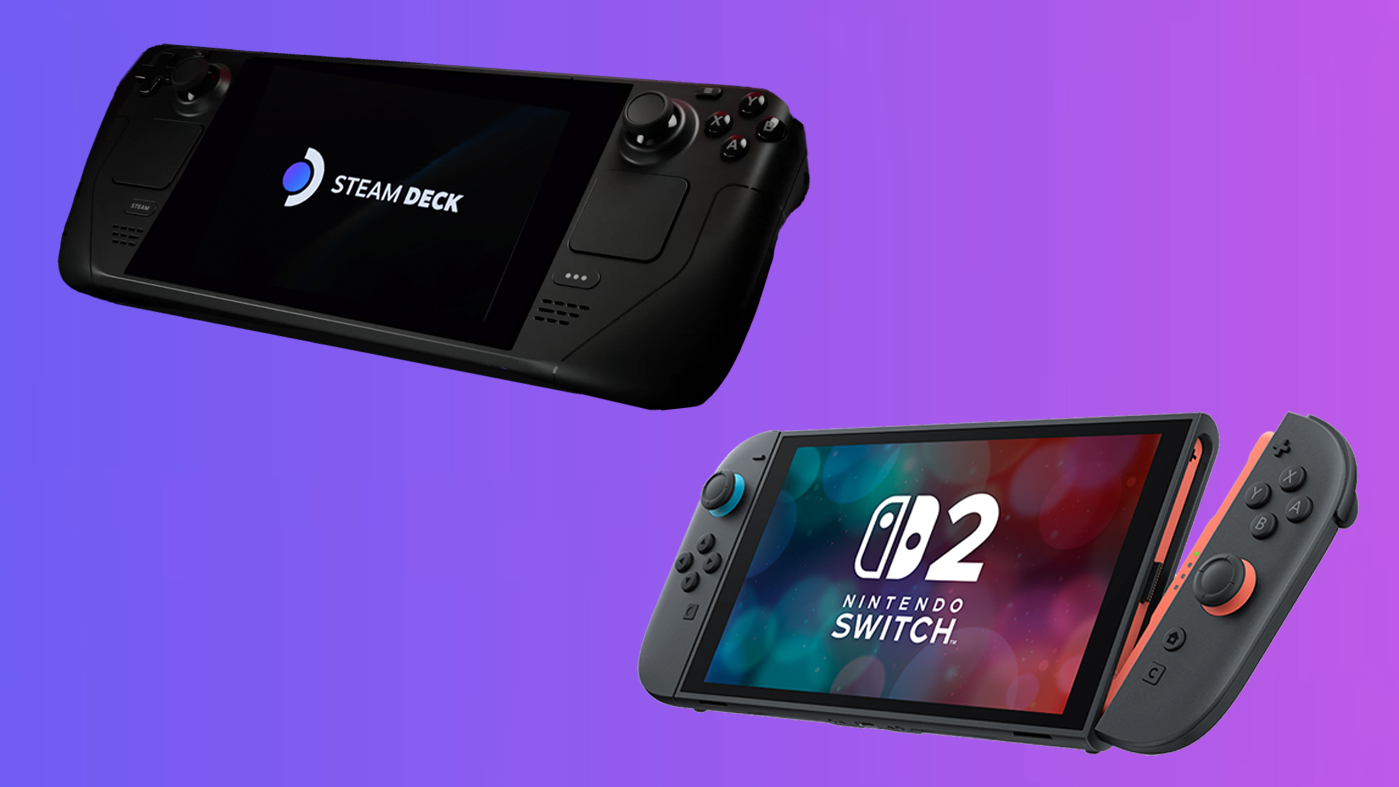
Since the reveal of the Steam Deck in a world where Nintendo Switch already exists – comparisons were already drawn. Although the Nintendo hybrid handheld has proven a success with over 150 million units sold, the power difference is fairly stark when putting the two against each other. Valve has spoken out to elaborate its handheld is for a difference market unlike the Nintendo Switch.
So when time came for the reveal of the Nintendo Switch 2, the conversation returned with new arguments as to what new capabilities the next hardware will offer. Aspects like 4K, HDR, and 120hz being talking points alone is a major upgrade for Nintendo. And with Valve stating the next-generation Steam Deck is years from being realized – this is the ultimate gaming handheld matchup.
Recently, Digital Foundry has officially sat both the Nintendo Switch 2 & Steam Deck against each other to find which is the better of the two. And through testing with Cyberpunk 2077, it reveals the Nintendo Switch 2 has a considerable advantage against the Steam Deck. You can watch the video below:
“The gap between Deck and Switch 2 widens if we compare a similarly set-up 40fps performance mode where the DRS windows expands to 540p to 1080p. Switch 2 hits the target more often but Deck with FSR 3 has 91 percent of Deck performance, dropping to 84 percent with XeSS,” technology editor Richard Leadbetter writes. “In short, demanding more in frame-rate terms sees the Deck fall short – and remember, when we’re dropping frames, we are almost certainly at lower bounds 540p while Switch 2 is more dynamic.
“He continues: “Combined with DLSS as a superior upscaling, it’s a big difference in favour of the Nintendo machine. Despite trying to match settings as best we could, the early part of the Kabuki run here suggests a missing shadow cascade on Switch 2, but more obvious is that the performance from Switch 2 is much more consistent in hitting 30fps. There’s so much headroom here that not only is Switch 2 running smoothly, but you are getting better image quality, not just from DLSS but also from a wider dynamic resolution range.”
Leadbetter adds: “Switch 2 has significant across-the-board advantages, but power efficiency is remarkable. Measured from the wall, Switch 2 pulls 18-19W of power. […] Steam Deck OLED is still maxing out at around 24.5W on average, but Switch 2 is delivering remarkably similar results – just a little less stable – and it draws around 8.9W on average based on overall battery life. And it has DLSS of course, so image quality is cleaner.”
He goes on to conclude that “If there is to be a winner from this face-off, Switch 2 clearly reaps the benefits of a bespoke approach from the developer, the ability to use DLSS and some remarkable efficiency wins. […] Switch 2 goes into this one with a range of unassailable advantages.” Despite the Nintendo handheld being very reliant on the GPU, it makes up for the handicap of its processor.
Are you surprised by these results when comparing the two?
Source: Eurogamer

- News
 XBOX Could Step Away From Day & Date Releases For Game Pass As Studios Detest The Business Model
Yesterday
- News
 Report Reveals Teams Exiting In XBOX Reset Not Obligated To Ship Work On Game Pass
Yesterday
- News
 PlayStation User Reveals Even Legacy Purchases Aren’t Safe From The Digital Future
Yesterday
- NewsXBOX Could Step Away From Day & Date Releases For Game Pass As Studios Detest The Business Model
Yesterday
- NewsReport Reveals Teams Exiting In XBOX Reset Not Obligated To Ship Work On Game Pass
Yesterday
- NewsPlayStation User Reveals Even Legacy Purchases Aren’t Safe From The Digital Future
Yesterday
- News
 Sega Boss Says The Publisher Has No Plans To End Support For Physical Games
Yesterday
