Summary
If you bounced off Diablo IV at launch, this is a reasonable time to come back, ideally a week or two from now once the servers have settled. The PlayStation 5 edition, specifically, is an excellent port other than the lack of meaningful DualSense integration. If you liked the base Diablo IV, you’ll definitely love Lord of Hatred.
Developer – Blizzard Entertainment, Inc.
Publisher – Blizzard Entertainment, Inc.
Platforms – PC(Reviewed), Xbox One, Xbox Series S|X, PS4, PS5 (Reviewed)
Review copy given by publisher
NOTE:
Rectify Gaming Reviewed the Expansion on PC via Steam , Steamdeck and Battle.net aswell as on console on PS5 , this review goes over all platforms reviewed
To really understand what Diablo IV: Lord of Hatred is trying to accomplish, you have to look at the long road that led here. Blizzard has been building toward this moment for decades, ever since Diablo II introduced players to Mephisto as one of the Prime Evils. That legacy carried forward into Diablo III, though the tone shifted slightly toward a more bombastic style.
Diablo IV returned the series to a darker, more grounded atmosphere, setting up the Age of Hatred arc and reintroducing Mephisto as a looming force manipulating events from the shadows. The base game leaned heavily on slow burn storytelling, with The Wanderer caught in a conflict that felt larger than any one character.
The first expansion, Diablo IV: Vessel of Hatred, began steering the game back on track after a rocky launch period filled with balance issues and repetitive seasonal grinds. It laid the groundwork for something bigger, and Lord of Hatred is clearly meant to be the payoff.
Story and Campaign in Lord of Hatred
Lord of Hatred picks up with a sense of inevitability that the base game spent dozens of hours building toward. The Wanderer is no longer just reacting to the chaos spreading across Sanctuary. This time, the journey feels more deliberate, more personal, and far more focused on the psychological pull of Mephisto rather than the physical destruction he leaves behind.
The campaign runs roughly eight to ten hours, but it wastes very little time. Instead of padding things out with long stretches of filler objectives, it moves with purpose, constantly pushing you into new encounters, revelations, and moral dilemmas. There is a noticeable shift in pacing compared to the base game. Dialogue is tighter, cutscenes are more impactful, and the narrative feels more confident in where it is going.
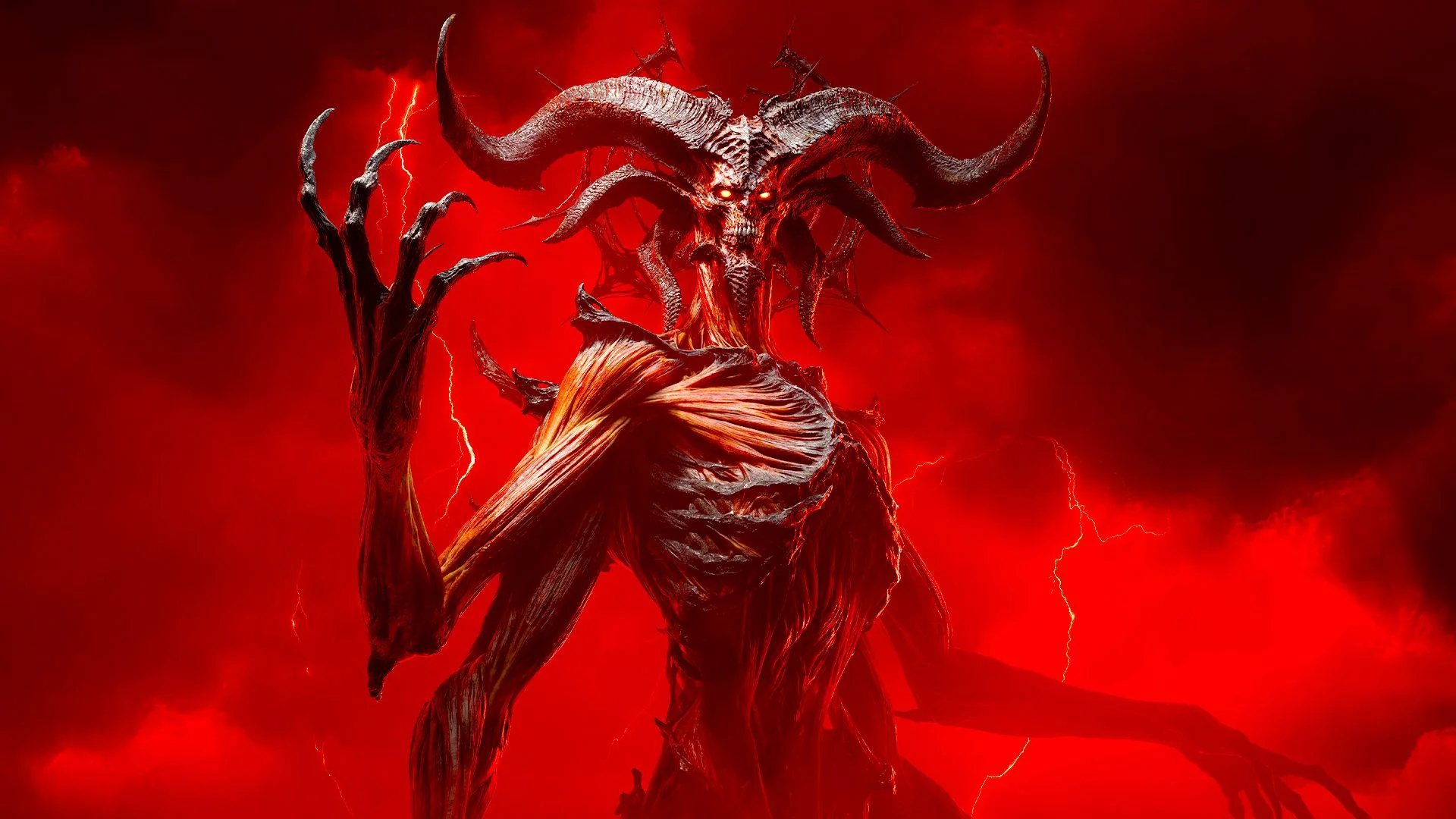
A huge part of that comes down to how Mephisto is portrayed. In earlier Diablo stories, Prime Evils often leaned into spectacle. Big speeches, overwhelming force, and a clear sense of good versus evil. Here, Mephisto operates differently. He is patient, manipulative, and unsettlingly calm. His presence lingers even when he is not on screen, shaping events in ways that make you question whether you are actually stopping him or simply playing into his plans.
This approach gives the expansion a colder tone. There are fewer moments of triumph and more moments of doubt. The Wanderer is constantly put in situations where the “right” choice is not immediately clear, and the story leans into that ambiguity. It makes the stakes feel more personal, even when the broader conflict is still about the fate of Sanctuary.
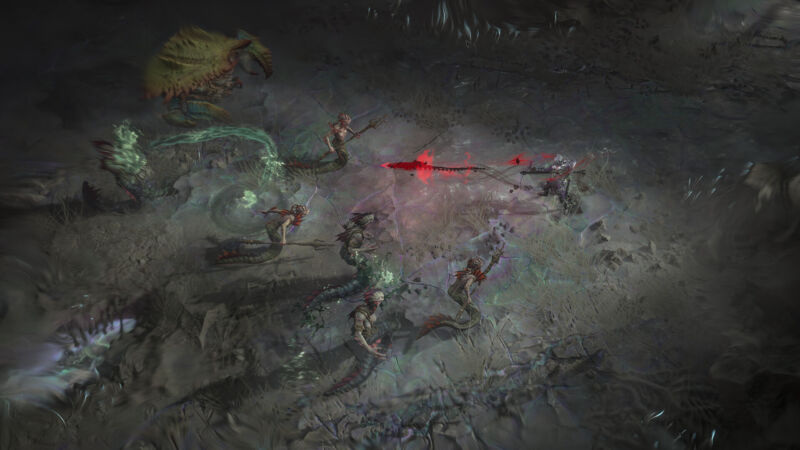
The new region of Skovos plays a major role in reinforcing that tone. Visually, it is a departure from the usual dark and decaying environments. Bright coastlines, open skies, and volcanic landscapes give it a distinct identity, but that contrast actually makes the underlying tension more noticeable. There is a constant sense that something is off beneath the surface, as if the beauty of the environment is masking something far more sinister.
Quest design also benefits from this shift in storytelling. Rather than sending you back and forth across the map for repetitive objectives, many missions are built around specific narrative beats. You will find yourself investigating strange phenomena, uncovering hidden truths about Mephisto’s influence, and dealing with characters who are not always what they seem. Some of these side characters are given just enough depth to make their involvement feel meaningful without dragging the pacing down.
There are also several moments that longtime fans will appreciate, particularly in how the expansion ties back into the broader Diablo lore. Without spoiling anything, the story does a good job of rewarding players who have been paying attention since launch while still being accessible enough for those who may have stepped away after finishing the base campaign.
That said, the shorter length may still be a sticking point for some. Just as the story really starts to hit its stride, it begins moving toward its conclusion. While the ending does deliver on the long awaited confrontation with Mephisto, it also leaves room for future developments rather than offering complete closure. Depending on what you were hoping for, that can either feel like a satisfying setup for what comes next or a slightly abrupt stopping point.
Even with that limitation, the overall quality of the storytelling is a clear step up. The writing is sharper, the tone is more consistent, and the focus on Mephisto as a manipulative force rather than just a final boss helps elevate the entire campaign. It may not be the longest Diablo story, but it is one of the more memorable ones.
New Classes and Build Variety
The biggest shake up in Lord of Hatred is easily the addition of the Paladin and the Warlock, and what makes them interesting is not just how they play, but how differently they approach power.
Blizzard clearly designed these two classes as opposites. One channels divine Light to purge evil, the other weaponizes Hell itself. That contrast is not just thematic, it shows up in nearly every aspect of how they feel in combat.
Paladin: Familiar Power With a Slow Burn
The Paladin is exactly what longtime Diablo fans hoped for on paper. A heavily armored frontline fighter built around holy damage, survivability, and aura based buffs. It pulls heavily from its roots, especially Diablo II, bringing back that classic identity of being both a damage dealer and a walking support system for your party.
At its core, the Paladin revolves around maintaining auras while weaving in melee abilities. These auras passively enhance you and your allies, reinforcing that feeling of being an unstoppable force of Light.
The class is broken into several distinct playstyles that lean into different fantasies. You can become a fast moving holy warrior that slices through enemies with divine speed, a ranged caster raining down celestial attacks, or a tank like juggernaut that simply refuses to die.
Where things get a bit more divisive is the pacing. The Paladin is not a flashy class early on. It builds power gradually, and until your build starts to click, combat can feel a bit passive. You are often relying on auras to do consistent damage while you slowly work through packs of enemies.
Once it comes online, though, it becomes extremely stable. It is the kind of class that thrives in higher difficulties because of its survivability and consistency. It might not delete enemies instantly, but it rarely feels out of control either.
In a way, the Paladin feels like a comfort class. Reliable, durable, and rooted in familiarity, even if it does not always deliver the most exciting moment to moment gameplay.
Warlock: High Risk, High Reward Chaos
The Warlock is where Diablo IV: Lord of Hatred really starts to flex its creativity. This is not just another caster. It is a class built around control, sacrifice, and managing multiple systems at once.
At a basic level, the Warlock summons demons and bends them to its will, pulling power directly from Hell rather than fighting against it. But what makes it stand out is how layered that system becomes.
Instead of simply summoning minions and letting them do the work, the Warlock constantly interacts with them. You are generating resources, spending them, sacrificing demons, empowering others, and timing abilities for maximum effect. It creates a loop that feels far more active than traditional summoner classes.
The class also leans into a dual resource style design, balancing destructive spellcasting with demon management. Some abilities generate power, others consume it, and the real skill comes from knowing when to hold back and when to unleash everything at once.
What really elevates the Warlock is its flexibility. Different specializations and build paths allow you to shape your playstyle in meaningful ways, whether you want to overwhelm enemies with hordes of demons, lean into burst damage, or create a more controlled, methodical setup.
It also just feels powerful. Even early on, the Warlock has a strong sense of momentum. You are constantly doing something, constantly managing something, and when it all clicks together, it can absolutely melt bosses and large groups of enemies.
The downside is that it demands more attention. Compared to the Paladin, it is far less forgiving. Mismanaging your resources or mistiming abilities can leave you exposed, especially in tougher content.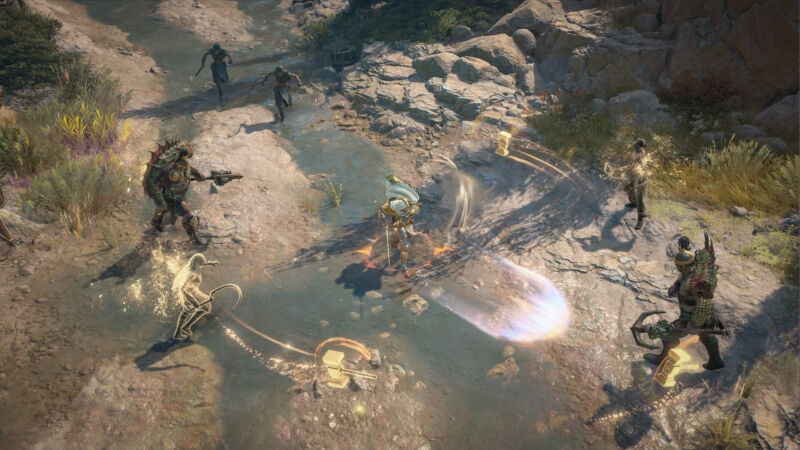
Systems Overhaul and Endgame
Beyond the new classes, Lord of Hatred introduces a wide range of system updates that feel like a soft relaunch for the game.
Torment difficulty has been expanded up to twelve tiers, offering more room for progression at the high end. The return of the Horadric Cube adds a layer of crafting flexibility that longtime fans will appreciate. The new Talisman system finally introduces something close to traditional set bonuses using seals and charms.
One of the most welcome additions is the loot filter, which significantly reduces inventory clutter and makes grinding far less tedious. War Plans serve as a new endgame structure, allowing players to chain together activities with custom modifiers and rewards, giving more control over how you spend your time.
Fishing also makes an appearance. It feels slightly awkward on a controller, but it works well enough as a side activity, even if it feels a bit out of place in a Diablo game.
PS5 vs PC Performance and Feel
On PlayStation 5, Diablo IV continues to target 60 frames per second, and for the most part it holds steady. Performance dips can occur during chaotic endgame scenarios when the screen fills with enemies and layered ability effects, but outside of that it remains smooth.
Load times are quick once you are in game, though a full startup takes around seventeen to eighteen seconds. Players using the upgraded console will notice the PS5 Pro Enhanced label, which adds some visual improvements.
There is also an Enhanced Visuals mode that introduces ray traced shadows and reflections, though it caps performance at 30 frames per second. A Power Saving mode is included as well, reducing frame rate to lower energy usage when idle.
Compared to PC, the console version is surprisingly intuitive. While mouse and keyboard still provide more precision, especially for inventory management and targeting, the controller setup feels natural for moment to moment gameplay.
That said, the DualSense controller remains underutilized. Haptic feedback is basic and adaptive triggers are not used at all, which feels like a missed opportunity.
Accessibility Features
Blizzard continues to improve accessibility options in Diablo IV. Players have access to screen reader functionality, text to speech, and subtitle customization.
There are also helpful quality of life features like the Pathfinder system, which creates a visible route to pinned objectives, along with auto pinning for new quests. Audio cues for item drops help reduce reliance on visual scanning, which is a nice touch during chaotic encounters.
While not groundbreaking, the accessibility suite is solid and continues to evolve in the right direction.
Final Verdict
At 40 dollars, Diablo IV: Lord of Hatred delivers a substantial package, especially since it includes Vessel of Hatred. The new classes alone provide a strong reason to return, with the Warlock standing out as one of the most engaging additions the game has seen.
The campaign may be shorter than expected, but it pushes the story forward in meaningful ways and gives Mephisto the depth he deserves. Combined with the sweeping system changes, improved endgame, and quality of life upgrades, this expansion feels like the version of Diablo IV players have been waiting for.
If you walked away from the game at launch, this is a good time to come back, though it might be wise to wait a few days for server stability to improve. On PlayStation 5, it remains an excellent port despite its lack of advanced controller features.
For returning players and longtime fans, Lord of Hatred is not just another expansion. It is a turning point.