
Summary
One More Button is a game that puzzle fans will love, and even casual players might find themselves hooked by the charm of its world. It’s proof that great design doesn’t need complexity—it just needs the right idea executed well. One More Button may look small, but it presses all the right buttons.
Developer – Tommy Kjær
Publisher – Tommy Kjær
Platforms – PC (Reviewed)
Review copy given by Developer
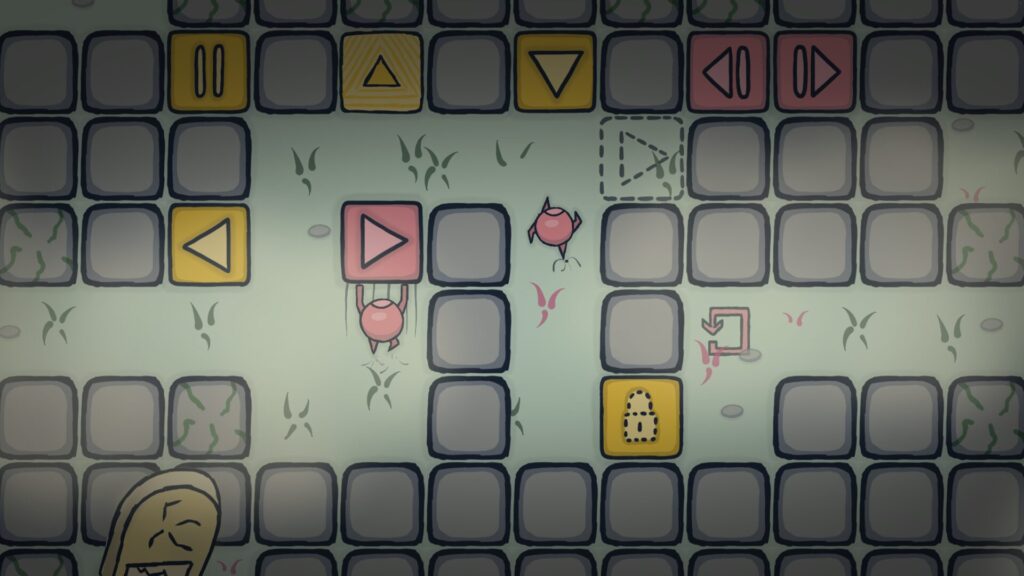
One More Button is one of those puzzle games that takes a familiar concept, flips it upside down, and dares you to rethink how you even approach movement. At its heart, it’s a sokoban-style puzzler where you push things around to reach an exit. The twist is that you aren’t just pushing blocks—you’re pushing buttons. You literally are a button yourself, and the only way to move is by pressing arrow buttons that exist inside the level. Want to go left? You’d better have a left arrow button nearby. Want to move at all? Hope the stage gives you the inputs to do it.
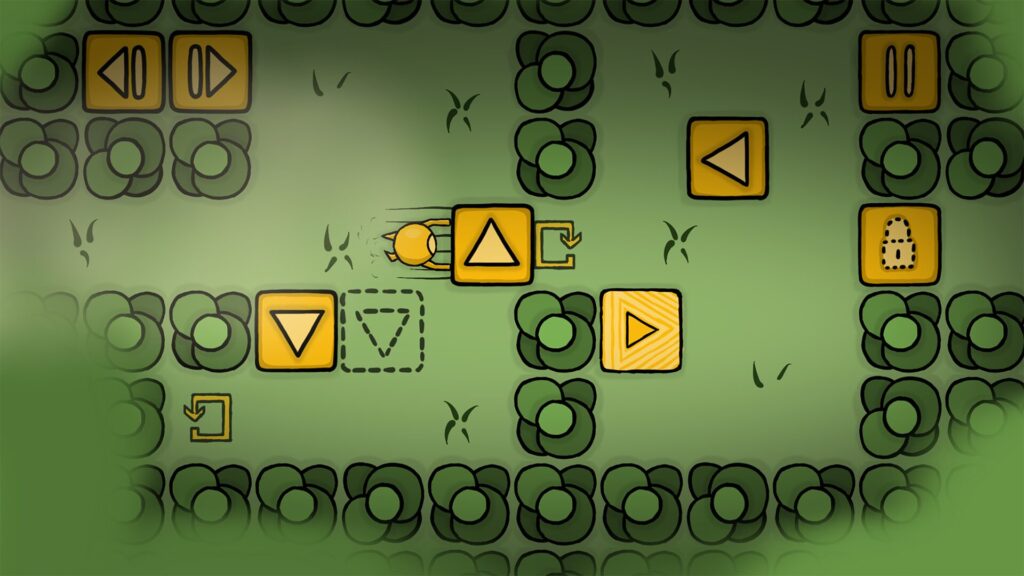
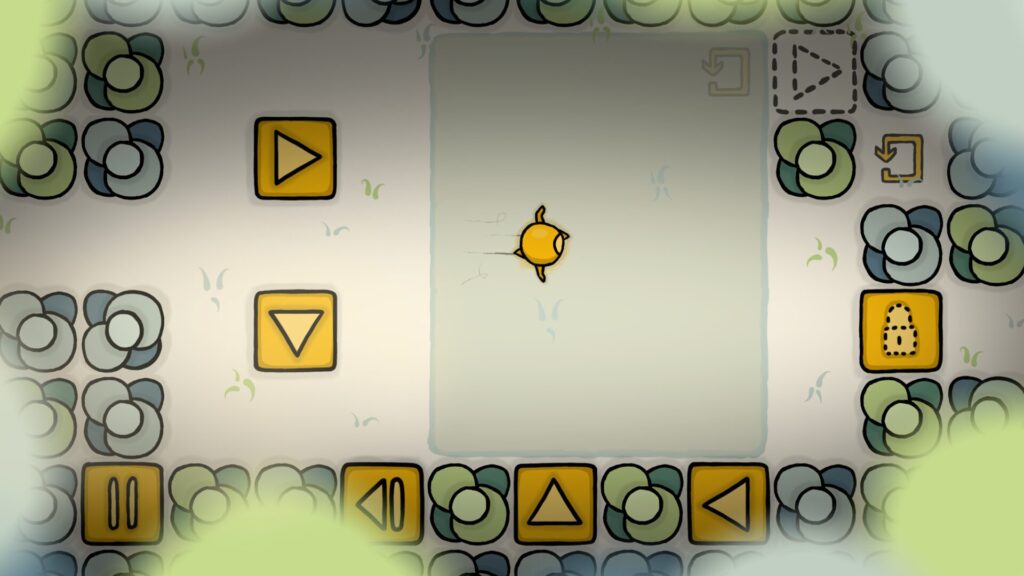
This mechanic feels like someone took the physical buttons off your controller and dropped them into the game world itself. It sounds like a simple gimmick, but it’s the backbone of a brilliantly escalating puzzle structure. Early on, you’ll just be nudging buttons around to open up paths. Before long, the rules evolve into twisting buttons to rotate your available moves, sliding on ice, sneaking through stealth sections, manipulating undo and redo stacks like timelines, and even dealing with multi-character puzzles. The variety is impressive, and each chapter builds on the last in a way that always makes sense within the story.
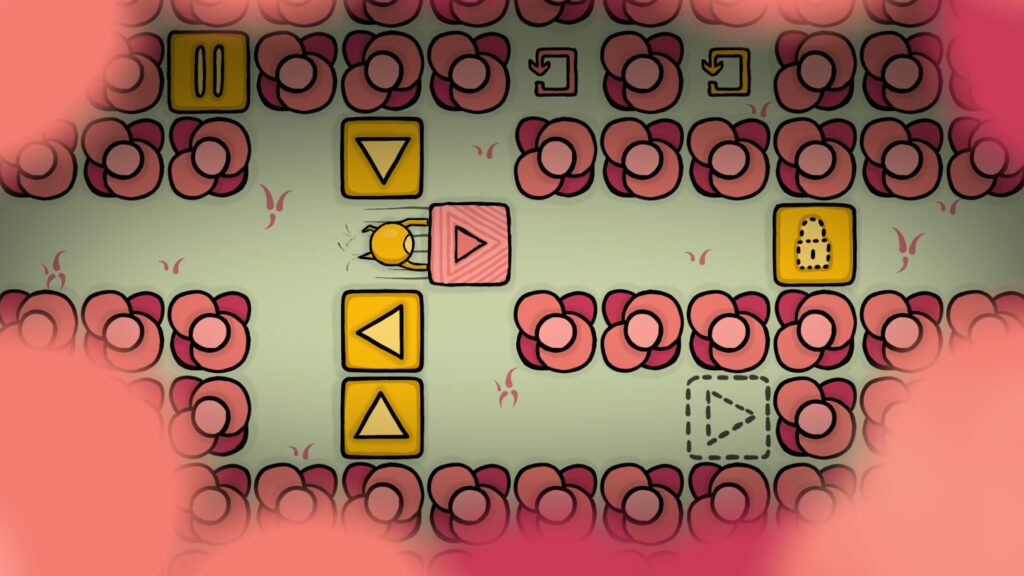
Yes, there’s a story here, and it’s not just background dressing. You play as a button that once belonged to a portable console before it was smashed apart. Now, you wander through forests, caves, cities, and battlefields in search of a new console to call home. Along the way you encounter other buttons, some friendly and some hostile, and eventually get caught up in an all-out war between yellow consoles and pink consoles. It’s a wordless tale, told through cutscenes and the shifting mechanics of the puzzles themselves. When you enter a cave, suddenly the levels are dark except for torchlight. When the war breaks out, the puzzles start to feel more aggressive, with real stakes behind each move.
What makes the narrative so effective is how closely it’s tied to the mechanics. It isn’t just “now here’s a level with a new twist.” The game shows you why things are different, and the art, sound, and rules all shift in unison. That cohesion makes even the most abstract challenges feel grounded in the world. By the time you reach the ending, you can’t help but feel emotionally invested in this little circle button. The ending itself is unsettling, almost tragic, and hints at multiple outcomes depending on what secrets you uncover. For something told without words, it hits surprisingly hard.
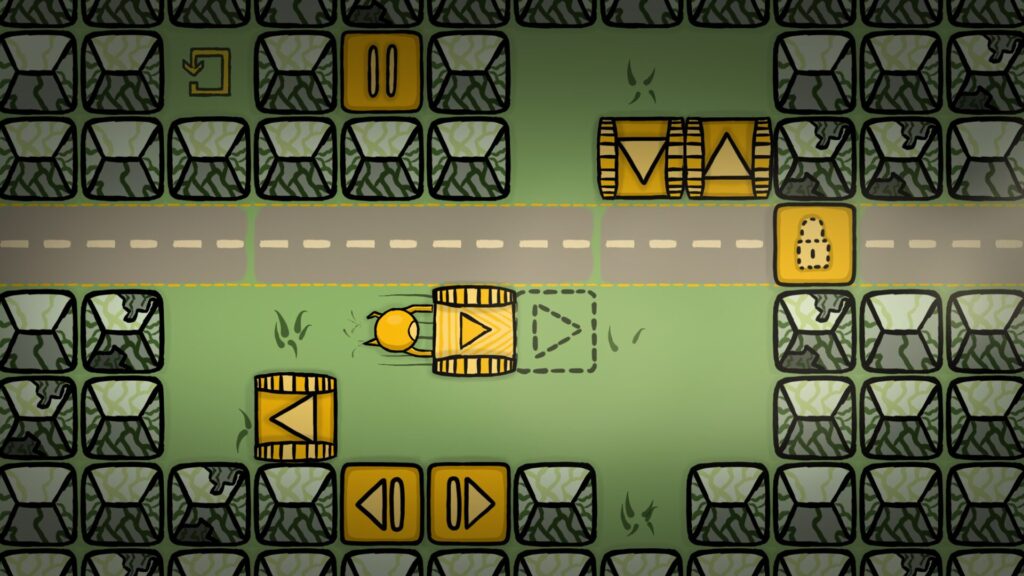
Visually, the game leans into a hand-drawn style that makes every chapter feel distinct. From shadowy caves to bright cityscapes, each area looks alive with small artistic details that fit the tone of the puzzles. The soundtrack shifts along with it, keeping you in sync with the mood of each new environment. It never tries to overwhelm, instead matching the quiet, contemplative nature of the gameplay.
As for the puzzles themselves, the level design is excellent. Across 84 levels spread through 13 chapters, the game finds fresh ways to challenge you without repeating ideas. Some chapters give you small, self-contained puzzles, while others expand into large scrolling maps with multiple parts. Each level forces you to think in new directions, and the difficulty curve is well-judged. It’s hard enough to feel rewarding, but never so punishing that you’ll want to give up. For most players, you’re looking at 3 to 6 hours of playtime depending on how fast you adapt to the mechanics.
One More Button is also generous with its tools. Undo and redo functions are built right into the puzzle structure, which makes experimentation painless. That said, they aren’t always available unless you can find the appropriate buttons within the level, which feels unnecessarily limiting. It would have been nice if restart, undo, and redo were always accessible regardless of the level’s design. Still, the option to instantly backtrack a mistake instead of restarting completely is invaluable.
Performance-wise, the game runs smooth and fast. Keyboard, mouse, and controller play are all supported, though the controls aren’t configurable and sometimes inputs don’t register, which can be frustrating in trickier sections. A bit of input caching would go a long way toward smoothing out those moments. The only parts that truly break the flow are the stealth levels, which restart instantly if you’re caught. They’re clever in concept but harsh in execution, especially compared to the rest of the game’s more forgiving design.
Accessibility could use some improvements. The yellow and pink color scheme doesn’t pose major issues, but there aren’t options for colorblind players, which feels like a missed opportunity. A few more modern conveniences would also make the experience better, like multiple save profiles, hints for tougher puzzles, or even the ability to skip levels. A custom level editor and workshop support would also be perfect for a game like this, letting players extend the life of the mechanics long after finishing the main campaign.
Despite those nitpicks, the overall package feels complete. It’s small in size, quick to boot up, and always responsive. The puzzles themselves are the star, and the creativity behind them is enough to keep you engaged from start to finish. Every time you think you’ve seen the game’s best trick, it throws another curveball at you, and the fact that it ties so neatly into the story makes it even better.
What really sets One More Button apart is its ability to surprise. A sokoban game could easily get repetitive, but by fusing its unique button-based movement system with a surprisingly poignant allegory about console wars, it finds a rhythm that constantly keeps you engaged. You’ll feel clever when you solve its brain-melting puzzles, but you’ll also feel something deeper when the story quietly plays out behind them.
One More Button is an inventive puzzle game that takes risks and pulls them off. It’s clever, it’s stylish, and it has more heart than you’d expect from a game where you play as a circle button. Yes, it could use some quality-of-life improvements, and yes, the stealth levels drag a little, but those issues don’t overshadow the brilliance of its mechanics and design.
In the end, this is a game that puzzle fans will love, and even casual players might find themselves hooked by the charm of its world. It’s proof that great design doesn’t need complexity—it just needs the right idea executed well. One More Button may look small, but it presses all the right buttons.