Summary
The Outer Worlds 2 succeeds at being exactly what it appears to be: more Outer Worlds. It delivers refined combat, memorable companions, and Obsidian’s unmistakable narrative brilliance, but it plays things safe, feeling smaller in imagination even as it expands in scope. Fans of the first game will find plenty to love,the sharp humor, choice-driven storytelling, and endearingly flawed characters are all here, but it never truly escapes the shadow of its predecessor. What emerges is a game that feels like a lavish, story-rich expansion rather than a bold sequel. For all its polish and heart, it’s a triumph of style and stability rather than evolution. It’s easy to recommend and even easier to enjoy, yet its comfort and familiarity hold it back from greatness, making it feel more like a return to a beloved home than the beginning of a daring new journey.
Developer – Obsidian Entertainment
Publisher – Xbox Game Studios
Platforms – Playstation 5,Xbox Series S|X (Reviewed),PC
Review copy given by Publisher
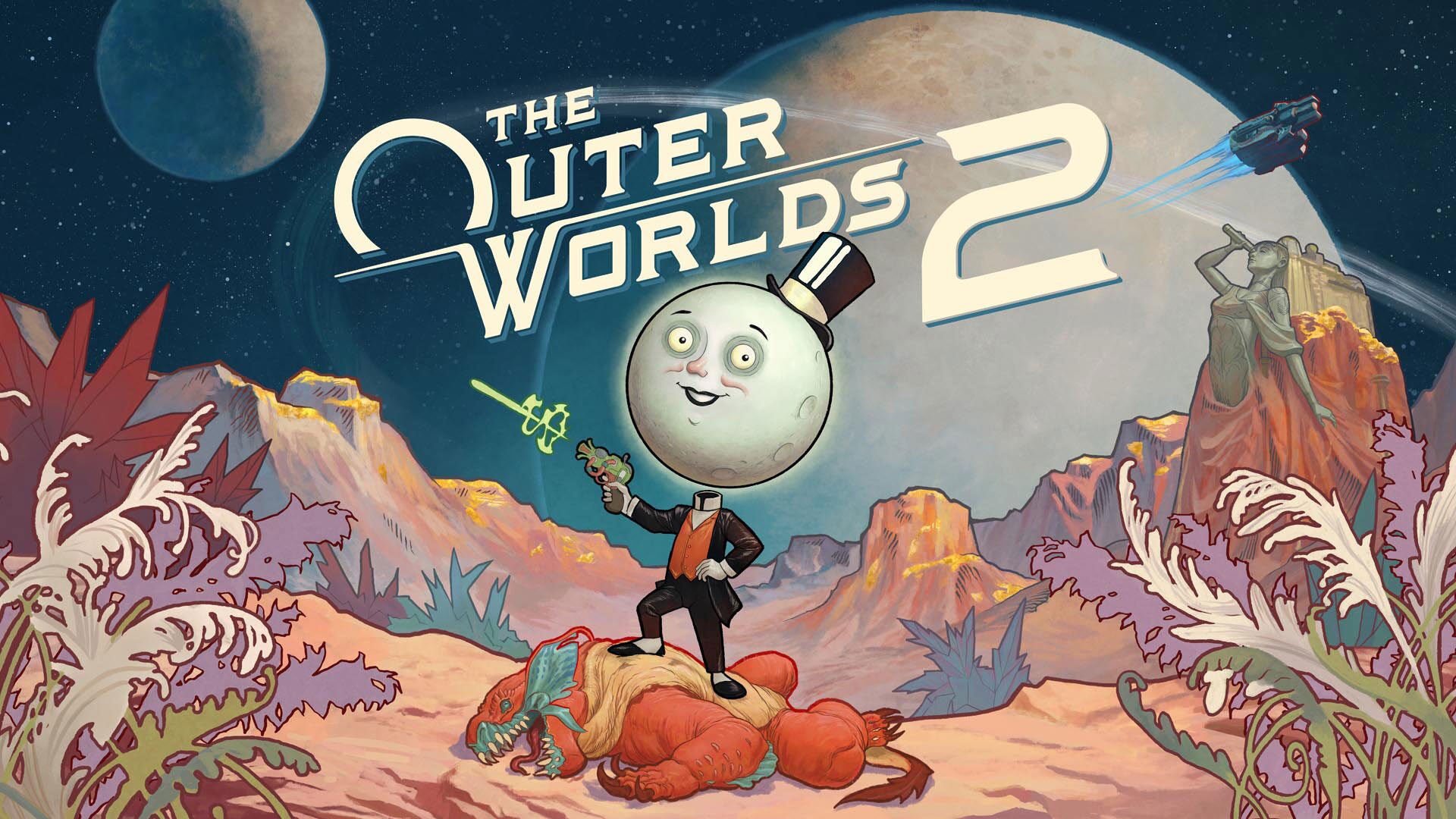
The Outer Worlds 2 arrives with all the confidence of a blockbuster sequel. The marketing promised a bigger, bolder galaxy, new factions, and a brand-new colony teetering on collapse. Yet the deeper you play, the more it becomes clear that despite its polish, technical leaps, and sharper dialogue, this sequel does not quite feel like the next grand chapter. Instead, it often plays like an ambitious DLC wearing a full sequel’s outfit. Obsidian’s signature writing and worldbuilding are here, but much of the exploration and discovery that defined the first game feels restrained, almost streamlined into corridors of combat and conversation rather than true adventure.
The story begins with your custom protagonist, a freshly minted Earth Directorate agent sent to investigate mysterious dimensional rifts threatening all of humanity. Your journey brings you to Arcadia, a new colony drenched in corporate greed, political turmoil, and spiritual rebellion that could burn the system down. On paper, it sounds massive. In practice, Arcadia feels more like a single extended campaign setting than a whole star system to lose yourself in. The first game’s charm came from bouncing between wildly different planets, each with its own culture and flavor. Here, despite gorgeous visuals and technical wizardry, the environments blur together in tone and mood.
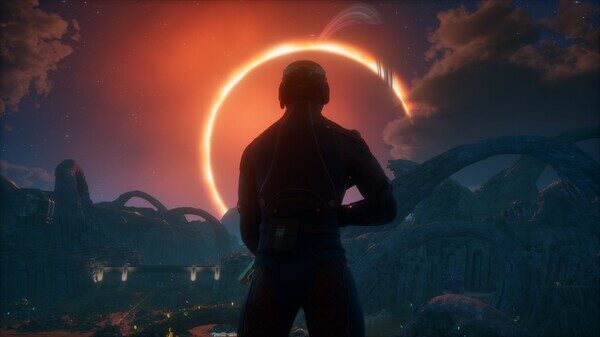
That lack of variety is part of what makes The Outer Worlds 2 feel like an expansion. It is not that Arcadia is small, it is that it feels focused to a fault. The world is crafted like one big interconnected zone rather than a network of distinct planets. This tighter scope makes the narrative pacing cleaner and more immediate, but it robs players of that sense of cosmic discovery. You do not get those moments of wonder when curiosity pulls you toward the horizon because the game quietly nudges you back on the critical path. There are side quests, of course, but fewer of them involve genuine exploration. Most send you back and forth between familiar settlements, creating an illusion of vastness that quickly fades.
The story itself, though, remains peak Obsidian. It is clever, cynical, and full of moral ambiguity. The corporate dystopia satire returns in full force, and the new factions each present a twisted ideology that feels unsettlingly believable. The Protectorate claims to bring order, the Rebellion seeks divine restoration, and the invading megacorporations view everything through the lens of profit. The main campaign revolves around deciding who controls the rifts that are tearing Arcadia apart, a setup that cleverly ties gameplay mechanics, lore, and faction politics together. It is an excellent framework that invites replayability even if the structure feels smaller than before.
Character writing remains a highlight. Your crew once again steals the spotlight, grounding the story through sharp dialogue and genuine chemistry. Each companion comes with a strong personality, backstory, and moral compass that respond to your choices. One early standout, an ex-Protectorate scientist grappling with guilt over failed experiments, delivers some of the best companion dialogue Obsidian has ever written. Their loyalty missions add emotional weight, but the arcs themselves feel familiar. The rhythm of helping each companion face their past and make a defining choice mirrors the first game almost exactly. It works, but it reinforces that expansion-like repetition.
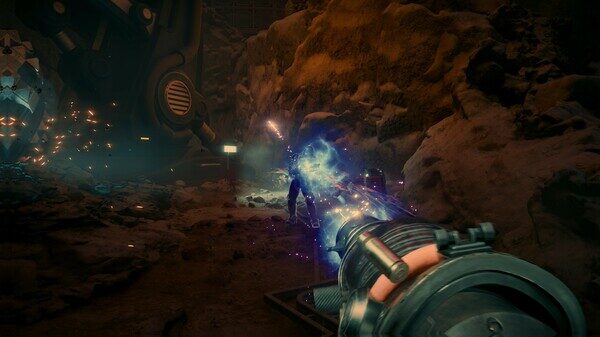
Gameplay sticks closely to what worked before. Gunplay feels smoother, with improved recoil, better impact, and sharper animations. Weapons have more satisfying variety, especially the new energy-based rift tech gear that manipulates time or space in short bursts. These additions make combat more stylish, though not necessarily deeper. The overall loop remains the same: shoot, loot, level, and talk your way through morally gray storylines. It is familiar and enjoyable but rarely surprising.
The skill and dialogue systems return largely unchanged. You can still build your character around persuasion, stealth, or brute force, and the colony reacts dynamically to your choices. However, the progression tree feels almost identical to before. Some new perks let you manipulate rift anomalies for tactical advantages, but most options feel like refinements rather than innovations. It is a great system, but its repetition reinforces the sense that this could have easily been a major DLC expansion instead of a full sequel.
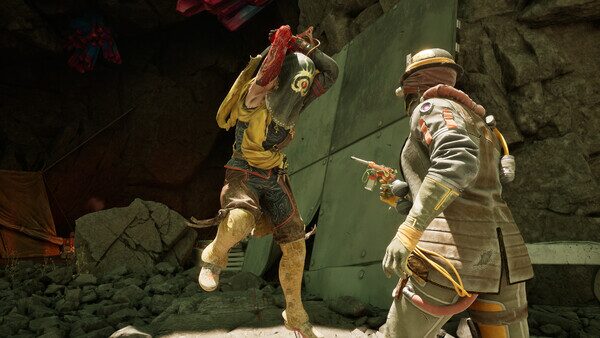
Combat encounters are better balanced, with smarter enemy AI and more tactical flexibility. Yet this improvement also highlights the game’s environmental problem. Many areas feel built for combat first and exploration second. Missions often push you from one firefight to another, across narrow canyons and tight industrial zones that limit your sense of freedom. The first Outer Worlds gave you multiple approaches to missions: sneak, hack, or fight. Here, those approaches still exist, but the map layouts are smaller and less open, making experimentation less rewarding.
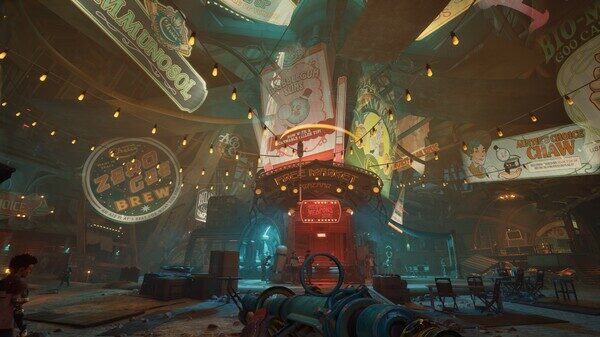
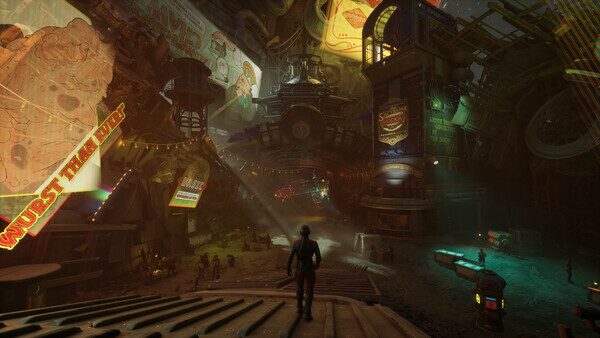
Arcadia’s major hubs are filled with detail but lack the vibrancy of the first game’s settlements. NPCs wander and chatter, propaganda blares from speakers, and faction patrols fill the streets, yet it all feels staged. The illusion of life is there, but the spontaneity is missing. When you walk through a neon cityscape under rainfall, light bouncing off metal and puddles, it looks incredible but feels hollow. This artificial stillness makes Arcadia impressive to look at but harder to feel attached to.
Visually, The Outer Worlds 2 is stunning. The move to Unreal Engine 5 has elevated the series to new technical heights. Every environment shines with intricate detail, and the lighting effects give Arcadia a cinematic realism that few RPGs achieve. Ray tracing adds depth to reflections, shadows, and light diffusion, while HDR support makes every neon hue and plasma blast pop with intensity. The visual leap is undeniable, and Obsidian deserves praise for achieving such fidelity without sacrificing performance.
On a technical level, the game runs impressively well. Even in large combat encounters, the frame rate holds steady, with minimal stutter or pop-in. Load times are brief, and support for DLSS, FSR, and XeSS means it looks great across a wide range of setups. The visual presentation may be the strongest argument for calling this a full sequel, though even that brilliance cannot completely disguise the structural sameness underneath.
The art direction keeps the franchise’s signature retro-futuristic charm. From glowing propaganda posters to overdesigned corporate armor, the style perfectly fits Obsidian’s satire. However, the tone across Arcadia’s locations feels too consistent. Nearly every zone leans on the same color palette of neon decay and industrial ruin. The first game’s variety—from lush wildernesses to sterile corporate colonies—gave it personality. Here, everything blurs together in visual sameness that fits the story’s tone but weakens the sense of discovery.
The music is one area where The Outer Worlds 2 truly excels. Composer Justin E. Bell returns with a soundtrack that blends orchestral swells, haunting synth layers, and reflective melodies. The score shifts fluidly from quiet ambience during exploration to thundering strings in battle. The music gives Arcadia emotional weight and helps elevate scenes that might otherwise feel mechanical. Even after long play sessions, the soundtrack stays memorable, lingering with the same impact as the first game’s theme.
Voice acting also shines. Every major character delivers their lines with conviction, and the companions in particular stand out. The writing strikes a balance between humor and sincerity, offering moments of levity without undercutting the story’s darker tone. The humor is less overt this time, replaced by moral introspection and philosophical questions about progress, faith, and control. This tonal shift works, but it slightly dulls the satirical edge that defined the original.
Technically, the polish here is impressive. There are very few bugs or performance hiccups. Minor issues such as occasional AI pathfinding or companion clipping are quickly forgotten thanks to the overall stability. This is one of the smoothest launches Obsidian has ever managed, a pleasant surprise given the studio’s history with buggier releases.
The rift mechanic, teased as the sequel’s big new feature, is an interesting but underdeveloped system. It occasionally allows you to bend reality in combat or alter short narrative paths, but it never evolves into a core gameplay pillar. Its potential is massive, but its impact feels minimal, as if it were added late in development. This further contributes to the sense that The Outer Worlds 2 builds on its predecessor without fully transforming it.
Arcadia’s faction war storyline is compelling but ultimately predictable. The dialogue-driven choices are excellent, yet the long-term consequences feel limited. Settlements rarely change based on your decisions, and major faction outcomes have smaller repercussions than expected. It creates a feeling that the player’s influence is more symbolic than systemic. The illusion of consequence is expertly written but still feels like an illusion.
Even so, the journey remains engaging. The mission variety, writing, and performances carry the experience. The pacing is strong, and the final act delivers satisfying confrontations and choices that shape your character’s legacy. Yet when the credits roll, the overarching feeling is that of a safe sequel. It is enjoyable and emotionally resonant but not transformative.
The Outer Worlds 2 is a game of dual identities. On one side, it is a beautifully crafted RPG that refines and perfects the foundation built by its predecessor. On the other, it is a continuation that rarely justifies its existence as a full-priced sequel. The gameplay is smoother, the visuals are spectacular, and the writing remains top-tier, but it lacks the bold sense of discovery that made the original so special.
The Outer Worlds 2 succeeds at being exactly what it appears to be: more Outer Worlds. It delivers refined combat, memorable companions, and Obsidian’s unmistakable narrative brilliance, but it plays things safe, feeling smaller in imagination even as it expands in scope. Fans of the first game will find plenty to love—the sharp humor, choice-driven storytelling, and endearingly flawed characters are all here—but it never truly escapes the shadow of its predecessor. What emerges is a game that feels like a lavish, story-rich expansion rather than a bold sequel. For all its polish and heart, it’s a triumph of style and stability rather than evolution. It’s easy to recommend and even easier to enjoy, yet its comfort and familiarity hold it back from greatness, making it feel more like a return to a beloved home than the beginning of a daring new journey.