
Summary
In a growing wave of climbing focused games, Cairn stands at the peak not because it is the flashiest, but because it is the most uncompromising. It treats the mountain with respect, and in doing so, asks the player to do the same. For those willing to endure its friction and embrace its systems, the ascent of Mount Kami becomes something special. Frustrating at times, certainly. But undeniably fun, and ultimately unforgettable.
Developer – The Game Bakers
Publisher – The Game Bakers
Platforms – PC (Reviewed)
Review copy given by Developer
By late 2025 and rolling into 2026, rock climbing games quietly became the indie scene’s new obsession. What started as a niche subgenre suddenly felt like a movement, with titles such as Jusant continuing to influence design conversations, Surmount expanding its physics driven approach, and Peak drawing attention with its stylized take on vertical exploration. Players who once chased soulslikes and cozy farming sims were now meticulously planning handholds and rationing chalk. Into that growing pile of carabiners and cracked fingertips steps Cairn, arguably the most anticipated of them all, arriving with more than 700000 wishlists and pre release awards backing its ascent.
From the creators of Furi and Haven, Cairn trades neon duels and romantic sci fi for raw stone and thin air. You play as Aava, a professional climber attempting to summit Mount Kami, a peak no one has ever conquered. The premise is simple, almost stark, but the execution is anything but. Cairn is not about spectacle in the traditional sense. It is about tension, preparation, and the slow, deliberate push upward against something that does not care whether you live or fall.
The first thing that stands out is how grounded the climbing feels. This is not an arcade platformer where you magnetize to yellow paint. Cairn’s simulation based system asks you to read the rock face, search for viable holds, and manually place hands and feet with deliberate inputs. Balance matters. Posture matters. Overextend and you feel it immediately in Aava’s stamina and stability. The mountain is not just a backdrop. It is the central antagonist.
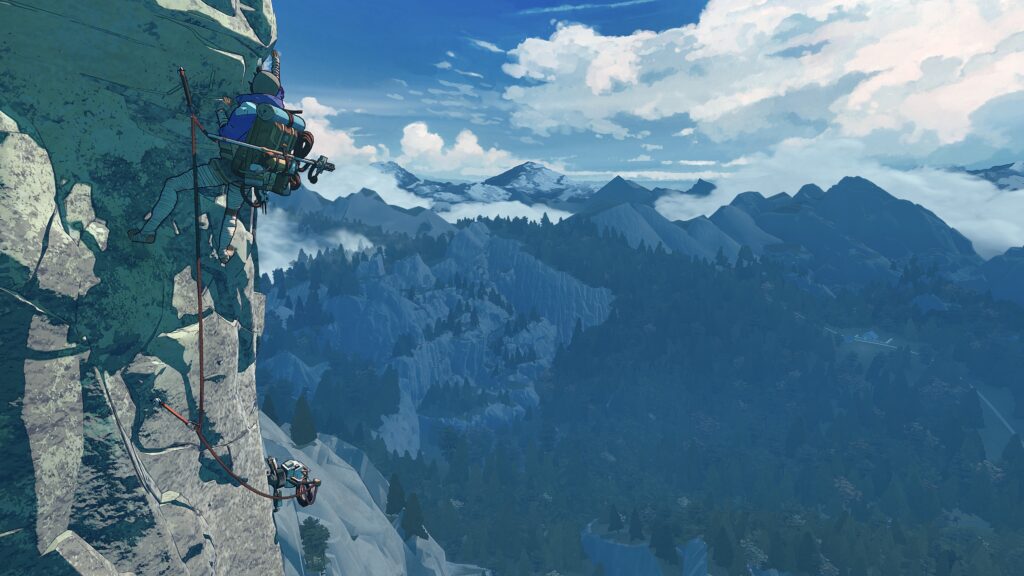
Each climb feels like a boss fight, but not in a loud, bombastic way. Instead of health bars and attack patterns, you are reading angles, friction, and body positioning. There is a quiet intensity in inching upward, adjusting your weight to prevent a slip. When you do fall, it feels earned. Painful, yes, but rarely unfair. The mountain punishes impatience more than anything else.
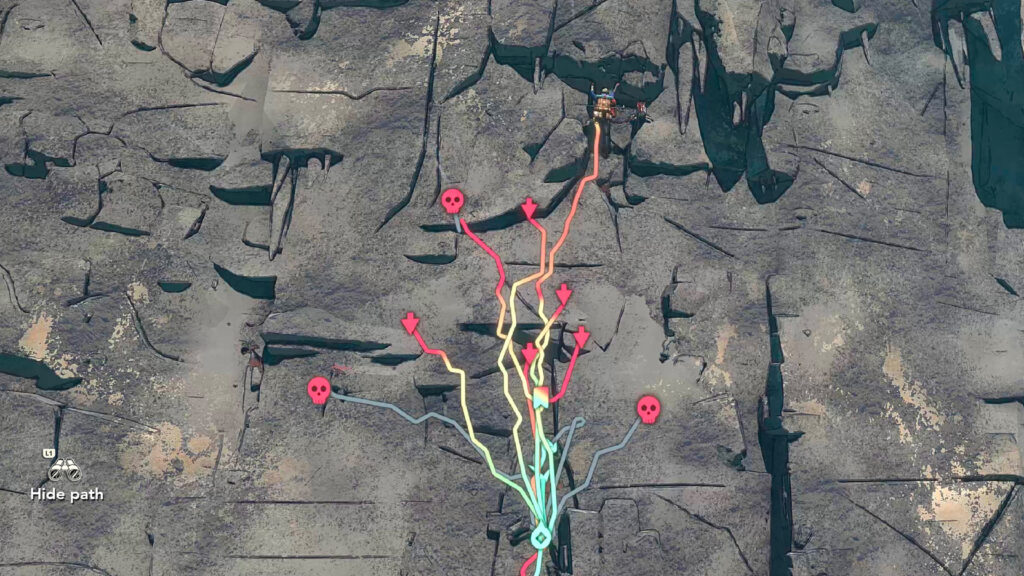
One of Cairn’s boldest decisions is allowing you to climb almost anywhere. There is no single prescribed route glowing in the distance. From the base of Mount Kami, you can study the rock face and decide your own path. Do you risk a steep but direct ascent, or snake around a ridge that looks safer but longer? That freedom gives the game a sense of authorship. Your summit attempt feels personal because it is.
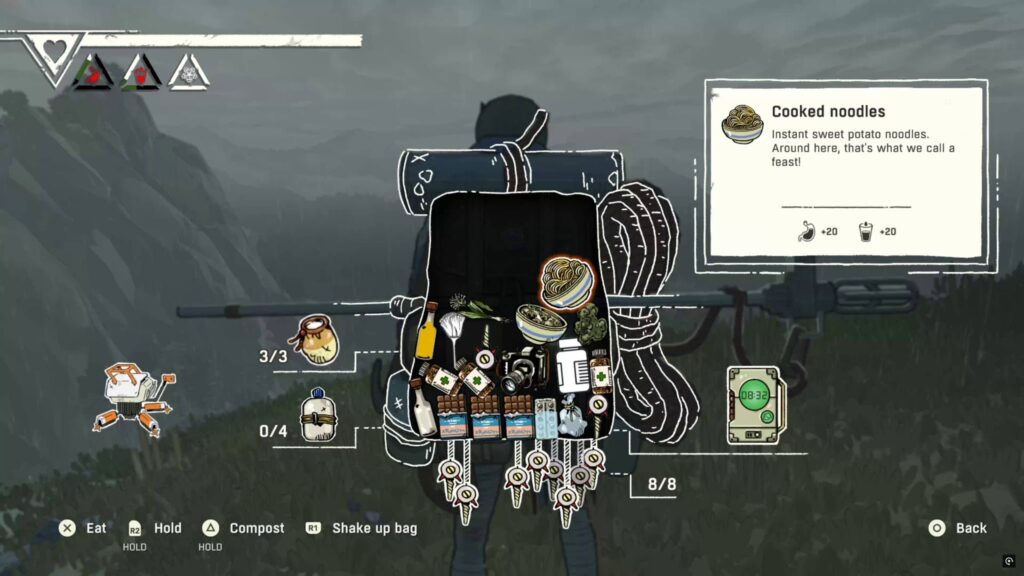
Of course, freedom means consequences. The survival layer ensures that every decision echoes hours later. Pitons, chalk, finger tape, food, water, medicine. Every item in your pack has weight and purpose. The inventory system sits at the center of this design, and it is both one of Cairn’s greatest strengths and most persistent irritations.
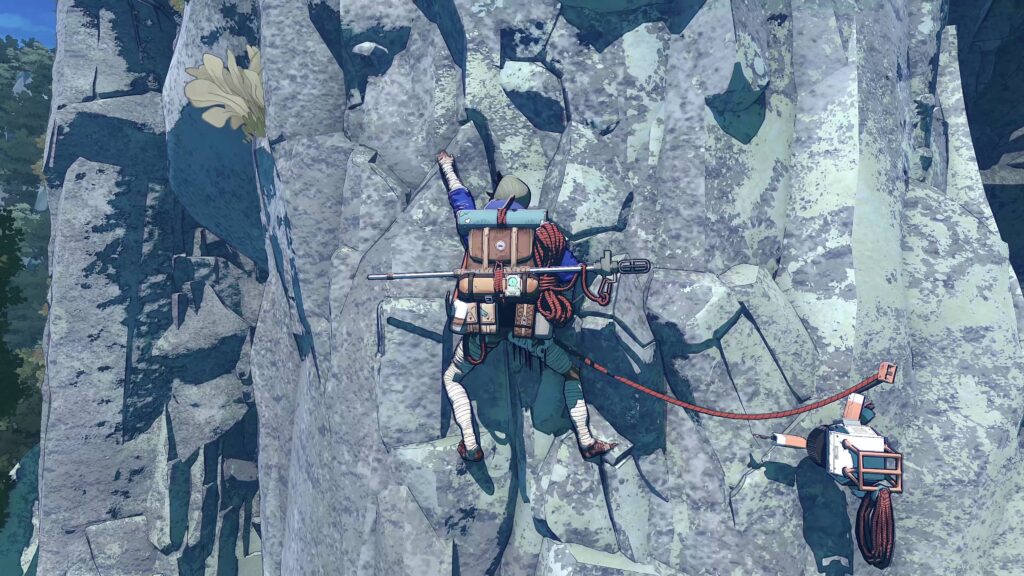
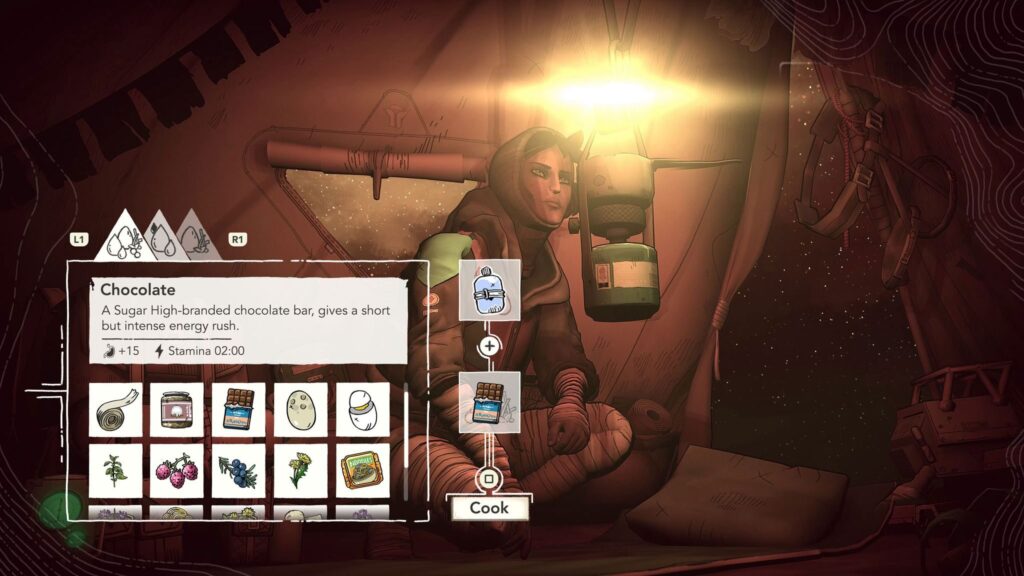
On the positive side, the inventory system reinforces immersion beautifully. You cannot carry everything. You are constantly making trade offs. Extra pitons might save your life on a brutal overhang, but they take up space that could hold more water. The physicality of items, and the way they are visually represented on Aava’s gear, grounds the experience. Preparing for a push upward feels like gearing up for a real expedition.
There is also a satisfying rhythm to resupplying. Establishing a bivouac, rationing supplies, and reorganizing your pack before tackling a difficult stretch creates natural tension. It turns downtime into meaningful gameplay rather than a menu chore. You feel the cost of every decision because you made it.
That said, the system can be cumbersome. Navigating the inventory mid climb is not always as smooth as it should be. When you are clinging to a narrow ledge and need to quickly access a specific tool, the interface can feel fiddly. There are moments where the realism crosses into friction, especially when minor misclicks cost precious seconds and stamina.
Weight management, while thematically strong, can also slow pacing. There are stretches where you will find yourself backtracking or spending extended time in menus simply to optimize loadouts. For players who crave constant upward momentum, this can feel like unnecessary drag. The game is committed to its survival sim identity, sometimes at the expense of flow.
Beyond the inventory, a few other annoyances crop up over time. The camera, while generally reliable, occasionally struggles on tight rock faces, making it harder to judge depth and distance. In a game where inches matter, that can be frustrating. There are also spikes in difficulty that feel less like organic escalation and more like abrupt walls, particularly in harsher weather segments.
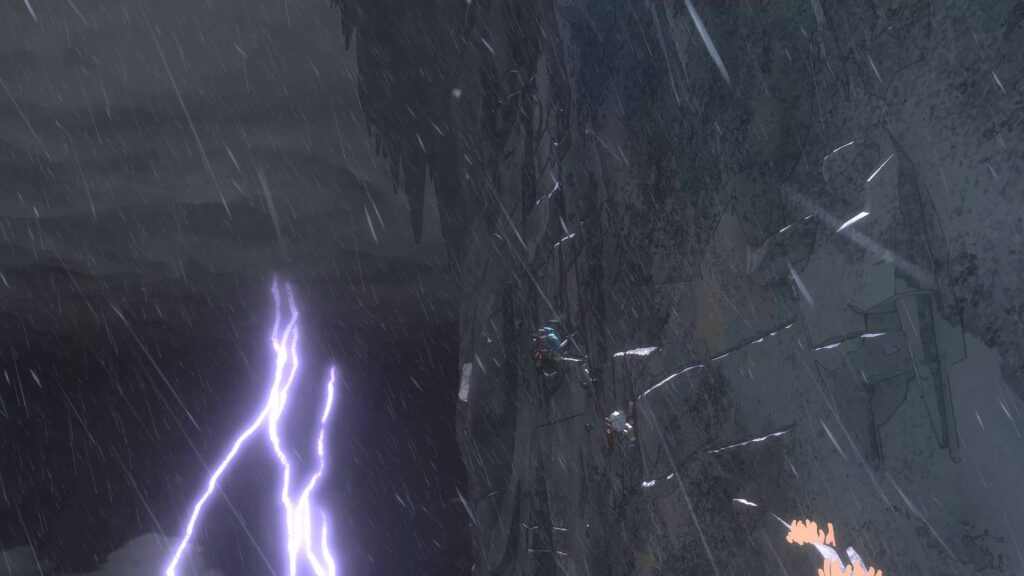
Speaking of weather, Mount Kami is not static. Conditions shift, winds howl, and visibility can drop. While this adds atmosphere and challenge, some environmental effects slightly obscure crucial visual information. Losing a clear view of handholds because of heavy particle effects can feel punishing in ways that are not entirely skill based.
Narratively, Cairn keeps things restrained. You hear from people back on the ground, and you encounter hints of past expeditions and the elusive troglodyte people said to inhabit the region. The story unfolds in fragments, echoing across radio transmissions and environmental details. It works because it never overwhelms the climb itself. Aava’s internal struggle and the question of what she is willing to sacrifice give the ascent emotional weight without turning it into melodrama.
There is something compelling about retracing the failed paths of earlier climbers. Finding remnants of past attempts, abandoned gear, or notes etched into stone creates a quiet sense of legacy. You are not just climbing a mountain. You are challenging history.
The adjustable difficulty options deserve praise as well. While Cairn can be brutally demanding, it offers ways to tailor the experience. This opens the door to players who may not want the full survival simulation but still want to experience the journey. Importantly, the tension remains intact even when tweaked. The mountain still feels formidable.
Visually, Cairn leans into stark beauty. Mount Kami is not lush or colorful in a traditional sense, but it is imposing. Jagged ridges, icy faces, and sweeping vistas create a sense of scale that reinforces the isolation of the climb. The minimal soundtrack amplifies the sound of wind and gear, making every movement feel intimate and precarious.
Despite its rough edges, Cairn succeeds because it understands what makes climbing compelling. It is not about speed. It is about focus. It is about committing to a move and living with the outcome. The systems, even when occasionally frustrating, serve that core fantasy.
Yes, the inventory can be clunky. Yes, the camera sometimes misbehaves. And yes, there are pacing lulls where logistics overshadow exhilaration. But when you are hundreds of meters above the ground, fingers metaphorically aching, carefully plotting your next move as the sun rises over the horizon, those annoyances fade into the background.
Cairn is demanding, deliberate, and at times stubbornly committed to realism. Yet it is also deeply rewarding. Reaching a new ledge after a grueling stretch feels like genuine accomplishment. Setting up a bivouac after barely surviving a storm feels like victory. Every meter gained is earned.
In a growing wave of climbing focused games, Cairn stands at the peak not because it is the flashiest, but because it is the most uncompromising. It treats the mountain with respect, and in doing so, asks the player to do the same. For those willing to endure its friction and embrace its systems, the ascent of Mount Kami becomes something special. Frustrating at times, certainly. But undeniably fun, and ultimately unforgettable.