Summary
Into the Restless Ruins is a smart, atmospheric roguelike that reshapes the deckbuilder formula. Instead of stacking buffs or just fighting monsters, you architect your own dungeon and try to survive it — without a map, in the dark, with time and corruption closing in. Its few rough edges don’t outweigh the satisfaction of outwitting your own creation. With strong replay value, rich lore, and a unique approach to both exploration and combat, this is a standout indie gem for players who enjoy thinking several moves ahead.
Developer – Ant Workshop Ltd.
Publisher – Wales Interactive
Platforms – PS5, Xbox Series X|S, Nintendo Switch, PC (Reviewed)
Review copy given by Publisher

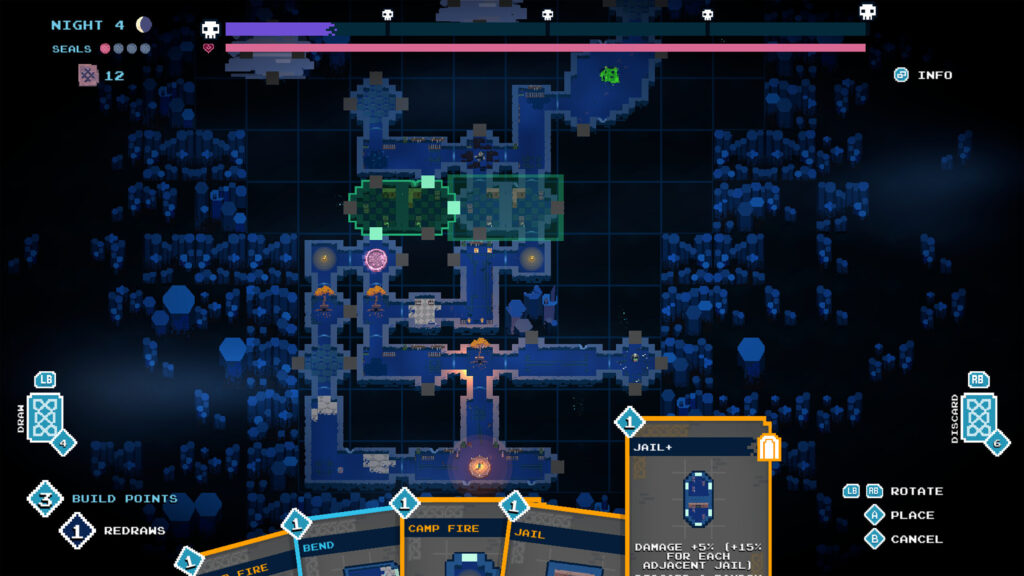
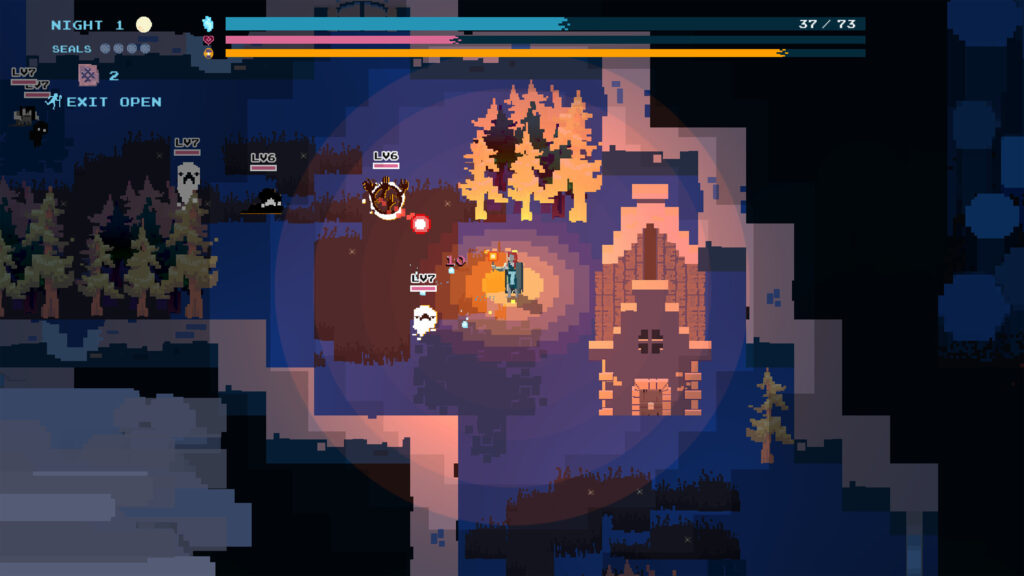
Into the Restless Ruins is a roguelike deckbuilder with a clever twist: your deck is the dungeon. Each night, you draw cards and spend build points to lay down rooms, corridors, traps, and boons across a grid, forming a custom labyrinth. The placement of each card shapes the dungeon’s layout — from cramped quarters to long winding halls — with exit placement requiring careful, strategic foresight. Once building is complete, you enter your creation under a dimming torchlight, watching as your character auto-battles through lurking monsters to gather Glimour and magical seals. The longer you survive, the more Glimour you earn, fueling future deck expansion. Instead of instant death, creeping corruption and dwindling light apply pressure, turning every run into a tense fight against time, memory, and attrition.
Every card in your deck does something different. Some offer passive bonuses like extra health or extended torch time, while others require in-run activation — for example, a workbench that grants a stat boost when visited. Room placement is critical: one misplaced hallway could block your exit or waste precious build points. Your choices aren’t just tactical — they’re spatial puzzles. The real trick lies in planning a dungeon you’ll later have to survive without a map, remembering where you left vital resources like campfires or portals.
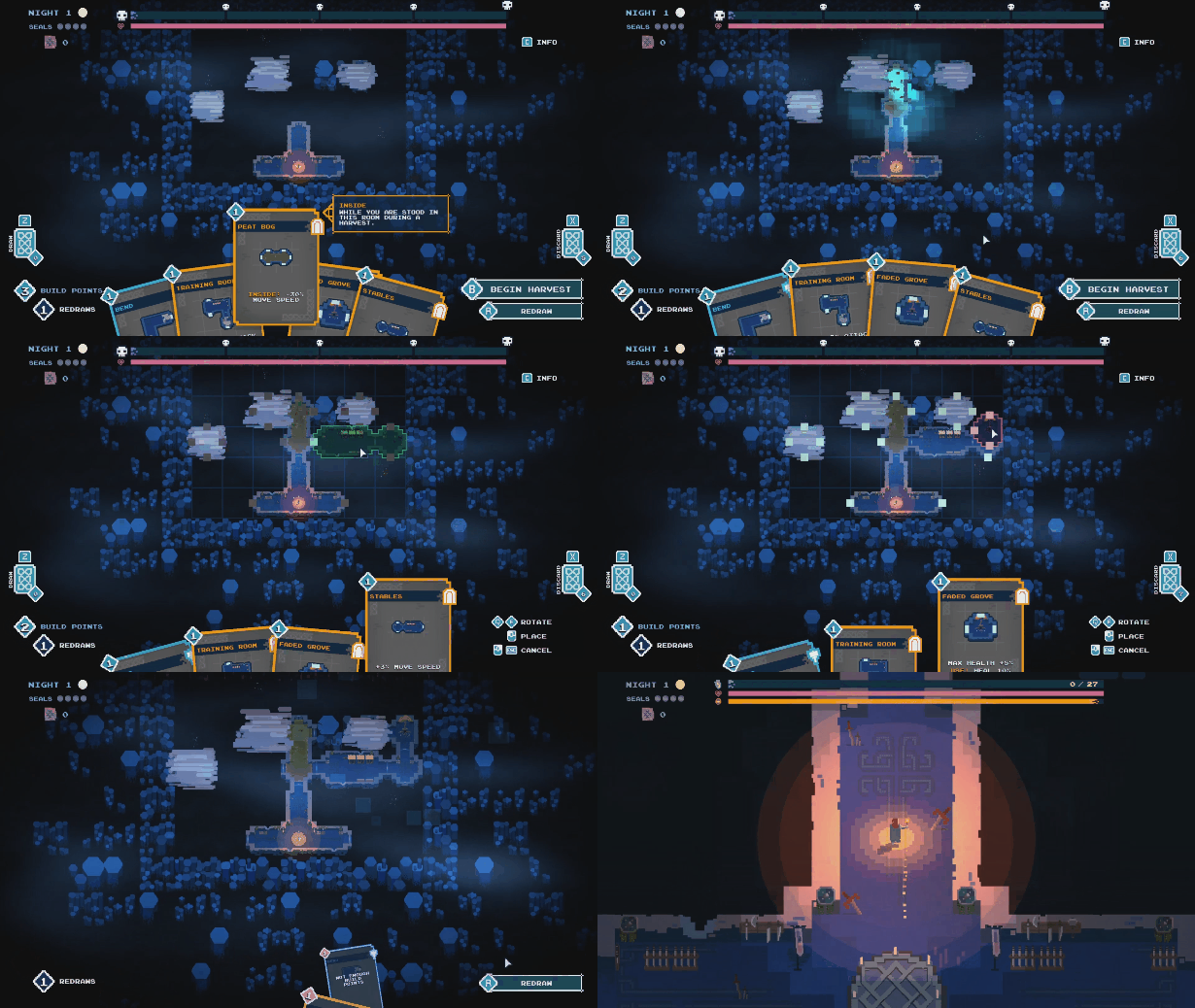
The way rooms interact is key to success. Campfires can restore torchlight mid-run, and portals allow for strategic shortcuts. Smart placement — chaining portals, clustering buffs near enemy zones, or building safe paths between vital locations — can make all the difference. Combat-focused rooms like Armouries or Barracks prep you for tougher foes, while Training Rooms and Libraries offer buffs or new cards. Crafting a smart dungeon layout — like looping paths through power-ups or stacking multiple rooms with synergistic effects — is often more important than simply drawing good cards.
There’s no minimap to rely on, which adds another layer of difficulty. You must remember where you placed each important room or risk getting lost in your own maze. At first, this can feel punishing, but over time it becomes a rewarding challenge. You built the dungeon — now you have to navigate it. That design philosophy runs deep through the entire experience.
The game’s setting draws from Celtic folklore, with you playing as a cloaked warrior hunting the fabled Harvest Maiden. Mythical figures like the Hen Wife and the Wulver appear in your dungeons offering upgrades, while bosses are drawn from Gaelic legends, like Am Fear Liath Mòr. The moody art style and atmospheric soundtrack amplify this folklore vibe, and Gaelic terms, dialogue, and even a fully Gaelic-language option add a sense of cultural authenticity. The ruins feel haunted, full of spirits, faeries, and eerie whispers, blending mythology with gameplay mechanics in a way that’s both immersive and unsettling.
Replayability is a major strength. Procedural generation ensures no two runs are the same, and the growing card pool means each build phase presents fresh challenges and strategies. Unlockable Cantrips act as modifiers to change up the difficulty — things like “Sudden Darkness” or “Infinite Build” — offering a high degree of customization and reward scaling. As you succeed, you unlock new echoes, card types, and challenges, gradually expanding what’s possible.
Progression feels meaningful. You start with a small deck, but over time, unlock new weapons, relics, and passive Charms — 40 of which offer bonuses like improved crit rates or faster reloads. These upgrades are often found mid-run or earned by trading relics with story characters. The Hen Wife and Wulver each provide stat boosts or new deck options depending on what you offer them. Weapons, too, are varied — from crossbows to magic spells — each adding a distinct flavor to your build strategy.
The game rewards experimentation. One run might focus on long-range weaponry and healing rooms, while the next uses a fast-paced, portal-hopping build with aggressive melee attacks. Lore fragments deepen the world and hint at secrets to uncover, while relics open up vendor options and new card synergies. Even a failed run helps progress your unlocks and strategy. With each attempt, you learn the value of room synergy, efficient layout, and path memory — all while earning the resources needed to fine-tune your deck and improve your odds.
That said, the game isn’t without drawbacks. Since combat is entirely automatic, some may find the action a bit passive. You don’t aim or attack — you simply set your gear and observe. This can be a downside for players who crave constant engagement. The lack of a visible map is also divisive; while it strengthens the memory-based challenge, it can lead to frustrating moments when you forget where a vital room is. Some UI elements and visual effects occasionally feel clunky, though the overall presentation carries a distinct, eerie charm.
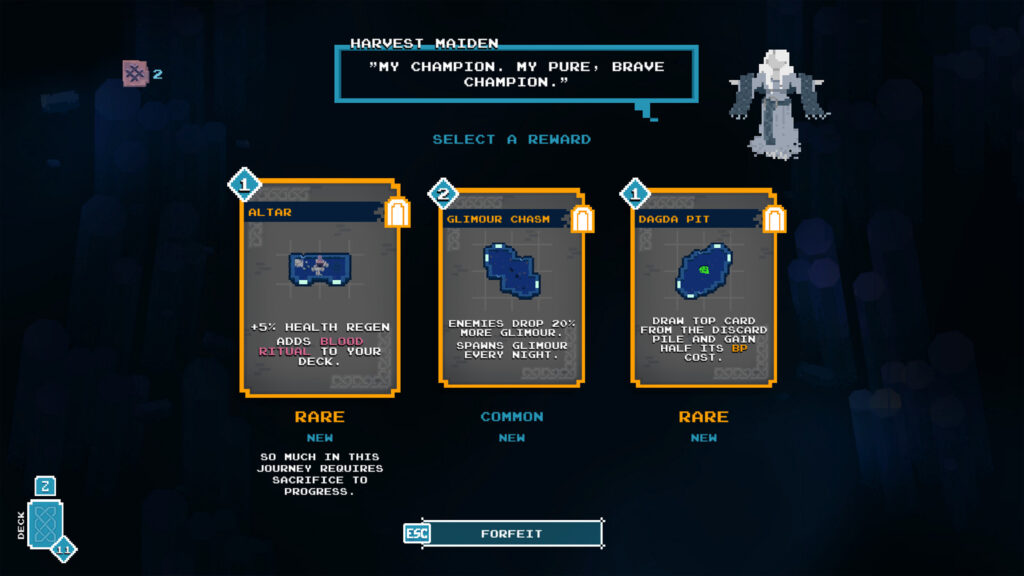
Still, the game’s core loop — build, explore, upgrade, repeat — remains satisfying. The blend of strategy, memory, and myth gives every run its own flavor. Over time, your growing collection of cards, Cantrips, weapons, and Charms opens up an impressive range of viable builds, encouraging experimentation and creativity. The game’s depth increases with each run, and the haunting setting ensures it sticks with you.
Into the Restless Ruins is a smart, atmospheric roguelike that reshapes the deckbuilder formula. Instead of stacking buffs or just fighting monsters, you architect your own dungeon and try to survive it — without a map, in the dark, with time and corruption closing in. Its few rough edges don’t outweigh the satisfaction of outwitting your own creation. With strong replay value, rich lore, and a unique approach to both exploration and combat, this is a standout indie gem for players who enjoy thinking several moves ahead.