Summary
Even with its rough edges, Undying Flower stays with you. It doesn’t offer easy answers or a clean resolution. It asks how much we’re willing to lose to silence the past, and whether healing is ever about forgetting—or if it’s about remembering the truth in full, no matter how painful. In its quietest moments, the game becomes more than a story. It becomes a mirror.
Developer – Calcatz
Publisher – indie.io
Platforms – PC (Reviewed)
Review copy given by Publisher
WARNING:
At Rectify Gaming, we are committed to fostering a gaming community that is inclusive, respectful, and safe for all players. The Following Game mentions some Adult and Hard to Handle Topics that may be triggering to see and not be suitable for all audiences
Furthermore, we encourage players to seek help or support if they are personally affected by any of these issues in real life. Play responsibly and be aware of the impact of the content on your emotions and well-being.
If you or someone you know is experiencing thoughts of Self-harm or Suicide, In Canada, you can reach out to Kids Help Phone at 1-800-668-6868 or visit kidshelpphone.ca. For assistance in the United States, the National Suicide Prevention Lifeline is available at 1-800-273-8255, or visit suicidepreventionlifeline.org , aswell as you can Text HOME to 741741 to connect with a volunteer Crisis Counselor from the Crisis Text Line. We’d also like to thank Safe in Our World for being supportive of our work in Gaming and Helping support Mental Health Awareness through Gaming.

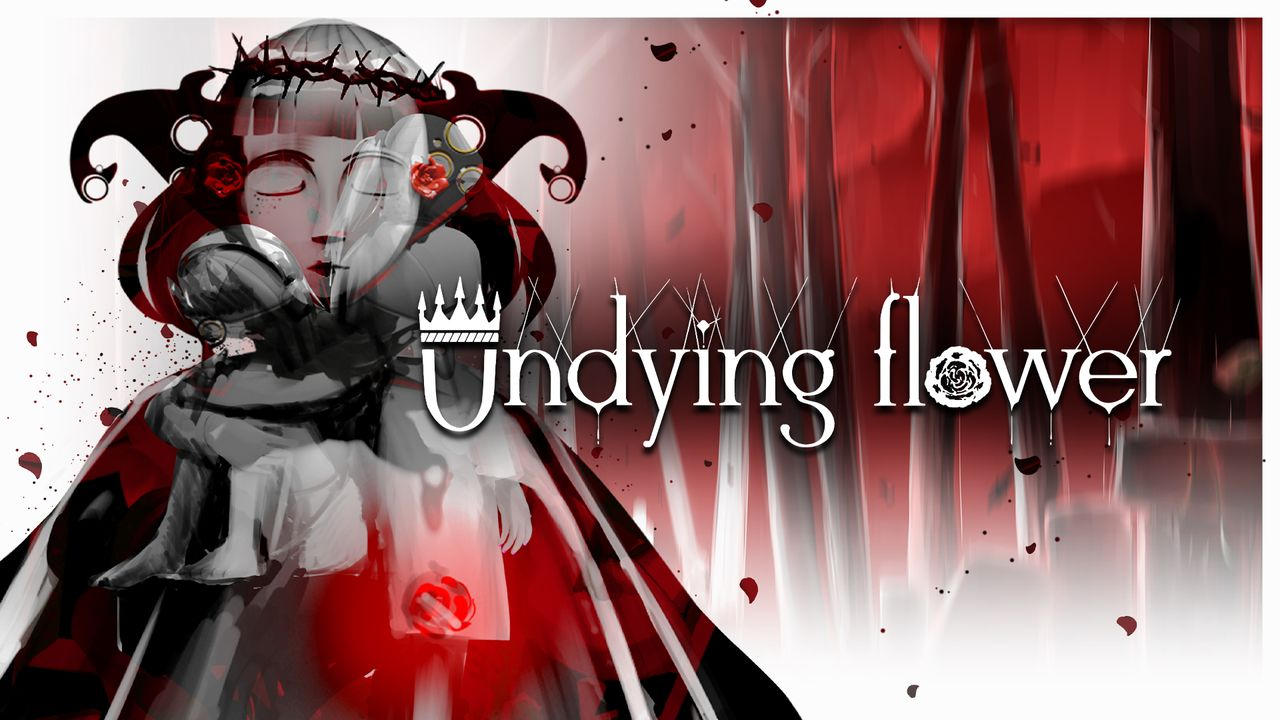
Undying Flower is a deeply personal descent into memory, regret, and the fragile boundaries between healing and self-destruction. It tells the story of Nala, a young woman undergoing an experimental treatment designed to erase the trauma of her past. Her journey unfolds within a surreal memory world, where reality slips and reshapes itself around fractured recollections of her late grandfather—the man who once meant everything to her and whose absence now consumes her.
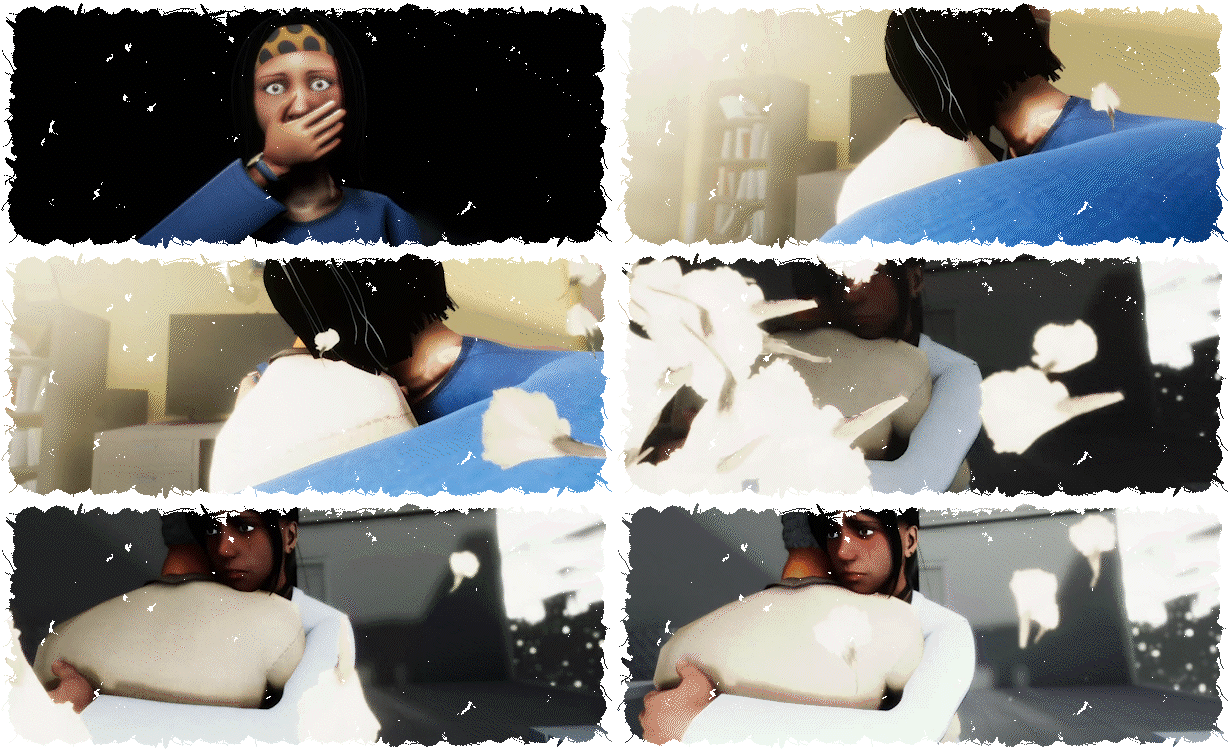
What makes Undying Flower so affecting isn’t just its themes, but the way it breathes emotion into every corner of its design. Memories aren’t relived plainly—they’re broken, mirrored, retold through two sets of eyes. We see joy laced with guilt, love tangled with grief. Nala’s memories of quiet birthdays and shared laughter twist into arguments, silences, and the haunting belief that she was to blame for his death. The game never lets you settle into one version of the truth, pushing you to explore both sides, to test, re-test, and retest again—as if memory itself were a puzzle to fix regret.
The voice acting is raw and intimate, like overhearing someone’s confession. Nala often narrates her thoughts in whispered monologues that feel less like dialogue and more like a diary cracked open. Her grandfather’s voice lingers too, not in the form of long conversations, but in small, gutting fragments that say more in a few words than paragraphs ever could. The Flower, a soft, enigmatic presence, guides you forward not with commands but with quiet prodding, almost like your own thoughts turning over in the dark.
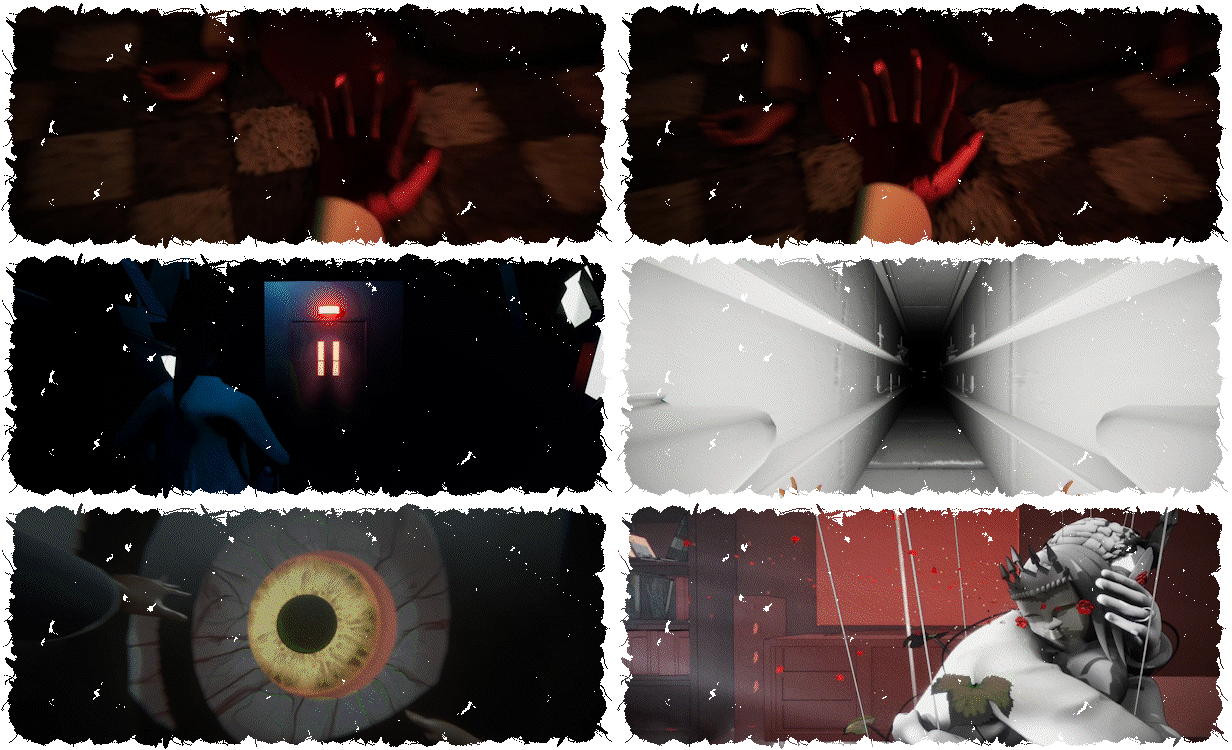
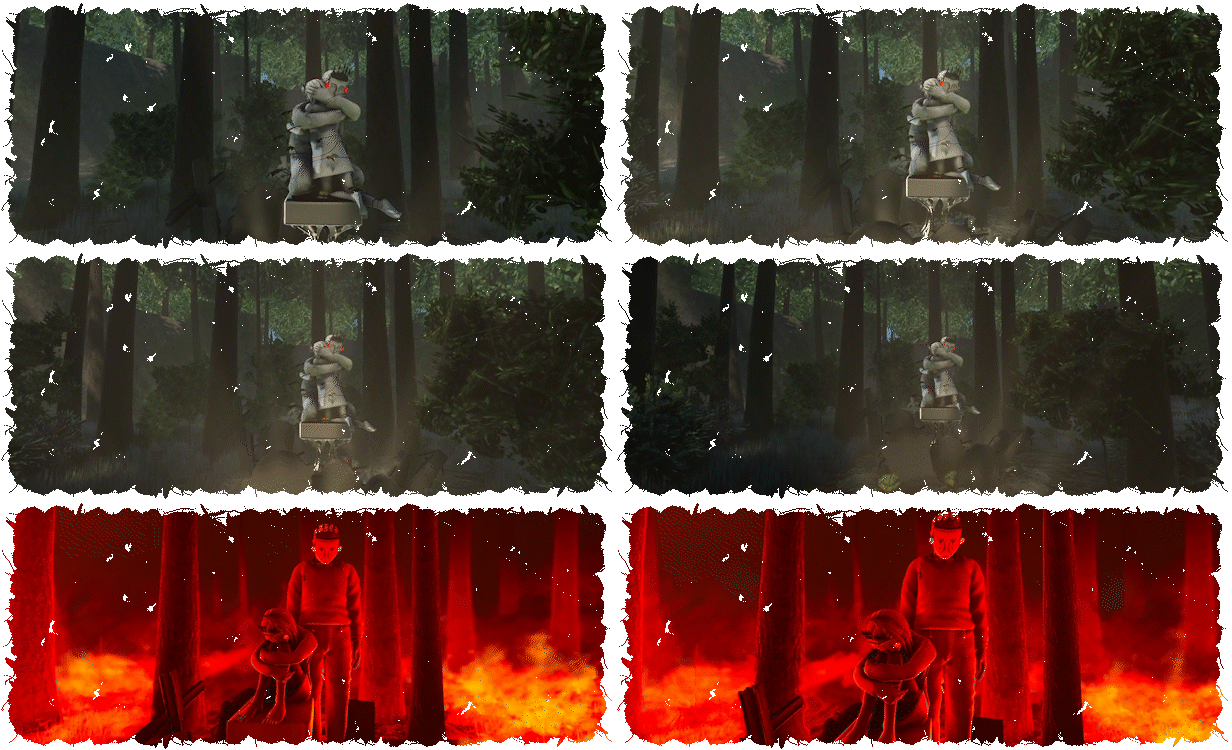
Music carries as much weight as the story. Delicate, melancholy guitar strings, slow piano, and faint choral whispers fold into each memory like a lullaby for pain. In some moments, the soundtrack does more than underscore the scene—it becomes the emotion itself. When Nala curls up with a memory of her younger self in a burning red forest, the sound alone communicates everything: loss, guilt, the ache of love too late expressed.
Still, as powerful as the emotions are, the game sometimes stumbles in how quickly they arrive. There are moments where Nala’s sorrow feels overwhelming before we’ve seen enough of the life she’s mourning. The story could have taken more time to show us the love and connection she had with her grandfather before diving so deeply into the aftermath. Some emotional climaxes don’t fully land because the steps leading up to them feel rushed, as if part of the path is missing. More grounding early on—small, human moments—would have given the later heartbreaks more weight.
But even with its rough edges, Undying Flower stays with you. It doesn’t offer easy answers or a clean resolution. It asks how much we’re willing to lose to silence the past, and whether healing is ever about forgetting—or if it’s about remembering the truth in full, no matter how painful. In its quietest moments, the game becomes more than a story. It becomes a mirror.