Summary
Rise of the Tomb Raider is the strongest entry in the Survivor trilogy, and nothing about this port changes that judgment. But the question is whether the Switch 2 is the right place to experience it. For first-timers, the case is straightforward: the price is reasonable, the DLC bundle is generous, and the portable factor is a nice cherry on top. For anyone who has already played this at 60fps on PlayStation or PC, this is an easy skip.
Developer – Aspyr
Publisher – Aspyr
Platforms – PC, Xbox One, PS4, Nintendo Switch 2 (Reviewed)
Review copy given by publisher
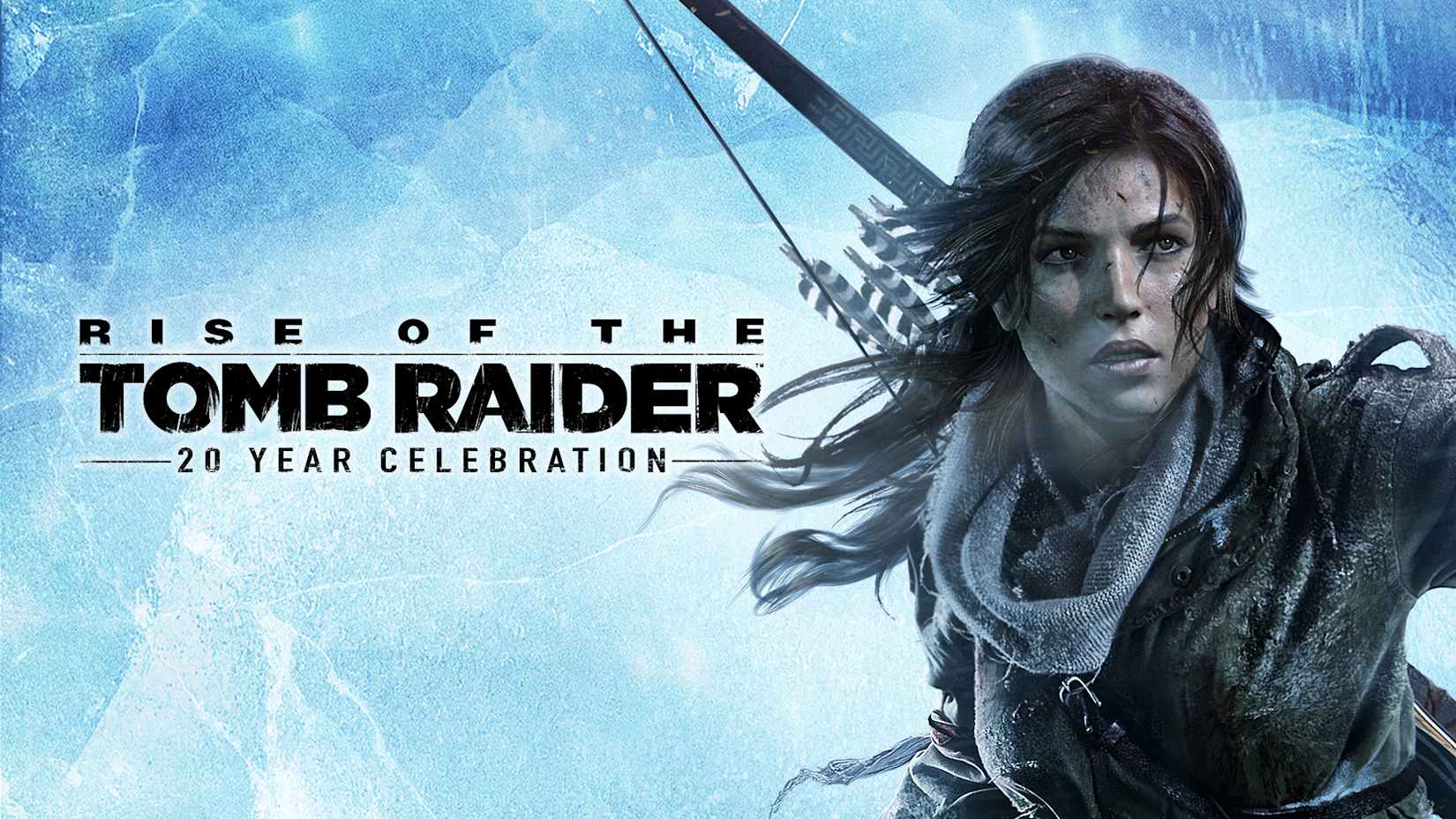
The “20 Year Celebration” branding in Rise of the Tomb Raider: 20 Year Celebration is quite misleading in 2026. That label was originally for the PS4 version released in 2016, alongside the original Tomb Raider’s twentieth anniversary, so a “30 Year Celebration” would be more accurate with this Switch 2 port. Branding gripes aside, Aspyr’s shadow drop during the June 9, 2026 Nintendo Direct fills in the middle chapter of Lara’s modern reboot trilogy on the Switch 2, slotting between last year’s Tomb Raider: Definitive Edition port and a still yet to come Shadow port. Aspyr handled the Definitive Edition conversion as well, and unlike that release, this one is Switch 2 exclusive, abandoning the older console entirely.
The campaign opens in the present, with Lara and her friend Jonah making their way up a Siberian mountain in the midst of a storm, then flashes back to set up how she got there. A year after the events of the 2013 reboot, Lara is still rattled by what she saw on Yamatai and can’t reconcile the supernatural with the academic world she was raised in.
She turns to her late father Lord Croft’s research on a lost Russian city called Kitezh and the artifact rumored to be buried with it: the Divine Source, said to grant immortality. Ana, her father’s former partner, warns her off but Lara presses on, first into a Syrian desert tomb, then up into Siberia when the trail points there. The script lands a couple of solid late game twists that hold up after all these years.
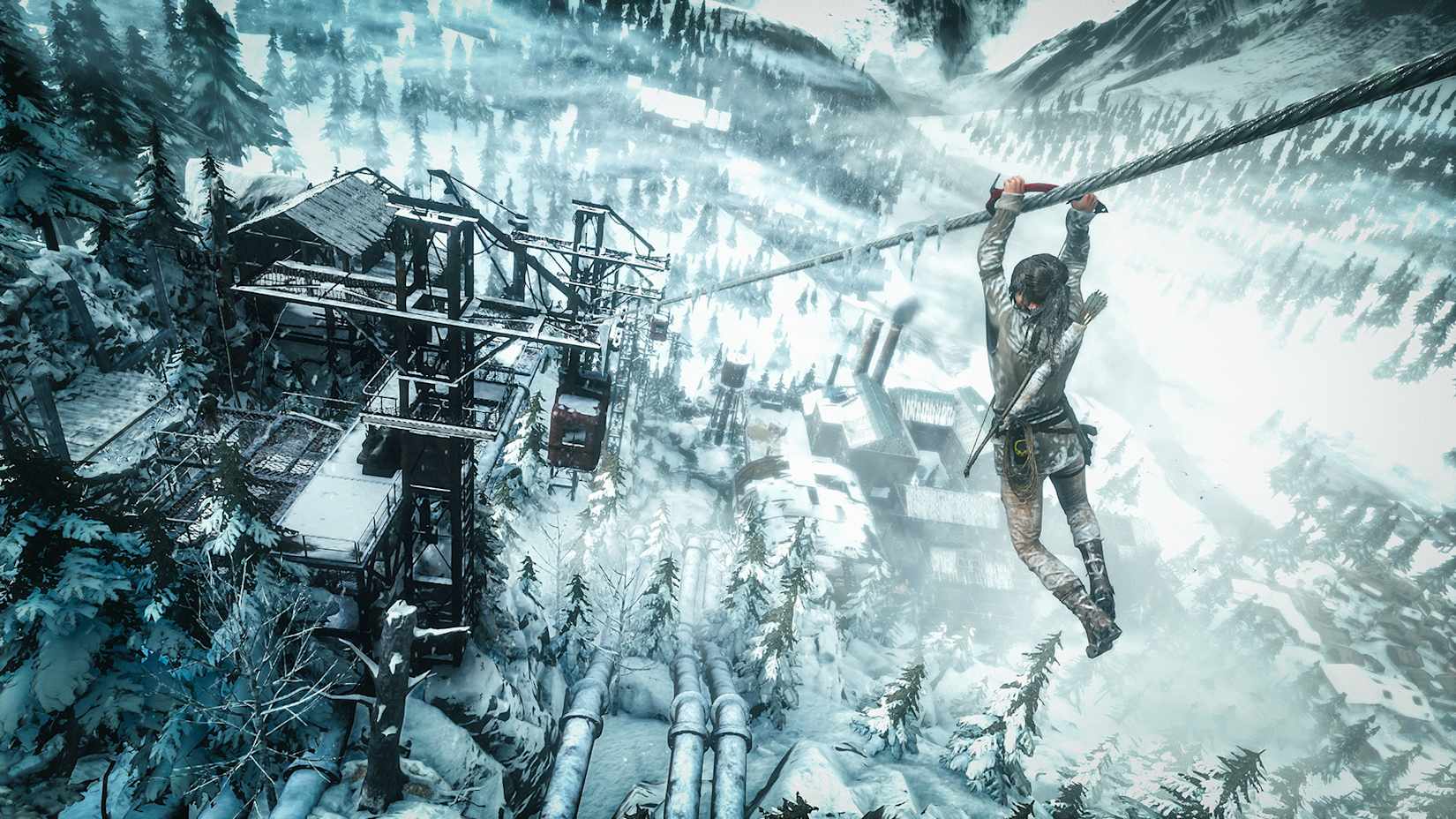
The gameplay structure refines rather than overhauls compared to the original. You climb, scavenge, hunt, fight, and pick apart environmental puzzles across semi-open hubs, returning to earlier zones as new tools unlock previously inaccessible routes. The optional challenge tombs are the high point. They’re larger, more multi-tiered, and demand more setup than the tombs of the predecessor, and clearing one grants a unique passive ability codex rather than just experience points and a chest.
Progression sits on three named skill trees: Brawler (melee and durability), Hunter (ranged combat, mostly bow and firearm focused), and Survivalist (crafting, stealth, and scavenging). Experience points feed skill points, and you earn them through combat kills, finding collectibles, examining relics, discovering new locations, or learning languages. You can raise Lara’s proficiency in various languages, and once her grasp of a language is high enough she can decipher monoliths that reveal hidden coin caches on the map.
The crafting and economy loop is the connective tissue. Hides, feathers, hardwood, mushrooms, oil, salvage, and a handful of rarer materials get pulled from animals, plants, and downed enemies and spent at base camp fires to upgrade weapons and craft gear. Certain animals only appear in specific zones or weather conditions, which gives hunting a light tracking mechanic. Lara’s Survival Instinct vision highlights nearby resources and points of interest, and a handful of late skills extend it to traps and hidden caches through walls.
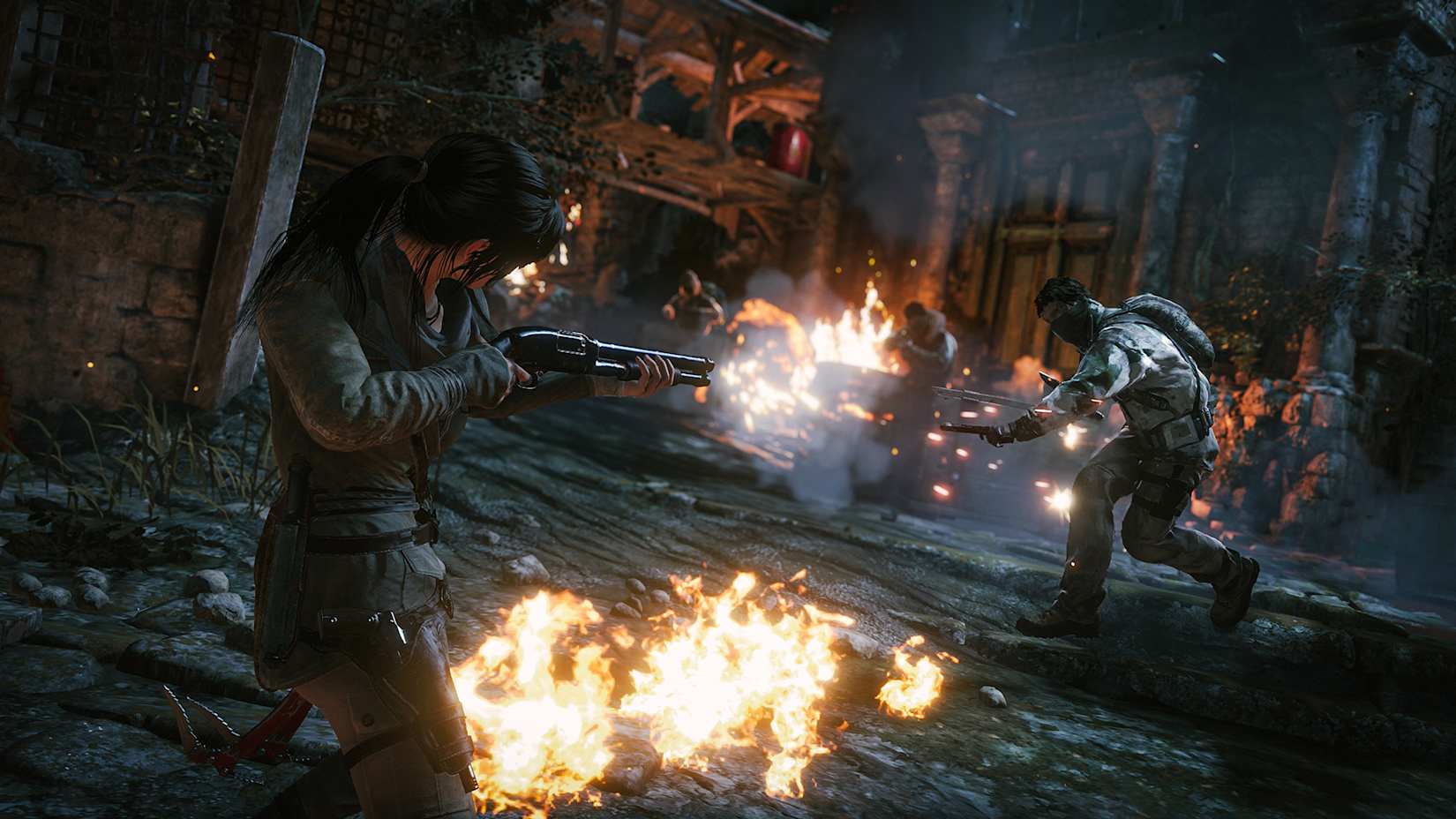
The port-specific concerns surface in combat. Stealth holds up well, with the bow, audio distractions, environmental kills (gas canisters and bottles thrown as distractions or improvised grenades), and silent takedowns offering layers to take down enemies. Open firefights are where things start to get iffy. Stick aiming on the Joy-Con feels too stiff for the shooting sections. There’s also noticeable input delay that’s most apparent in the menu but bleeds into general gameplay. Heavily armored Trinity enemies that show up in the back half of the campaign still force you into shoot outs, and that’s where the stick-aim drag is the most painful.
Gyro aiming would have been the obvious answer for the responsiveness issue, but Aspyr restricted it to inventory inspection of relics, with no option to use it for the bow, firearms, or even general camera movement. As an alternative, Aspyr included Joy-Con 2 mouse control support with adjustable sensitivity and selectable button layouts. There’s also limited touchscreen functionality.
Story-gated tools retroactively open paths in earlier zones. Difficulty options range from Adventurer (auto-regenerating health, generous resources) up through Tomb Raider and Survivor settings, with the Extreme Survivor mode from the 20 Year Celebration release present here too.
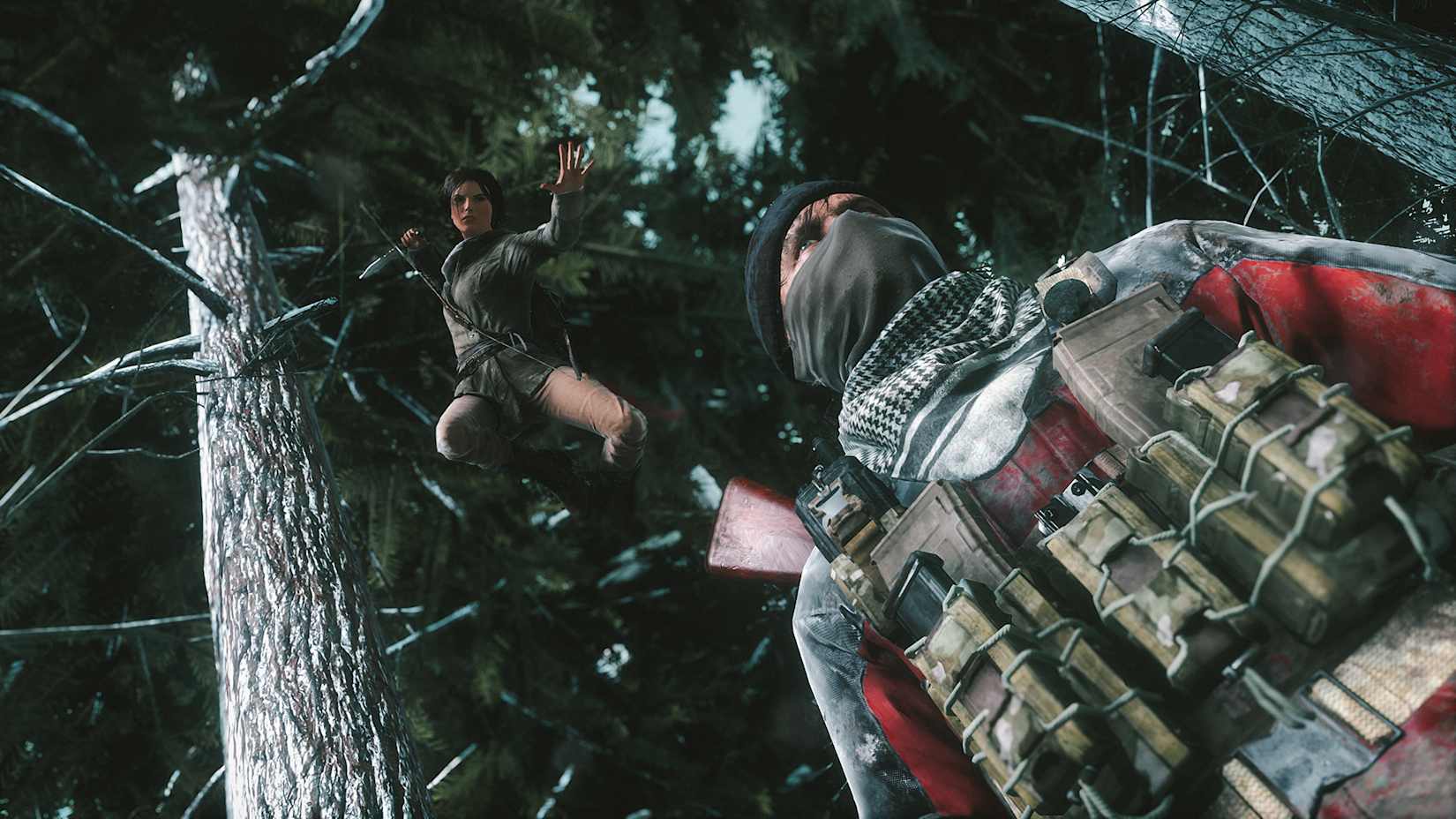
The 20 Year Celebration package bundles every piece of original DLC. Baba Yaga: The Temple of the Witch is a story chapter built around Russian folklore. Blood Ties takes Lara back to Croft Manor for a lore-heavy, combat-free sequence with light puzzles centered on proving her legal claim to the estate. Lara’s Nightmare reuses the manor for a horror-flavored combat mode in which the estate has been cursed. Endurance Mode is a survival challenge built around cold, hunger, and resource management, and the package also retains its Co-op Endurance variant, with online functionality intact on Switch 2.
The package also includes thirty-five Expansion Cards (modifiers used in score attack and expedition content), eight DLC outfits and seven DLC weapons, five classic Lara skins drawn from the PlayStation-era games, an Antarctica outfit that nods to Tomb Raider III, and the punishing Extreme Survivor difficulty mode. At $29.99 and weighing in at under 20GB, it’s a generously sized bundle for the asking price.
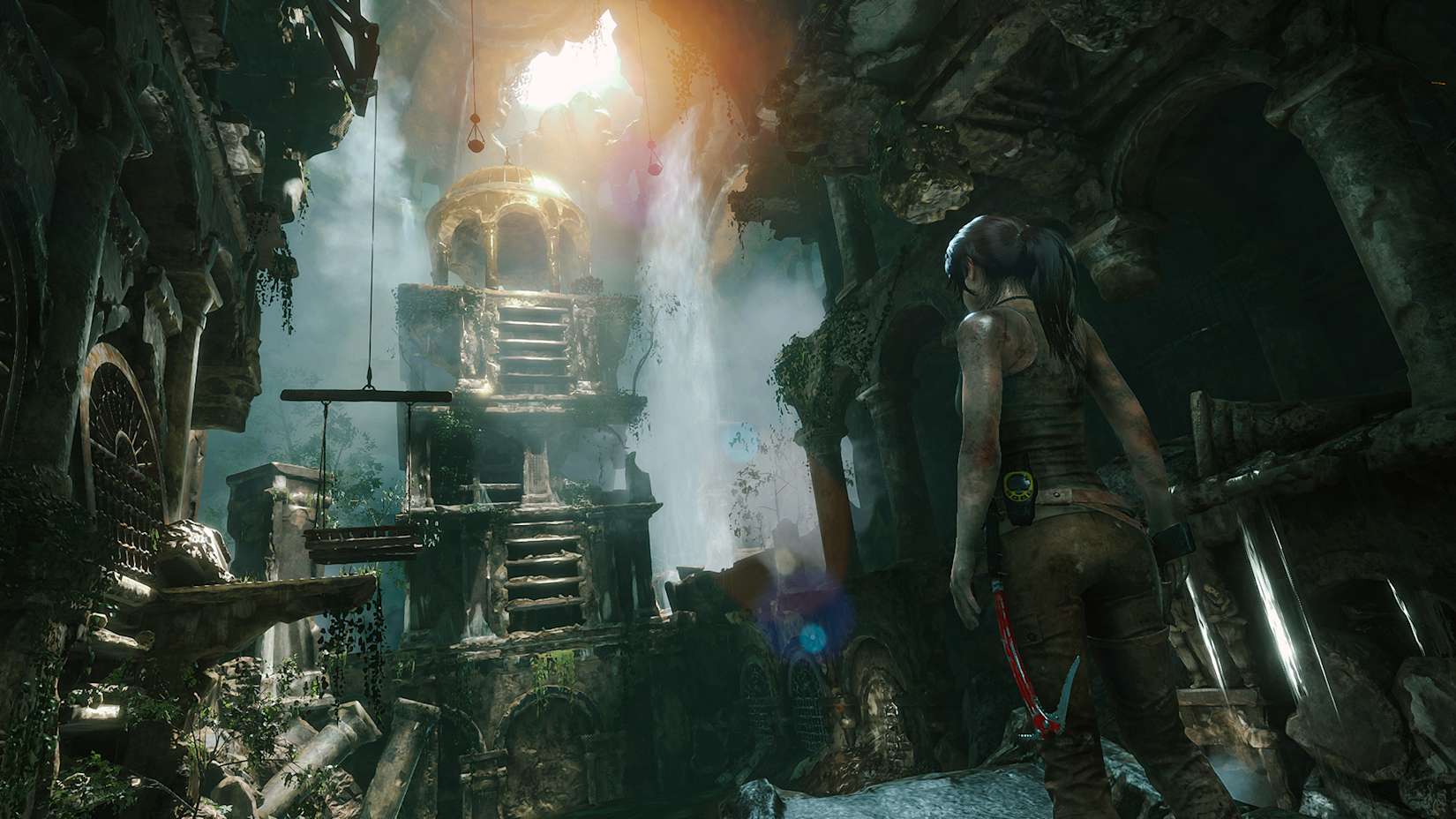
Technical performance is where most issues arise. The port runs at 1080p with a locked 30fps in both docked and handheld modes, with no HDR support and no DLSS or comparable modern upscaling solution. Snow effects also look noticeably dialed back compared to the original 2016 presentation. There’s also no option to uncap the framerate or target a 40fps middle ground, despite the Switch 2’s 120Hz display supporting it, and occasional stutters appear during transitions. This is the biggest con by far.
Note that the original PlayStation 4 release shipped in 2016 with PS4 Pro support that included a High Framerate Mode targeting 1080p and 60fps, alongside a 4K 30fps mode with HDR. The Switch 2 hardware has already demonstrated it can do better than 30fps in this series… Last year’s Tomb Raider: Definitive Edition port reached 60fps on the same console.
Final Verdict
Rise of the Tomb Raider is the strongest entry in the Survivor trilogy, and nothing about this port changes that judgment. But the question is whether the Switch 2 is the right place to experience it. For first-timers, the case is straightforward: the price is reasonable, the DLC bundle is generous, and the portable factor is a nice cherry on top. For anyone who has already played this at 60fps on PlayStation or PC, this is an easy skip.