
Discover everything you need to know about the best traits in The Outer Worlds 2, including how to use them effectively.
Traits in Outer Worlds 2 are special character-creation choices that grant your character lasting bonuses and help customize both your gameplay and role-playing experience. You pick one or more positive Traits, and optionally, you may be offered a negative Trait at character creation. Positive Traits give you beneficial effects like improved combat, movement, crafting, and dialogue.
The Negative Traits impose drawbacks like limiting skills and reducing health. Brawny is the best trait in the game because you can knock down the enemies while sliding and sprinting into them. Choosing the best traits is essential because your gameplay mostly depends on them. In this guide, we’ll discuss the best traits in The Outer Worlds 2, including what makes them the best and worst ones.
Best Positive Traits in Outer Worlds 2
You can select one positive trait for your character. However, you have the option of selecting another. If you do, you have to take on board a negative trait as well. Once selected, they cannot be changed, as you can’t opt out.
1. Brawny
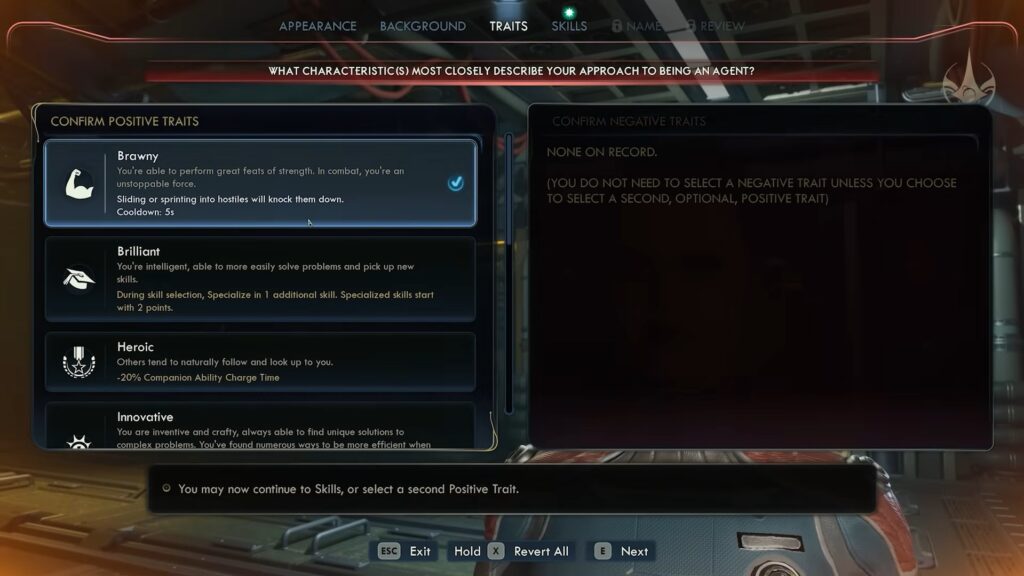
This trait lets you knock down hostiles while sliding or sprinting into them. Useful since it stops them from attacking, but it doesn’t work on boss enemies unless you get their health low. It does come up rarely in conversation, but what you really want Brawny for is how often it comes up in the world. You’ll find broken things or jammed doors, and if you have Brawny, you can simply open them with your brute strength.
There is no strength skill in The Outer Worlds 2, so if you want to play a big dude who can just bust his way into things, this is a good trait. Keep in mind that jammed doors can often be opened by having high engineering. So, if you plan on investing in that skill, my advice is that it clashes with Brawny. So, don’t pick up both unless it’s for role-playing purposes.
2. Innovative
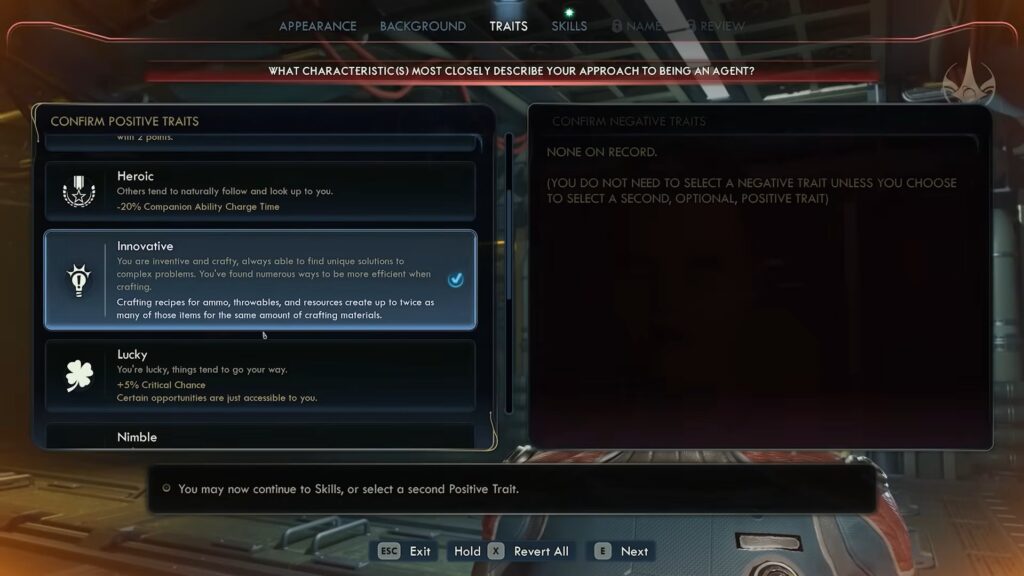
Innovative is the trait that I picked on my first playthrough and didn’t regret. It makes it so crafting recipes for ammo, throwables, and resources create up to twice as many of those items for the same amount of crafting materials. So, if you’re investing in medical or explosives, this is invaluable.
You’ll be crafting inhaler charges or grenades incredibly often, as they will supplement your build. Even investing heavily in gun matters here, as crafting ammo is a lot easier than buying it. Ammo is quite rare, while crafting materials are not. This trait also comes up in the world, often bypassing the need to have a high amount of skill in other areas.
3. Resilient
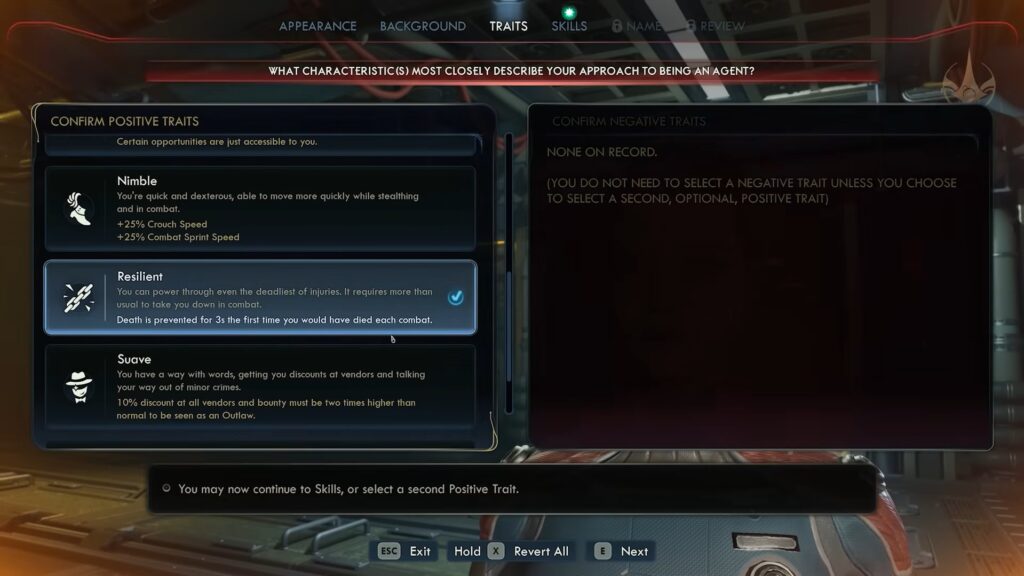
Resilience Trait in The Outer Worlds 2 makes it so death is prevented for 3 seconds, the first time you would have died in combat. It basically gives you 3 seconds to get safe and heal. This trait is naturally very powerful at higher difficulties, but at lower ones or normal ones. It’s not really worth the opportunity cost unless you’re not the best in combat situations. Resilient, like Nimble, rarely comes up in the world as a choice.
4. Brilliant
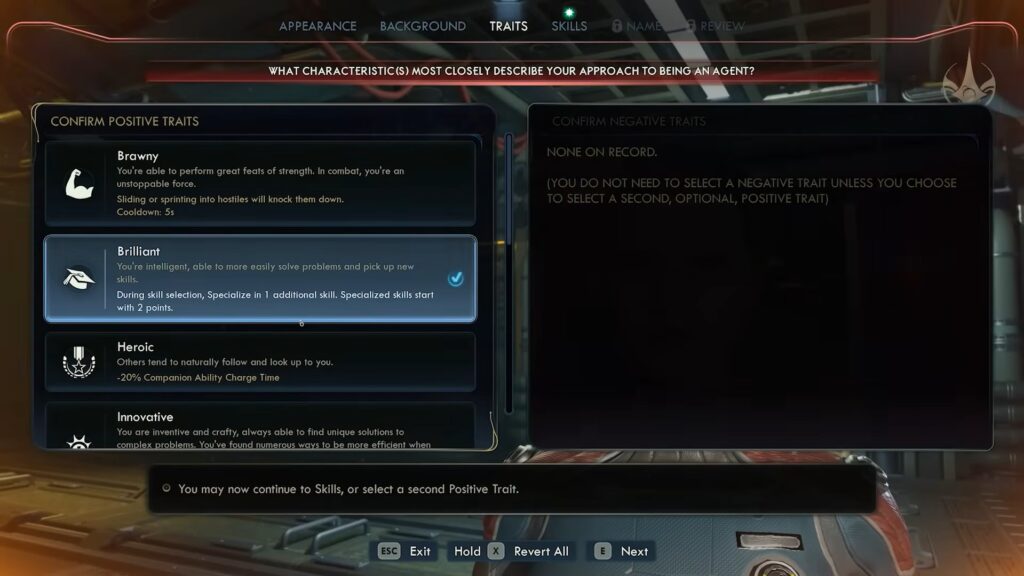
Brilliant in The Outer Worlds 2 is the most tempting trait at a surface level. It makes it so that during skill selection, the next choice you’ll need to make is for your character. You get to specialize in three rather than two skills. To quickly summarize, by specializing in the skill, you start with two points invested in it. Also, you can raise this skill level two points past your current level. So, if you’re level five, you can get specialized skills to level seven, whereas the nonspecialized skills you can invest in can only get to level five if you’re level five. Get two extra skill points into something and an extra skill to invest into.
It’s not quite how it works in practice. The max skill level is always 20, regardless of specializations, and you get two skill points to invest per level up. You can only get one skill two points above your level, but usually you’ll be investing equally into two skills or spreading them out.
As a positive though, two points into something at a base is usually enough early and mid-game to get some benefits. Brilliant is a great trait if you want those extra two skill points, which is like you’re one level above what you actually are. It also pays off in the world like all traits do, but it appears far less than Brawny.
5. Lucky
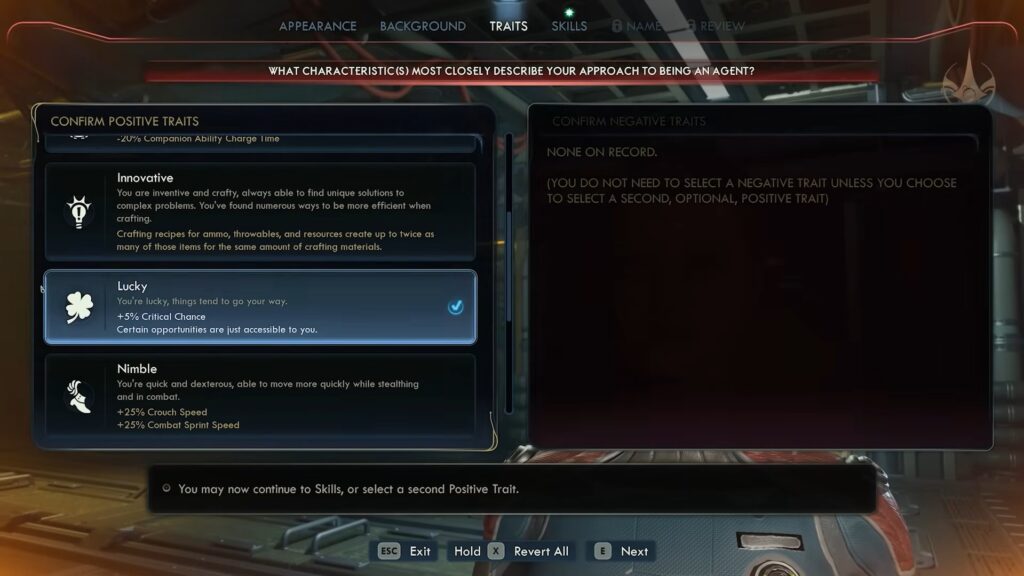
Lucky is a trait that applies a 5% critical chance to your damage. This is not a game-changing effect is probably the least valuable out of most of the positive traits. However, the biggest draw of Lucky is that sometimes in the world, you can rely on luck rather than skill or having the right items. You can get an option to mash a keypad and get the right outcome.
These outcomes for the lucky trait usually range from mildly impactful to getting the best outcome for that situation. That sounds very appealing, but Lucky isn’t needed in those cases. It just makes it easier or possible if you don’t have the requirements. Lucky doesn’t come up often, but out of all the traits, it does seem to be the most focused on worldly impact.
6. Nimble
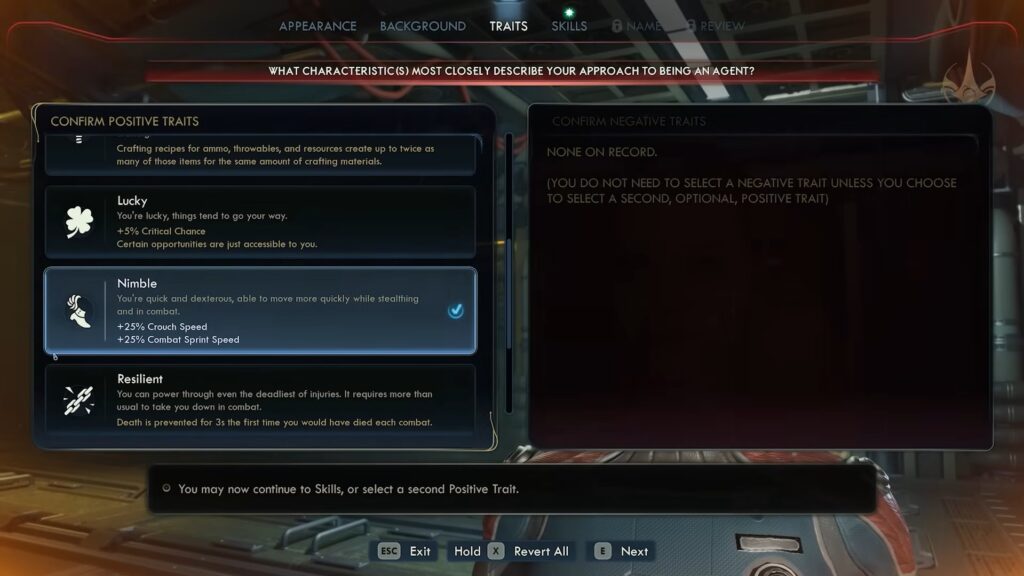
Nimble increases your craft speed and combat sprint speed by 25%. This is a large amount and very noticeable in practice. So, if you plan on melee and or being a stealthy character, this is a great trait to compensate for how powerful it is at a base. It very rarely comes up in the world, and I saw it only a handful of times.
7. Suave
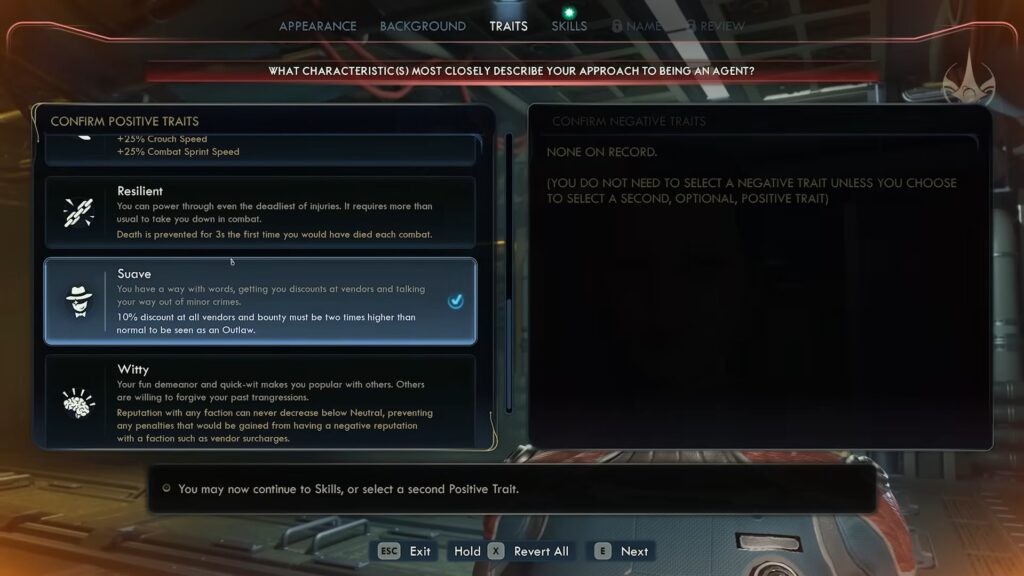
Suave in The Outer Worlds 2 allows you to get a 10% discount at all vendors, and your bounty must be two times high as normal to be seen as an outlaw. Unless you plan on being a terrible criminal, one that gets caught often, this won’t pay off as much as the other traits. However, Suave comes up sometimes in conversation. So, if you really want to lean into being a charming character, this could be a trait for you. Though having high speech does similar things.
8. Heroic
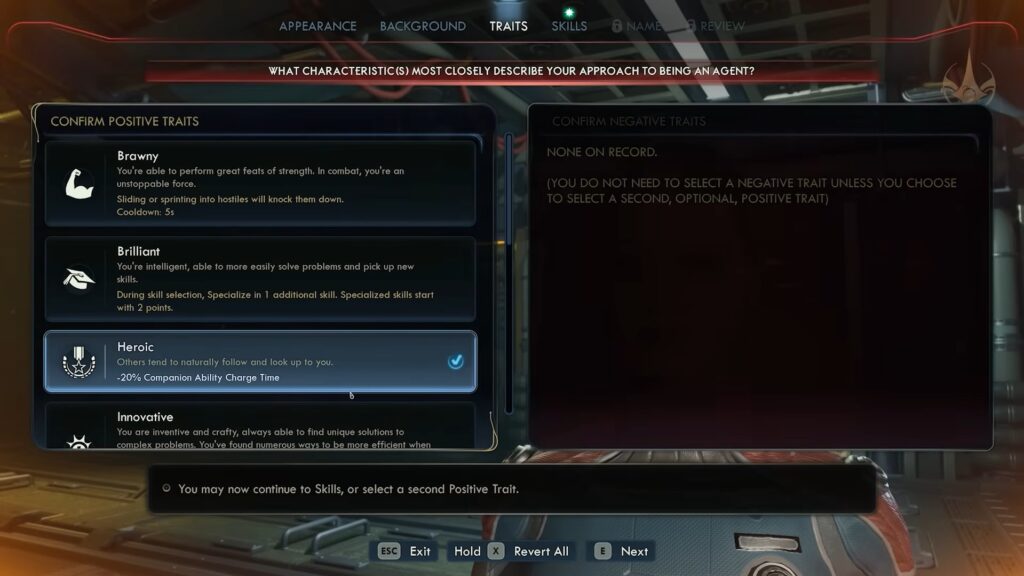
Heroic makes it so your companion’s ability recharge time is reduced by 20%. Companions are quite strong in this game, and if you invest in them, they can carry you through combat all the way through the endgame. Their abilities can be invested in a multitude of ways. Heroic is a natural addition to that, and it does come up in the world.
9. Witty
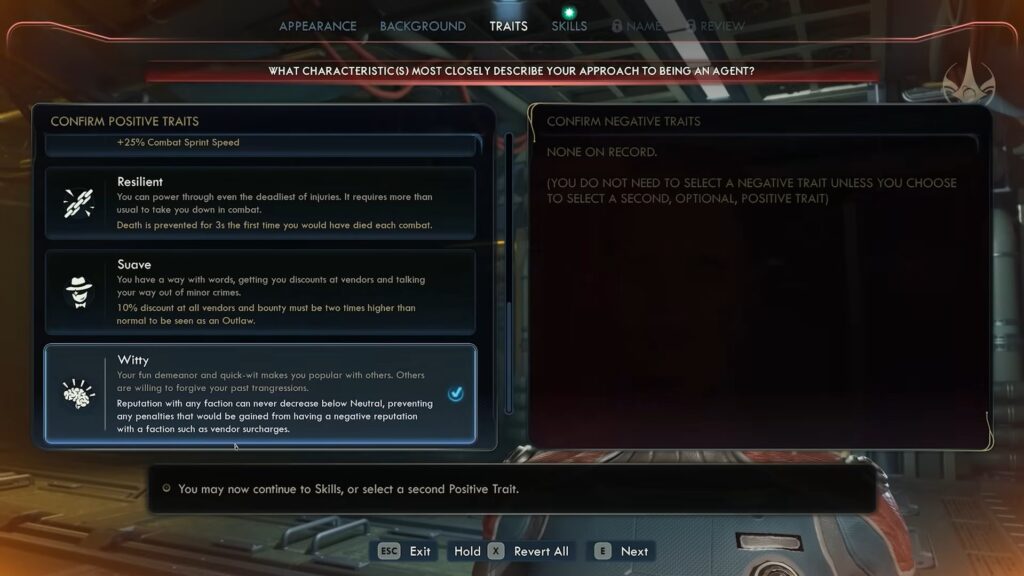
Witty is a trait that makes it so your reputation with any faction can never decrease below neutral, preventing those penalties from ever hitting you. Now, if you play normally, you won’t drop below neutral with anyone. So, this is good if you plan on being a criminal. Though some choices you may make can get one faction to drop in reputation. If you’ve been helping out at all, though, you’ll be fine.
One of the perks, Psychopath, makes it so you deal more damage the lower your reputation is. So that is counter synergy to this. You need a psychopath to get the serial killer trait. This is basically needed for every kill and every run. If you plan on killing as many people as you see, you need to lean into developing a negative reputation, or don’t.
This can come up in the world as something you can select as well. Negative traits can have positive outcomes, and some even combine with positive traits. So, for your first run, seeing all these situations come up is fun and exciting and gives you the maximum amount of choice.
Best Negative Traits in Outer Worlds 2
There are three negative traits to select in The Outer Worlds 2. I actually recommend selecting a negative trait. You get the benefit of two traits, which both come up in the world as options, as well as the bonuses that you get from a negative trait.
1. Abrasive
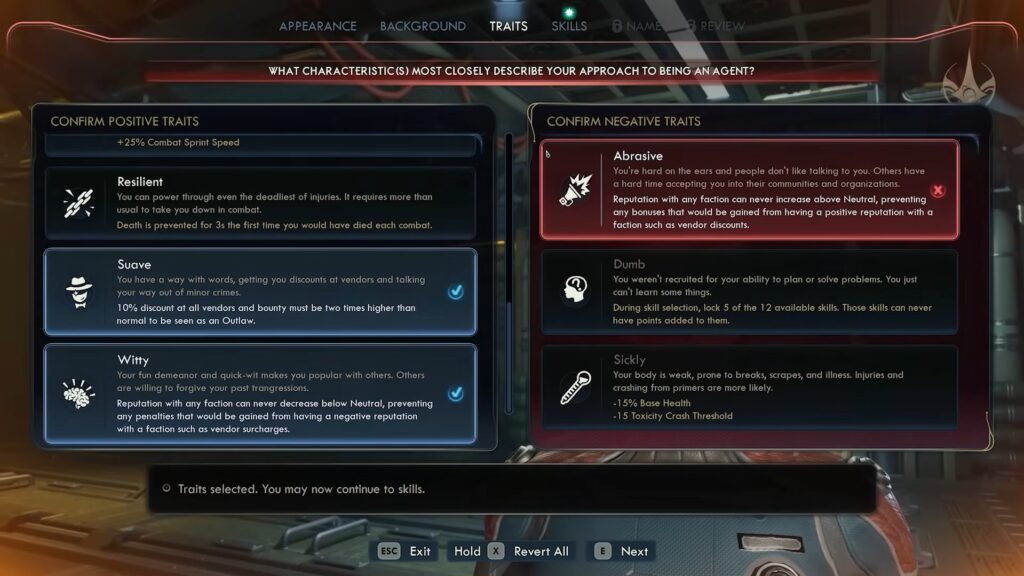
Abrasive in The Outer Worlds 2 makes it so that reputation with any faction can never increase above neutral, preventing bonuses with that faction. You can get this and witty, and it does come up in the game if you have both. This means you always stay neutral, no matter what. I don’t recommend picking Abrasive for your first playthrough, as it actually does limit you quite a bit.
2. Dumb
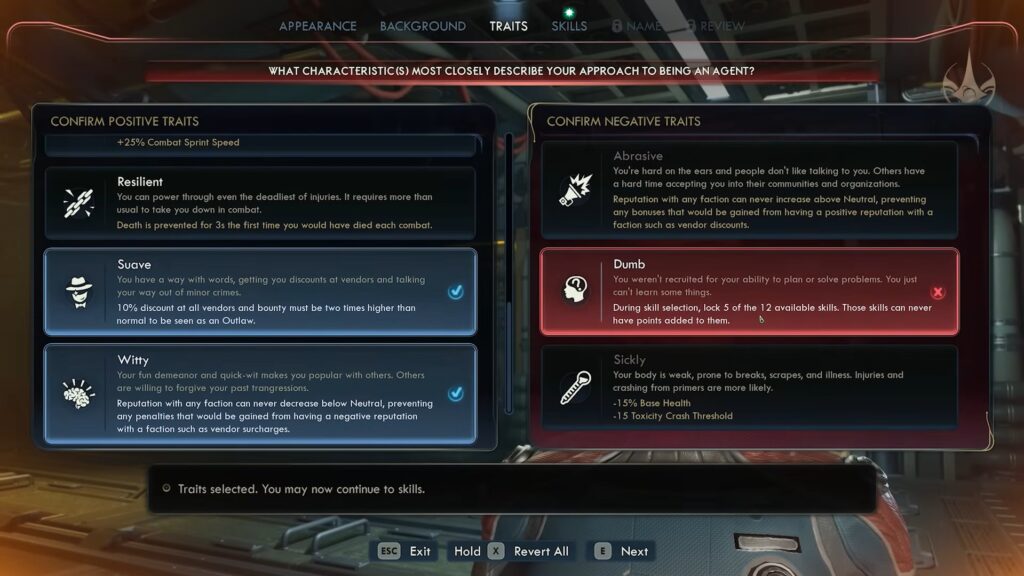
Dumb is another negative trait that makes it so that during skill selection, you have to lock five of the available skills. This means you can never put points into them. You get two skill points a level up, and each skill has a maximum of 20, and you can have a max character level of 30.
Do the math, and you can only max out three skills. Dumb actually does not affect you much at all. Unless you’re playing some kind of weird build where you put a point into every skill. However, this trait provides a lot of opportunities for dumb style dialogue, which you’re not actually locked into using. If you select dumb, you don’t need to select the dumb options that come up.
Also, in rare situations, you can use dumb to bypass things like using a can of sausage for a makeshift fuse. In this particular case, you can use all the dumb responses to get into a place you wouldn’t otherwise.
3. Sickly
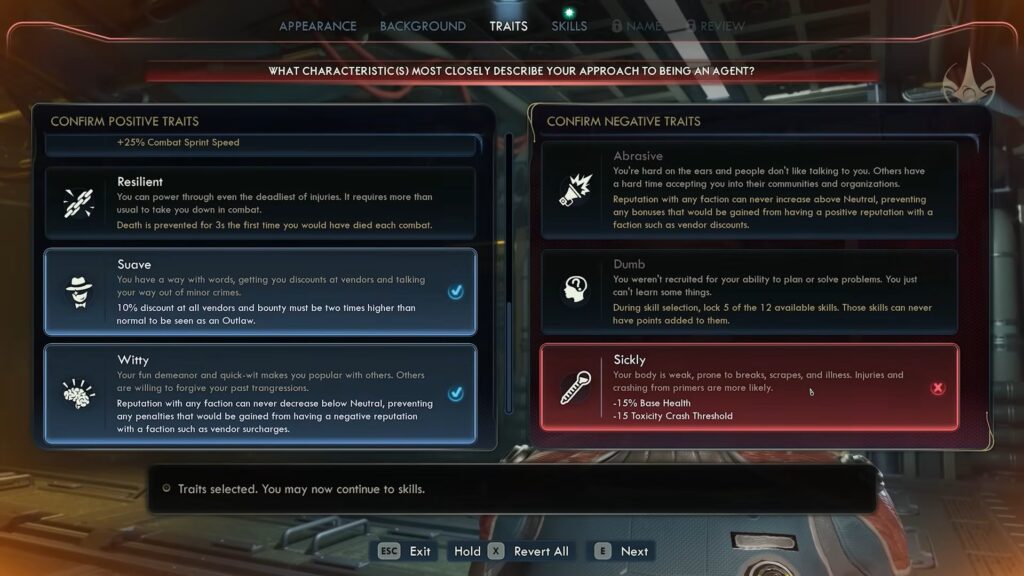
Sickly gives you 15% less base health and a lower total toxicity crash threshold. This is just how much you can use your inhaler before you crash, and you can’t use it again for a while. It sounds bad, but on normal difficulty, this wasn’t noticeable. Also, there are a lot of builds that require you to be in the crashed state. It also, like Dumb, gives you opportunities in conversation and in the world. Not really much of a drawback, considering how powerful an extra trait is.